 AIO
Electronic Glass
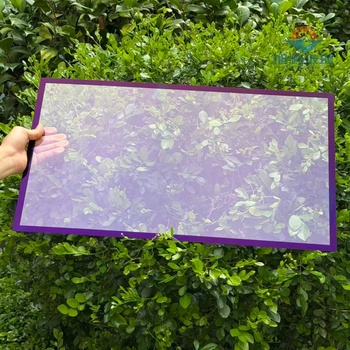
27-Inch AR Coated Glass for All-in-One PCs
- Large format
- AR coated
- Custom cutouts
MOQ: from 10 pcsDetails
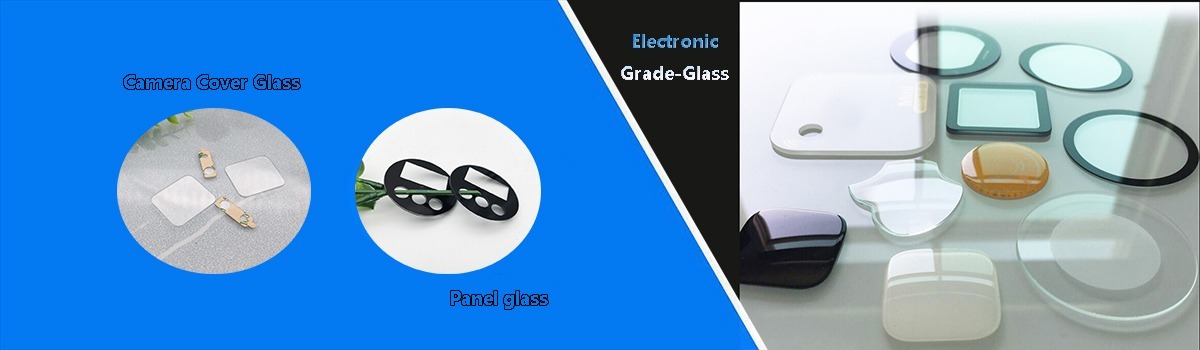
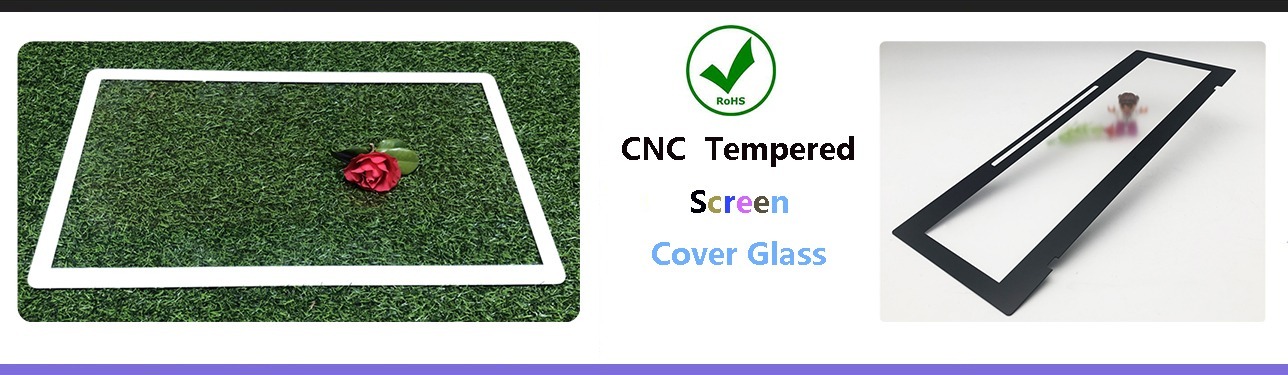


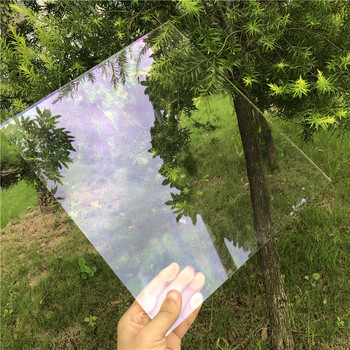
27-inch AR coated glass for all-in-one PCs is a large-format display cover glass engineered to protect the panel while reducing unwanted surface reflection. It is typically made from ultra-clear low-iron glass or clear float glass, cut to the AIO PC outline, CNC edged, optionally tempered, and coated with an anti-reflective thin-film stack. Buyers often specify it for premium office computers, design workstations, retail kiosks, medical AIO terminals and industrial control stations where screen clarity affects productivity and perceived product quality.
At 27 inches, the cover glass area is large enough that reflections from windows, ceiling lights, ring lights and nearby walls become highly visible. A standard uncoated glass surface reflects a noticeable percentage of ambient light, competing with the display image. Anti-reflective coating uses optical interference layers to reduce that surface reflection, improving perceived contrast, black-level depth and readability under mixed lighting. With the growth of AI-enabled all-in-one PCs, high-brightness panels, OLED options and slim-bezel industrial design, procurement teams increasingly treat the cover glass as a strategic optical component rather than a simple protective accessory.
The search intent behind this product is usually practical: engineers ask which thickness is appropriate, how AR differs from AG, whether the glass can be tempered and printed, how to test coating durability, what tolerance is realistic, and how to pack a 27-inch fragile part for export. This guide answers those questions in buyer language and explains how Dongguan AUVE Glass Co., Ltd. supports drawing-based production, sample validation and repeat orders.
The right construction depends on your display stack, ambient-light environment, touch design, bezel appearance and assembly process. These options cover the most common AIO PC sourcing paths.
AIO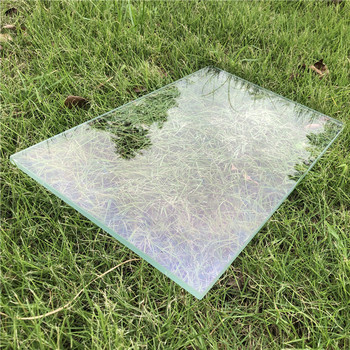 Hot
Use this checklist to prepare a clear RFQ. Final values must be confirmed against your 3D model, display stack, assembly method and agreed test standard.
| Specification Area | Typical Options / Reference | Buyer Notes |
|---|---|---|
| Substrate Material | Ultra-clear low-iron glass, clear float glass, tempered glass | Low-iron glass reduces green tint and supports premium display clarity. |
| Format | 27-inch AIO PC cover glass; custom outline, cutouts and camera windows | Provide a DXF, DWG, STEP or PDF drawing with critical dimensions. |
| Thickness | 1.1 mm, 2.0 mm, 3.0 mm, 4.0 mm or project-specific | Balance weight, impact resistance, touch integration and bezel design. |
| AR Coating | Single-side or double-side anti-reflective coating | Double-side AR is often requested for premium AIO PCs; validate reflection target on both surfaces. |
| AG Option | Anti-glare etched surface, AG + AR hybrid, custom gloss and haze | Consider AG when the AIO PC will be used in bright retail, office or industrial lighting. |
| Transmission & Reflection | Confirmed by substrate and coating stack; typical optical targets agreed before sampling | Request measurement method, wavelength range and sample approval criteria. |
| Edge & Holes | Flat polished edge, bevel, chamfer, CNC drilling, grooves | Sharp edges should be avoided for assembly safety and handling. |
| Tempering | Flat tempered or strengthened glass depending on thickness and design | Discuss coating order and printing compatibility with the factory before tooling. |
| Printing | High-temperature ceramic ink, black border, icons, logos, IR windows | Printing affects optics and assembly alignment; supply color and artwork files. |
| Surface Protection | Anti-fingerprint, easy-clean, anti-static and protective film options | Match surface treatment to touch use, cleaning chemicals and user environment. |
| Inspection | Dimensional check, visual inspection, coating appearance, edge inspection | Agree acceptance criteria and sampling plan before mass production. |
| Packing | Protective film, interleaving paper, foam corners, reinforced cartons, wooden crates | Large-format glass requires robust packing and clear carton labeling for export. |
*Values are typical reference points for engineering discussion. Project specifications, test methods and acceptance criteria must be agreed in writing before production.
Procurement is moving beyond piece price. Buyers are evaluating optical performance, supply resilience, documentation, packaging yield and total landed cost across the product life cycle.
AI-enabled workstations, creator PCs and premium office systems are pushing brands toward edge-to-edge glass, lower reflection and better perceived contrast. Procurement teams are likely to specify optical performance more precisely instead of accepting a generic cover glass.
Buyers now share CAD models, tolerance stacks, coating targets, printing artwork and assembly conditions earlier in the sourcing process. This reduces rework and helps factories quote a manufacturable process route rather than a simple size-based price.
Single-source strategies are increasingly reviewed against delivery risk. Global buyers ask for evidence of process control, inspection records, export packing standards and responsiveness when qualifying a 27-inch AR glass supplier.
Price per piece is only one factor. Breakage rate, packaging efficiency, lead time, inventory carrying cost and replacement risk all affect the true cost of 27-inch AR coated glass for all-in-one PCs.
Procurement teams increasingly request material declarations, restricted-substance documentation, packaging compliance and batch traceability. Clear documentation helps brands manage global supply-chain requirements.
Program-based purchasing is replacing one-off orders for many AIO PC brands. Sharing rolling forecasts and annual volume scenarios helps the factory plan coating runs, tempering batches and protective packing materials more efficiently.



The next generation of 27-inch AR coated glass for all-in-one PCs will be judged on more than reflection reduction. Brands want cleaner integration, durable optical stacks, better touch experience and reliable mass production. One clear trend is the combination of AR and AG properties. A pure AR coating delivers excellent image clarity by reducing surface reflection, while AG treatment scatters harsh glare. Hybrid AR+AG constructions can serve bright offices, showrooms and public kiosks where both clarity and glare diffusion matter.
Another trend is edge-to-edge design. Narrow bezels and flush front covers put more attention on the flatness, edge quality and printing registration of the glass. Buyers are asking for precise CNC outlines, smooth transitions, black border printing with accurate optical windows and camera holes that align within agreed tolerances. For touch-enabled AIO systems, anti-fingerprint and easy-clean surfaces are increasingly requested, because the cover glass is both a protective part and a user interface.
Durability is also becoming a key purchasing topic. Coatings must survive cleaning agents, repeated handling and assembly. Buyers are more likely to define coating adhesion, abrasion resistance, humidity exposure and appearance criteria in the RFQ. Optical inspection and batch traceability are moving from optional value-added services to expected supplier capabilities. As AIO PC designs become thinner and displays brighter, glass thickness, weight and coating uniformity will be balanced against drop, vibration and flexural requirements.
Deep-processing experience, engineering support and export-minded service for buyers sourcing custom coated glass from China.
Dongguan AUVE Glass Co., Ltd. is a deep-processing glass enterprise specializing in the integration of glass product research and development, design, manufacture and sales. Our professional processing and production include flat and curved tempered glass, ultra-white glass, laminated glass, painted glass, LCD glass, advertising glass, touch screen glass, intelligent control panel glass, LED lamp glass, instrument glass, AR glass (high-transmittance / anti-reflective glass), AG glass (anti-glare glass) and a series of high-quality tempered glass products.
For 27-inch AR coated glass for all-in-one PCs, our team reviews the application environment, display stack, touch requirements, printing artwork and assembly method before recommending a process. Depending on the project, the route may include cutting, CNC edging, drilling, tempering, silk-screen printing, AR/AG coating, cleaning, inspection and protective packing. Our production adopts advanced processing technology and strictly follows defined standards, supported by a comprehensive quality management system.
AUVE Glass adheres to the corporate development philosophy of “focusing on high-end glass, pioneering and innovating.” We invest in skilled talent and production equipment to support reliable delivery for OEMs, brand owners and distributors. Our products are exported to the United States, Russia, Canada, South Korea, Japan, Australia and other markets. For buyers who need a responsive partner, our average response time is within 7 hours and our displayed response rate is 82.86%.
Process control is especially important for large-format coated glass. Each step should be reviewed for handling risk, optical appearance and assembly fit.
Check size, thickness, tolerance, coating, printing and assembly conditions.
Precision outline, holes, cutouts, chamfers and safe edge profiles.
Thermal tempering or strengthening selected according to design and thickness.
Black borders, logos, icons and optical windows with high-temperature ink.
Single or double-side AR, AG or hybrid coating with appearance control.
Dimensional, visual and optical checks followed by fragile-goods packing.
For large-format coated glass, reliable supply depends on communication before production. Our workflow is built around drawing clarity, process review, inspection and export-ready packing.
We review thickness, edge, holes, printing and coating compatibility before quoting.
Average response time is within 7 hours for project questions and quotations.
Documented inspection and production management support consistent batch quality.
Protective film, interleaving materials, foam and reinforced crates for fragile glass.
Experience serving the United States, Canada, Russia, South Korea, Japan and Australia.
Send drawings and quantities to info@auveglass.com for engineering review.
These are the questions global buyers most often ask when sourcing anti-reflective cover glass for all-in-one PCs.
It is a large-format display cover glass made for 27-inch all-in-one computers. The anti-reflective coating is applied to reduce surface reflections from windows, lights and nearby objects. This helps the display appear clearer and more contrast-rich, especially in bright offices, showrooms and public environments. The glass can also be tempered, printed, drilled and supplied with AG or anti-fingerprint options.
A 27-inch screen has a large surface area, so even modest reflection can be distracting. AR coating reduces the amount of ambient light reflected from the cover glass, allowing users to see the display image more directly. For premium AIO PCs, AR glass supports a cleaner design, deeper perceived blacks and better readability under mixed lighting. It is particularly valuable in offices with windows, retail demo areas and industrial control rooms.
AR stands for anti-reflective. It uses an optical thin-film coating to reduce surface reflection while keeping images sharp. AG stands for anti-glare. It creates a micro-textured surface that scatters reflected light, reducing harsh glare. AR is often chosen for clarity, while AG is chosen when glare is difficult to control. Some AIO PC projects use AR plus AG when both low reflection and glare diffusion are required.
Common thicknesses include 1.1 mm, 2.0 mm, 3.0 mm and 4.0 mm. The best choice depends on impact resistance, overall weight, touch integration, chassis design and tempering requirements. A thinner glass can reduce weight but may require different handling and strengthening. A thicker glass may offer greater rigidity but adds weight. The final specification should be reviewed against your drawing and assembly process.
Yes. The production route can include CNC cutting, edging, drilling, tempering, silk-screen printing and AR/AG coating. Printing options include black borders, brand logos, icons, camera windows and sensor windows. Because tempering, printing and coating can affect each other, the process sequence should be reviewed by the factory before sampling and mass production.
MOQ depends on material, size, coating, printing, tempering and packing requirements. Custom coated parts can often start from small pilot quantities for engineering validation, while tempered and printed mass-production orders are higher. For a new AIO PC project, share your target annual volume, sample quantity and launch schedule so the factory can propose a practical MOQ and production plan.
Evaluate the glass against agreed criteria: dimensions, flatness, edge quality, coating appearance, reflection or transmission targets, coating adhesion, abrasion resistance, printing registration and packing condition. It is useful to approve a golden sample and define inspection methods before mass production. Request inspection records and batch traceability if your program requires documentation.
Large-format glass should be protected with interleaving film or paper, edge protection, foam corners and reinforced cartons or wooden crates. The packing method should prevent movement, surface abrasion and edge impact during sea, air or express transport. Clear labeling helps the receiving team identify model, batch, quantity and handling direction. For high-value coated glass, discuss enhanced packaging for your specific logistics route.
Send a DXF, DWG, STEP or PDF drawing with the outline, thickness, critical dimensions, edge profile, holes, cutouts, printing artwork, coating requirement, surface treatment and quantity. If available, include the display stack, assembly method, target reflection or transmission, and any test standards. This allows the factory to quote the correct material and process route more accurately.
Samples can be discussed for suitable projects. Sampling is especially important for 27-inch AR glass because the coating appearance, printed border, cutout alignment, edge finish and packing method should be validated before a production order. Sample lead time depends on whether new tooling, printing screens or coating runs are required.
Common terms include EXW, FOB, CFR, CIF, DDP, DDU, DAF and express delivery. The best choice depends on your customs setup, freight forwarder and risk plan. We recommend discussing packaging, insurance and shipping method together, because large-format glass benefits from careful logistics planning from the factory door to your warehouse.
Email info@auveglass.com with your drawing, application, target quantity and delivery market. For faster review, include the glass size, thickness, coating requirement, printing details and any special inspection standards. You can also use the inquiry button on this page. Our team aims to respond within 7 hours on average and will confirm technical questions before issuing a quotation.
Send your drawing, display stack and quantity target. Our team will review the glass size, coating, tempering, printing, packing and export requirements, then confirm the next step for engineering validation or quotation.
info@auveglass.com