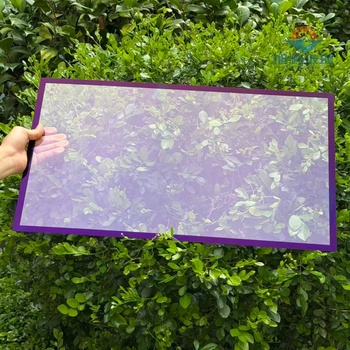
 Outdoor
AG Display Glass
Etched AG Coated Tempered Glass for Outdoor LCD Kiosks
- Etched AG
- Tempered
- Low-iron
MOQ: project-basedDetails
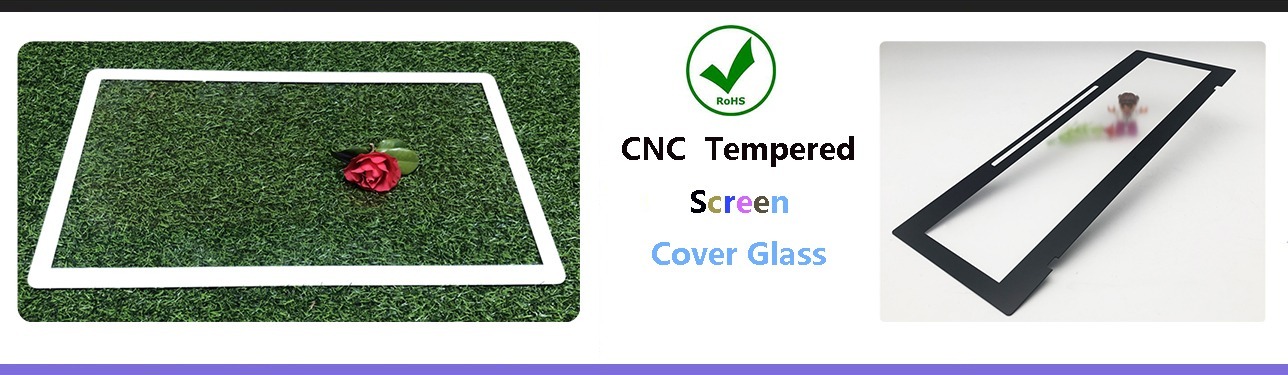

Search demand for anti-glare AG coated glass for LCD display panels is no longer limited to price per square meter. Global buyers now ask about haze, gloss, transmission, touch integration, coating durability, drawing tolerances and total landed cost.
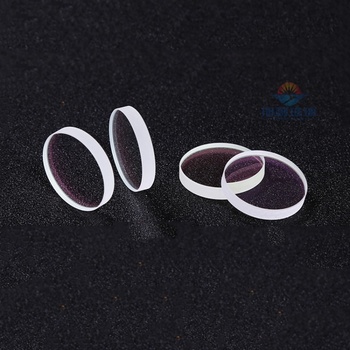
Anti-glare AG coated glass for LCD display panels is usually a custom cover glass that sits in front of an LCD module, touch sensor or industrial display. A micro-textured or coated surface diffuses incident light so that reflections become softer and less concentrated. The result is easier reading in bright rooms, outdoor kiosks, factory floors, medical equipment and automotive-style control panels.
For procurement teams, AG coating cannot be judged from a single description. A buyer may ask for “anti-glare glass,” but the real requirement may be low haze with high clarity, a specific gloss level, anti-fingerprint performance, AR plus AG coating, tempered strength, printed black borders or dimensional tolerances that match an existing enclosure.
That is why a useful RFQ should define the substrate, thickness, size, haze or gloss target, transmission target, surface hardness, edge profile, drilling, printing, coating side and packing method. When these details are clear, suppliers can quote the same scope and avoid later disputes over appearance or optical performance.
Typical targets help internal teams align design, sourcing and quality. Final values should always be confirmed against your drawing, display brightness, touch structure, housing design and approved sample.
| Parameter | Typical Starting Point | What to Confirm With the Supplier | Why It Matters |
|---|---|---|---|
| Substrate | Ultra-clear low-iron glass or optical-grade float glass | Color tint, bubble and inclusion standard, raw material source and thickness availability | Low-iron glass supports neutral color and higher visible transmission for LCD readability |
| Thickness | 1.1 mm, 2 mm, 3 mm, 4 mm, 5 mm or 6 mm | Assembly gap, touch sensor position, weight, tempering route and edge strength | Thickness affects drop resistance, optical distance, bonding method and enclosure fit |
| Haze | Low haze to medium haze depending on application | Target haze range, measurement method, instrument and acceptable tolerance | Higher haze softens glare but may slightly reduce perceived sharpness |
| Gloss | Matt to semi-matt appearance | Gloss unit target, viewing angle and sample comparison under agreed lighting | Gloss controls how much reflected light remains visible as a hot spot |
| Transmission | High transmission for display clarity; AR option for contrast | Transmission target, AR coating design, color shift limit and coating side | Transmission affects brightness, contrast and backlight power consumption |
| AG Uniformity | Uniform texture without visible sparkle or patch marks | Inspection distance, lighting condition, sample limit and area-specific criteria | Non-uniform AG can create visible mottling on large LCD panels |
| Surface Durability | Project-dependent hardness, adhesion and cleaning resistance | Test method, steel wool or eraser requirement, chemical exposure and cleaning instructions | Display glass must survive touch, cleaning and handling in the field |
| Printing and Holes | High-temperature ceramic ink, CNC holes, cut-outs and edge grinding | Print color, registration tolerance, window ink, step edge, hole position and coating sequence | Mechanical features must remain compatible with AG or AR coating processes |
| Size and Shape | Small HMI windows to large format LCD covers | Maximum sheet size, CNC tolerance, warpage, chamfer, corner radius and packing layout | Large-format glass needs careful handling and stable process control |
Values are practical reference points for inquiry preparation, not a universal product specification. Final acceptance criteria are agreed per drawing, sample and purchase order.
These product routes are commonly requested by global buyers. Each can be adapted in size, thickness, edge profile, holes, printing, haze, gloss and coating to match the final display assembly.
Outdoor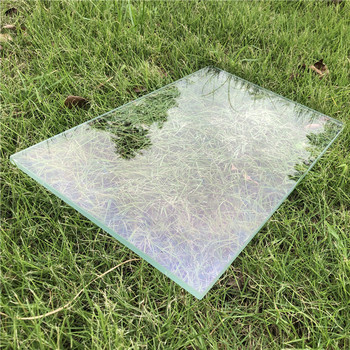 High ContrastCustomUltra-Clear
Global buyers are moving from simple catalog inquiries toward engineering-led sourcing. Suppliers who can support documentation, sampling and process transparency will have a clear advantage.
Buyers increasingly send drawings, stack-up details, brightness data and acceptable haze ranges rather than asking only for a generic anti-glare glass price. This reduces sampling loops and improves first-article success.
Outdoor kiosks and industrial displays often need both glare diffusion and reflection reduction. AG plus AR coating can improve contrast under strong light while preserving the touch-friendly hard surface.
Procurement teams want pilot quantities for fit checks, optical review and customer approval before committing to large orders. Flexible sample and low-volume production support becomes a supplier selection criterion.
Buyers ask for inspection criteria, material records, batch control, packing photos and traceability from raw sheet to final carton. Clear documentation lowers quality risk for OEM and brand-owner projects.
Purchasing decisions now consider breakage rate, packing quality, delivery reliability and rework cost, not only unit price. Stable AG appearance and tight dimensional control can be more valuable than the lowest quotation.
Global buyers diversify glass suppliers while keeping the same drawing and inspection standard. A manufacturer with in-house cutting, tempering, printing and coating can simplify communication and shorten response time.
The next generation of LCD display glass must balance glare control, image clarity, touch feel, durability and efficient manufacturing.
Buyers want enough diffusion to reduce glare but not so much haze that fine text or high-resolution graphics appear soft. Fine-texture etching and controlled coating processes are becoming more important than simple matt appearance.
Anti-glare surfaces are increasingly requested with anti-fingerprint, easy-clean, anti-bacterial-style claims where supported by test data, and improved chemical resistance for frequent cleaning in public terminals.
All-in-one PCs, interactive kiosks and industrial displays continue to move toward larger panels. At the same time, thinner glass can save weight, but it requires tighter handling, edge treatment and packing control.
Public terminals and industrial equipment need impact resistance as well as optical performance. Tempered low-iron AG glass with CNC holes, printed borders and controlled flatness is a common direction for rugged assemblies.
Display stacks increasingly use optical bonding, gaskets or touch sensors. Buyers should confirm whether the AG or AR coating is on the outward surface, and whether the opposite side is suitable for printing, bonding or index matching.
Large display glass benefits from automated inspection for spot defects, coating uniformity and edge issues. Combining instrument checks with agreed visual samples helps both buyer and supplier judge appearance consistently.
Use this checklist to compare suppliers with the same technical and commercial basis. Clear questions lead to comparable quotations and fewer surprises during production.
| Qualification Area | Questions to Ask | Evidence to Request |
|---|---|---|
| Drawing Review | Can the supplier review tolerances, holes, print registration, edge profile and coating sequence before quoting? | Marked-up drawing, manufacturability notes and process route |
| Optical Performance | How are haze, gloss, transmission and color shift measured and reported? | Instrument type, sample data, agreed inspection standard and limit samples |
| Process Control | Are cutting, CNC, tempering, printing and AG coating controlled in-house or subcontracted? | Process flow, key control points and final inspection plan |
| Durability | What cleaning chemicals, wipe methods and surface tests are expected in the application? | Adhesion, hardness, chemical resistance or abrasion test reports where applicable |
| Packing and Logistics | How is glass protected during export, and what Incoterms are supported? | Packing drawing, corner protection details, carton or crate photos and shipping terms |
| Commercial Clarity | What is included in the quotation, and how are samples, tooling, printing and coating charged? | Quotation breakdown, MOQ, lead time, sample approval process and change-order policy |



Dongguan AUVE Glass Co., Ltd. is a deep-processing glass enterprise specializing in the integration of glass product research and development, design, manufacture and sales. Our professional processing and production cover flat and curved tempered glass, ultra-white glass, laminated glass, painted glass, LCD glass, advertising glass, touch screen glass, intelligent control panel glass, LED lamp glass, instrument glass, AR glass and AG glass, along with a series of high-quality tempered glass products.
The company adopts advanced production technology and implements strict production management. A comprehensive quality management system supports reliable quality, strong safety and flexible service. Our products are exported to the United States, Russia, Canada, South Korea, Japan, Australia and other markets.
For AG coated LCD display glass projects, our team can review your drawing, discuss the right substrate and coating route, prepare a sample plan and coordinate cutting, edging, drilling, tempering, printing and coating. We follow the corporate philosophy of focusing on high-end glass, pioneering and innovating, and we continue to invest in skilled people and production equipment so that global OEMs and distributors can source with confidence.

These are the questions global procurement teams and engineers most often ask during RFQ, sample review and supplier comparison.
Anti-glare AG coated glass is a display cover glass with a micro-textured or coated surface that diffuses reflected light. Instead of a sharp mirror-like reflection, the glass spreads ambient light so the LCD image remains easier to read. It is commonly used for outdoor kiosks, industrial control panels, medical monitors, point-of-sale terminals and other displays exposed to strong lighting.
AG, or anti-glare, treatment scatters reflected light and usually creates a matt or semi-matt appearance with a controlled haze level. AR, or anti-reflective, coating uses thin-film interference to reduce surface reflection and increase transmission. For difficult lighting conditions, a project may use AG plus AR: AG controls harsh reflections and AR helps improve contrast and brightness efficiency.
AG treatment can slightly change perceived sharpness because it diffuses light, and some haze levels may reduce peak brightness. However, a properly specified AG surface can greatly improve readability under strong ambient light. The right choice depends on display brightness, viewing distance, text size, touch requirements and whether an AR coating is also used. Sample evaluation under real lighting is strongly recommended.
Yes, subject to drawing review. We can process ultra-clear or low-iron glass with CNC cutting, edge grinding, drilling, tempering and high-temperature silk-screen printing, and then apply AG or AG plus AR coating on the required surface. The exact sequence is confirmed after checking print ink, hole positions, edge quality, coating side and handling requirements.
Send a CAD, DXF or PDF drawing with outer dimensions, thickness, tolerances, corner radius, edge profile, holes, cut-outs, print artwork, coating requirement, haze or gloss target, transmission target, estimated annual volume and packing requirement. If you have an existing sample or display module, include photos and the assembly stack-up. Our team can then advise on substrate, process route and inspection criteria.
MOQ and lead time depend on substrate, glass size, thickness, coating type, printing, tempering and order quantity. Coated and optical parts can start from small pilot quantities in many projects, while standard tempered parts often require larger production runs. For an accurate schedule, email info@auveglass.com with your drawing, target quantity and required delivery date.
Agree on a limit sample and inspection conditions before mass production, including lighting, viewing distance, angle and inspection area. Typical checks may include haze and gloss targets, visual defects, coating uniformity, print registration, edge condition and dimensional measurements. Because AG appearance can vary under different lighting, a shared sample is often more useful than a verbal description alone.
Prepare your drawing, target quantity, coating requirement and application environment. Then contact Dongguan AUVE Glass Co., Ltd. at info@auveglass.com or use the quotation button on this page. Our average response time is usually within 7 hours, and our engineers can help confirm the manufacturability of your anti-glare AG coated glass for LCD display panels.
Share your display size, thickness, haze or gloss target, transmission requirement, printing, holes and annual volume. Dongguan AUVE Glass Co., Ltd. will review the process route and reply with practical next steps.
info@auveglass.com