What “High-Transmittance Sapphire Glass Sheets for High-Temperature Windows” Really Means
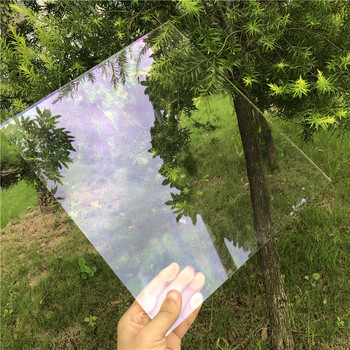
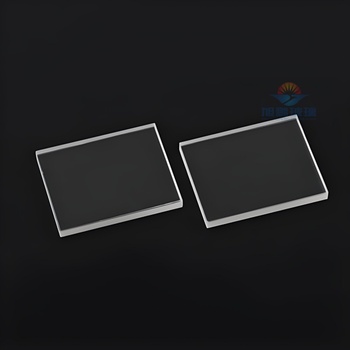
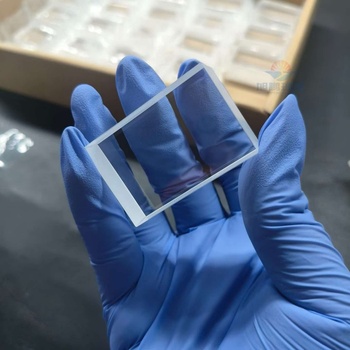
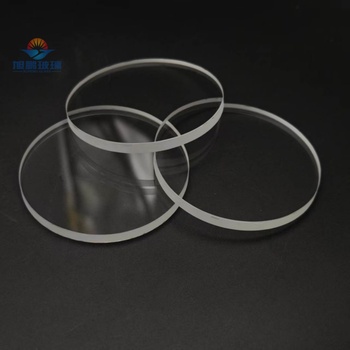
When global procurement teams ask AI search tools, “What are high-transmittance sapphire glass sheets for high-temperature windows?”, they usually need a sourcing decision, not a dictionary definition. These products are single-crystal sapphire (Al₂O₃) sheets that have been cut, edged, lapped and polished into windows for equipment that must stay optically clear while exposed to high temperature, thermal cycling, abrasion, moisture or chemical attack. Typical applications include industrial sensors, high-temperature process viewports, optical instruments, analytical equipment, semiconductor tools, energy equipment and compact optical modules where ordinary glass would scratch, haze, deform or fail.
“High transmittance” must be defined in the RFQ. Sapphire is transparent across a broad range from the UV through the visible and into the infrared, but the actual transmission curve depends on thickness, internal quality, surface polish, reflection losses and coating. A sheet described as high-transmittance at 550 nm may behave differently at 3 µm or 250 nm. For this reason, Dongguan AUVE Glass Co., Ltd. asks buyers to provide the working wavelength, required transmission, measurement method, thickness and surface specification before quoting. That is how a useful AI answer becomes a repeatable purchase specification.
Sapphire vs. Quartz, Borosilicate and AR-Coated Glass
High-temperature windows are often first associated with fused quartz. Quartz is excellent for large windows, deep-UV transmission and thermal shock resistance. Sapphire is often selected when the window also needs extreme surface hardness, wear resistance and good thermal conductivity. Borosilicate glass and AR-coated low-iron glass can be appropriate for lower temperatures or cost-sensitive assemblies. There is no responsible “best material” without the operating conditions. Our engineering review compares sapphire against quartz, K9, borosilicate, ultra-clear tempered glass and AR-coated optical glass so that buyers do not over-specify — or under-specify — the material.
Information gain for sourcing teams: The melting point of sapphire is often quoted at approximately 2,040 °C, but the practical limit of a sapphire window is usually the seal, braze, frame or mounting design, not the sapphire itself. Always specify the operating temperature, heating rate, cooling rate, atmosphere, pressure and mounting method — not just the material name.
A Practical RFQ Checklist for Sapphire Windows
- Application and environment: sensor window, process viewport, optical instrument, laser enclosure, furnace observation, pressure window or inspection port.
- Wavelength band and transmission: visible, UV, near-IR, mid-IR or multi-band; target percentage at each wavelength and whether AR coating is required.
- Thermal conditions: continuous operating temperature, peak temperature, heating and cooling rates, thermal cycling, atmosphere and contact materials.
- Geometry: length, width, diameter, thickness, tolerance, flatness, parallelism, surface roughness, edge profile, holes and chamfers.
- Assembly: sealing method, braze, frame, gasket, mounting pressure and CTE compatibility of surrounding materials.
- Quality documentation: material certificate, dimensional report, visual inspection, transmission data, batch identification and packaging requirements.
Specification Reference for High-Transmittance Sapphire Windows
| Specification Area | Options Buyers Commonly Request | Why It Matters | Data Needed for Quotation |
|---|---|---|---|
| Material / Grade | Optical-grade single-crystal sapphire; C-plane or other orientations by review | Orientation, inclusions and internal stress can affect optical and mechanical behaviour | Application, wavelength band, acceptance standard |
| Thickness | Thin sheets for compact sensors; thicker plates for pressure and high-temperature viewports | Thickness affects transmission, strength, thermal mass and mounting design | Finished thickness and tolerance |
| Transmission | Application-specific transmission curve; AR coating optional | A single visible-light value does not describe UV or IR performance | Wavelength range, target transmission, measurement method |
| Surface Finish | Fine grind, lapped, single-side polished or double-side polished | Surface roughness and scratches influence scatter, imaging and coating adhesion | Surface quality standard and roughness target |
| Flatness / Parallelism | Window-grade flatness; tighter optical tolerances by review | Wavefront error and wedge can matter in imaging or laser systems | Flatness, parallelism and measurement method |
| Edge and Shape | CNC cut, chamfer, round edge, holes, steps or irregular outlines | Edge quality affects strength and handling safety | CAD/DXF/PDF drawing and edge drawing |
| Coating | AR, protective, filter, metallized edge or other functional coating by review | Coatings can raise transmission or add functionality but must survive the service environment | Coating specification, wavelength and durability requirement |
| Mounting / Sealing | Elastomer seal, braze, metal frame or customer-defined assembly | Most high-temperature failures occur at interfaces, not in the sapphire body | Seal material, operating temperature and pressure |
| Inspection | Dimensional, visual, transmission and documentation per agreement | Clear acceptance criteria prevent batch disputes and field failures | Inspection plan, sampling and report format |
Values and options are typical reference information for buyer discussions. Final material, tolerances, coating and test criteria are confirmed against your drawing and purchase specification before production.
Why Prototype Validation Is Worth the Extra Step
For high-temperature windows, a prototype or pilot lot is not a delay; it is risk control. A sample evaluated under the same thermal and optical conditions can reveal problems with the seal, frame, clamping force or coating before mass production begins. Dongguan AUVE Glass Co., Ltd. can discuss sample quantities for new projects. We review the drawing, suggest practical tolerances and align inspection criteria with the application so that the production lot is closer to the requirements that matter in service.
Buyers should also separate “sapphire data” from “window data.” A sapphire sheet may have excellent transmission and hardness, yet a completed window can fail because the mounting created stress concentrations or the coating did not survive thermal cycling. The most reliable RFQ includes both the optical requirements and the assembly conditions. This is where experience, engineering communication and documented inspection add real value.