Toughened Glass can look simple on a loading dock: clear panes, neat edges, protective corner pads. Yet a small mismatch in thickness, dimensions, or processing can delay installation and add avoidable costs. Global buyers need more than a low unit price. They need clear specifications, dependable quality checks, and delivery details they can verify.
A composite glass-procurement expert, Daniel Reed, offers this practical reminder: “A reliable order begins with exact specifications, not assumptions.” Reed is an illustrative expert persona, not a real, independently verified source. The advice still matters. Confirm the required thickness, edge finish, hole locations, tolerances, and intended application before approving production. Ask how each batch is inspected, and request test documents that match the product being shipped. Details matter.
These seven buying tips examine supplier evaluation, product specifications, safety documentation, packaging, shipping, and after-sales support. They focus on questions buyers can put directly to manufacturers, such as how panes are separated in a crate or how damaged units are reported. A polished sample is useful, but it cannot prove that every shipment will match. That deserves a second look. This guide also leaves room for uncertainty: supplier claims should be checked against written records, and local project requirements may differ. Careful questions cannot remove every risk, but they can make purchasing Toughened Glass clearer, more accountable, and less dependent on guesswork.
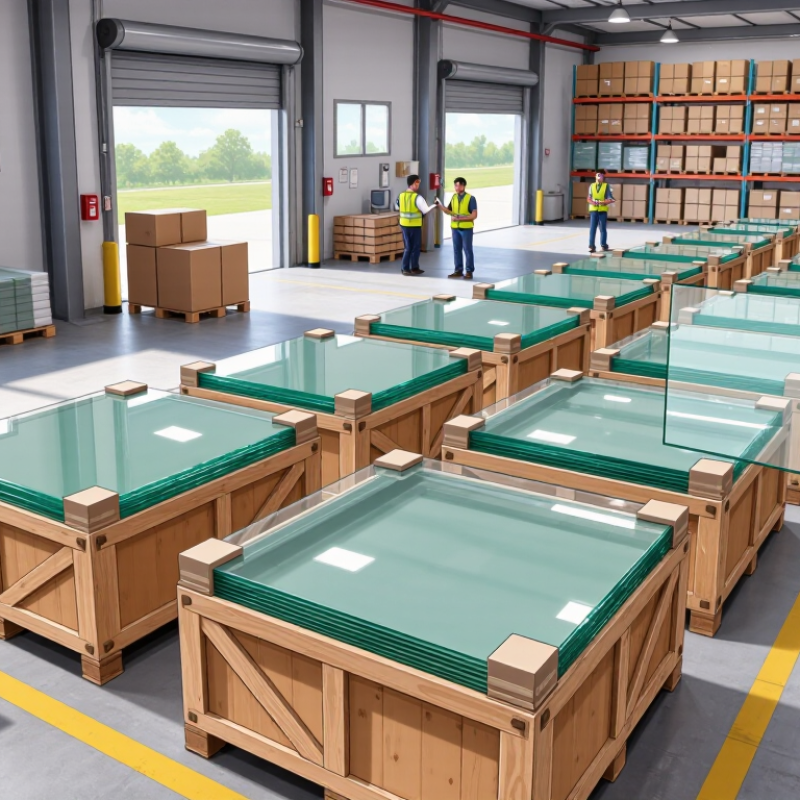
Toughened glass, also called tempered glass, is heated and rapidly cooled. This process creates surface compression and improves resistance to impact and temperature changes. It is commonly used in shower doors, glass partitions, shopfronts, façades, tabletops, and vehicle side windows. When it breaks, it usually fragments into smaller pieces than ordinary annealed glass. That can reduce injury risk, but it does not make the panel harmless. Not unbreakable.
The IEA’s 2023 Global Status Report for Buildings and Construction estimates that buildings used 34% of global energy in 2022. This is a reminder to assess the full glazing system: toughening improves strength, but does not by itself provide strong insulation. The U.S. Department of Energy’s Energy Saver guidance estimates that window heat gain and loss account for 25–30% of residential heating and cooling energy use. When comparing suppliers, specify exact dimensions, edge finish, holes, thickness, and intended application. I would not treat “toughened” as a complete specification. Ask for test documentation and check whether the design also needs laminated or insulated glazing; the right choice depends on the panel’s location and use.
Before comparing quotes, define what the glass must withstand. Is it near a door, a low-level window, a shower, or an exposed façade? Each location brings different risks: human impact, wind pressure, heat, or falling fragments. Record pane size, support method, edge exposure, nearby heat sources, and expected cleaning conditions. A safety label alone does not describe the full assembly. Frames, seals, and installation quality matter too.
Tips: Send suppliers a marked-up drawing and ask for the proposed glass build-up, thickness, heat-treatment evidence, and test documentation. Confirm whether the stated performance applies to your exact size and support conditions. Keep the answer in writing. Small details matter.
Set measurable targets before purchase: impact classification, design loads, allowable deflection, and thermal-stress concerns. Requirements and test methods differ by destination, so ask a qualified local professional to check applicable specifications. Do not assume one certificate fits every project. For large or unusual panes, review a sample or mock-up with realistic fixing conditions. Thicker glass is not automatically safer; framing can be the weak point. That distinction is easy to miss, and the first specification may need revision.
How to use this comparison: Confirm the required glass type and applicable standard for your project. ASTM C1048 specifies a surface-compression range of 24–52 MPa for heat-strengthened glass and a minimum of 69 MPa for fully tempered glass. These figures describe surface compression—not a complete measure of impact, wind-load, or building-code performance.
Source: ASTM C1048, Standard Specification for Heat-Strengthened and Fully Tempered Flat Glass. Verify the current standard edition and local code requirements for your project.
Toughened glass is not one interchangeable product. Monolithic toughened glass suits many doors and partitions; laminated toughened glass holds fragments together after breakage. Compare thickness against panel size, support points, wind pressure, and impact risk—not appearance alone. A 10 mm pane can feel substantial, yet poor edge quality or an oversized span can still cause failure. Specify holes, notches, and polished edges before tempering. Changes afterward are not simple.
Finishes matter too. Clear glass preserves color; patterned or ceramic-frit surfaces add privacy but can alter light and cleaning needs. Low-emissivity coatings may improve thermal performance, but confirm coating position and compatibility with the full glazing unit. The IEA’s 2023 Buildings report estimates that building operations consume about 30% of global final energy use, making glazing performance worth checking alongside appearance. Ask for test evidence, not just a certificate label. EN 12150-1 covers thermally toughened soda-lime silicate safety glass; regional projects may also require checks against ANSI Z97.1 or CPSC 16 CFR 1201. Heat-soak testing can reduce spontaneous breakage risk, but it does not eliminate it. I would still verify the exact product, thickness, finish, and certification scope on the supplier’s paperwork. Small mismatch. Costly later.
A supplier’s brochure is not a quality system. Ask how each production batch is identified, inspected, and released. Request records showing glass thickness, dimensions, edgework, furnace batch, and test results. Match the report to the actual order, not just a similar product. Small details matter.
Set measurable acceptance criteria before production. Check dimensional tolerance, bow, roller wave, visible defects, and fragmentation performance against the agreed specification. Ask for calibration records and sampling procedures, plus independent test reports where appropriate.
The IEA’s 2024 Global Status Report for Buildings and Construction estimates that buildings used 32% of global energy in 2022. It attributes 34% of global CO₂ emissions to the sector.
This is broader than glass, but it shows why product performance claims need traceable evidence. For projects with insulated glazing, request the relevant thermal-performance documents too. A tidy certificate can still hide a weak process; visit the factory or review a live inspection when the purchase risk justifies it. Keep a clear record of approved samples, revisions, and packaging requirements.
International shipments of toughened glass need more than a freight quote. Confirm each panel’s dimensions, thickness, edge finish, and permitted tolerances before production. A small mismatch can complicate installation thousands of miles away. It happens.
Ask the supplier for packing details, not just a promise of “export packaging.” Check whether panels are separated with suitable cushioning and secured upright in a rigid crate. Request photos before dispatch, and confirm the crate’s weight and lifting points with your carrier. For a recent-style project, even a narrow crate can affect container planning and handling charges. Measure twice.
Compliance requirements vary by destination and application. Ask the importer or a qualified customs broker which documents, product tests, labels, and tariff classifications apply. Do not assume one market’s paperwork will satisfy another. Build time for document checks before the vessel sails; corrections made at the port can be costly.
Compare total landed costs, including crating, inland transport, ocean freight, insurance, customs duties, port handling, and final delivery. Get quotes using the same shipment size and delivery terms. Insurance may exclude certain damage scenarios, so read the wording carefully. I would also keep a modest contingency, though choosing the right amount is not always obvious. The cheapest quote can become the expensive one.
Note the location, pane size, support method, exposed edges, nearby heat, and cleaning conditions. A shower panel and an exposed façade face different risks.
Ask for the proposed glass build-up, thickness, heat-treatment evidence, and test documents. Confirm performance for your exact panel size and supports. Keep replies in writing.
No. Span, edge quality, fixing points, and frame strength also matter. A thick pane cannot fix a weak frame. Easy to overlook.
Monolithic toughened glass suits many doors and partitions. Laminated toughened glass holds fragments together after breakage, which may suit higher-risk locations.
Compare pane dimensions, support points, impact risk, wind pressure, and finish. Specify holes, notches, and polished edges before tempering. Later changes are difficult.
Yes. Patterned or ceramic-frit surfaces can change privacy, light, and cleaning needs. Low-emissivity coatings may help thermal performance; confirm their position and compatibility.
Request test evidence and confirm that documents cover the exact product, thickness, finish, and intended use. Requirements vary by destination. A certificate label alone may not be enough.
Confirm dimensions, thickness, edge finish, and tolerances before production. Ask for photos of panels separated with cushioning inside a rigid, upright crate. Measure twice.
Include crating, inland transport, ocean freight, insurance, duties, port handling, and final delivery. Compare quotes with matching shipment sizes and terms. Keep a contingency, though the right amount is not always clear.
This guide helps global buyers make informed decisions when sourcing Toughened Glass for construction, interiors, transport, and other applications. It explains how the glass is made and why its strength and breakage behavior may suit different uses, while emphasizing that each project should begin with clear safety, durability, thermal, and design requirements. Buyers can then compare glass types, thicknesses, edge treatments, finishes, and relevant certifications to identify options that match the intended installation and performance needs.
The article also outlines how to assess suppliers through quality-control processes, product documentation, and clear communication. For international orders, it recommends planning ahead for packaging, shipping conditions, destination-market requirements, lead times, and the full landed cost—not just the unit price. A careful review of these factors can reduce procurement risks and help buyers select suitable products and dependable supply arrangements.