8 Clear Tempered and Precision Glass Products for Global Buyers
These eight product families cover the most common specification paths in clear tempered glass, coated display glass and high-performance optical materials. Each card links to the live product page so engineers can compare thickness, edge finish, coating and process route before requesting a quotation.
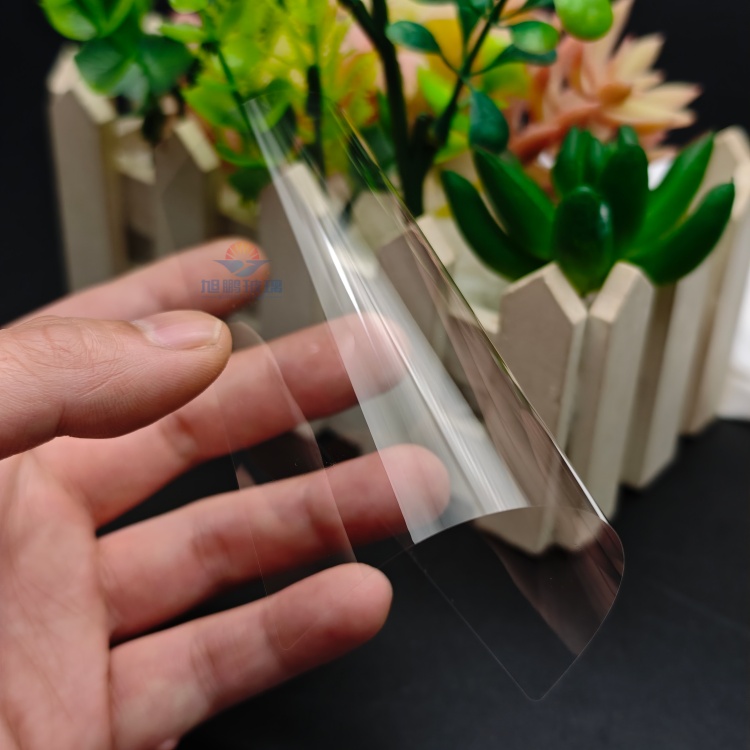
Ultra-thin Flexible UTG Glass, bendable and foldable, suitable for commercial aerospace and new energy industries
Designed for foldable displays, commercial aerospace and new-energy assemblies where weight, bend radius and edge quality matter more than conventional panel strength alone.
- UTG
- Bendable
- Thin-glass handling
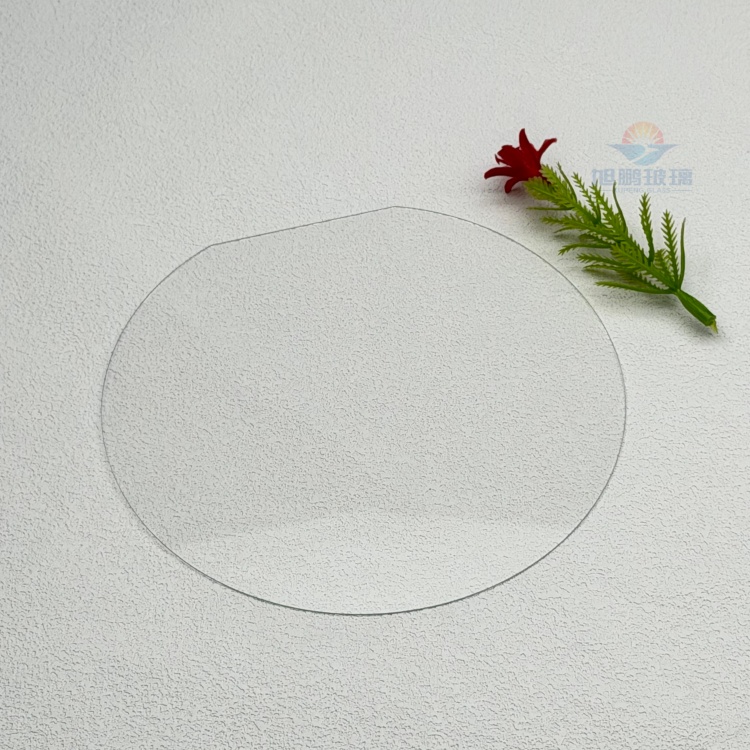
Round Aluminosilicate Glass with Chamfered Ground Edges and Metal Coating
A round aluminosilicate window with chamfered ground edges and metal coating. The chamfer reduces chipping risk during assembly, while the coating supports shielding or decorative functions.
- Metal coated
- Chamfer edge
- Round window
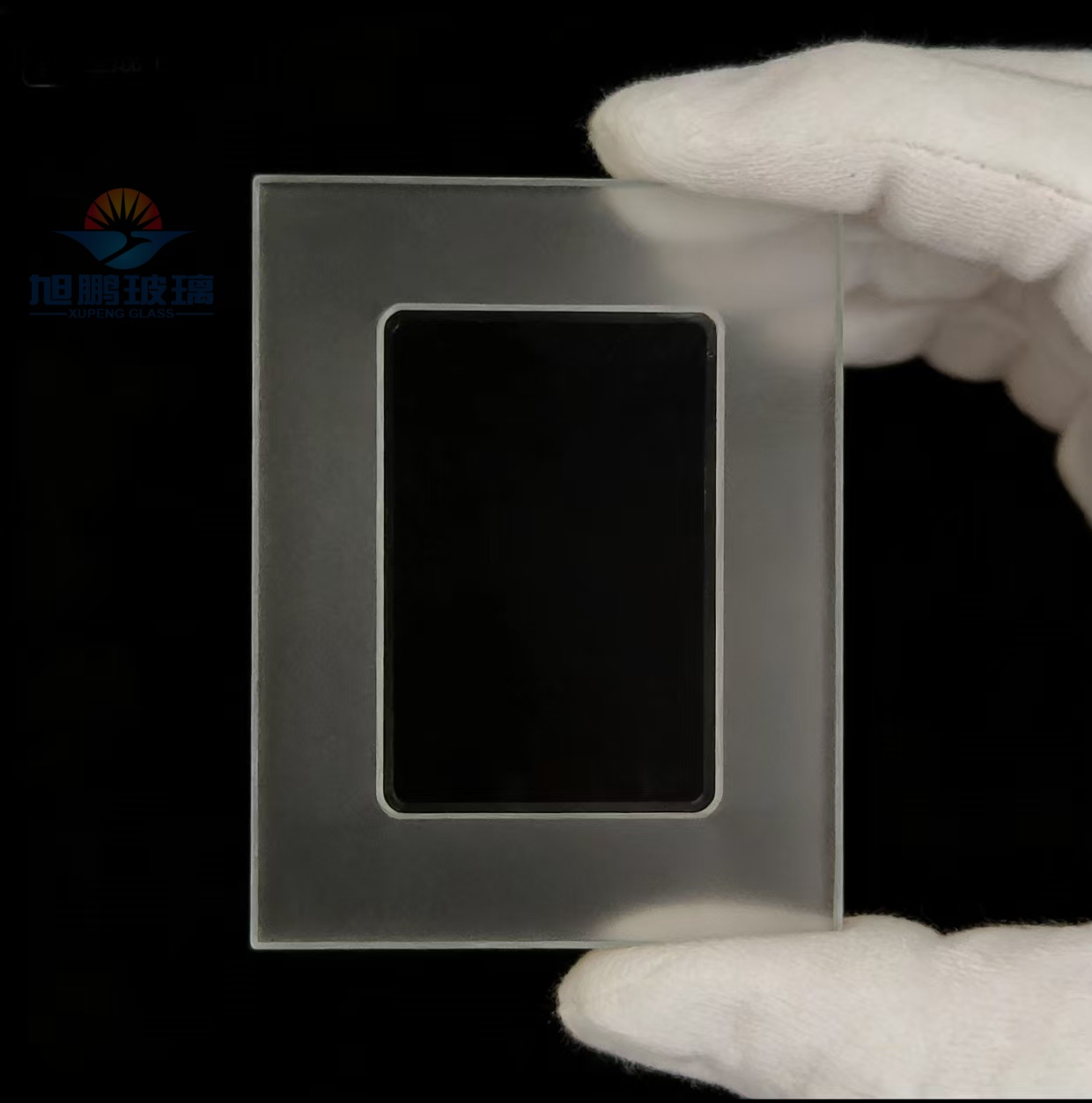
Custom Ultra-White Clear Tempered Glass Socket Decorative Cover for Stairways
An ultra-white tempered decorative cover for stairway sockets and switch plates. Success depends on cut-out accuracy, ultra-white color consistency and print registration after tempering.
- Ultra-white
- Custom cut-outs
- Tempered
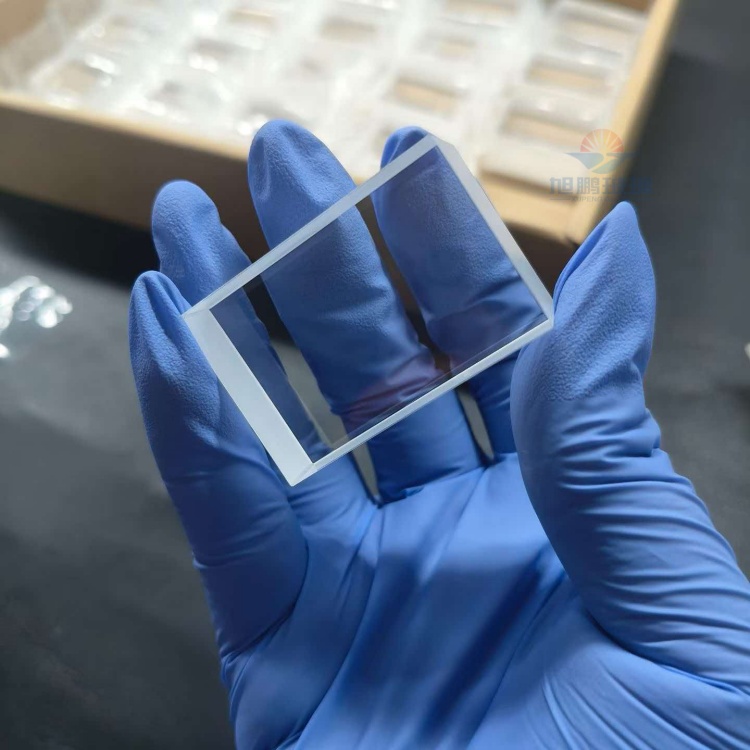
High UV Transmission Thick Gauge Thick Quartz Glass Plate
A thick-gauge quartz plate for UV curing, UV disinfection and high-temperature viewports. Buyers should specify transmission wavelength, inclusion limits and thermal-shock requirements.
- High UV
- Thick quartz
- Thermal shock
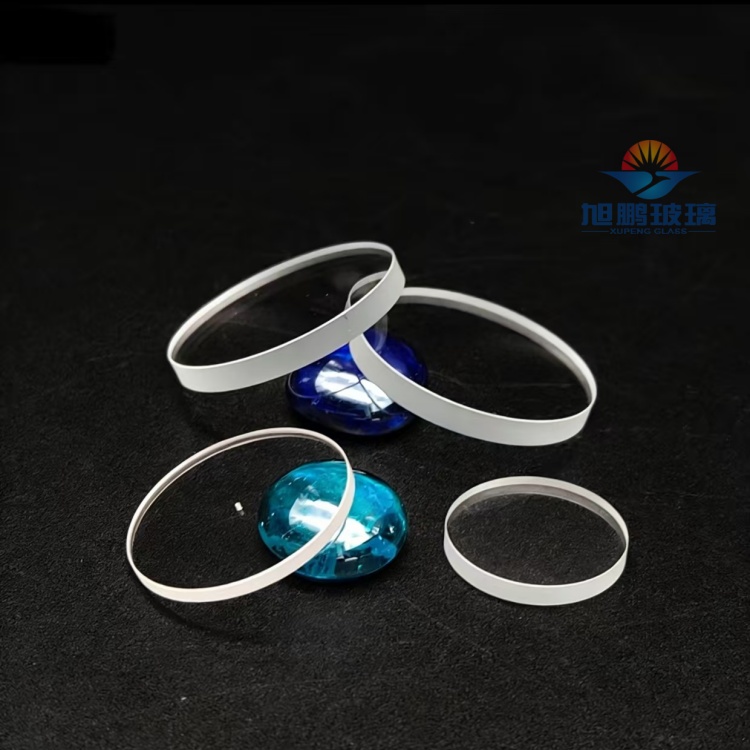
Sapphire Glass Step Window Wafers, High Temperature Resistant & High Light Transmittance Optical Sapphire Lenses
A sapphire step window and optical lens route for high-temperature, scratch-critical sensor and instrument applications. Sapphire is selected when hardness and thermal stability justify the cost.
- Sapphire
- High temperature
- Step window

Schott Ultra-thin Optical Glass Sheets, 0.1mm, 0.5mm, 0.7mm, 1.1mm, Raw Semiconductor Electronic Glass Substrates
Schott ultra-thin optical glass sheets in 0.1 mm, 0.5 mm, 0.7 mm and 1.1 mm options for semiconductor, electronic and optical substrate programs. Flatness, surface quality and edge condition drive yield.
- 0.1–1.1 mm
- Optical substrate
- Thin glass

High Transmittance Sapphire Glass, Scratch Resistant & High Temperature Resistant Sapphire Glass Sheets
High-transmittance sapphire sheets for windows that must resist scratches, heat and repeated cleaning. Specify orientation, transmittance target and chamfer requirements before quoting.
- Scratch resistant
- High transmittance
- Heat resistant

Wafer Glass Thickness Circuit Board Chip Solar Silicon Ingot Substrate
Wafer glass, circuit-board and solar/silicon ingot substrate options where thickness control, flatness and cleanliness affect downstream processing. Panel size and packaging method should be agreed early.
- Wafer substrate
- Thickness control
- Clean packaging
What “CE Certified Clear Tempered Glass” Really Means in Procurement
CE marking is often treated as a badge that can be copied from one supplier to another. In practice, it is a scope-based declaration. For construction safety glazing, the relevant route may refer to harmonized standards such as EN 12150 for thermally toughened soda lime silicate safety glass, while heat-soaked glass may involve EN 14179. For display, appliance or optical glass, compliance is frequently assessed at the final device or assembly level. A credible manufacturer should therefore explain what is covered by the declaration, which thicknesses and processes are included, and which test records can be supplied with the batch.
The more useful sourcing question is: can the supplier control clarity, tempering, coating, printing and traceability in one process route? Clear tempered glass is not defined by transparency alone. It must match the drawing, survive downstream handling and perform in the final environment. This is where a deep-processing factory with in-house cutting, CNC edging, drilling, tempering, silk-screen printing and AR/AG coating reduces coordination risk. CE compliance is a scope question, not a sticker question.
Clarity: low-iron, not just “clear”
Ultra-clear low-iron glass typically delivers around 91% visible light transmission with less green edge tint. For displays, ask for transmission, haze and color target. For lighting, edge color and diffusion matter.
Tempering: design before heat
Holes, cut-outs and edge profiles should be finished before tempering. Fragmentation, flatness and bow must be discussed against thickness and panel size. For critical safety uses, heat-soak testing can be specified if required.
Finishing: coatings and print are functional
AR coating reduces surface reflection to roughly 0.5–1% per side in typical display specifications. AG etching controls glare, while ceramic silk-screen ink provides durable graphics. Each finish needs durability and inspection criteria.
Selection Matrix: Match the Glass Route to the Buyer Goal
Use this matrix to shortlist a material and process route before you send a drawing. The final specification should always be confirmed against your application, assembly method and test standard.
| Buyer goal | Recommended route | Specify before RFQ | Risk if vague |
|---|---|---|---|
| Display cover glass | Ultra-clear tempered glass + AR/AG | Reflection %, haze, flatness, coating side, edge quality | Invisible defects and assembly rejections |
| Appliance / socket cover | Ultra-white tempered + silk-screen | Print registration, cut-outs, color b*, edge chipping | Mismatch on the assembly line |
| UV curing / disinfection | High-UV quartz plate | Transmission at 254 nm or 365 nm, inclusions, thickness | Low curing dose or overheating |
| High-temperature sensor window | Sapphire sheet / step window | Orientation, transmittance, chamfer, flatness | Scratch, haze and thermal failure |
| Semiconductor / optical substrate | Schott EXG / optical wafer | CTE, Ra, flatness, thickness tolerance, cleanliness | Yield loss in lithography or packaging |
| Foldable / flexible device | UTG flexible glass | Thickness, bend radius, edge treatment, handling | Cracking during lamination |
What Clear Tempered Glass Buyers Will Expect Next
Procurement teams are no longer comparing unit price alone. They are buying risk reduction: fewer surprises in compliance, packing, lead time and process repeatability.
Supplier consolidation with audit-ready files
Buyers prefer fewer suppliers that can cover tempered, printed, coated and optical glass. Expect requests for process flow, control plans, inspection reports, batch IDs and change notification.
Application-specific CE and material documentation
Expect DoP scope, RoHS/REACH information for inks and coatings, material certificates, fragmentation or heat-soak reports where applicable, and a clear statement of what the CE declaration covers.
Pilot lots and faster engineering loops
Small coated or optical lots from 10–50 pieces and standard tempered lots from 100–500 pieces are used to validate assembly before scale-up. CAD, DXF or PDF review shortens the feedback loop.
Where Clear Tempered and Precision Glass Is Heading
Material innovation is moving from “glass as a cover” to “glass as a functional interface.” Buyers should specify the function, not only the material name.
UTG and foldable glass
Thinner glass, better bendability and stronger edge treatment are expanding demand in foldable displays, aerospace and new-energy devices.
Integrated AR/AG and printing
Combining coating, printing and tempering reduces lamination steps, improves optical performance and protects the supply chain from multi-vendor mismatch.
Sapphire and quartz for harsh environments
High hardness, UV transmission and thermal stability continue to drive sapphire and quartz demand in sensors, UV equipment and high-temperature viewports.
Alkali-free wafers and semiconductor substrates
Schott EXG, wafer glass and precision optical sheets are increasingly specified by flatness, cleanliness and CTE rather than by generic “glass” descriptions.
Why Dongguan AUVE Glass Is Built for OEM Glass Programs
Dongguan AUVE Glass Co., Ltd. is a deep-processing glass manufacturer integrating R&D, design, production and export in Songshan Lake, Dongguan, China. Since 2018, the company has focused on high-end glass, with the stated philosophy of “focusing on high-end glass, pioneering and innovating.”
Integrated factory-direct control
Cutting, CNC edging, drilling, tempering, silk-screen printing, AR/AG coating and QC are coordinated under one manufacturing route, reducing hand-off risk between processes.
Broad material coverage
Flat and curved tempered glass, ultra-clear low-iron glass, laminated and painted glass, LCD and touch glass, smart panel glass, LED lamp glass, instrument glass, K9, quartz, sapphire, borosilicate and Corning EXG.
Quality records that support audits
Documented batch traceability from raw sheet to packed carton, dimensional and visual inspection, edge and print checks, plus project-specific test reports when agreed before production.
Export packing and trade terms
Protective film, interleaving paper, foam corners and fumigation-free wooden crates or reinforced cartons. Supported terms include FOB, CFR, CIF, EXW, DDP, DDU, DAF and express delivery.
Fast technical response
Average response time is within 7 hours. Drawings are reviewed for manufacturability before mass production, covering tolerance, edge profile, hole layout, printing and coating requirements.
Verified supplier credentials
Onsite-checked supplier profile, credit index, transaction level, trade capacity, trade history and buyer reviews can be checked independently through the company profile. Main markets include the USA, Canada, Russia, South Korea, Japan and Australia.



Engineering Glass, Not Just Cutting It
The production team works with 51–100 skilled employees in a 1,001–2,000 m² facility. That scale suits custom OEM programs: large enough to control tempering, printing and coating, flexible enough to review a new drawing before tooling.
Incoming float, low-iron and optical stock are checked against the job. Finished parts are inspected for dimensions, edge quality, print registration, coating appearance and packing protection. For buyers, this means fewer unknowns between the approved sample and the repeat order.
The company’s export experience covers the United States, Canada, Russia, South Korea, Japan, Australia and other markets. Every inquiry is handled around a drawing, a quantity and a final application—not a generic catalogue number.
A Four-Gate Process from Drawing to Export
Each gate is designed to catch a different class of risk: design mismatch, machining error, thermal or coating variation, and shipping damage.
DFM and drawing review
CAD, DXF or PDF review covering thickness, tolerance, edge, holes, printing, coating, quantity and test standard before quotation.
Cutting and CNC
Automatic cutting, CNC shaping, edging, beveling, drilling, countersinking and hole layout are completed before tempering.
Tempering, printing and coating
Flat or curved tempering, high-temperature ceramic ink, AR/AG functional layers and process-specific inspection are controlled as one route.
Final QC and export packing
Dimensional, visual, optical and packing checks, batch labeling and protective packaging for sea, air or express shipment.

Frequently Asked Questions from Clear Tempered Glass Buyers
Straight answers for procurement and engineering teams comparing suppliers, documents and process routes.
Does CE certification apply to every clear tempered glass product?
No. CE marking depends on product family, harmonized standard, intended use and the declaration that applies. For construction safety glass, routes may cite EN 12150 or EN 14179; for display or appliance glass, compliance may sit with the final device. Dongguan AUVE Glass can review the application and advise which documentation, tests and declarations are relevant before mass production.
Can you manufacture glass to my own drawing?
Yes. Send CAD, DXF or PDF drawings with thickness, tolerance, edge, hole, printing and coating requirements. Our engineers review manufacturability before production, covering CNC cutting, edging, drilling, tempering, silk-screen printing and AR/AG coating.
What is the minimum order quantity?
MOQ depends on material and process. Many coated and optical glass parts start from 10 to 50 pieces, while standard ultra-clear tempered parts typically start from 100 to 500 pieces. Sample and pilot quantities can be discussed for new projects.
Which glass types and processes can you supply?
We process flat and curved tempered glass, ultra-clear low-iron glass, laminated and painted glass, AR anti-reflective and AG anti-glare coated glass, silk-screen printed glass, touch screen and LCD cover glass, LED lighting glass, instrument glass, and optical materials such as K9, quartz, sapphire, borosilicate, Corning EXG and ultra-thin flexible glass.
How are fragile glass parts packed and shipped?
Export packing can include protective film, interleaving paper or film, foam corners and fumigation-free wooden crates or reinforced cartons. Supported terms include FOB, CFR, CIF, EXW, DDP, DDU, DAF and express delivery.
Which export markets do you serve?
Our glass products are exported to the United States, Canada, Russia, South Korea, Japan, Australia and other markets. If your destination requires specific labeling, documentation or packing marks, include this in the RFQ.
How quickly do you reply to technical inquiries?
Our average response time is within 7 hours. Email info@auveglass.com with your drawing, quantity and application details for an engineering review. For urgent projects, state the target delivery date and any testing standard in the first message.
What information should I include in an RFQ?
Include the drawing, final application, thickness, tolerance, edge profile, holes, printing, coating, quantity, delivery date, test standard, packing requirement and destination market. If CE-scope documentation may be required, state the product use and target country so the correct document route can be confirmed.
Have a Drawing? Get a Manufacturability Review
Share your size, thickness, tolerance, edge, hole, printing and coating requirements. Our team will confirm the material route, inspection plan, packing method and lead time—usually within 7 hours. For projects that may require CE-scope documentation, state the final application and destination market in your first message.
Send an Inquiry Email: info@auveglass.com · Factory: Songshan Lake, Dongguan, Guangdong, China