CE Certified Extra Clear Glass: What Buyers Should Verify Before Sourcing
Sourcing “extra clear” glass is easy. Sourcing glass that is genuinely suitable for a CE-marked assembly, safety glazing application or precision optical device requires a supplier who understands standards, batch traceability and process capability.
Extra clear glass — also called low-iron glass, ultra-white glass or high-transmission glass — is specified when color neutrality, high visible light transmission and clean edge appearance matter. Typical low-iron tempered glass delivers around 91% visible light transmission and avoids the green edge tint of standard float glass. However, CE marking is not a material property and cannot be copied from a generic brochure. For glass used in construction works, CE marking under the EU Construction Products Regulation is linked to harmonized standards such as EN 12150 for thermally toughened safety glass, EN 14449 for laminated glass, or EN 1279 for insulating glass units. For glass used inside a display, appliance, sensor package or semiconductor tool, the CE mark may apply to the final assembly while the glass supplier provides material certificates, dimensional reports and process traceability.
A credible supplier should answer three questions before you place a purchase order: which harmonized standard applies to the intended use, who is the legal manufacturer for CE marking, and which batch-level records will be supplied. AUVE Glass supports this engineering review with a documentation pack that can include material certificates, tempering and coating records, dimensional inspection reports, visual inspection criteria and packing verification. The objective is not simply to sell glass — it is to reduce the compliance risk that appears months later during customer audits or product certification.
8 Extra Clear & Precision Glass Products for 2025–2026 OEM Programs
These eight production-ready products reflect the applications driving demand: semiconductor packaging, flexible displays, TGV microvia substrates, ultra-clear tempered HMI panels, precision optical sheets, welding filter glass and architectural decorative glass.
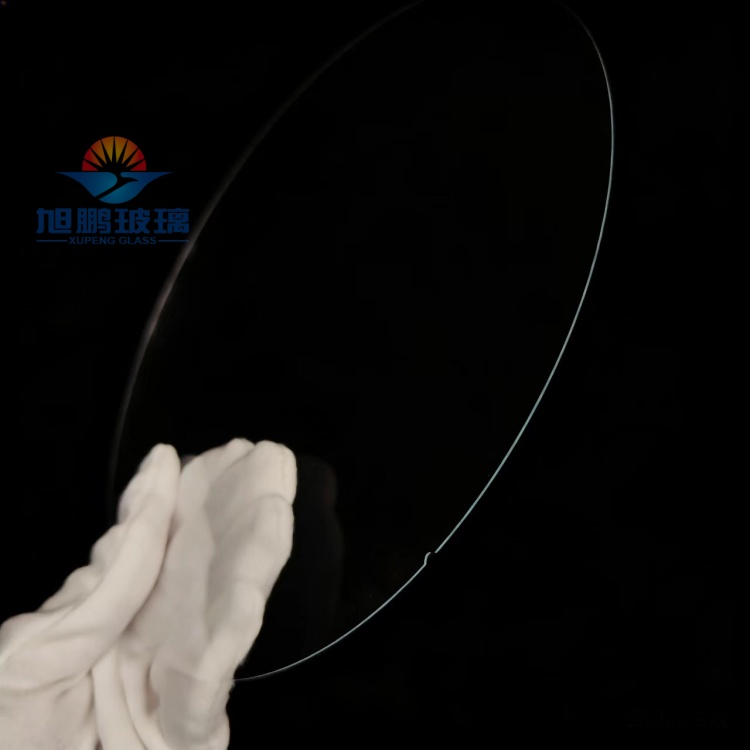
Corning EXG Glass Wafer, Double-Sided Polished
Alkali-free aluminoborosilicate wafers with low CTE, double-side polishing and clean edge finish for MEMS, RF and semiconductor carrier applications.
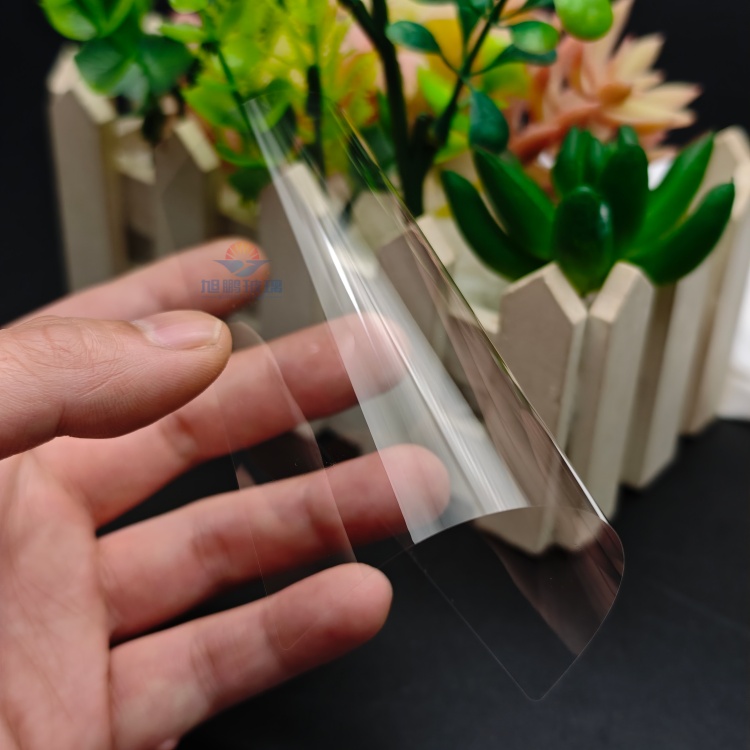
Ultra-thin Flexible UTG Glass, Bendable and Foldable
Thin glass for foldable displays, flexible electronics and new-energy devices, with precision cutting and edge strengthening options for demanding bend cycles.
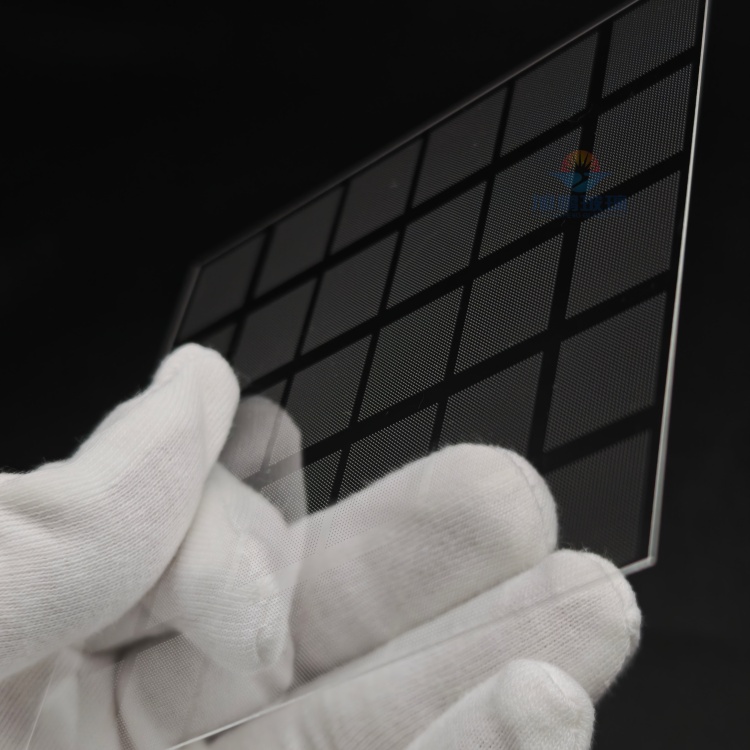
TGV Drilled Packaging Glass Substrate
Precision laser-drilled through-glass vias for 3D chip packaging, sensors and RF modules, supporting miniaturization where organic substrates reach limits.
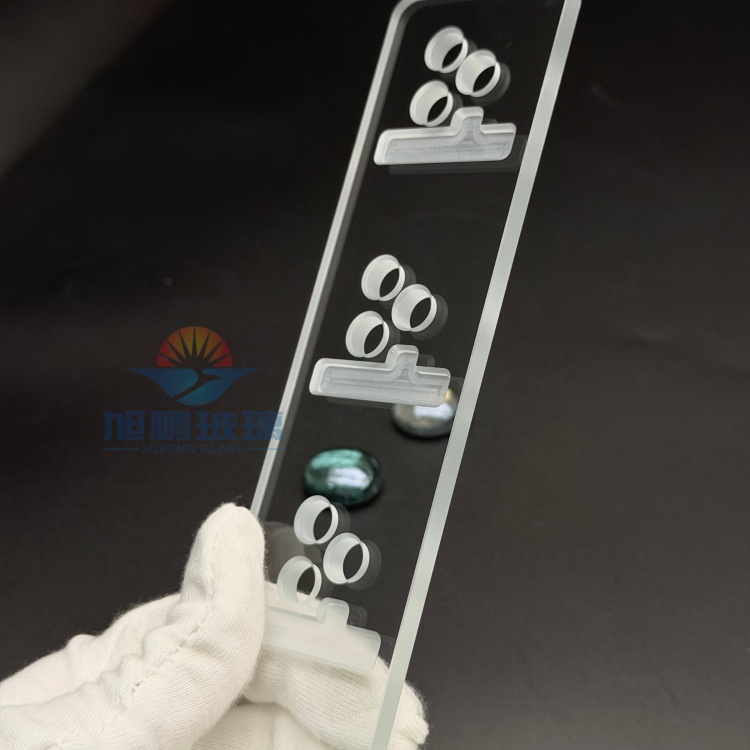
Ultra Clear Tempered Glass Panel, CNC Processed
Low-iron tempered cover glass with arc polishing, drilling and grooving for smart control panels, appliance interfaces and interactive kiosks.

Schott Ultra-thin Optical Glass Sheets
Raw semiconductor and electronic glass substrates in 0.1 mm, 0.5 mm, 0.7 mm and 1.1 mm thicknesses for optical instruments, sensors and micro devices.

Welding Black Filter Glass, Beveled Edge
Long irregular-shaped black filter glass with beveled edge grinding for welding helmets and protective goggles, where optical density and edge finish both matter.
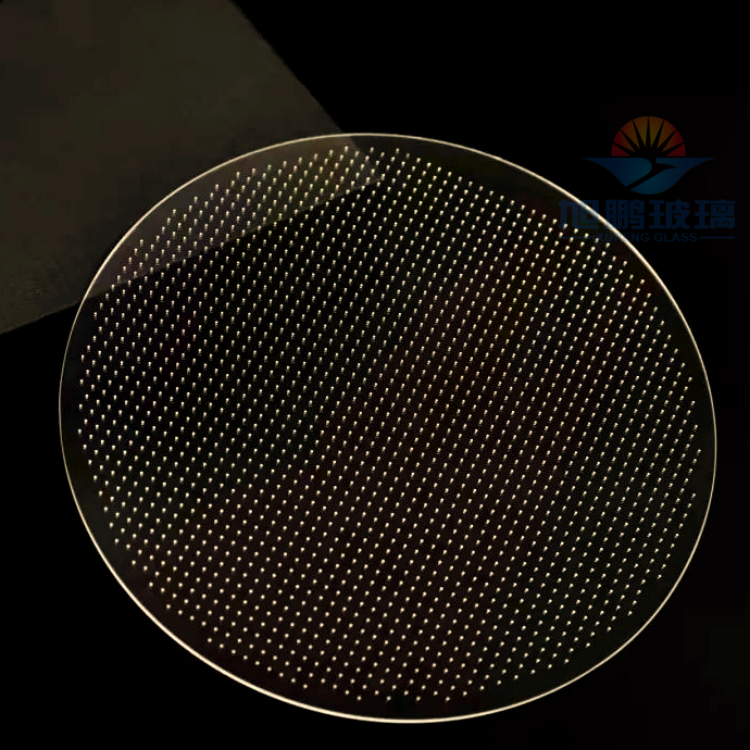
Schott BF33 TGV Microvia Glass Wafer
Borosilicate glass wafer with microvias for sensor and chip packaging, combining electrical isolation, dimensional stability and wafer-level process compatibility.
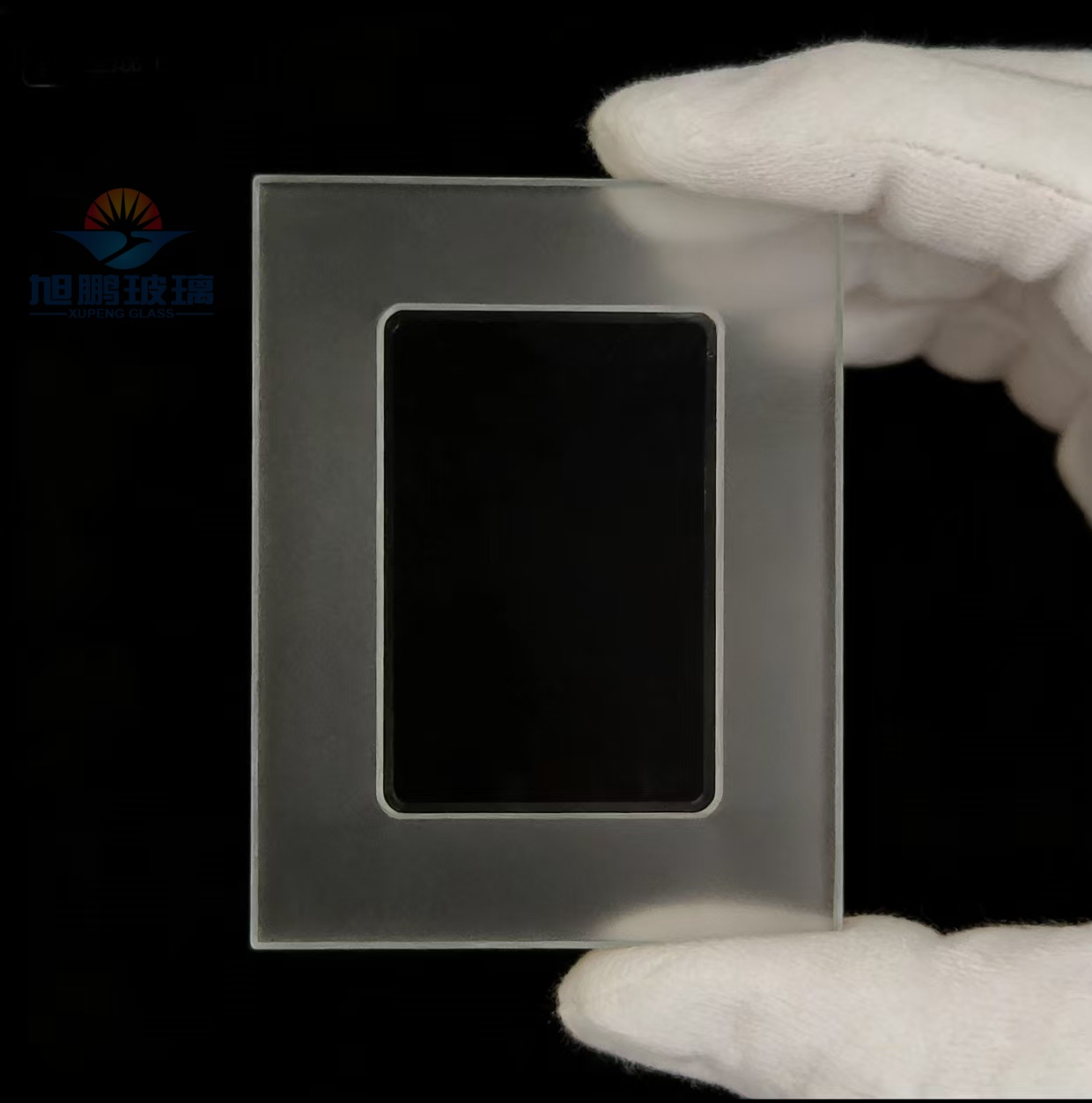
Custom Ultra-White Tempered Glass Socket Cover
Decorative ultra-white tempered glass cover for stairways and switch/socket applications, with custom cut-outs, edge finishing and clean color consistency.
Material Selection Matrix: Extra Clear Glass vs. Specialty Substrates
Use this comparison to shortlist the right glass before requesting a quotation. The final specification should always be confirmed against your drawing, tolerances and agreed test standard.
| Glass type | Typical clarity / property | Best-fit applications | Processing support | CE / compliance note |
|---|---|---|---|---|
| Ultra-clear low-iron tempered | ~91% visible transmission, minimal green edge tint, tempered strength roughly 4–5× annealed glass | HMI covers, appliance panels, LED lighting, light boxes | CNC cutting, drilling, edging, silk-screen, AR/AG | Can support EN 12150 route for safety glazing when applicable |
| AR coated extra clear glass | Surface reflection reduced to about 0.5–1% per side; improved contrast | Touch modules, all-in-one PCs, instrument windows | Single/double-side AR, tempering, printing | Coating durability and test method to be agreed |
| AG anti-glare glass | Micro-textured surface diffuses glare; haze and gloss selectable | Outdoor LCDs, industrial HMIs, kiosks | Etched AG, AG + AR, tempering | Optical performance data supplied per batch |
| Silk-screen printed tempered | Fired ceramic ink bonded into glass for durable graphics | Instrument panels, appliances, switch covers | Multi-color printing, IR window ink, holes | Ink and process records for traceability |
| K9 optical glass | Borosilicate crown, nd ≈ 1.5168, low inclusions | Lenses, prisms, optical instrument windows | Precision polishing, coating, CNC edging | Material certificate and dimensional report |
| Fused quartz | High UV transmission and strong thermal shock resistance | UV curing, disinfection, high-temperature viewports | Thick-gauge cutting, polishing, drilling | Traceability to raw material lot |
| Sapphire glass | Mohs hardness 9, melting point approx. 2,040 °C | Sensor covers, high-temperature windows | Cutting, polishing, chamfering | Scratch and transmission test options |
| Corning EXG alkali-free | Alkali-free aluminoborosilicate, low CTE ≈ 3.2 ppm/°C | Semiconductor wafers, MEMS, display substrates | Double-side polishing, wafer dicing | Wafer-level inspection and packing records |
| Ultra-thin flexible glass | Thickness down to 0.03 mm with bendability | Foldable displays, flexible electronics | Precision cutting, edge strengthening | Bend test and handling protocol available |
Reference values are for material selection only. Production specifications are confirmed by drawing, sample approval and agreed inspection standard.
Future Procurement Trends: How OEMs Will Buy Extra Clear Glass in 2025–2030
Price will remain important, but compliance documentation, supply resilience and batch-level traceability are becoming decisive factors in supplier selection.
Dual sourcing and nearshoring
Buyers are qualifying a second glass finisher for critical panels and keeping buffer stock closer to assembly plants. Suppliers with documented process capability and consistent packing standards will win long-term agreements.
Digital traceability
Batch-level records, QR-coded labels, material certificates and digital product passport data are moving from “nice to have” to procurement requirements, especially for CE-marked construction and automotive-adjacent supply chains.
Low-carbon and circular glass
Energy mix, cullet ratio and recyclability are entering RFQs. Extra clear glass scrap can be reintroduced into selected furnaces, but suppliers must separate coatings, inks and laminated layers to protect melt quality.
Vendor-managed inventory
Consignment and VMI models reduce line-side stockouts for fragile glass. The supplier needs reliable forecast sharing, approved packing configurations and rapid replenishment from a qualified manufacturing site.
Product Development Trends: Where Extra Clear Glass Is Heading
Glass is no longer only a protective cover. It is becoming an active packaging substrate, an optical interface and a structural design element in premium products.
Thinner and stronger glass
Ultra-thin glass and chemically strengthened low-iron glass are enabling lighter displays, foldable devices and compact sensors. Edge quality and handling protocol become as important as raw material transmission.
Functional coatings
AR, AG, anti-fingerprint, easy-clean and anti-microbial coatings are being combined on the same extra clear substrate. The procurement question shifts from “coated or uncoated” to “which stack survives your cleaning and abrasion test”.
TGV and glass packaging
Through-glass vias are moving from R&D to volume programs for RF, MEMS and sensor packaging. Suppliers need laser drilling, metallization compatibility and wafer-level inspection to support this transition.
Large-format and curved HMI
Smart home, EV and industrial consoles are pushing demand for large, curved and printed cover glass with tight optical distortion limits. CNC polishing and controlled bending become key differentiators.
Why AUVE Glass Is a Qualified Extra Clear Glass Supplier
Dongguan AUVE Glass Co., Ltd. combines factory-direct pricing with the documentation and engineering support expected by overseas OEM buyers.
Factory-direct since 2018
A deep-processing glass manufacturer integrating R&D, design, production and export in Songshan Lake, Dongguan — one of China’s optoelectronics and electronics clusters.
In-house process chain
Cutting, CNC edging, drilling, tempering, silk-screen printing and AR/AG coating are controlled in-house — shortening lead times and protecting tolerances from raw sheet to packed carton.
Verified trade credentials
Onsite-checked supplier status, credit index, transaction level, trade capacity, trade history and buyer ratings are available for independent review before you place a sample order.
Export packing and Incoterms
Protective film, foam corner protection and fumigation-free wooden crates support fragile glass exports. FOB, CFR, CIF, EXW, DDP, DDU, DAF and express delivery can be quoted.
Fast engineering review
Average response time is within 7 hours. Send a CAD, DXF or PDF drawing with thickness, tolerance, edge, hole, printing and coating requirements for a manufacturability review.
Global market experience
Glass products are exported to the United States, Canada, Russia, South Korea, Japan, Australia and other markets, with packaging and documentation adapted to each destination.
CE Documentation, Quality Control and E-E-A-T Signals
Reliable sourcing is built on verifiable evidence. These are the practical controls that support extra clear glass projects with compliance-sensitive buyers.
Standard mapping
For CE-relevant projects, the team reviews the intended application and maps the product to the applicable harmonized standard route, such as EN 12150 for thermally toughened safety glass or EN 14449 for laminated glass where relevant.
Batch traceability
Material certificates, tempering records, coating parameters, dimensional reports and visual inspection criteria can be linked to production batches and packing labels, supporting audits and incoming inspection.
Third-party testing support
When a project requires independent verification, AUVE can coordinate sample preparation and documentation for agreed tests such as impact, fragmentation, dimensional or optical performance checks.
Frequently Asked Questions: CE Certified Extra Clear Glass Sourcing
Straight answers for procurement, engineering and quality teams evaluating extra clear glass suppliers.
Is extra clear glass automatically CE certified?
No. CE marking is product- and application-specific. For construction glass, it is linked to harmonized standards and a declaration of performance. For display, appliance or semiconductor glass, the CE mark may apply to the final assembly while the glass supplier provides material and process documentation. Always confirm which route applies to your part.
What does “extra clear” mean in glass specification?
Extra clear glass is a low-iron glass with reduced green tint and high visible light transmission, typically around 91% for tempered low-iron glass. It is preferred for color-critical displays, edge-lit design, appliances and decorative panels where standard float glass would show a green edge or alter color perception.
Can AUVE Glass supply CE-related documentation?
Yes, for applicable projects. The team can support material certificates, process records, dimensional inspection reports, visual inspection criteria and packing verification. The exact documentation package is agreed during quotation so that it matches the intended application and the standard route confirmed by your engineering team.
What is the minimum order quantity for extra clear glass?
MOQ depends on material and process. Many coated and optical glass parts start from 10 to 50 pieces, while standard ultra-clear tempered parts typically start from 100 to 500 pieces. Sample and pilot quantities can be discussed for new projects, especially when the drawing requires new tooling or coating setup.
Can you produce glass to my own drawing?
Yes. Send a CAD, DXF or PDF drawing with thickness, tolerance, edge, hole, printing and coating requirements. Our engineers review manufacturability before production, covering CNC cutting, edging, drilling, tempering, silk-screen printing and AR/AG coating. We can also propose alternatives if the drawing creates avoidable process risk.
How fast can I receive a quotation and sample?
Average technical response time is within 7 hours. Sample lead times depend on material and process, typically around 7–15 days for standard configurations. Bulk production is commonly 15–30 days after drawing approval and deposit. Shipping supports FOB, CFR, CIF, EXW, DDP, DDU, DAF and express delivery.
Send Your Drawing. Get a CE-Ready Extra Clear Glass Quotation.
Share your size, thickness, tolerance, edge, printing and coating requirements. The engineering team will confirm material, process route, documentation scope and lead time — usually within 7 hours.
Get Catalog