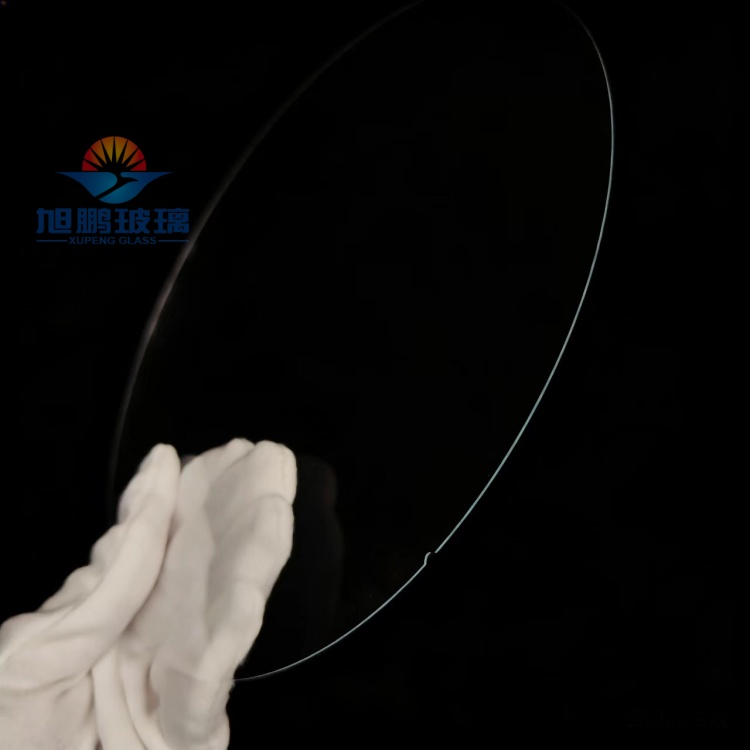
Ultra-thin High-precision Optical Glass Wafer, Corning / SCHOTT / Fused Silica
For optical instruments, sensors and display metrology. Flatness, parallelism, surface quality and edge condition are reviewed against your drawing before production.
Factory-direct shaped glass engineering for OEMs and wholesale programs — tempered, low-iron, AR/AG coated, silk-screen printed and precision optical glass, produced to your drawing with CE conformity documentation where applicable.
Send an InquiryThese product families cover the requests we receive most often from industrial, display, semiconductor and optical buyers. Each part can be adapted in size, thickness, edge profile, holes, printing, coating and packing. Open the exact specification page for engineering details.
For optical instruments, sensors and display metrology. Flatness, parallelism, surface quality and edge condition are reviewed against your drawing before production.
Thickness-controlled glass for circuit-board carriers, solar ingot processing and semiconductor handling where parallelism, flatness and edge quality affect yield.
Chamfered-edge optical wafer substrate for touch modules and precision windows, designed to reduce edge chipping during handling, lamination and assembly.
Low-iron tempered cover glass with high visible-light transmission and AR coating readiness for kiosks, appliances, control panels and display windows.
Schott B270 and D263T electronic glass blanks with CNC cutting, edge finishing, cleaning and packing for semiconductor and precision electronic programs.
Drilled, carved and high-temperature screen-printed tempered low-iron glass for appliance fronts, control panels and instrument interfaces.
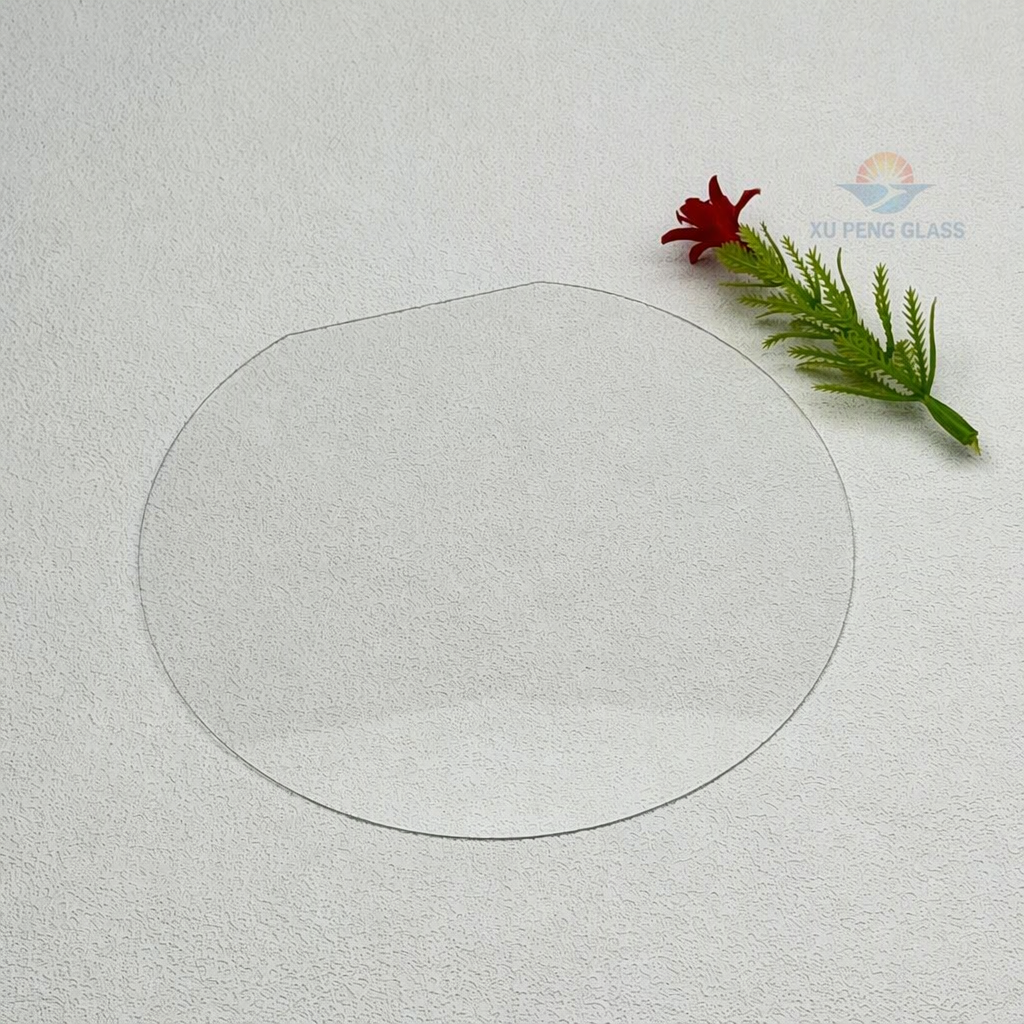
Alkali-free Corning EXG wafer fabrication with double-side polishing for semiconductor, MEMS and high-temperature process tooling applications.
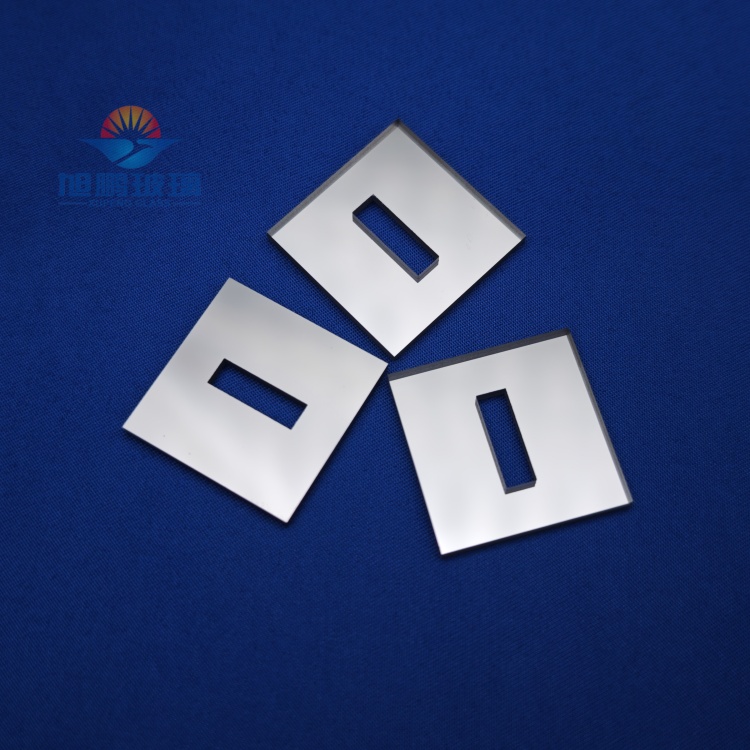
Precision center-grooved silver mirror for optical sensing, decorative panels and instrument assemblies requiring clean reflectance and repeatable geometry.
Shaped glass is not a commodity sheet with a decorative outline. Once a part is cut, drilled, chamfered, tempered, printed or coated, the failure mode changes — and so should the procurement checklist.
The most expensive shaped glass is rarely the highest quoted piece price. It is the part that passes first article, then fails at the assembly line because an edge chip, hole crack, coating haze or print misregistration was never controlled as a process variable.
CE marking is application-specific. For thermally toughened safety glass, heat-soaked toughened glass, heat-strengthened glass or laminated glass, the relevant harmonized standard may be EN 12150, EN 14179, EN 1863 or EN 14449 depending on process and intended use. For other products, CE marking may not apply at all, or another directive may govern. A credible shaped glass manufacturer should therefore ask what the glass is used for, which standard applies, and which declaration or test evidence the buyer needs — before issuing a certificate or a price.
For OEM and wholesale buyers, the better question is not “Can you supply CE glass?” but “Can you show the drawing, standard, process route, inspection record and batch label that support this finished part?” That is the information gain that separates a qualified supplier from a trading page. Dongguan AUVE Glass works from CAD, DXF or PDF drawings and reviews thickness, tolerance, edge profile, holes, printing, coating side and packing before production. The company has operated since 2018, runs a 1,001–2,000 m² facility with 51–100 skilled employees, and maintains an average response time within 7 hours for technical inquiries.
Wholesale buyers also need repeatability across materials. A distributor may source ultra-clear tempered covers, AR display windows, printed control panels, K9 optical parts, fused quartz viewports and Corning EXG wafers from different end customers. Consolidating these requirements with one deep-processing partner reduces tolerance drift, duplicate first-article work, mixed packaging standards and unclear responsibility when a coated or printed part fails. That is the practical value of a manufacturer that combines cutting, CNC shaping, edging, drilling, tempering, silk-screen printing, AR/AG coating, optical polishing and export packing under one quality system.
Dongguan AUVE Glass Co., Ltd. integrates R&D, design, production and export in Songshan Lake, Dongguan — one of China’s electronics and optoelectronics clusters. The advantage is not a single machine; it is the discipline of matching material, process and inspection to the application.
Cutting, CNC shaping, edging, drilling, tempering, silk-screen printing, AR/AG coating and inspection are coordinated in-house. That reduces tolerance drift, shortens engineering loops and keeps responsibility with one supplier.
Send a drawing with thickness, tolerance, edge, hole, printing and coating requirements. Our engineers review manufacturability first, then confirm the process route, inspection plan and lead time — not just a per-piece number.
Ultra-clear low-iron glass, K9, fused quartz, sapphire, borosilicate, Corning EXG and Schott B270/D263T can be quoted under one supplier relationship, with material-specific polishing and cleaning routes.
Projects are reviewed against the applicable standard scope, not a generic certificate claim. Process records, incoming material data, final visual and dimensional checks, and batch labels support traceability from raw sheet to packed carton.
Interleaving film or paper, foam corner protection, reinforced cartons and fumigation-free wooden crates are selected around part geometry. We support FOB, CFR, CIF, EXW, DDP, DDU, DAF and express delivery.
Our average response time is within 7 hours. Buyers in the United States, Canada, Russia, South Korea, Japan, Australia and other markets use AUVE for pilot quantities, repeat wholesale orders and engineering changes.
For shaped glass, documentation should follow the part. A general brochure is not enough when the buyer must defend a specification to engineering, quality, procurement or a notified body.
The applicable EN standard, product scope and declaration route should be stated in writing. CE marking is not a universal badge; it depends on the product, intended use and harmonized standard.
Raw glass certificate, coating reflectance or haze data, adhesion results and print durability records should match the supplied part — not only a generic sample from a different material lot.
Tempering or heat-soak records, flatness after thermal treatment, edge quality, hole stress and first-article dimensional reports show whether the process route is repeatable.
Raw sheet lot, machine route, production date, inspection result and packaging label should connect the finished part back to its process history, especially for repeat wholesale orders.
Buyers are not simply moving orders between countries. They are redesigning supplier qualification, first-article approval, inventory planning and compliance evidence around shaped glass.
China-plus-one sourcing will continue, but buyers increasingly require the same drawing, edge specification, coating side and inspection method across two suppliers. The winning model is dual-qualified supply with one engineering baseline, not parallel specifications that create hidden variation.
More teams validate with 10–50 coated or optical parts and 100–500 standard tempered parts before committing annual volume. Suppliers that can support pilot runs, first-article reports and scale-up pricing without restarting engineering will win repeat wholesale business.
Procurement scorecards now include breakage rate, packaging cost, freight, rework, inspection time and documentation quality. A lower piece price can lose on total landed cost when coated or printed glass arrives without traceability or protective packing.
Kanban, vendor-managed inventory and kitting are moving from electronics into shaped glass. Buyers want batch labels, forecast visibility and repeatable packing so that multi-material glass programs can be replenished without opening every carton for inspection.
The next wave of glass demand is driven less by larger sheets and more by thinner stacks, functional coatings, curved interfaces and semiconductor-grade surfaces.
Ultra-thin glass down to 0.03 mm is moving from concept samples to foldable display and flexible electronics programs. Edge quality, chemical strengthening and handling cleanliness become more important as thickness decreases.
AR, AG, anti-fingerprint, scratch-resistant and optical filter stacks are increasingly specified together. Buyers need coating-side control, durability tests and a clear inspection method, not only a target reflectance number.
All-in-one PCs, kiosks, industrial HMIs and appliance interfaces continue to push larger formats, curved tempered glass, printed borders and integrated touch or display modules — with tighter flatness and optical requirements.
Corning EXG, fused quartz, sapphire and Schott B270/D263T are being specified for wafers, UV viewports, high-temperature windows and sensor covers. Metrology, contamination control and polishing consistency matter as much as the material brand.
Use this table to shortlist a material before requesting a quotation. Final specifications should always be confirmed against your drawing, application environment and agreed test standard.
| Material family | Typical shaped-glass use | Procurement check before approval |
|---|---|---|
| Ultra-clear low-iron tempered glass | Smart control panels, appliance covers, LED fixtures, light boxes and display windows. | Visible-light transmission, edge tint, tempering mark, flatness after tempering and print adhesion. |
| AR anti-reflective coated glass | Touch modules, all-in-one PCs, instrument windows and museum or high-contrast glazing. | Reflectance target, coating side, haze, adhesion, durability and whether single- or double-side AR is required. |
| AG anti-glare glass | Outdoor LCDs, industrial HMIs, kiosks and display covers exposed to strong ambient light. | Gloss or haze range, sparkle level, surface durability and compatibility with AR or anti-fingerprint layers. |
| Silk-screen printed tempered glass | Instrument panels, home appliances, switch or socket covers and control interfaces. | Ink type, registration tolerance, infrared-transparent windows, fusing quality and resistance to cleaning chemicals. |
| K9 optical glass | Lenses, prisms, optical instrument windows and precision light-guide components. | Refractive index, bubble or inclusion class, polish grade, chamfer geometry and coating specification. |
| Fused quartz glass | UV curing, UV disinfection, high-temperature viewports and photonics equipment. | UV transmission, OH content, thermal shock history, annealing and surface quality after drilling or polishing. |
| Sapphire glass | Scratch-critical sensor covers, high-temperature windows and wear-resistant optical parts. | Crystal orientation, surface finish, edge chamfer, thickness tolerance and whether single-crystal sapphire is required. |
| Corning EXG alkali-free glass | Semiconductor wafers, MEMS, display substrates and high-temperature process carriers. | CTE match, double-side polish, flatness, metal contamination control and wafer dicing or edge profile. |
A clear review sequence protects both the buyer and the production line. It also makes the quotation comparable across suppliers.
Share the drawing, use environment, target standard, substrate preference and any CE or declaration requirement. We confirm whether the requested glass, coating and printing route fit the application.
Engineers review tolerance stack-up, edge profile, hole spacing, coating side, print registration and packing. Sample or pilot quantities can be discussed before a bulk commitment.
Dimensional, visual, coating and print checks are compared with the approved drawing. Packaging is validated for the actual part geometry, not only for a standard sheet size.
Batch labels, inspection records and export packing support repeat orders. For wholesale programs, forecast visibility and material planning reduce lead-time surprises.
Glass is fragile, but fragility is not an excuse for vague logistics. The right packing and commercial terms should be defined before the first carton is closed.
We support FOB, CFR, CIF, EXW, DDP, DDU, DAF and express delivery. Sea, air and courier routes can be quoted around project urgency, part value and destination customs requirements.
Interleaving film or paper, foam corner protection, reinforced cartons, wooden crates and batch labeling are selected around part geometry. Packing can be reviewed together with the first article.
AUVE glass products are exported to the United States, Canada, Russia, South Korea, Japan, Australia and other markets. Average technical inquiry response is within 7 hours.
Straight answers for engineering, sourcing and quality teams evaluating a CE certified shaped glass manufacturer and wholesaler.
CE marking is product- and standard-specific. For shaped safety glass, the applicable harmonized standard may be EN 12150, EN 14179, EN 1863 or EN 14449 depending on the process and intended use. We review the application and confirm the applicable declaration or test evidence for the project scope. Buyers should avoid accepting a generic “CE certificate” that is not tied to the product, standard and manufacturing route.
Yes. Send a CAD, DXF or PDF drawing with thickness, tolerance, edge profile, hole positions, printing, coating side and packing requirements. Our engineers review manufacturability before production, covering CNC cutting, edging, drilling, tempering, silk-screen printing, AR/AG coating and optical polishing where applicable.
Processes include precision cutting, CNC shaping, edge grinding, beveling, grooving, drilling, thermal tempering, curved tempering, silk-screen printing, AR anti-reflective coating, AG anti-glare treatment, mirror coating, polishing, cleaning and export packing. Material options include ultra-clear low-iron glass, K9, fused quartz, sapphire, borosilicate, Corning EXG and Schott B270/D263T.
MOQ depends on material and process. Many coated and optical glass parts start from 10 to 50 pieces, while standard ultra-clear tempered parts typically start from 100 to 500 pieces. Sample and pilot quantities can be discussed for new projects, especially when a first-article approval is required before a repeat wholesale order.
Yes, sample and pilot quantities can be discussed. For custom shaped glass, the sample stage usually includes drawing review, material selection, process route confirmation and inspection against agreed dimensions. The exact sample plan, tooling requirement and lead time are confirmed after the drawing and target quantity are reviewed.
Our average response time for technical inquiries is within 7 hours. Production lead time depends on material, size, tempering, printing, coating, polishing, quantity and current capacity. A confirmed lead time is provided with the quotation after the drawing and process route are reviewed.
We support FOB, CFR, CIF, EXW, DDP, DDU, DAF and express delivery, with export packing designed for fragile glass parts. Our products are exported to the United States, Canada, Russia, South Korea, Japan, Australia and other markets.
Send the drawing in CAD, DXF or PDF, material preference, thickness, dimensional and flatness tolerances, edge and hole requirements, printing artwork or color reference, coating specification, quantity, target standard and delivery destination. If the application is safety-critical or CE-regulated, state the intended use so the applicable standard can be reviewed before quotation.
Share your size, thickness, tolerance, edge, hole, printing and coating requirements. Our team will confirm material, process route, documentation scope and lead time — usually within 7 hours.
Send an Inquiry