CE Certified Thin Glass Manufacturer & Supplier
From 0.03 mm flexible ultra-thin glass to Corning EXG wafers, sapphire windows, borosilicate tempered panels and high-temperature glass-ceramics — engineered to drawings, documented for EU market access, and exported worldwide.
Get a Quote8 Precision Thin Glass Products for CE-Driven OEM Projects
This shortlist reflects the thin-glass products most often requested by display, semiconductor, optical, appliance and industrial buyers. Each product can be customized in size, thickness, tolerance, edge profile, holes, printing, coating and packaging, with compliance documentation reviewed against your end application.
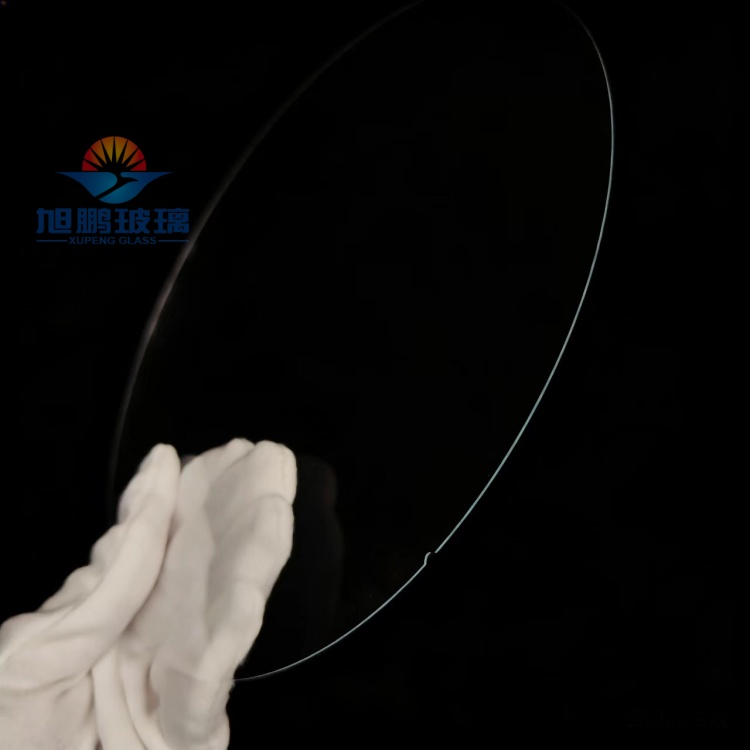
Corning EXG Glass Wafer, Double-Sided Polished Custom Fabrication for Semiconductor Glass Wafers
Alkali-free, low-CTE substrate for semiconductor, MEMS, display R&D and precision optics. Double-sided polishing, wafer dicing and clean-room packing support downstream CE technical files.
- Alkali-free
- DSP
- Wafer dicing
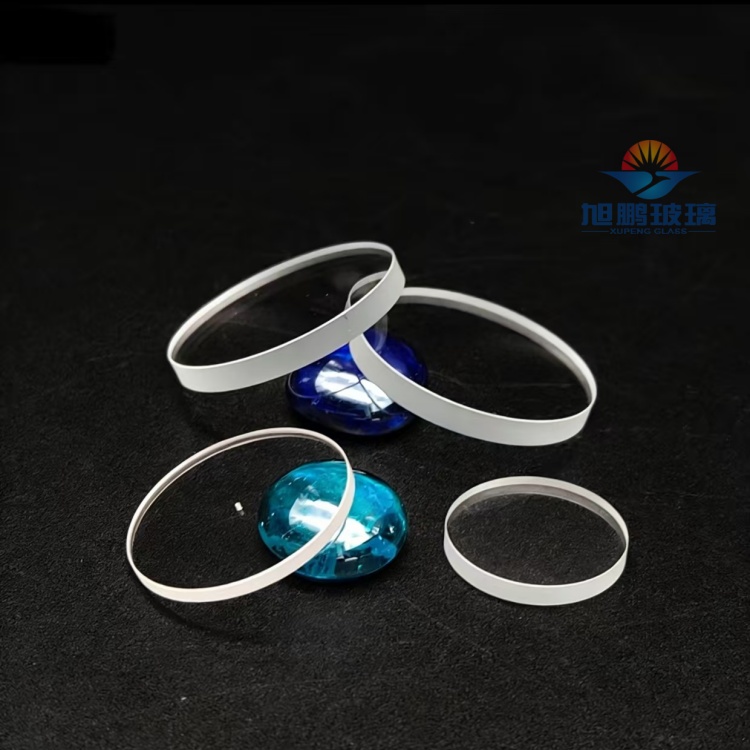
Sapphire Glass Step Window Wafers, High Temperature Resistant & High Light Transmittance Optical Sapphire Lenses
Hard, scratch-resistant sapphire windows for sensors, high-temperature viewports and optical instruments. Custom step geometry and polishing help protect optical performance in harsh assemblies.
- High temp
- Scratch resistant
- Optical grade

White Ceramic Glass-Ceramic, 4mm & 6mm, High Temperature Resistant Glass-Ceramic
Opal white glass-ceramic for appliance panels, high-temperature covers and thermal-shock-resistant components. Available in 4 mm and 6 mm with custom cutting and edge finishing.
- 4 mm / 6 mm
- Thermal shock
- Appliance panels
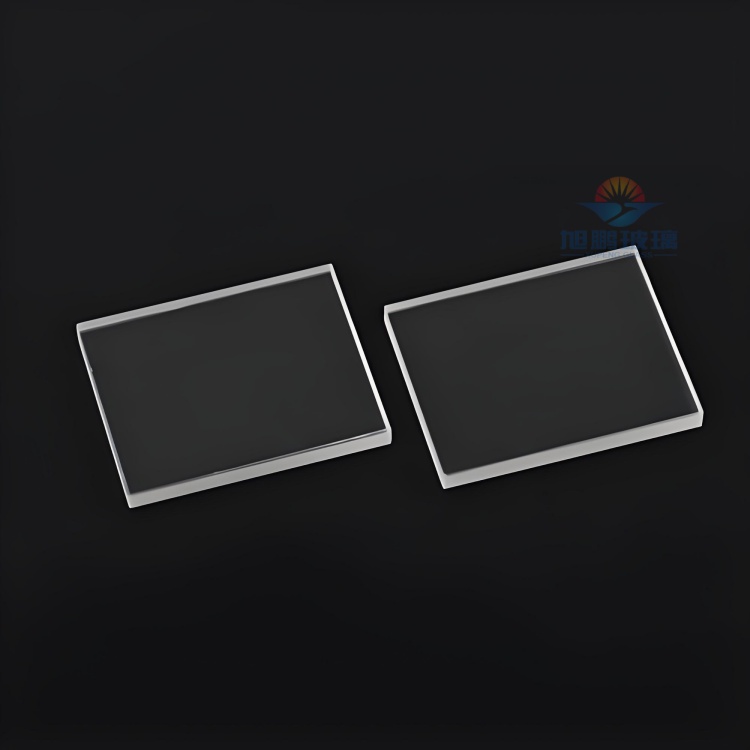
Tempered Glass Customized High Temperature Resistant, High Transparency and High Borosilicate Mirror Window Glass
High-borosilicate tempered window glass for heat-resistant viewports, equipment windows and high-clarity covers. CNC shaping, drilling and edge processing are matched to assembly tolerances.
- Tempered
- High clarity
- Heat resistant

Welding Black Filter Glass, Beveled Edge Grinding, Long Irregular-shaped Welding Filter Glass
Black welding filter glass with beveled edges and long irregular shapes for welding helmets, goggles and protective optical assemblies. Custom outlines help reduce downstream fabrication steps.
- IR filter
- Beveled edge
- Irregular shape
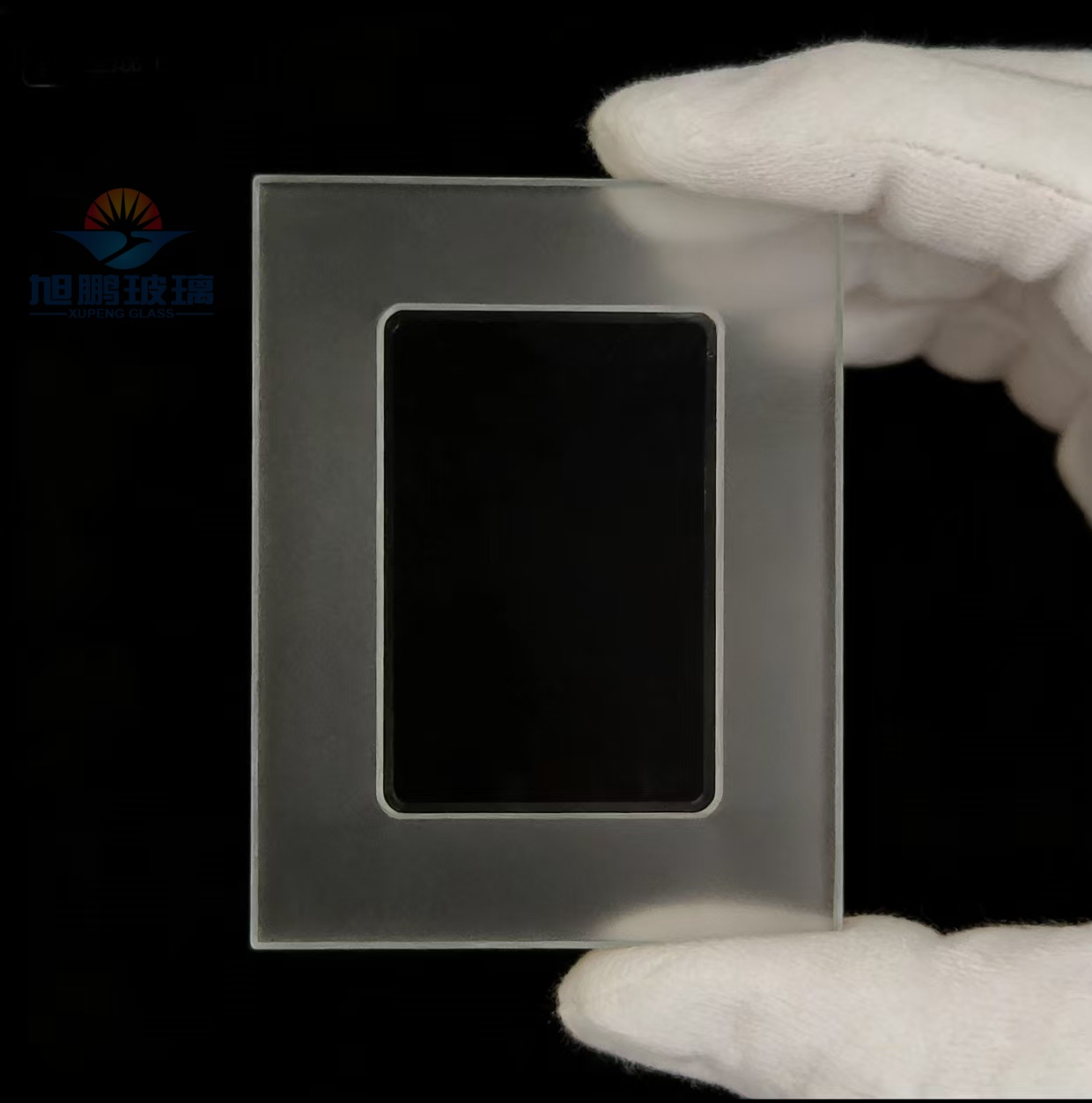
Custom Ultra-White Clear Tempered Glass Socket Decorative Cover for Stairways
Ultra-white tempered glass covers with custom cut-outs for switches, sockets and architectural details. Low-iron clarity and clean edges preserve the intended design appearance.
- Ultra-white
- Custom cut-outs
- Tempered

Precision CNC Cut & Holed, High-temperature Silk Screen Tempered Glass, Drilled Ultra-clear Small Round Glass Discs
Small-round glass discs with CNC holes, ultra-clear surfaces and high-temperature silk-screen graphics. Designed for instrument windows, control panels and compact electronic assemblies.
- CNC holes
- Silk-screen
- Ultra-clear
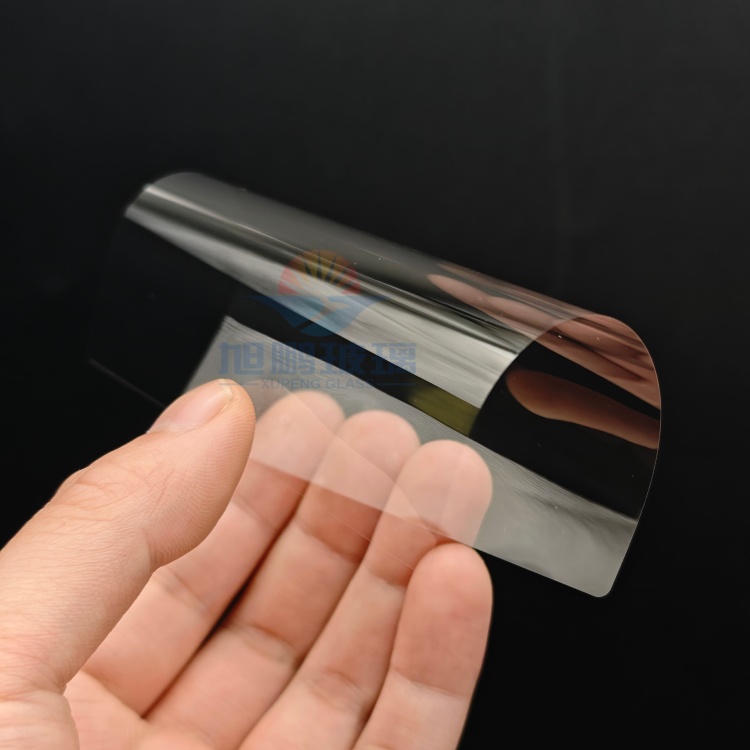
0.03 mm Ultra-thin Flexible Bendable Glass
Ultra-thin bendable glass for foldable display cover, flexible electronics and lightweight protective structures. Precision cutting and edge strengthening support next-generation device development.
- 0.03 mm
- UTG
- Bendable
Founded in Songshan Lake, Dongguan
Skilled employees in production and QC
Deep-processing production facility
Average technical inquiry response
Main export markets worldwide
What CE Certification Means for Thin Glass Buyers
In the European Union, CE marking is not a single material property attached to every glass pane. It is a conformity declaration tied to the finished product and the directives or regulations that apply to it — for example, low-voltage equipment, EMC, machinery, medical devices or construction products. For a CE certified thin glass manufacturer & supplier, the real value lies in producing glass that helps the downstream OEM build and defend a complete technical file.
AUVE approaches CE requests as an engineering documentation exercise, not a label-only claim. Our team first confirms the end application, applicable standards and declaration scope; then defines the glass material, thickness, edge quality, holes, printing, coating and tolerances; validates samples; and issues inspection records that match the drawing and order. For applicable projects, we support the customer’s CE file with material declarations, RoHS and REACH statements, batch traceability, dimensional and optical inspection data, and export packaging information.
Buyers should verify the declaration scope, part number, material statements, test reports and label consistency. Where CE marking is not directly applicable to the bare glass, a reliable supplier should still provide RoHS/REACH documentation and process evidence so the OEM can complete its own conformity assessment without delays. This distinction is central to semantic search intent: professional buyers are not simply looking for “CE glass”; they are looking for a thin-glass partner that understands the compliance chain.
Compliance Pack Available
- CE Declaration of Conformity support for applicable projects
- RoHS and REACH material declarations
- Batch traceability from raw sheet to packed carton
- Dimensional, visual and optical inspection records
- Golden sample, drawing revision and packaging confirmation
- Fragile-goods export packing for sea, air and express
Why AUVE Glass Is a Reliable Thin Glass Manufacturing Partner
Deep-processing capability, drawing-based engineering and export experience are combined in one facility — giving procurement teams a practical alternative to fragmented glass sourcing.



Factory-direct engineering from Songshan Lake, Dongguan
Dongguan AUVE Glass Co., Ltd. is a deep-processing glass manufacturer integrating R&D, design, production and export. Founded in 2018, the company operates with 51–100 skilled employees in a 1,001–2,000 m² facility in Songshan Lake — one of China’s important electronics and optoelectronics clusters. Our glass products are exported to the United States, Canada, Russia, South Korea, Japan, Australia and other markets.
Our production scope covers flat and curved tempered glass, ultra-clear low-iron glass, laminated and painted glass, touch screen and LCD cover glass, smart control panel glass, LED lighting glass, instrument glass, AR anti-reflective glass, AG anti-glare glass, K9 optical glass, quartz glass, sapphire glass, borosilicate glass, Corning EXG alkali-free glass, glass-ceramic and ultra-thin flexible glass. Processes include CNC cutting, edging, drilling, grooving, tempering, high-temperature silk-screen printing, AR/AG coating, polishing and final inspection.
Guided by the philosophy of “focusing on high-end glass, pioneering and innovating,” we review manufacturability before quoting. That means tolerances, hole positions, edge profiles, ink coverage, coating targets and packaging risks are discussed early, not discovered after mass production. Our average response time is within 7 hours, and our documented quality system keeps each batch traceable from raw sheet to packed carton.
Buyers can independently review our onsite-checked supplier profile, credit index, transaction level, trade capacity, trade history and buyer ratings. For thin-glass projects, this transparency reduces sourcing risk and gives engineering teams a clearer path from sample to serial production.
Get a QuoteThin Glass Selection Matrix for Engineers and Sourcing Teams
Choosing the wrong substrate can create rework, field failures and compliance gaps. Use this reference to shortlist the right material before sending a drawing.
| Thin Glass Family | Typical Feature | Best-fit Applications | CE / Documentation Focus |
|---|---|---|---|
| Ultra-thin flexible glass | Thickness from 0.03 mm; bendable UTG | Foldable displays, flexible electronics, lightweight covers | RoHS/REACH, batch traceability, edge quality records |
| Corning EXG alkali-free | Low CTE, alkali-free aluminoborosilicate | Semiconductor wafers, MEMS, display substrates | Material declaration, double-side polish data, clean packing |
| Sapphire windows | Mohs hardness 9; high-temperature resistance | Sensor covers, optical instruments, harsh-environment windows | Optical inspection, surface quality, dimensional report |
| Borosilicate tempered glass | High transparency and thermal resistance | Equipment windows, viewports, appliance panels | Tempering records, dimensional checks, packing validation |
| Glass-ceramic panels | 4 mm and 6 mm; thermal-shock resistance | Appliance covers, high-temperature equipment | Material data, visual inspection, thermal process records |
| AR/AG coated glass | Reflection control; anti-glare surface | Touch modules, displays, HMI, kiosks | Coating spec, gloss/haze data, adhesion and appearance checks |
| Silk-screen tempered glass | High-temperature ceramic ink graphics | Instrument panels, switches, appliance interfaces | Color/ink approval, registration check, tempering record |
| Welding filter glass | Black filter glass with beveled edges | Welding masks, goggles, protective optics | Optical density request, edge quality, custom-shape approval |
Thin Glass Procurement Trends Reshaping 2025–2030
Procurement teams are moving from “lowest unit price” to “lowest risk, fastest qualification and strongest documentation.” These priorities are changing how thin glass suppliers are evaluated.
Compliance-first sourcing
RFQs increasingly ask for RoHS/REACH statements, declaration support, batch records and packaging declarations before samples are approved. A supplier that treats compliance as a document package, not a slogan, shortens qualification.
Dual-source and supply resilience
OEMs are qualifying a primary and backup glass processor to reduce disruption. The backup supplier must match drawings, inspection methods and packing standards, not simply offer a similar material.
Total landed cost over unit price
Breakage, rework, freight, tariffs and line stoppages often cost more than the glass itself. Buyers now compare delivered yield, packaging reliability and engineering response time alongside piece price.
Low-MOQ pilot before mass production
Many coated and optical parts can start from 10–50 pieces for validation, while standard tempered parts often begin around 100–500 pieces. Pilot quantities de-risk design changes before tooling and batch commitments.
Traceability by batch and process route
Material lot, cutting program, tempering batch, printing revision, coating run and inspection data are becoming standard expectations. Traceability protects both the OEM and the glass supplier during audits.
Sustainability and packaging waste
Right-sized crates, recyclable interleaving materials, consolidated shipments and damage reduction are practical ESG levers. For fragile thin glass, better packing also lowers replacement orders and freight emissions.
Thin Glass Product Trends Buyers Should Track
Material innovation and downstream device design are moving together. These are the development directions most relevant to OEM engineering and procurement roadmaps.
Sub-0.1 mm UTG and foldable displays
Ultra-thin glass below 0.1 mm, including 0.03 mm bendable glass, is becoming a key cover material for foldable and flexible devices. Buyers need tight thickness control, edge strengthening and damage-free handling.
AR/AG and anti-fingerprint integration
Display, HMI and kiosk projects increasingly combine anti-reflective coating, anti-glare etching and easy-clean surface requirements. Coating durability and appearance consistency matter as much as initial optical performance.
Semiconductor-grade alkali-free substrates
Corning EXG and comparable alkali-free glass wafers support MEMS, semiconductor and display R&D. Low CTE, double-side polishing and clean-room packaging are central to repeatable downstream processes.
High-temperature glass-ceramic and sapphire
Appliance panels, equipment viewports and sensor windows are pushing demand for glass-ceramic, borosilicate and sapphire solutions. Suppliers must control thermal history, edge quality and optical inspection.
Precision structured glass
CNC holes, grooves, bevels, step windows and laser-cut outlines reduce assembly steps. The design trend favors glass parts that arrive closer to final fit, with inspection data tied to each critical dimension.
Printed and coated glass integration
High-temperature silk-screen printing, AR/AG coating, mirror coating and selective windows are being combined in one part. This integration improves aesthetics and function but demands disciplined process sequencing.
From Drawing to Export Carton: Quality Built into Every Step
Each step is controlled in-house to shorten lead times, protect tolerances and solve manufacturability issues before they reach the assembly line.
Drawing & DFM review
CAD, DXF or PDF drawings are reviewed for material, thickness, holes, edges and coating feasibility.
Material selection
Low-iron, borosilicate, quartz, sapphire, EXG, glass-ceramic or UTG is matched to the application.
CNC cutting & edging
Cutting, grinding, beveling, drilling, grooving and laser processing shape the part to drawing.
Tempering, printing & coating
Thermal tempering, ceramic ink printing, AR/AG coating, polishing and mirror finishing are sequenced for durability.
Inspection & documentation
Dimensional, visual and optical checks are recorded against the approved drawing and sample.
Export packing
Protective film, foam corners, batch labels and wooden crates or reinforced cartons protect fragile parts.
Frequently Asked Questions About CE Certified Thin Glass Procurement
Direct answers to the questions engineering, sourcing and compliance teams ask most often.
Does CE certification apply to the glass itself or the finished product?
In most cases, CE marking applies to the finished product, not to a bare glass pane. The glass can support the finished product’s conformity assessment through material declarations, dimensional records, coating or tempering data and batch traceability. For applicable projects, AUVE prepares documentation that helps the OEM complete its CE technical file.
What documents can AUVE provide for a CE file?
Depending on the application, we can supply CE Declaration of Conformity support, RoHS and REACH statements, material traceability, inspection reports, drawing revision records, golden sample approval and packaging specifications. The exact document package is confirmed during quotation so it matches the end product and target market.
Can you produce thin glass from my CAD, DXF, PDF or drawing?
Yes. Send a CAD, DXF or PDF drawing with thickness, tolerance, edge, hole, printing and coating requirements. Our engineers review manufacturability before production, covering CNC cutting, edging, drilling, tempering, silk-screen printing, polishing and AR/AG coating.
What is the minimum order quantity for thin glass orders?
MOQ depends on material and process. Many coated and optical glass parts start from 10 to 50 pieces, while standard ultra-clear tempered parts typically start from 100 to 500 pieces. Sample and pilot quantities can be discussed for new projects, especially when a drawing review confirms the process route.
Which thin glass materials and thicknesses are available?
We process ultra-clear low-iron glass, borosilicate, quartz, K9 optical glass, sapphire, Corning EXG alkali-free glass, glass-ceramic, welding filter glass and ultra-thin flexible glass down to 0.03 mm. Recommended thickness depends on strength, optical, thermal and assembly requirements; our team confirms the final substrate against your drawing.
How do you control optical, dimensional and cosmetic quality?
Quality control covers incoming material, cutting and edge geometry, hole position, tempering condition, printing registration, coating appearance, transmittance or reflection targets where applicable, and final visual inspection. Inspection methods and acceptance criteria are agreed before mass production and documented for traceability.
What are the lead time, Incoterms and shipping methods?
Lead time depends on material, process, order quantity and current production schedule. We support FOB, CFR, CIF, EXW, DDP, DDU, DAF and express delivery. Export packing is designed for fragile glass parts, with options for sea, air and courier shipment based on urgency and destination.
How do you pack fragile thin glass for export?
Packing typically includes protective film or interleaving paper, foam corner protection, individual part protection where needed, batch labeling and fumigation-free wooden crates or reinforced cartons. The packing method is matched to part size, thickness, surface finish and shipping mode.
Ready to Qualify a CE-Compliant Thin Glass Supplier?
Send your drawing, target application, estimated quantity and compliance requirements. Our engineers will review material, process route, tolerances and documentation needs — usually within 7 hours.
Get a Quote Email: info@auveglass.com · Dongguan AUVE Glass Co., Ltd. · Songshan Lake, Dongguan, China