8 Production-Ready Custom Glass Products for Engineering Review
These items represent the practical range of a qualified China custom glass panel supplier: decorative tempered glass, high-temperature glass-ceramic, precision CNC low-iron panels, coated round optics, flexible UTG and TGV packaging substrates. All product URLs are preserved for direct technical review.
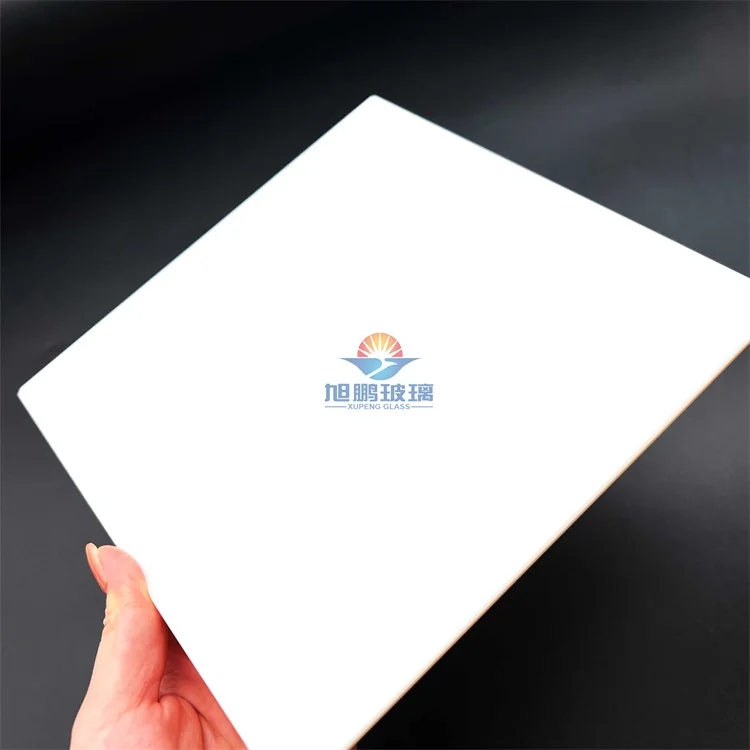
White Ceramic Glass-Ceramic, 4mm & 6mm, High Temperature Resistant Glass-Ceramic
Recommended for high-temperature viewports, appliance tops, fireplace windows and industrial covers. Low thermal expansion and stable color make it a strong replacement for ordinary tempered glass in heat-critical assemblies.
- 4 / 6 mm
- High temp
- Custom cut-outs

Custom Ultra-White Clear Tempered Glass Socket Decorative Cover for Stairways
A decorative ultra-white tempered panel for stairways, wall sockets and switch covers. The low-iron substrate keeps white ink bright, while tempered strength protects high-touch surfaces in residential and commercial interiors.
- Ultra-white
- Tempered
- Screen printed

CNC Carved Low Iron Glass Sheet, High-temperature Screen Printed Tempered Glass, Drilled Glass Panel
Built for appliance displays, instrument windows and electronic interfaces that require clarity, CNC carving, drilled holes and fired ceramic ink. Edge quality, hole position and print registration are reviewed against your CAD.
- CNC carved
- Low-iron
- Drilled

Round Aluminosilicate Glass with Chamfered Ground Edges and Metal Coating
A precision round part for sensor windows, lighting and instrument applications. Aluminosilicate glass supports thermal stability and scratch resistance; chamfered ground edges reduce handling risk and improve fit.
- Round
- Chamfered edge
- Metal coated

Ultra-thin Flexible UTG Glass, Bendable and Foldable, Suitable for Commercial Aerospace and New Energy Industries
For foldable displays, flexible electronics, aerospace and new-energy devices. Thickness, bend radius, edge strengthening and carrier handling must be defined early because ultra-thin glass is a system material, not a commodity sheet.
- UTG
- Bendable
- 0.03 mm option

Schott BF33 TGV Microvia Glass Wafer, Packaging Substrate for Sensors & Chips
A glass packaging substrate for sensor and chip applications. Borosilicate BF33 offers low CTE and dielectric stability; microvia diameter, pitch, wafer thickness, flatness and surface finish are confirmed per drawing before sampling.
- BF33
- TGV microvia
- Wafer
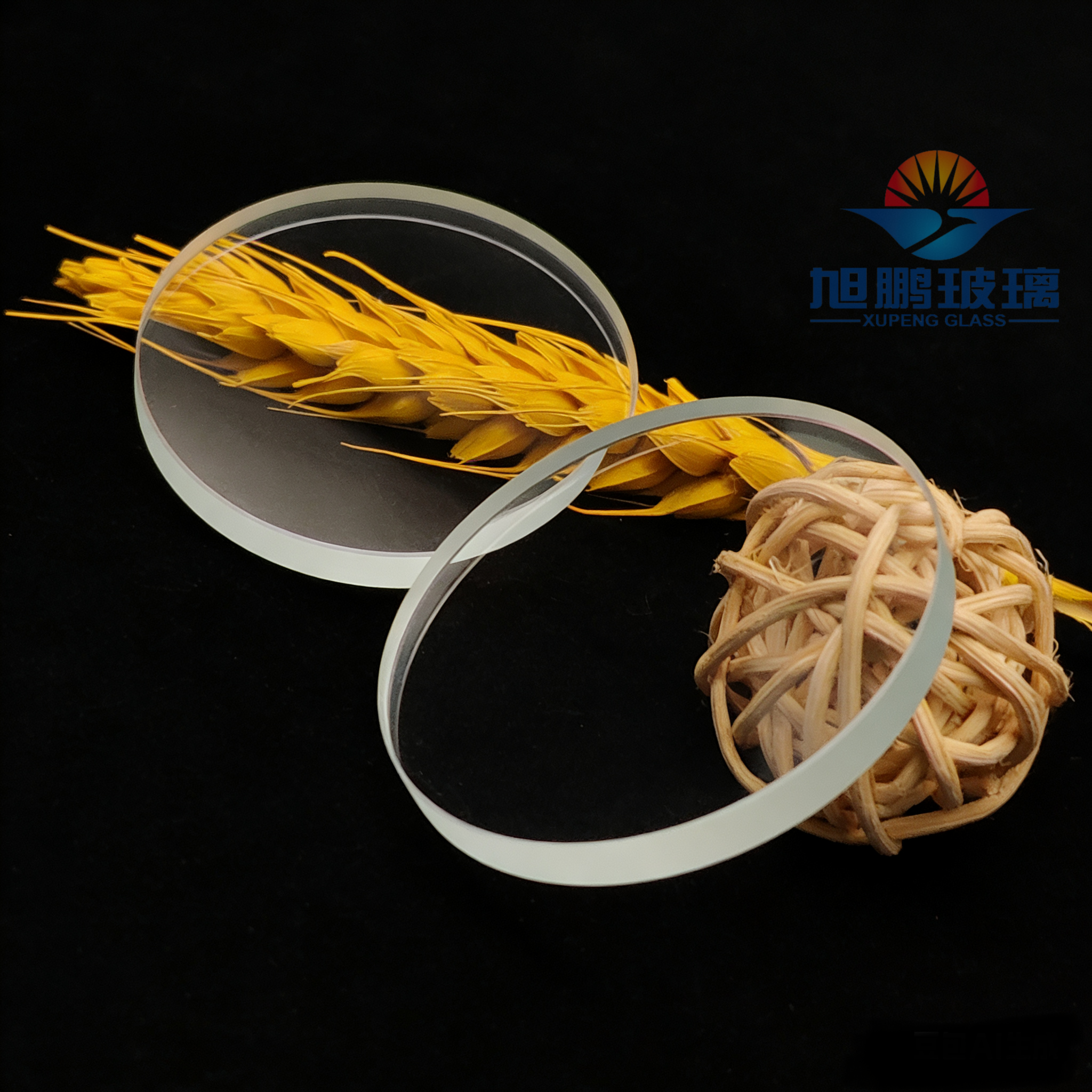
Low Iron Round High Transmittance Tempered Glass Panel with Precision Polished Edges, Flat Clear Glass
A clear round panel for viewports, lighting covers and display windows where green edge tint and optical distortion must be controlled. Precision polishing and controlled tempering improve visual clarity and edge safety.
- Low-iron
- Tempered
- Polished edge
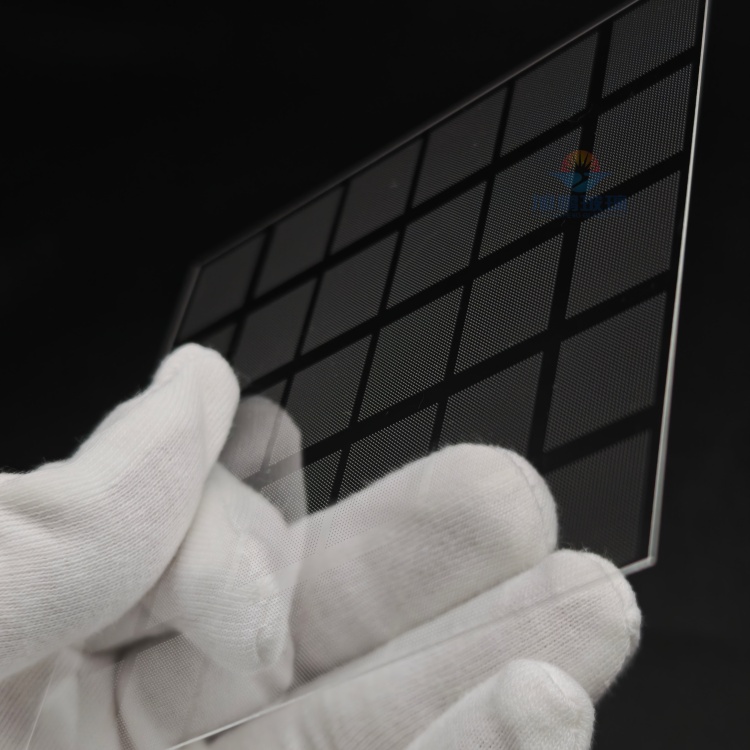
TGV Drilled Packaging Glass Substrate, Precision Laser Microvia Glass
A laser-drilled glass substrate for advanced packaging. The process route targets consistent microvia geometry, edge quality and downstream metallization compatibility for sensor, RF and chip packaging development.
- TGV
- Laser drilled
- Packaging
What “Best” Should Mean When Buying Custom Glass Panels in China
For procurement teams, the phrase “China best custom glass panel factories and supplier” is useful only when it is translated into testable selection criteria. This white paper treats “best” as a balance of engineering fit, process depth, quality evidence, communication speed and export reliability.
1. Drawing-to-production capability
A qualified supplier should review CAD, DXF or PDF drawings before quotation, flag manufacturability risks and confirm thickness, tolerance, edge profile, holes, printing and coating in one engineering loop.
2. Process coverage under one roof
Cutting, CNC shaping, edging, drilling, tempering, silk-screen printing, AR/AG coating and final inspection should be coordinated through one documented workflow to reduce handling damage and finger-pointing.
3. Quality evidence, not slogans
Buyers should ask for first-article reports, dimensional inspection records, coating or transmission data where relevant, packing photos and batch traceability from raw sheet to carton.
4. Low communication latency
Custom glass projects fail on unclear assumptions. A supplier with an average response time within about 7 hours and English-speaking technical review reduces rework caused by missing tolerances or ambiguous finishes.
5. Export-ready logistics
Fragile glass requires edge protection, interleaving film, reinforced cartons or wooden crates, batch labels and an Incoterm plan that matches your customs and delivery model: FOB, CFR, CIF, EXW, DDP, DDU, DAF or express.
6. Material breadth without chaos
The best supplier is not the one with the longest catalogue, but the one that can explain which substrate belongs in which application: low-iron tempered glass, ceramic glass-ceramic, aluminosilicate, quartz, sapphire, BF33 or UTG.
Enterprise Advantages Buyers Can Verify
Dongguan AUVE Glass Co., Ltd. combines factory-direct deep processing with export experience. The following figures and capabilities reflect the public company profile information and the production scope relevant to custom glass panel sourcing.
Process Depth Is the Real Competitive Advantage
Custom glass panels are rarely won by cutting alone. They are won by edge quality, hole position, thermal treatment, ink adhesion, coating uniformity and final packing discipline. The indicators below show the relative emphasis of the factory workflow.
CNC cutting & shaping
CAD review, CNC cutting, carving, contouring and hole layout for non-rectangular panels.
Thermal tempering
Flat and curved tempering for impact resistance, thermal stability and safer broken patterns.
Precision edging & drilling
Grinding, beveling, chamfering, grooving, countersinking and laser or CNC hole processing.
Silk-screen printing
High-temperature ceramic inks, multi-color graphics, IR windows and functional icons.
AR / AG functional coating
Anti-reflective and anti-glare finishes for display contrast, readability and outdoor use.
Optical polishing & QC
Surface inspection, dimensional checks and optical review for wafers, windows and precision panels.
Custom Glass Material & Product Selection Matrix
Use this matrix to shortlist a substrate before sending a drawing. It is intentionally practical: the goal is not to list every glass grade in the world, but to help engineers and sourcing teams ask better questions in the RFQ stage.
| Glass product family | Best-fit application | Typical engineering focus | Process compatibility | Procurement note |
|---|---|---|---|---|
| White ceramic glass-ceramic | High-temperature viewports, fireplace windows, appliance panels | Thermal expansion, color stability, cut-out quality and edge finish | Cutting, drilling, edge grinding, printing | Confirm continuous and peak service temperature before quotation |
| Ultra-white tempered glass | Socket covers, stairway panels, decorative appliance fronts | Low-iron clarity, ink color, tempered strength and flatness | Tempering, silk-screen, CNC holes, AR/AG | Decorative batches should be compared against an approved color master |
| CNC low-iron glass | Smart control panels, instrument windows, electronic interfaces | Hole position, carved depth, print registration and edge quality | CNC carving, drilling, tempering, printing, coating | Provide a tolerance stack, not only a nominal drawing |
| Round aluminosilicate glass | Sensor windows, lighting optics, industrial instruments | Roundness, chamfer geometry, coating adhesion and scratch resistance | CNC edging, polishing, metal coating, tempering where applicable | Specify the coated area and handling protection required |
| Ultra-thin flexible UTG | Foldable displays, aerospace and new-energy devices | Thickness, bend radius, edge strengthening and carrier method | Precision cutting, edge treatment, lamination support | Plan sampling and handling as a system-level project |
| BF33 TGV glass wafer | Sensor and chip packaging, microvia substrates | Microvia diameter, pitch, CTE match, flatness and surface finish | Laser drilling, polishing, wafer cleaning, inspection | Ask for metrology data before metallization or downstream bonding |
| Low-iron round tempered panel | Clear viewports, lighting covers and display windows | Transmission, edge tint, polish quality and flatness | Tempering, precision polishing, printing, AR/AG | For optical clarity, define both transmission and visual acceptance criteria |
Values and process notes are indicative reference points for early material selection. Final production specifications must be confirmed against your drawing, tolerance requirements and agreed inspection standard.



Why Dongguan AUVE Glass Is a High-Trust Custom Glass Panel Partner
Dongguan AUVE Glass Co., Ltd. is a deep-processing glass manufacturer integrating R&D, design, production and export in Songshan Lake, Dongguan — one of China’s leading electronics and optoelectronics clusters. The company processes flat and curved tempered glass, ultra-white, laminated and painted glass, LCD and touch screen glass, smart control panel glass, LED lamp glass, instrument glass, AR high-transmittance glass, AG anti-glare glass and advanced optical materials.
The working philosophy is “focusing on high-end glass, pioneering and innovating.” In practice, this means buyers are not limited to standard sheets. Panels can be engineered with CNC cut-outs, holes, chamfered edges, silk-screen graphics, AR or AG coatings, and optical polishing support — provided the application, drawing and inspection criteria are clear from the beginning.
- Factory-direct engineering: cutting, edging, drilling, tempering, printing, coating and inspection are coordinated as one production route.
- Verified business signals: onsite-checked supplier profile, credit index, transaction level, trade capacity, trade history and buyer feedback are available for buyer due diligence.
- Export experience: products are shipped to the United States, Canada, Russia, South Korea, Japan, Australia and other markets.
- Response discipline: average response time is within about 7 hours for technical and quotation inquiries.
- Flexible order development: many coated and optical parts can start from 10–50 pieces, while standard ultra-clear tempered parts often start from 100–500 pieces.
- Fragile-goods packing: protective film, foam corners, interleaving paper, reinforced cartons or fumigation-free wooden crates support safe ocean, air and express shipment.
For buyers comparing China custom glass panel factories, this combination matters: the supplier should be able to explain the material, challenge the drawing, control the process, document the result and ship the finished panel without hidden hand-offs.
From Raw Sheet to Finished Glass Panel
A reliable custom glass panel factory controls the hand-off between each process. This is where scratches, chipped holes, distorted printing and coating defects are prevented — not after the carton is packed.
1. Precision cutting
Automatic and CNC cutting from float, low-iron, ceramic, aluminosilicate and optical stock, with kerf and edge allowance reviewed against the final drawing.
2. CNC edging & drilling
Grinding, beveling, chamfering, grooving, countersinking and hole processing with attention to micro-crack control and downstream tempering limits.
3. Thermal tempering
Flat and curved tempering for impact resistance and thermal stability. Hole spacing, edge quality and print compatibility are checked before heat treatment.
4. Silk-screen printing
High-temperature ceramic inks, logos, windows, icons and multi-color graphics. First-article color and registration checks reduce batch-to-batch variation.
5. AR / AG coating
Anti-reflective, anti-glare, mirror and other functional finishes. Buyers should define reflection, haze, gloss, transmission and durability expectations.
6. QC & export packing
Dimensional, visual and optical checks are paired with protective packing, batch labels and shipment documentation for fragile glass parts.
How Custom Glass Panel Procurement Is Changing
Buyers are moving away from pure piece-price comparison. The more mature RFQ now evaluates total landed risk, engineering responsiveness, documentation quality and the supplier’s ability to support pilot builds before mass production.
From lowest price to lowest total risk
Procurement teams now score scrap rate, edge chip risk, packing method, change-control discipline and documentation alongside unit price. A lower quotation can become expensive if one container arrives with edge damage or coating rejects.
Smaller qualified MOQs and co-development
New programs increasingly start with 10–50 pieces for optical or coated parts and 100–500 pieces for standard tempered panels. Suppliers that can support prototypes, pilot builds and controlled scale-up earlier become long-term partners.
Traceability and material consolidation
OEMs prefer one qualified glass partner that can handle low-iron tempered panels, printed glass, AR/AG coatings and advanced substrates. Fewer suppliers mean fewer hand-offs, but only if the factory can document each process step.
Where Custom Glass Panel Technology Is Moving
The next wave of demand is not just larger panels or lower prices. It is thinner, harder, clearer, more functional and more deeply integrated with electronics, thermal systems and advanced packaging.
Coated display and touch glass
AR anti-reflective and AG anti-glare glass continue to replace bare cover glass in touch modules, all-in-one PCs, outdoor kiosks, industrial HMIs and medical displays. Buyers are specifying reflection, haze, gloss, transmission and durability together, not just “AR coating.”
Advanced substrates: TGV, BF33 and UTG
Glass is becoming a semiconductor and flexible-electronics material. TGV microvia wafers, BF33 packaging substrates and ultra-thin flexible UTG demand tighter metrology, cleaner handling and closer collaboration between glass processing and downstream bonding or metallization.
Decorated structural glass and ceramic glass
Ultra-white tempered socket covers, stairway panels and high-temperature ceramic glass-ceramic parts show that glass is no longer only a window. It is a durable, cleanable and visually premium structural surface for appliances, interiors and industrial equipment.
Frequently Asked Questions About China Custom Glass Panel Sourcing
These are the questions engineering, procurement and quality teams ask most often when evaluating a factory-direct glass panel supplier in China.
What types of custom glass panels can Dongguan AUVE Glass manufacture?
The company processes flat and curved tempered glass, ultra-white and low-iron glass, laminated and painted glass, AR anti-reflective and AG anti-glare coated glass, silk-screen printed glass, touch screen and LCD cover glass, LED lighting glass, instrument glass, ceramic glass-ceramic and optical materials such as K9, quartz, sapphire, borosilicate, Schott BF33 and Corning EXG-type alkali-free glass. The practical starting point is always your drawing, application and inspection requirement.
Can you produce glass to my own CAD, DXF or PDF drawing?
Yes. Send the drawing with thickness, tolerance, edge profile, hole positions, printing, coating and packing requirements. Engineering review is most useful when the drawing includes a tolerance stack and identifies which dimensions are critical for assembly. The factory can then confirm the process route: CNC cutting, edging, drilling, tempering, silk-screen printing and AR/AG coating.
What is the minimum order quantity for custom glass panels?
MOQ depends on material and process. Many coated and optical glass parts start from 10 to 50 pieces, while standard ultra-clear tempered parts typically start from 100 to 500 pieces. Sample and pilot quantities can be discussed for new projects, especially when the design is still in validation and the buyer needs to test fit, appearance or coating performance.
Which Incoterms and shipping methods are supported?
The supported commercial terms include FOB, CFR, CIF, EXW, DDP, DDU, DAF and express delivery. For fragile glass, the packing method should be agreed before shipment: protective film, interleaving paper, foam corners, reinforced cartons and fumigation-free wooden crates can be combined depending on panel size, edge exposure and transport route.
Which export markets does the supplier serve?
Glass products are exported to markets including the United States, Canada, Russia, South Korea, Japan, Australia and other regions. Buyers outside these markets can still request an engineering review; the key question is whether the drawing, destination packaging requirement and logistics route are compatible with the selected process.
How quickly will a technical inquiry receive a response?
The average response time is within about 7 hours. For a faster review, include the material preference, dimensions, thickness, quantity, application environment, edge and hole requirements, printing or coating requirements, and any acceptance standard. A complete RFQ reduces clarification cycles and makes the first quotation more useful.
How is quality controlled before shipment?
Quality control should cover incoming material identification, dimensional inspection, visual defect checks, edge and hole inspection, print or coating checks where applicable, and packing verification. For critical parts, buyers can request first-article approval, batch labeling, inspection photos and traceability records. The agreed inspection standard should be written into the order, not left as an assumption.
Can you support prototypes, pilot builds and mass production?
Prototype and pilot quantities can be discussed before tooling or mass production. This is especially important for UTG, TGV wafers, AR/AG coated panels and printed decorative glass, where handling, lamination, bonding or color approval may need several iterations. A controlled pilot build is usually cheaper than discovering a tolerance or coating mismatch after a full production run.
What information should I include in the first RFQ?
Include a 2D drawing and, where useful, a 3D model; the glass material or expected function; dimensions, thickness and tolerances; edge, hole and cut-out requirements; printing or coating specification; annual and first-order quantities; destination market; required Incoterm; and any special packing or documentation need. If you do not know the exact glass grade, describe the application temperature, optical target, strength requirement and assembly method so the supplier can recommend a shortlist.
How are fragile glass panels packed for export?
Packing is designed around the panel format and risk points. Typical methods include interleaving film or paper, foam corner protection, edge protection, reinforced cartons, wooden crates, batch labels and shipment photos. For high-value optical or coated parts, buyers should discuss moisture protection and double-wall packing before the order is released.
Can you help choose between low-iron, ceramic, aluminosilicate, quartz and sapphire glass?
Yes. The selection should follow the application: low-iron tempered glass for clarity and strength in decorative or display panels; ceramic glass-ceramic for high-temperature stability; aluminosilicate for thermal and scratch requirements; quartz for UV transmission and thermal shock; sapphire for extreme scratch resistance and high-temperature windows; BF33 or EXG-type glass for semiconductor and packaging substrates. Confirm the final grade with application testing and drawing review.
Do you provide material certificates and inspection reports?
Documentation requirements should be agreed during quotation. Ask specifically for the material grade certificate, dimensional report, visual inspection criteria, coating or transmission data where relevant, packing record and batch traceability. The more clearly the acceptance standard is written, the easier it is to compare suppliers on an apples-to-apples basis.
Have a Drawing? Get an Engineering Review Before You Tool Up.
Share your size, thickness, tolerance, edge, hole, printing, coating and packing requirements. The team will review manufacturability, confirm material and process route, and respond with practical next steps — usually within 7 hours. For custom glass panels, the cheapest mistake is skipping the engineering conversation.