8 Flat Tempered Glass Products Recommended for Export & Wholesale
The fastest way to qualify a China flat tempered glass exporter is to compare real, buildable product families rather than generic catalogue pages. The eight items below represent practical buying routes for display glass, semiconductor packaging, precision optics, sensor windows and custom tempered panels. Use them as benchmark parts when requesting samples, process capability studies or wholesale quotations.
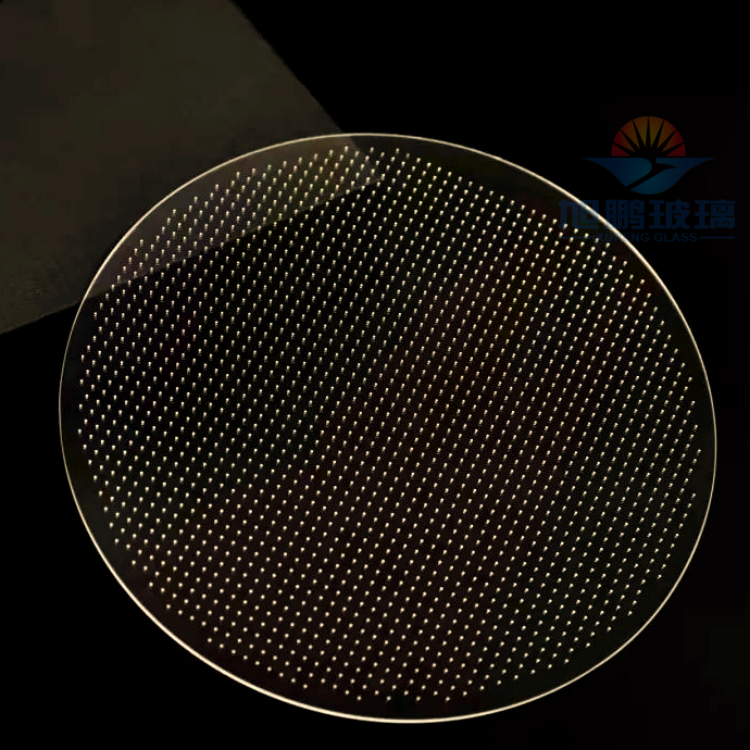
Schott BF33 TGV Microvia Glass Wafer, Packaging Substrate for Sensors & Chips
Recommended for MEMS, CMOS image sensors, RF filters, biochips and wafer-level packaging. BF33 borosilicate provides stable insulation, low dielectric loss, strong chemical durability and a CTE close to silicon, which helps protect via alignment and bonding yield. Buyers should define wafer diameter, thickness, via diameter, pitch, surface finish and dicing lanes.
- BF33 borosilicate
- Through-glass via
- Wafer packaging
- Sensor and chip

High Transmittance Sapphire Glass, Scratch Resistant & High Temperature Resistant Sapphire Glass Sheets
Recommended for sensor windows, high-temperature viewports, wear-critical lenses and scratch-resistant covers. Single-crystal sapphire combines Mohs 9 hardness, excellent thermal stability and broad optical transmission. In procurement, thickness and crystal orientation influence transmission, so specify the working wavelength, chamfer, surface quality and coating before sampling.
- Mohs 9 hardness
- 2,040°C melting point
- Optical window
- Scratch resistant

CNC Carved Low Iron Glass Sheet, High-temperature Screen Printed Tempered Glass, Drilled Glass Panel
Recommended for HMI panels, appliance fronts, instrument windows and architectural electronics. Low-iron glass reduces the green edge tint and improves color fidelity after tempering. CNC carving, drilling, edge grinding, high-temperature silk-screen printing and heat treatment can be combined in one route, lowering secondary assembly and supplier coordination risk.
- Low-iron clarity
- CNC drilling
- Tempered
- Silk-screen printed

Ultra-white Tempered Glass, AR Anti-Reflection Coatable, High Light Transmittance & Anti-reflective
Recommended for touch displays, industrial monitors, smart control panels and optical windows. Ultra-white low-iron substrate keeps color neutral; AR coating can reduce surface reflection to below 1% per side in optimised stacks. Buyers should specify visible light transmission, haze, reflectance per side, color shift, coating durability and the visual acceptance standard.
- Ultra-white
- AR coatable
- High VLT
- Display cover
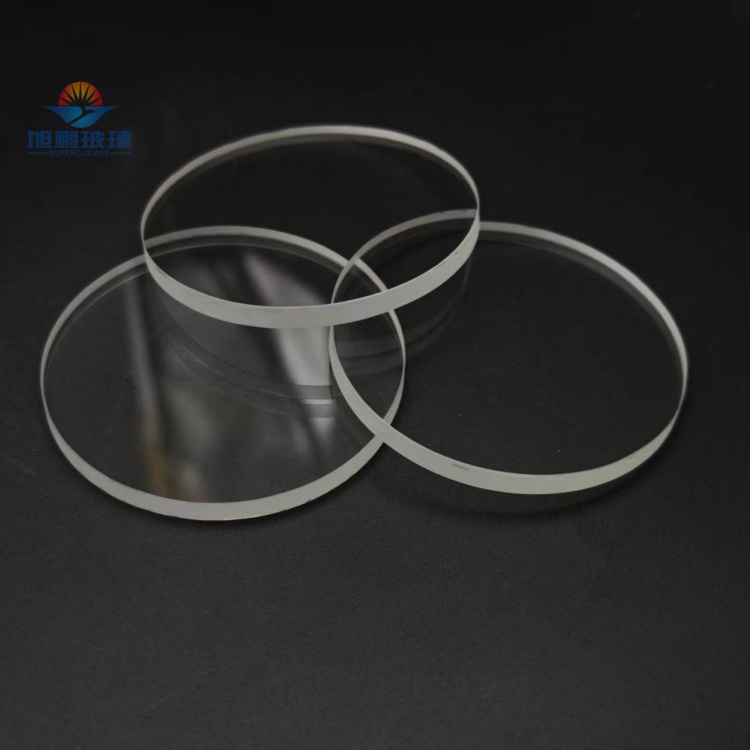
K9 Optical Glass (K9 Crystal Glass) for Optical Instruments
Recommended for prisms, lenses, windows and instrument components. K9 is a borosilicate crown glass with a refractive index around 1.5168 and good visible transmission. Control bubbles, striae, surface roughness, parallelism and chamfer quality to protect imaging performance. For repeat production, ask for a first-article inspection report with dimensional and optical measurements.
- K9 / BK7 equivalent
- nd ≈ 1.5168
- Polished optics
- Instrument windows

High-transmittance Anti-Reflection Coated Glass
Recommended for museum glazing, display windows, optical sensors and high-contrast instrument covers. Single-side and double-side AR designs can reduce ghosting and improve contrast. A useful RFQ asks for reflectance by wavelength, coating area, adhesion test method, abrasion resistance, environmental ageing and edge cleanliness, not simply the word “AR coated”.
- Single / double-side AR
- Low reflection
- Display window
- Custom coating
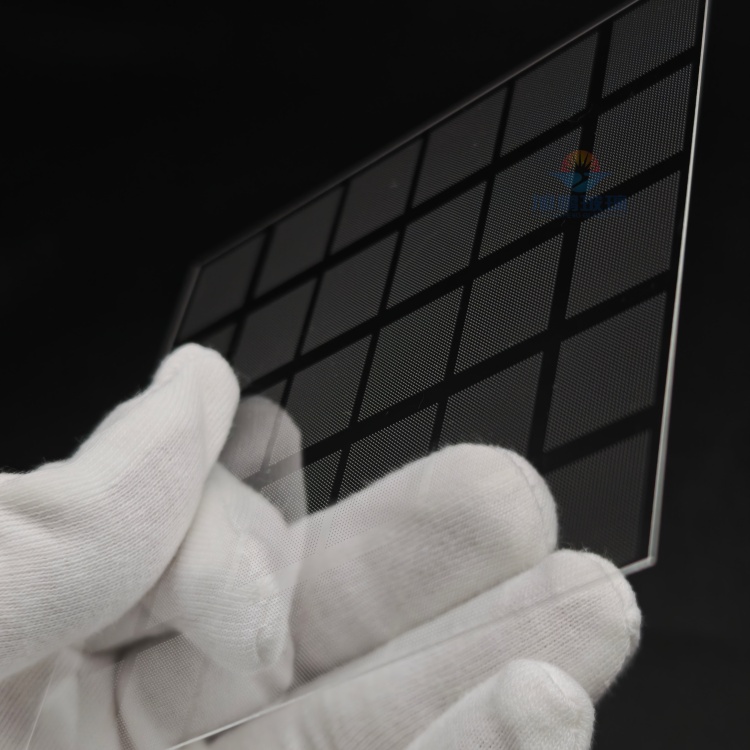
TGV Drilled Packaging Glass Substrate, Precision Laser Microvia Glass
Recommended for sensors, RF modules, MEMS, photonics and bio-diagnostics. Laser drilling creates microvias with low mechanical stress, but the process window must be matched to glass grade and thickness. Evaluate via taper, pitch, edge chipping, surface cleanliness, downstream metallisation compatibility and wafer-level inspection data before scaling from prototype to production.
- Laser microvia
- High aspect ratio
- Packaging substrate
- Precision glass
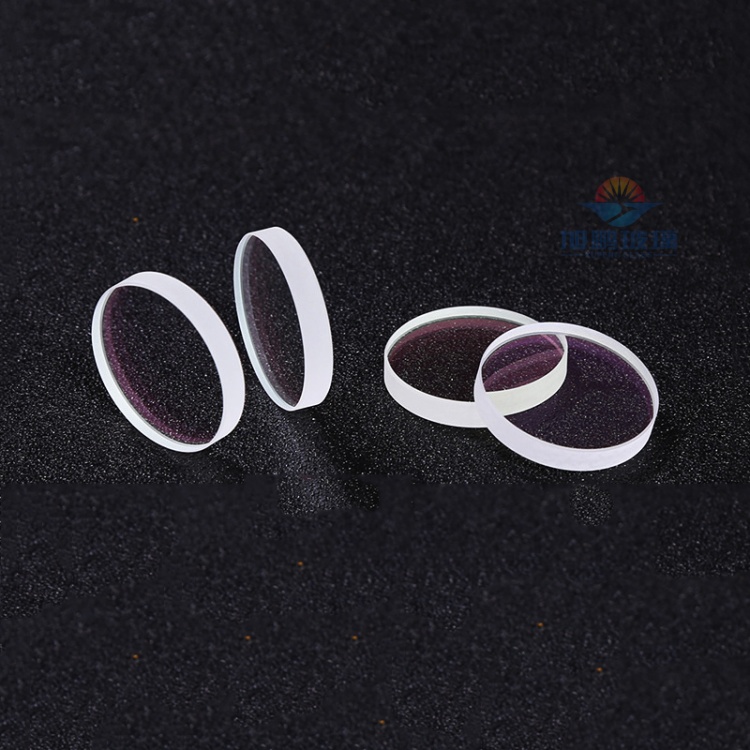
Ultra-clear Tempered Glass, Custom Processing Available: Drilling, Etching, AG Coating, Silk Printing, AR Coating
Recommended for smart-home panels, lighting, appliances, device view windows and control covers. Integrated processing reduces the number of suppliers and the risk created by moving fragile glass between factories. Specify glass grade, thickness, tolerances, edge profile, hole positions, ink color, coating area, surface treatment and the export packing method in one drawing package.
- Drilling
- Etching
- AG / AR coating
- Silk printing
What “China Best Flat Tempered Glass Exporter & Wholesalers” Means in a Real Sourcing Project
When a procurement manager types that phrase, the intent is rarely “show me a directory.” It usually combines three decisions: finding a manufacturer with real process depth, proving quality before mass production, and reducing landed-cost risk after the quotation is signed. That is why a useful supplier page must go beyond “high quality, competitive price and fast delivery”.
Manufacturer depth, not a directory listing
A wholesaler that cannot explain cutting, CNC edging, drilling, tempering, silk printing, AR/AG coating and final inspection cannot control the variables that create field failures. Ask which steps are performed in-house, which are subcontracted, and how process parameters are recorded by batch.
Evidence a technical buyer can audit
Request first-article inspection, dimensional reports, appearance limits, coating test data, tempering records and packing validation. For safety-related parts, ask whether heat-soak testing or additional fragmentation checks are available. Evidence beats adjectives because it can be compared side by side with another supplier.
Export execution and breakage control
Glass can survive a factory inspection and still fail in transit. The better question is not only “What is your price?” but “How will you pack, label, palletise, document and ship this order?” Interleaving film, foam corners, reinforced cartons, fumigation-free crates and batch labels are part of total cost.
The most valuable information gain is specific and comparable: the glass grade, achievable tolerance, inspection method, coating band, packing trial, Incoterm and escalation path. That is the difference between a search result and a supplier a procurement team can actually qualify.
Flat Tempered Glass Procurement Trends for 2025–2030
Buying behaviour is shifting from lowest unit price toward total landed cost, process capability, traceability and supply resilience. These trends are especially relevant to OEMs comparing Chinese flat tempered glass exporters and wholesalers.
Risk-aware dual sourcing
Procurement teams increasingly qualify one primary glass supplier and one technical backup rather than depending on a single factory. The backup does not need identical equipment, but it must be able to reproduce the same drawing, coating band, ink color and inspection standard without re-learning the project.
Engineering-led RFQs and CAD data
Buyers now send CAD, DXF or PDF drawings earlier, with thickness, tolerance, edge, hole, printing and coating requirements in one package. Suppliers that provide manufacturability feedback before quotation reduce later engineering changes and help sourcing teams avoid hidden cost at the sample stage.
Traceability and audit-ready data
Inspection records, batch labels, raw material certificates and packaging photos are becoming normal expectations. For export buyers, traceability is not bureaucracy: it is the fastest recovery path when a batch issue appears in the assembly line or in field returns.
Lower-carbon and energy-aware supply
Energy consumption in tempering, coating and cleanroom polishing is receiving more attention from brand owners. Buyers increasingly ask about process yield, scrap reduction, packing recyclability and the ability to consolidate multiple glass processes in one factory to reduce shipping and handling waste.
High-mix, low-volume acceleration
More projects start with pilot quantities, custom sizes and multiple coating options before they scale. Flexible processes, quick engineering review and clear MOQ logic matter more than ever. A supplier that can support a 10–50 piece optical or coated trial can shorten the validation cycle for a 500–2,000 piece production order.
Packaging and logistics engineering
Freight volatility and breakage claims have pushed packaging into the engineering discussion. Buyers now compare packaging trials, container fill rate, pallet weight, loading sequence and damage records alongside the unit price. Better packing can lower total cost even when the glass itself costs slightly more.
Product Development Trends Reshaping Flat Tempered Glass
Flat tempered glass is no longer only a protective panel. It is becoming an optical interface, a packaging substrate, a printed display component and a thermal or chemical barrier. The material roadmap below is useful for product teams planning the next 2–3 years.
Thinner, stronger, clearer
Low-iron and ultra-white substrates continue to replace standard float glass in display and lighting applications where color neutrality matters. At the same time, ultra-thin flexible glass down to around 0.03 mm is moving from demonstration projects into foldable and flexible electronics development.
AR and AG integration
Anti-reflection and anti-glare functions are being combined with tempering and printing rather than treated as separate finishing steps. The design challenge is balancing VLT, haze, gloss, color shift and durability while keeping the manufacturing route stable enough for repeat production.
TGV and advanced packaging
Through-glass vias are gaining attention in sensor packaging, RF and photonics because glass offers electrical insulation, dimensional stability and low dielectric loss. Laser drilling, via metallisation compatibility and wafer-level inspection are becoming part of the glass sourcing specification.
Optical and extreme materials
K9, fused quartz, sapphire, borosilicate and alkali-free glass such as Corning EXG are increasingly specified together with flat tempered glass in instrument, semiconductor and UV equipment projects. Material selection now depends on wavelength, thermal shock, hardness and cleanliness, not only size and thickness.
Glass Selection Guide for Engineers & Sourcing Teams
Choosing the wrong substrate is one of the most common causes of field failures and re-sourcing cost. Use this reference to shortlist the right material before you send a drawing. Final specifications should always be confirmed against your drawing and agreed test standard.
| Glass Type | Key Property (Typical) | Best-Fit Applications | Available Processing |
|---|---|---|---|
| Ultra-clear low-iron tempered | ~91% visible light transmission; reduced green edge tint; tempered strength approx. 4–5× annealed glass | Smart control panels, appliance covers, LED fixtures, light boxes | CNC shaping, drilling, silk-screen, AR/AG |
| AR coated glass | Surface reflection reduced to roughly 0.5–1% per side in optimised stacks | Touch modules, all-in-one PCs, museum glazing, instrument windows | Single/double-side AR, tempering, printing |
| AG anti-glare glass | Micro-textured surface diffuses glare; gloss and haze selectable | Outdoor LCDs, industrial HMIs, kiosks | Etched AG, AG + AR, tempering |
| Silk-screen printed tempered | Fired ceramic ink fused into glass for durable graphics | Instrument panels, appliances, switch and socket covers | Multi-color printing, IR/window ink, holes |
| K9 optical glass | Borosilicate crown glass, nd ≈ 1.5168, low inclusions | Lenses, prisms, optical instrument windows | Precision polishing, coating, CNC edging |
| Fused quartz | High UV transmission and excellent thermal shock resistance | UV curing, UV disinfection, high-temperature viewports | Thick-gauge cutting, polishing, drilling |
| Sapphire glass | Mohs hardness 9; melting point approx. 2,040°C | Sensor covers, high-temperature and scratch-critical windows | Cutting, polishing, chamfering |
| Corning EXG alkali-free | Alkali-free aluminoborosilicate, low CTE (~3.2 ppm/°C) | Semiconductor wafers, MEMS, display substrates | Double-side polishing, wafer dicing |
| Ultra-thin flexible glass | Thickness down to 0.03 mm with bendability | Foldable displays, flexible electronics | Precision cutting, edge strengthening |
Values are typical reference data for material selection. Final specifications are confirmed against your drawing and agreed test standard before mass production.
Why Dongguan AUVE Glass Co., Ltd. Is a Credible Export Partner
Dongguan AUVE Glass Co., Ltd. is a deep-processing glass manufacturer integrating R&D, design, production and export in Songshan Lake, Dongguan — one of China’s key electronics and optoelectronics clusters. The company is not only a catalogue wholesaler: it is structured around drawing-led glass engineering and export execution.

Factory capability that covers the full route
AUVE processes flat and curved tempered glass, ultra-white, laminated and painted glass, LCD and touch screen glass, smart control panel glass, LED lamp glass, instrument glass, AR high-transmittance glass, AG anti-glare glass, and optical materials such as K9, quartz, sapphire, borosilicate, Corning EXG alkali-free glass and ultra-thin flexible glass. Production follows defined process standards and a documented quality management system, so each batch can be traced from raw sheet to packed carton.
Guided by the philosophy of “focusing on high-end glass, pioneering and innovating”, the company continues to invest in skilled engineers and advanced equipment. For buyers, that translates into a practical advantage: material selection, CNC cutting, edging, drilling, tempering, printing, coating, inspection and export packing can be coordinated through one supplier instead of five.
The company was founded in 2018, operates with 51–100 skilled employees and a 1,001–2,000 m² facility, and exports to key markets including the United States, Canada, Russia, South Korea, Japan and Australia. Its average response time to technical inquiries is within 7 hours, which helps sourcing teams move from concept to sample approval without long communication gaps.
Onsite-Checked Supplier
Premises and legal status confirmed through third-party onsite verification.
View supplier assessment →Credit Index
A transparent credit profile built on real trading behaviour and verification data.
Check credit index →Transaction Level
Verified online transaction records with overseas buyers.
See transaction level →Trade Capacity
Export experience, main markets and production capability evidence.
View trade capacity →Ratings & Reviews
Buyer feedback on quality, delivery and technical service.
Read buyer reviews →Trade History
Documented shipment history across global markets.
View trade history →Quality Control, Export Packing and Delivery Terms
For flat tempered glass, quality is not a single final inspection. It is created by drawing review, incoming material control, process discipline and packing engineering. AUVE supports buyers with manufacturability review before quotation and documented inspection before shipment.
Drawing & DFM review
CAD, DXF or PDF drawings are reviewed for cutting, edge, hole, printing, coating, tempering and packing feasibility before quotation.
CNC cutting & machining
Cutting, CNC edging, beveling, grooving, drilling and laser processing are matched to the material grade and tolerance target.
Tempering, printing & coating
Flat or curved tempering, high-temperature silk-screen printing and AR/AG coating are controlled as connected process steps.
Inspection & export packing
Dimensional, visual and optical checks, protective interleaving, foam corners and reinforced export packing protect every batch.
AUVE supports FOB, CFR, CIF, EXW, DDP, DDU, DAF and express delivery, with export packing designed for fragile glass parts. MOQ depends on material and process: many coated and optical glass parts start from 10–50 pieces, while standard ultra-clear tempered parts typically start from 100–500 pieces. Sample and pilot quantities can be discussed for new projects.
Flat Tempered Glass Procurement FAQ
Straight answers to the questions engineering, sourcing and quality teams ask most often when comparing China flat tempered glass exporters and wholesalers.
What makes a flat tempered glass exporter reliable?
Look for process depth, not only a product list. A reliable exporter should explain cutting, CNC edging, drilling, tempering, printing, AR/AG coating, inspection and packing without gaps. Ask for first-article data, batch traceability, packing photos and a named technical contact. Onsite verification, credit index, transaction level and buyer reviews are useful supporting checks before a sample order.
Can AUVE produce glass to my own drawing?
Yes. Send a CAD, DXF or PDF drawing with thickness, tolerance, edge, hole, printing and coating requirements. The engineering team reviews manufacturability before production, covering CNC cutting, edging, drilling, tempering, silk-screen printing and AR/AG coating. For best results, include the assembly interface, critical dimensions, appearance limit and test standard.
What glass types and finishes are available?
AUVE processes flat and curved tempered glass, ultra-clear low-iron glass, laminated and painted glass, AR anti-reflective and AG anti-glare coated glass, silk-screen printed glass, touch screen and LCD cover glass, LED lighting glass, instrument glass, and optical materials such as K9, quartz, sapphire, borosilicate, Corning EXG alkali-free glass and ultra-thin flexible glass.
What is the minimum order quantity?
MOQ depends on material and process. Many coated and optical glass parts start from 10–50 pieces, while standard ultra-clear tempered parts typically start from 100–500 pieces. Sample and pilot quantities can be discussed for new projects. Providing annual usage, drawing complexity and coating requirement helps the supplier recommend a practical MOQ.
How should I specify AR or AG glass?
Define the working wavelength band, visible light transmission, reflectance per side, haze or gloss target, color shift, coating area, adhesion test, abrasion resistance and environmental ageing requirement. “AR coated” or “AG glass” alone is not a complete specification because two suppliers may use different stacks, etching depths and test methods.
Which Incoterms and shipping methods do you support?
AUVE supports FOB, CFR, CIF, EXW, DDP, DDU, DAF and express delivery, with export packing designed for fragile glass parts. Before shipment, confirm pallet dimensions, carton labelling, loading sequence and documentary requirements so the glass arrives intact and cleared for production.
Which markets do you export to?
Glass products are exported to the United States, Canada, Russia, South Korea, Japan, Australia and other markets. For new markets, the team can review packing, Incoterm, local documentation and express or sea-freight options during quotation.
How quickly do you reply to technical inquiries?
The average response time is within 7 hours. Email info@auveglass.com with your drawing, quantity, surface finish, coating requirement and target delivery date for an engineering review. Including the application and operating environment helps the supplier recommend the most suitable glass grade and process route.
Send Your Drawing, Get an Engineering Review
Share your size, thickness, tolerance, edge, hole, printing, coating and packaging requirements. The team will confirm material, process route, MOQ and lead time — usually within 7 hours. For flat tempered glass, AR/AG coated glass, TGV wafers, sapphire, K9 or custom ultra-clear panels, a drawing is the fastest way to start.
Inquire Now