8 Touch Panel Glass Products for Faster, Lower-Risk Sourcing
This shortlist is built around real deep-processing capabilities rather than catalogue volume. Each product family solves a specific optical, mechanical, thermal or packaging problem, and every item can be adapted in size, thickness, edge profile, holes, printing and coating to fit your assembly.

CNC Carved Low Iron Glass Sheet, High-temperature Screen Printed Tempered Glass, Drilled Glass Panel
A clean optical base for touch interfaces that need integrated printing, apertures and sensor windows. Low-iron substrate reduces green tint, while CNC carving, drilling and ceramic ink support durable HMI covers, appliance control panels and equipment view windows.
View product details
Precision CNC Cut & Holed, High-temperature Silk Screen Tempered Glass, Drilled Ultra-clear Small Round Glass Discs
Small-format ultra-clear discs for touch buttons, sensor windows, wearable interfaces and compact instruments. High-temperature silk-screen printing resists wear, while CNC-cut holes and edges support clean assembly, sealing and light control.
View product details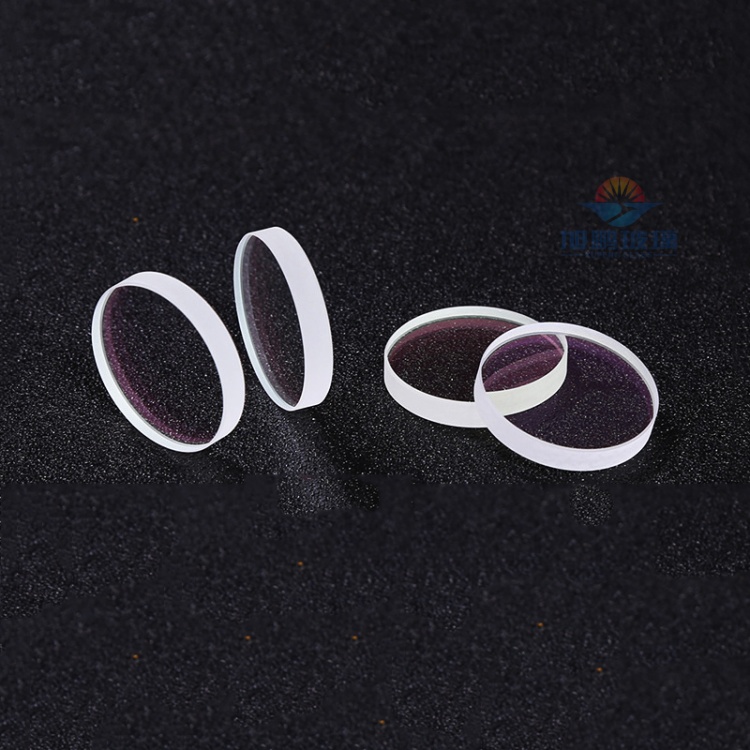
Ultra-clear Tempered Glass, Custom Processing Available: Drilling, Etching, AG Coating Silk Printing, AR Coating
A flexible cover-glass platform for premium touch displays. Combine drilling, etching, AG anti-glare, AR anti-reflection and silk printing in one process route — ideal for outdoor HMIs, kiosks, medical displays and high-contrast control panels.
View product details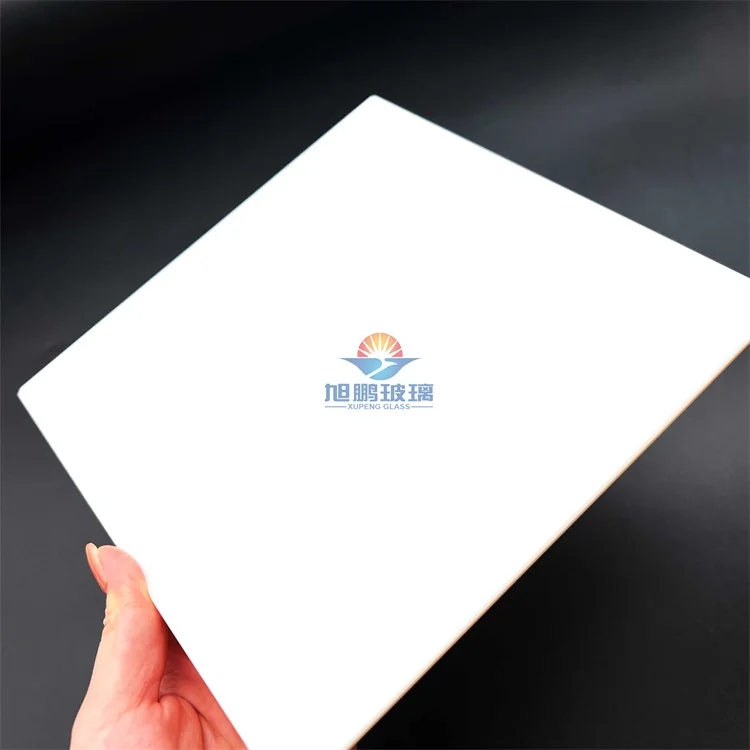
White Ceramic Glass-Ceramic, 4mm & 6mm, High Temperature Resistant Glass-Ceramic
For touch and control surfaces that must tolerate heat, thermal cycling and repeated cleaning. White glass-ceramic is suited to induction cookers, high-temperature appliances, industrial equipment windows and control panels requiring a durable, opaque aesthetic.
View product details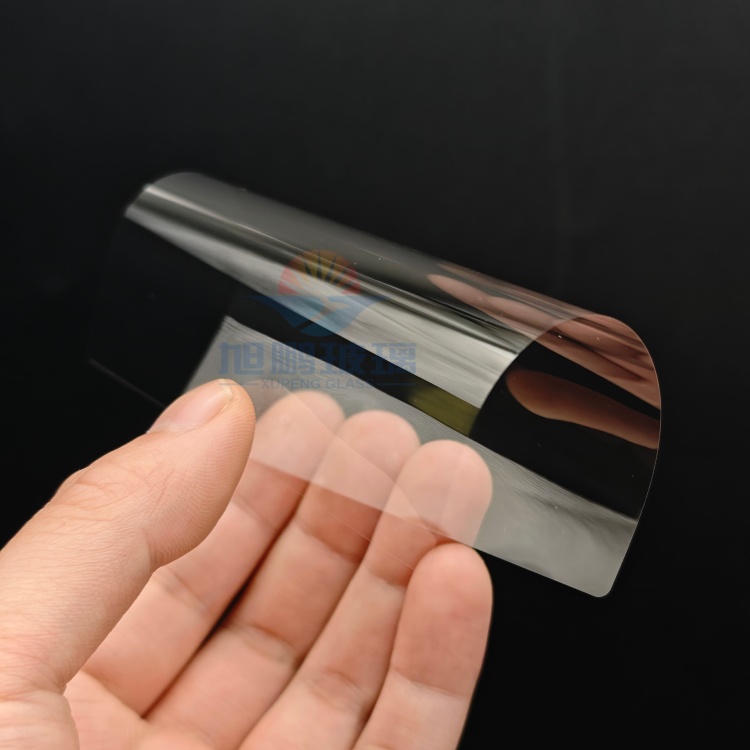
0.03 mm Ultra-thin Flexible Bendable Glass
An advanced substrate for foldable displays, flexible sensors and lightweight protective covers. The ultra-thin glass format needs careful edge treatment, clean handling and packaging control — exactly where an experienced deep-processing supplier adds value.
View product details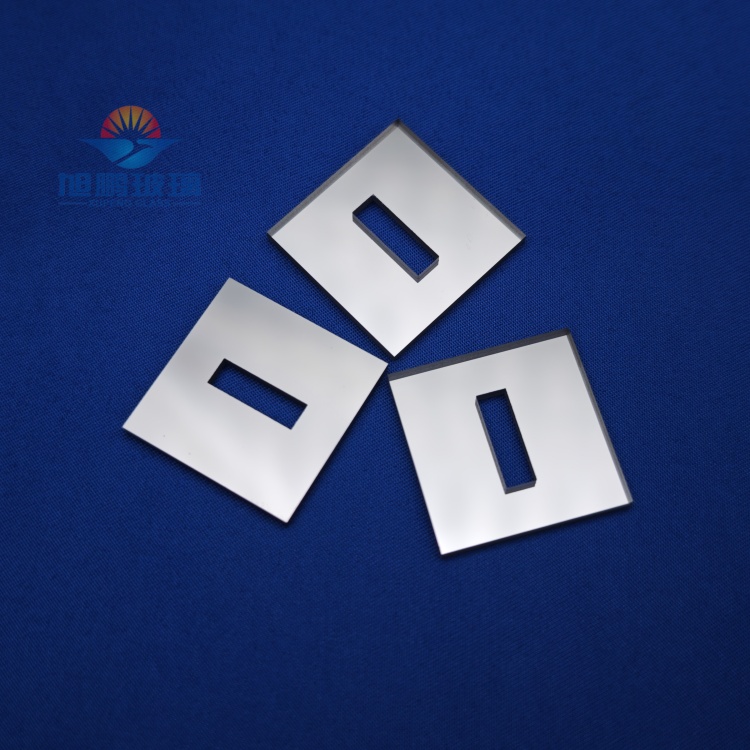
Silver-coated Mirror, Grooved at the Center of Glass
A decorative and functional mirror glass for smart mirrors, appliance faces, display bezels and control-panel accents. Center grooving must be executed without chipping or coating damage, so edge quality and handling discipline are critical.
View product details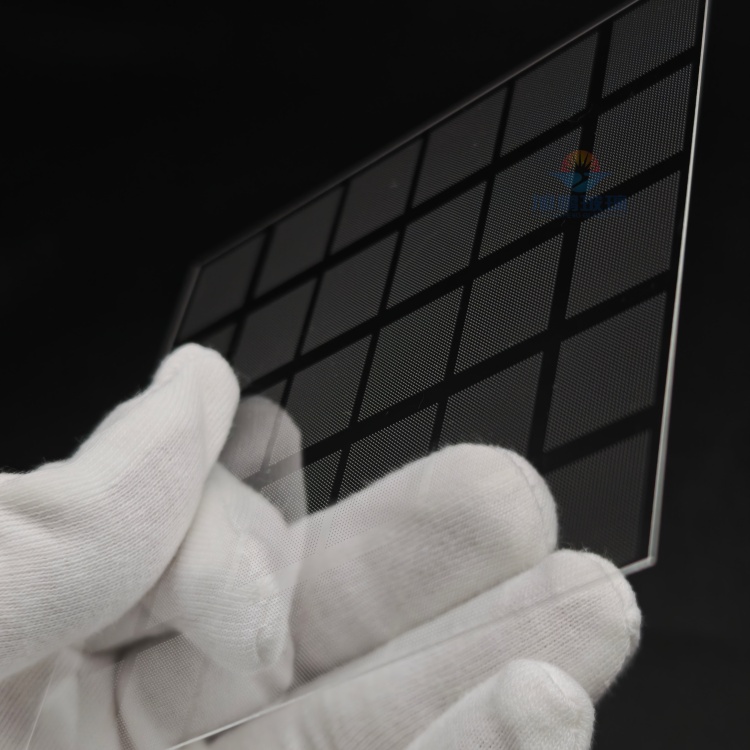
TGV Drilled Packaging Glass Substrate, Precision Laser Microvia Glass
Through-glass via substrates for sensors, RF devices and advanced packaging. Microvia quality, taper control, surface flatness and particle cleanliness all influence downstream yield, making process validation more important than piece price alone.
View product details
Schott BF33 TGV Microvia Glass Wafer, Packaging Substrate for Sensors & Chips
Borosilicate glass wafer formats for sensor and chip packaging where dimensional stability and via consistency matter. Suitable for projects moving from prototype to stable supply, with engineering review available before tooling and production release.
View product detailsWhy Touch Panel Glass Buyers Pay for Process Control, Not Just Glass
Touch panel glass is a system component disguised as a flat part. Two suppliers may quote the same thickness and size, yet produce very different field performance once edge quality, coating durability, ink adhesion, flatness, hole integrity and packing discipline are considered.
Map Every Specification to a Failure Mode Before You Order
The most useful RFQ is not a price request; it is a manufacturability review. For a touch panel cover, clarify visible light transmission, haze, AR reflection target, AG gloss level, surface hardness expectation, edge chip tolerance, hole-to-edge distance, printing registration, coating adhesion and cleaning resistance. Then confirm how those requirements will be measured, packed and repeated batch after batch.
This is where information gain matters. A capable China touch panel glass exporter should help you separate aesthetics from function: the display window must remain optically clean, the printed border must resist abrasion, the adhesive zone must stay flat, and the drilled areas must not become crack initiation points during tempering or shipment.
- Optical control: low-iron substrate, AR/AG balance, transmission and haze targets.
- Mechanical control: tempering route, CNC edge profile, hole layout and micro-crack prevention.
- Print & coating control: high-temperature ceramic ink, AR/AG durability and cleaning resistance.
- Supply control: batch traceability, safe export packing and responsive engineering communication.

Dongguan AUVE Glass: A Factory-Direct China Touch Panel Glass Wholesaler Built for Custom Work
Dongguan AUVE Glass Co., Ltd. integrates R&D, design, production and export in Songshan Lake, Dongguan — one of China’s electronics and optoelectronics clusters. The company processes flat and curved tempered glass, ultra-white and low-iron glass, LCD and touch screen glass, smart control panel glass, LED lamp glass, instrument glass, AR high-transmittance glass and AG anti-glare glass.
Deep Processing Under One Roof
Cutting, CNC edging, drilling, tempering, silk-screen printing, AR/AG coating and inspection are coordinated as one process route. That reduces hand-offs, shortens lead time and gives engineers one point of accountability from drawing to packed carton.
Engineering-Led Customization
Send CAD, DXF or PDF drawings with thickness, tolerance, edge, hole, printing and coating requirements. Production planning covers CNC cutting, edging, drilling, tempering, silk-screen printing and AR/AG coating, with manufacturability reviewed before release.
Verified Buyer Assurance
Buyers can review onsite-checked supplier status, credit index, transaction level, trade capacity, ratings and reviews, and trade history. This evidence-based profile helps sourcing teams reduce supplier risk before a sample or bulk order is placed.
Export Discipline for Fragile Glass
Products are exported to the United States, Canada, Russia, South Korea, Japan, Australia and other markets. Supported terms include FOB, CFR, CIF, EXW, DDP, DDU, DAF and express delivery, with protective film, foam corners and export-grade crates or cartons.
Responsive Technical Communication
Average response time is within 7 hours for technical inquiries. For new projects, share your drawing, target quantity and application environment so the reply can cover material choice, process route, MOQ, tooling and risk notes rather than a generic price list.
Quality Culture & Traceability
Guided by a philosophy of “focusing on high-end glass, pioneering and innovating,” the team follows defined process standards and a documented quality management system so each batch can be traced from raw sheet to packed carton.
From Raw Sheet to Finished Touch Panel Glass
Each process step protects a different performance property. Keeping the route coordinated in one factory helps solve tolerance conflicts early — before a beautiful sample becomes a difficult production order.
Precision Cutting
Float, low-iron and optical stock are cut to drawing, then prepared for CNC shaping and hole layout.
CNC Edging & Drilling
Edge grinding, beveling, grooving, holes and laser punching are controlled to reduce chipping and micro-cracks.
Tempering
Flat and curved thermal tempering improves impact and thermal resistance while balancing optical flatness.
Silk-Screen Printing
High-temperature ceramic inks create durable logos, windows, icons and border graphics with registration control.
AR / AG Coating
Anti-reflective, anti-glare, mirror and functional coatings are selected for display contrast, touch feel and environment.
QC & Export Packing
Dimensional, visual and optical checks are followed by protective interleaving, corner protection and export packing.
What Smart Procurement Teams Will Change in Touch Panel Glass Sourcing
Piece price will always matter, but the next round of supplier selection will be decided by risk, responsiveness and evidence. These shifts are especially relevant for buyers comparing China touch panel glass exporters and wholesalers.
Dual-Source Qualification
Buyers will qualify a primary and a secondary glass supplier with comparable drawings and quality evidence, rather than discovering a process gap during a demand spike.
Traceable Quality Records
Inspection records, material lots, process parameters and packing labels will be requested as standard evidence, especially for automotive, medical and industrial HMI projects.
Faster Engineering Loops
Low-MOQ pilots and rapid manufacturability feedback will decide which supplier joins the next product platform. Slow quotations create hidden engineering cost.
Total Landed Cost
Breakage rate, replacement cost, customs clearance, packing quality and line stoppage risk will be weighed beside unit price. A slightly higher quote can be cheaper when yield is stable.
Compliance & ESG Packaging
Fumigation-free packing, recyclable protection, material declarations and clean documentation will become routine requirements in global glass supply chains.
Regional Inventory Buffers
Rather than relying on one shipment at a time, buyers will plan safety stock by product family and schedule repeat runs for high-use touch panel covers and optical parts.
Procurement Priority Snapshot for Custom Glass Projects
Product Development Trends Shaping the Next Generation of Touch Panel Glass
Demand is moving in two directions at once: thinner and more flexible on the display side, and more robust and precision-engineered on the packaging and industrial side. A wholesaler with deep processing capability must support both paths.
Ultra-Thin Flexible Glass
Thickness down to 0.03 mm enables foldable displays, flexible sensors and lightweight protective layers. Handling, edge strengthening and packing become core supplier capabilities.
TGV & Advanced Packaging
Through-glass vias are moving into sensors, RF devices and chip packaging. Microvia quality, flatness and cleanliness directly affect downstream yield, so process validation comes before price negotiation.
AR/AG Integrated Surfaces
Touch panels increasingly combine anti-reflection, anti-glare, anti-fingerprint feel and durable printing. Buyers will expect coating performance to be validated alongside optical transmission and haze.
Low-Iron Tempered Clarity
Ultra-clear low-iron glass remains the base for high-end display windows because it avoids green edge tint and preserves color fidelity in white and light-color interfaces.
Ceramic Glass for Heat
White ceramic glass-ceramic in 4 mm and 6 mm is expanding into high-temperature control panels, appliances and industrial windows where ordinary tempered glass may not be ideal.
Integrated Printing & Mirror Effects
Touch panels are becoming brand surfaces. High-temperature silk printing, silver-coated mirror effects and precision grooves can combine function and decoration without adding extra parts.
A Practical RFQ Checklist for Custom Touch Panel Glass
Use these four groups to brief a China touch panel glass exporter clearly. The more decision-ready your drawing and performance targets are, the faster the supplier can confirm material, process route and cost.
Drawing & Tolerance
- Size, thickness and corner radius
- Edge profile, bevel and chamfer
- Hole diameter, position and edge distance
- Flatness, bow and dimensional tolerance
Optical Performance
- Visible light transmission target
- AR reflection and AG gloss/haze range
- Color tint and low-iron requirement
- Print color, window ink and registration
Mechanical & Environmental
- Tempering and impact requirement
- Coating adhesion and cleaning resistance
- High-temperature or thermal shock exposure
- Surface hardness and scratch expectation
Commercial & Packing
- Prototype, pilot and mass-production quantities
- MOQ and repeat-order forecast
- Incoterm, destination and label format
- Protective film, crate and replacement policy
Typical MOQ depends on material and process. Many coated and optical glass parts start from 10 to 50 pieces, while standard ultra-clear tempered parts commonly start from 100 to 500 pieces. Sample and pilot quantities can be discussed for new projects.
Touch Panel Glass Export & Wholesale FAQ
Direct answers for engineering, sourcing and purchasing teams comparing China best touch panel glass exporters and wholesalers.
What is touch panel glass, and how should I choose between ultra-clear, AR and AG glass?
Touch panel glass is the transparent cover or substrate that protects a display, sensor or HMI while preserving optical clarity and touch performance. Ultra-clear low-iron glass is usually the base material when color fidelity and clean white transmission matter. AR coating reduces surface reflection and improves contrast, making it suitable for displays, instrument windows and all-in-one PCs. AG coating diffuses glare and is often chosen for outdoor kiosks, industrial panels and bright environments. Many projects combine an AR or AG surface with low-iron tempered glass and high-temperature silk printing.
Can Dongguan AUVE Glass produce touch panel glass to my own drawing?
Yes. Send a CAD, DXF or PDF drawing with thickness, tolerance, edge, hole, printing and coating requirements. The engineering team reviews manufacturability before production, covering CNC cutting, edging, drilling, tempering, silk-screen printing and AR/AG coating. For advanced projects such as TGV glass substrates, flexible ultra-thin glass and ceramic glass-ceramic, early application review helps confirm process feasibility and inspection criteria.
What is the minimum order quantity for custom touch panel glass?
MOQ depends on material and process. Many coated and optical glass parts start from 10 to 50 pieces, while standard ultra-clear tempered parts typically start from 100 to 500 pieces. New projects can discuss sample and pilot quantities before mass production. The final MOQ should be confirmed together with drawing complexity, coating type, printing colors, packing method and annual forecast.
How do you control quality from sample to bulk production?
Quality starts with a manufacturability review and a confirmed drawing or boundary sample. Production then follows a defined process route for cutting, CNC machining, tempering, printing, coating and packing. Inspection can cover dimensions, appearance, edge quality, printing registration, coating appearance and agreed optical requirements. Batch identification and export packing documentation support traceability when customers need to compare repeat shipments.
Which Incoterms and shipping methods do you support?
FOB, CFR, CIF, EXW, DDP, DDU, DAF and express delivery are supported. Glass is fragile, so the packing method must match the shipping mode, route and handling environment. Protective film, interleaving material, foam corners and fumigation-free wooden crates or reinforced cartons can be specified for export orders.
Which markets do you export touch panel glass to?
The company exports to the United States, Canada, Russia, South Korea, Japan, Australia and other markets. Different destinations may require different labels, documentation, packaging language and delivery terms, so include the destination country and consignee requirements in the RFQ.
What should I include in an inquiry to get a useful quotation?
Send the drawing, material preference, thickness, size, surface finish, coating requirement, printing artwork, hole and edge details, target quantity, application environment and destination. If you are unsure about the best glass type, describe the display, temperature, cleaning method and impact requirement. That allows the supplier to recommend a process route instead of quoting an unsuitable part.
How quickly can I receive a technical response?
The average response time is within 7 hours. Include your drawing and quantity for an engineering review. For urgent projects, state the required sample date, production schedule and any testing standard so the reply can prioritize feasibility, lead time and packing requirements.
Send Your Drawing. Get a Manufacturability and Cost Review.
Share your size, thickness, tolerance, edge, hole, printing and coating requirements. Dongguan AUVE Glass will confirm the suitable material, process route, MOQ, lead time and export packing — usually within 7 hours.