What “Top” Should Mean When Comparing China Glass Substrate Exporters
Price matters, but specification control, process depth and export reliability decide whether a glass substrate order protects your program or creates hidden rework cost.
China is not a single supplier market; it is an industrial ecosystem of float-glass lines, precision finishing shops, tempering plants, coating houses, optical polishing teams and export packers. The practical difference between a qualified glass substrate exporter and wholesaler and a basic trading listing is not the ability to email a quotation. It is the ability to control specification risk before production begins. For procurement teams, “top” should mean documented material traceability, drawing review, repeatable process capability, inspection records, export-grade packaging and a communication loop fast enough to stop a costly batch from becoming scrap.
A glass substrate is the base material that carries a function: a display cover, touch sensor base, semiconductor wafer, UV window, mirror, welding filter, instrument lens or flexible UTG layer. Two suppliers can quote the same size and thickness and still deliver very different parts, because substrate grade, CTE, visible-light transmission, flatness, edge micro-cracks, coating adhesion and tempering stress are not identical. That is why a low price without a specification review is not a real saving. The better evaluation asks whether the supplier can match material, geometry, coating, printing, packaging and compliance in one controlled route.
Dongguan AUVE Glass Co., Ltd. is built around that factory-direct model. The company integrates R&D, design, production and export in Songshan Lake, Dongguan — one of China’s leading electronics and optoelectronics clusters. Its production scope covers flat and curved tempered glass, ultra-clear low-iron glass, laminated and painted glass, LCD and touch screen cover glass, smart control panel glass, LED lighting glass, instrument glass, AR high-transmittance glass, AG anti-glare glass and optical materials such as K9, quartz, sapphire, borosilicate and Corning EXG alkali-free glass. For buyers who need one partner for multiple glass functions, this range reduces split shipments and tolerance mismatches between separate suppliers.
Eight Glass Substrate Products for High-Value OEM Programs
These products reflect real factory capability in thin flexible glass, quartz, sapphire, alkali-free wafers, tempered glass, CNC processing and high-temperature printing. Final specifications are confirmed against your drawing, quantity and acceptance standard.
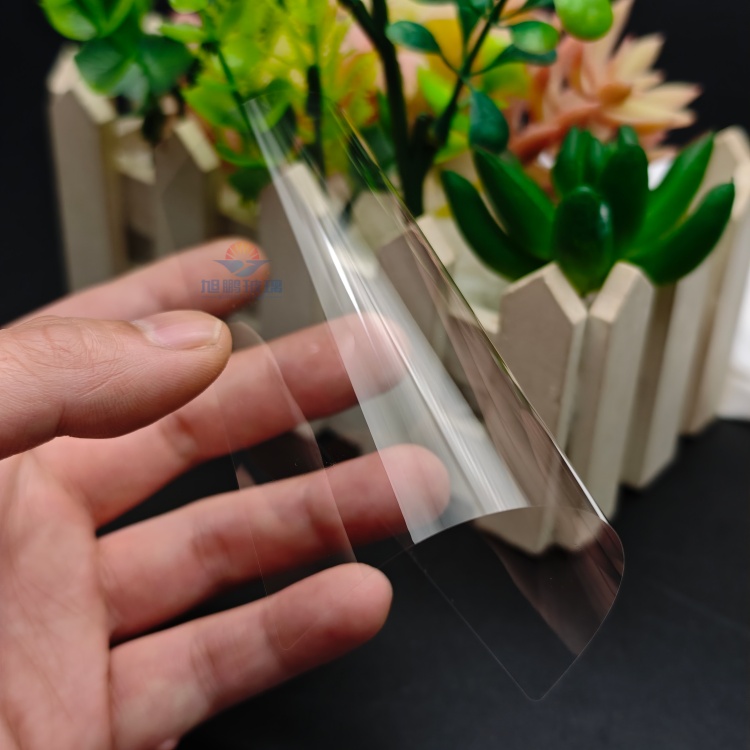
Ultra-thin Flexible UTG Glass, bendable and foldable, suitable for commercial aerospace and new energy industries
Ultra-thin glass for programs where low mass, bendability, optical clarity and material stability must coexist. Suitable for flexible device structures, specialty aerospace interfaces and new-energy research builds.
View product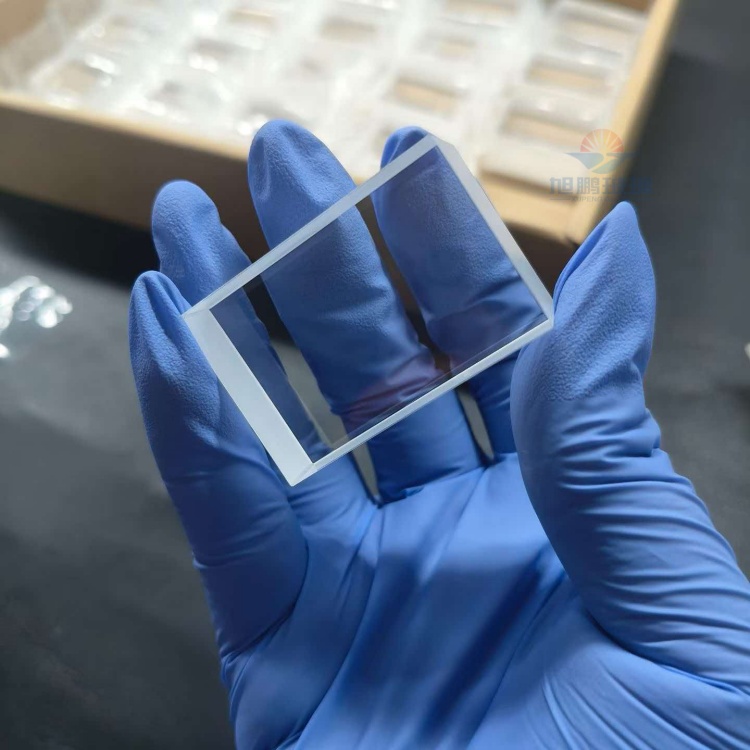
High UV Transmission Thick Gauge Thick Quartz Glass Plate
Thick-gauge fused quartz for UV curing, UV disinfection, high-temperature viewports and inspection windows. Offers high UV transmission with strong thermal shock performance.
View product
Corning EXG Glass Wafer Double-Sided Polished for Custom Semiconductor Glass Wafers & Solar Panels
Double-side polished alkali-free glass wafer with low CTE and clean surface quality for semiconductor, MEMS, display substrate and solar research applications.
View product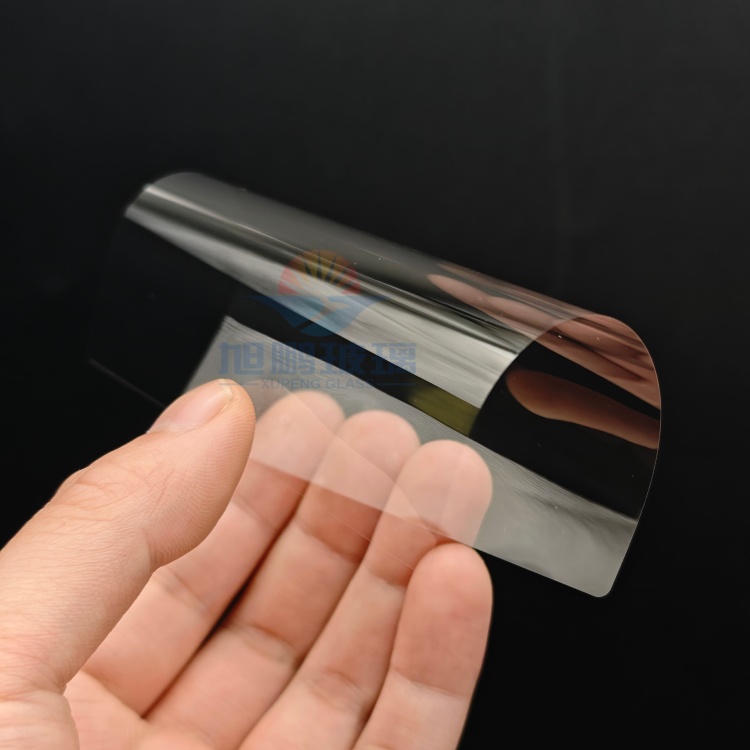
0.03 mm Ultra-thin Flexible Bendable Glass
Extremely thin flexible glass for foldable display stacks, flexible electronics and lightweight optical assemblies. Supports prototype, pilot and repeat-production discussions.
View product
Precision CNC Cut & Holed, High-temperature Silk Screen Tempered Glass, Drilled Ultra-clear Small Round Glass Discs
Small-format ultra-clear tempered discs with CNC holes, edge finishing and fired ceramic ink. Ideal for device view windows, instrument interfaces and compact control covers.
View product
CNC Carved Low Iron Glass Sheet, High-temperature Screen Printed Tempered Glass, Drilled Glass Panel
Low-iron tempered glass with CNC carving, drilling and high-temperature screen printing. A practical choice for appliance panels, control covers and architectural electronics.
View product
Welding Black Filter Glass, Beveled Edge Grinding, Long Irregular-shaped Welding Filter Glass
Black filter glass for welding masks, goggles and optical safety assemblies. Beveled edge grinding and irregular shapes help match tight mechanical enclosures.
View product
High Transmittance Sapphire Glass, Scratch Resistant & High Temperature Resistant Sapphire Glass Sheets
Sapphire sheets for sensor windows, harsh-environment optics and premium wear surfaces. Offers high transmittance, Mohs-level scratch resistance and excellent temperature resistance.
View productMatch the Substrate to the Failure Risk, Not Just the Drawing
Experienced buyers shortlist material and process together. A dimensionally correct part can still fail through coating adhesion, thermal stress, edge chipping or insufficient transmission.
Display & Touch Electronics
Prioritize ultra-clear low-iron glass, AR anti-reflective coating, AG anti-glare etching and precise silk-screen printing. Check reflection target, haze, transmission, flatness and ink adhesion before approving a cover glass program.
Semiconductor & Photonics
Use alkali-free Corning EXG, K9 optical glass, fused quartz or sapphire according to CTE, transmission band, surface quality and cleaning compatibility. Surface defects and flatness often matter more than nominal thickness.
UV, Energy & Aerospace
Thick quartz, UV-grade windows, UTG and sapphire support demanding thermal, optical and mass requirements. Buyers should specify UV transmission, thermal shock, edge quality and mounting method in the RFQ.
Industrial Safety & Instruments
Welding filter glass, printed tempered glass and CNC low-iron panels serve harsh industrial environments. Beveled edges, impact resistance, optical density and high-temperature ink durability should be defined early.
Glass Substrate Comparison for Procurement and Engineering Teams
Use this as a starting point for supplier discussion. Final acceptance criteria should be written into your drawing, sample approval record and purchase order.
| Glass Substrate | Selection Value | Best-Fit Applications | Available Processing |
|---|---|---|---|
| Ultra-Clear Low-Iron Tempered | High visible clarity, minimal green edge tint, tempered strength for covers and panels. | Smart control panels, appliance covers, LED fixtures, light boxes. | CNC shaping, drilling, edge polishing, silk-screen, AR/AG coating. |
| AR Coated Glass | Reduces surface reflection and improves display contrast, especially under strong light. | Touch modules, all-in-one PCs, museum windows, instrument displays. | Single- or double-side AR, tempering, printing, custom sizes. |
| AG Anti-Glare Glass | Diffuses reflected light with selectable gloss and haze for visual comfort. | Outdoor LCDs, industrial HMIs, kiosks, medical and lab interfaces. | Etched AG, AG plus AR, tempering, edge treatment. |
| Silk-Screen Printed Tempered | Fired ceramic ink creates durable graphics, windows, icons and alignment marks. | Instrument panels, home appliances, switch covers, socket covers. | Multi-color printing, IR/window ink, holes, CNC cut-outs. |
| K9 Optical Glass | Borosilicate crown material with stable optical performance and low inclusions. | Lenses, prisms, optical instrument windows, imaging components. | Precision polishing, coating, CNC edging, drilling. |
| Fused Quartz | High UV transmission and strong thermal shock resistance for severe environments. | UV curing, UV disinfection, high-temperature viewports, lab equipment. | Thick-gauge cutting, polishing, drilling, edge fire-polishing. |
| Sapphire Glass | Excellent scratch resistance, high transmittance and high-temperature capability. | Sensor covers, wear-critical windows, harsh-environment optics. | Cutting, polishing, chamfering, thickness customization. |
| Corning EXG Alkali-Free | Alkali-free composition and low CTE for semiconductor and display substrate work. | Semiconductor wafers, MEMS, solar research, display substrates. | Double-side polishing, wafer dicing, cleaning and packing. |
| Ultra-Thin Flexible Glass | Thickness down to 0.03 mm with bendability for next-generation form factors. | Foldable displays, flexible electronics, aerospace and new-energy prototypes. | Precision cutting, edge strengthening, lamination support. |
Values are typical reference data for early material selection. Final transmission, tolerance, coating and test specifications must be confirmed against your drawing and agreed inspection method before mass production.
How Glass Substrate Buying Will Change Through 2025–2030
Procurement is shifting from transaction pricing toward technical risk management. Buyers who prepare supplier data packages now will shorten qualification cycles later.
Specification-First RFQs
More buyers now send CTQ drawings, acceptance tests, sample sizes, coating targets and packaging requirements with the first inquiry. Suppliers that can review manufacturability and respond with a process route will win over those that only quote a price per piece.
Dual Sourcing with a China Process Hub
Many OEMs keep a second source for risk control but continue to use China for deep processing, custom coatings, optical polishing and flexible thin-glass work. The winning model is not single-country dependence; it is audited dual sourcing with clear process ownership.
Traceability and Landed Total Cost
Buyers increasingly compare landed total cost, not ex-works price. Breakage, rework, inspection, freight, customs and line downtime can erase a low quotation. Batch traceability and consistent packing data are becoming qualification requirements rather than nice-to-have documents.
High-Mix, Small-Batch Programs
Custom glass programs increasingly involve more SKUs, lower initial volumes and faster design iterations. Flexible cutting, CNC processing, low-MOQ coating runs and sample-to-pilot pathways help buyers validate a design before committing to large tooling or inventory.
Where Glass Substrate Technology Is Moving Next
Product roadmaps increasingly require glass that does more than protect. The substrate becomes part of the optical, thermal or electronic function.
Thinner, Flexible, Stronger Glass
Ultra-thin glass down to 0.03 mm is moving from concept samples into foldable displays, flexible sensors and lightweight aerospace structures. Edge quality, handling, lamination and inspection become more important as thickness decreases.
Coating Convergence
AR, AG, anti-fingerprint, hydrophobic and easy-clean functions are increasingly requested in one stack. Adhesion, durability, haze and transmission must be balanced together, so coating suppliers and glass processors need a shared qualification process.
Semiconductor-Grade Substrates
Alkali-free glass, low-CTE wafers and precision quartz are gaining attention in semiconductor, MEMS, photonics and solar research. Cleanliness, flatness, surface defects and lot traceability matter more than simple dimensional tolerance.
High-Temperature & Printed Glass
Fired ceramic inks, precision holes, beveled edges and high-temperature windows are improving durability in industrial and appliance products. Buyers are also asking for stronger integration of printing, coating and forming in one supplier route.
Why Dongguan AUVE Glass Is a Practical China Glass Substrate Partner
Supplier authority is proven through factory capability, traceable trading history and technical communication — not by a slogan alone.


Dongguan AUVE Glass Co., Ltd. is a deep-processing glass manufacturer integrating R&D, design, production and export in Songshan Lake, Dongguan, Guangdong — one of China’s leading electronics and optoelectronics clusters. Founded in 2018, the company operates with 51–100 skilled employees in a 1,001–2,000 m² facility and exports to the United States, Canada, Russia, South Korea, Japan, Australia and other markets.
The production scope covers flat and curved tempered glass, ultra-white, laminated and painted glass, LCD and touch screen glass, smart control panel glass, LED lamp glass, instrument glass, AR high-transmittance glass, AG anti-glare glass and optical materials such as K9, quartz, sapphire, borosilicate and Corning EXG alkali-free glass. Supported by the philosophy of “focusing on high-end glass, pioneering and innovating,” the team keeps investing in engineers, equipment and controlled process development.
For buyers, the advantage is not simply factory-direct pricing. It is the ability to consolidate cutting, CNC edging, drilling, tempered processing, high-temperature silk-screen printing, AR/AG coating, optical polishing and export packing under one quality system. Production follows defined process standards and a documented quality management system, so every batch can be traced from raw sheet to packed carton.
- Drawing-based DFM review before quotation
- In-house cutting, CNC, tempering, printing and coating
- Documented inspection and batch traceability
- Export packing engineered for fragile glass parts
- FOB, CFR, CIF, EXW, DDP, DDU, DAF and express support
- Verified supplier data, trade history and buyer feedback
From Drawing to Export Carton: A Repeatable Glass Substrate Workflow
A strong process does not hide problems at final inspection. It prevents them at the step where the risk is created.
Drawing & Manufacturability Review
CAD, DXF or PDF drawings are reviewed for thickness, tolerance, edge profile, holes, printing, coating and handling risk before quotation.
Material Selection & Sample Plan
The specification is matched to low-iron, quartz, sapphire, K9, alkali-free or UTG material, followed by a sample and acceptance plan when required.
Precision Cutting & CNC
Automatic cutting, CNC shaping, edging, beveling, drilling and hole processing convert raw sheet into the required geometry.
Tempering, Printing & Coating
Flat or curved tempering, high-temperature ceramic ink printing and AR/AG functional coating are aligned with the approved sample.
Inspection & Optical Checks
Dimensional, visual, edge and optical checks are performed according to the agreed inspection method and product risk level.
Export Packing & Documentation
Protective film, foam separation and reinforced cartons or wooden crates support safe sea, air, express or DDP shipment.
What to Confirm Before You Approve a Glass Substrate Wholesale Order
Use the inquiry stage to reduce future disputes. Clear inputs create a better quote and a faster qualification cycle.
Audit Identity and Onsite Status
Check legal name, address, onsite verification status, credit index, transaction level and trade history. A real factory profile should connect to the quotation, bank details and shipment documents.
Confirm Process Capability
Ask how each CTQ will be made: edge micro-cracks, hole chipping, coating haze, printed ink adhesion, flatness and tempering stress. Capability should be linked to equipment and inspection method.
Require Sample and First Article Data
For new projects, approve the sample, first article report and packaging method before mass production. Include measurement method, sampling plan and defect classification in the approval record.
Lock Incoterms and Packing
Confirm FOB, CFR, CIF, EXW, DDP, DDU, DAF or express delivery, plus crate marking, desiccant, corner protection and replacement policy for transit damage. Clear terms prevent avoidable claims.
Frequently Asked Questions About China Glass Substrate Export & Wholesale
Straight answers for procurement, engineering and quality teams comparing a China glass substrate exporter or wholesaler.
What is a glass substrate, and how is it different from ordinary tempered glass?
A glass substrate is the base material selected for a downstream function, such as display covering, optical transmission, semiconductor processing or UV windows. Ordinary tempered glass mainly emphasizes safety strength. A substrate specification may also control CTE, transmission, flatness, surface quality, coating adhesion and chemical compatibility.
Can you manufacture from my CAD, DXF or PDF drawing?
Yes. Send the drawing with thickness, dimensions, tolerance, edge profile, holes, printing, coating and packing requirements. The engineering team reviews manufacturability before production and can recommend material or process adjustments where risk is identified.
What is the MOQ for export and wholesale orders?
MOQ depends on material and process. Many coated and optical glass parts can start from 10 to 50 pieces, while standard ultra-clear tempered parts typically start from 100 to 500 pieces. Sample and pilot quantities can be discussed for new projects.
Which glass materials can be sourced in one project?
The range includes ultra-clear low-iron, tempered, AR/AG coated, silk-screen printed, K9 optical, fused quartz, sapphire, borosilicate, Corning EXG alkali-free and ultra-thin flexible glass. Combining materials in one supplier route can reduce split shipments and tolerance mismatch.
How do you protect fragile glass during shipping?
Export packing can include interleaving film or paper, foam corner protection, separation layers, reinforced cartons or fumigation-free wooden crates. The packing method is selected according to size, thickness, coating, quantity and shipping mode.
Which Incoterms and markets do you support?
Supported terms include FOB, CFR, CIF, EXW, DDP, DDU, DAF and express delivery. Products are exported to the United States, Canada, Russia, South Korea, Japan, Australia and other markets, with documentation prepared for the agreed trade term.
How quickly can I receive a technical response?
The average response time is within 7 hours. For a faster engineering review, include the drawing, target quantity, material preference, application environment and required delivery term in the first message. Email info@auveglass.com for technical follow-up.
What quality documentation can be discussed before shipment?
Depending on the product and order, inspection records, dimensional and visual check data, sample approval records, packing photos and batch identification can be discussed. Acceptance criteria should be agreed before mass production so both teams measure against the same standard.
Send Your Drawing for a Factory-Direct Glass Substrate Review
Share your size, thickness, material, tolerance, coating, printing, quantity and delivery target. The team will confirm the process route, packing method and quotation direction — usually within 7 hours.
Send an InquiryEmail: info@auveglass.com · Dongguan AUVE Glass Co., Ltd. · Songshan Lake, Dongguan, Guangdong, China