A Factory and Wholesaler for Custom Glass Cover Plates, Not a Catalogue Middleman
When buyers search for a custom OEM glass cover plate factory and wholesaler, the real intent is rarely to buy a generic sheet. They need a qualified manufacturing partner who can interpret a drawing, recommend a material, control coating and printing, protect fragile parts in transit, and repeat the specification on future orders.
AUVE Glass operates at that intersection: a Dongguan-based deep-processing glass manufacturer founded in 2018, with an integrated R&D, design, production and export workflow in the Songshan Lake electronics and optoelectronics cluster. The factory processes flat and curved tempered glass, ultra-white and low-iron glass, laminated and painted glass, LCD and touch screen cover glass, smart control panel glass, LED lighting glass, instrument glass, AR high-transmittance glass, AG anti-glare glass, and optical materials such as K9, quartz, sapphire, borosilicate and Corning EXG alkali-free glass.
For procurement teams, that breadth matters. One qualified source can cover multiple cover-plate categories, reduce supplier fragmentation, and keep drawing-based manufacturing, coating, printing, inspection and export packing under a single communication loop. The result is not simply a lower quote. It is a clearer process route, fewer handoffs, and more predictable repeat production.
Eight OEM Glass Cover Plate Products for Drawing-Based Customization
The eight cover-plate and substrate families below reflect real production routes at AUVE Glass. Each base configuration can be adjusted in dimensions, thickness, tolerance, edge profile, holes, printing, coating and packing to match the assembly.
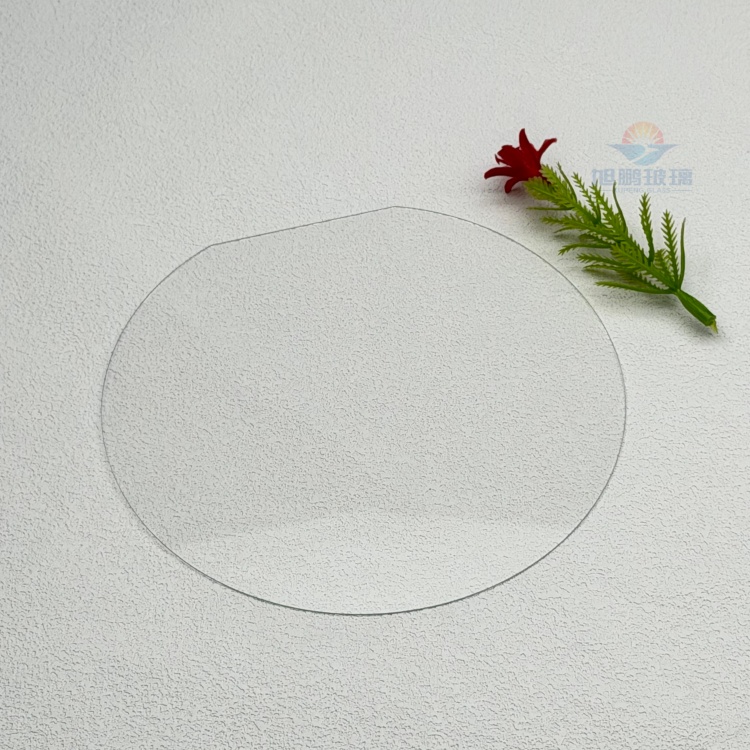
Round Aluminosilicate Glass with Chamfered Ground Edges and Metal Coating
Round cover glass with chamfered edges and metal coating for displays, sensors and decorative control surfaces. The edge treatment reduces handling risk while the coating adds functional or aesthetic value for projects needing edge quality plus selective reflectivity.
View product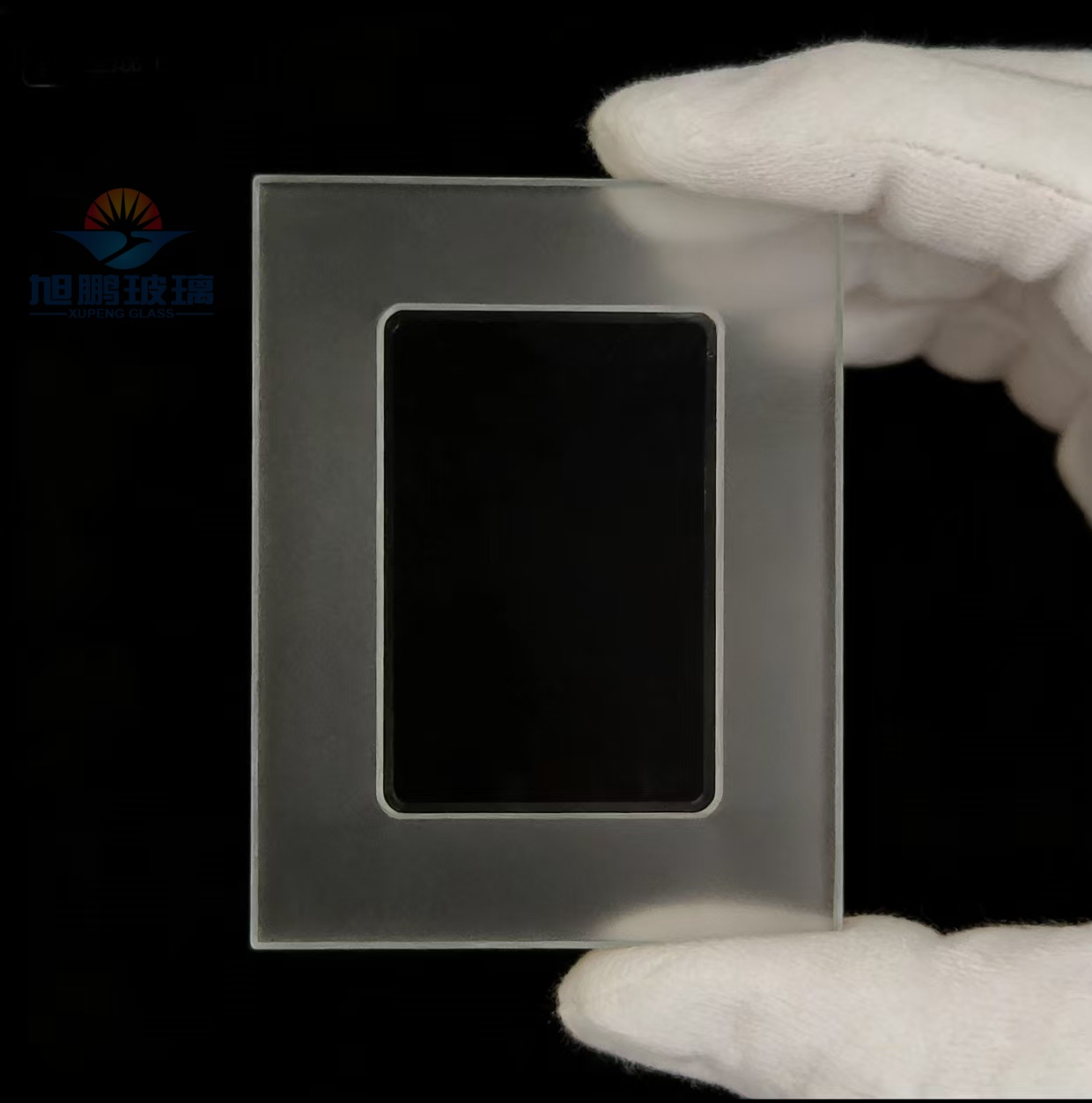
Custom Ultra-White Clear Tempered Glass Socket Decorative Cover for Stairways
Ultra-white tempered glass socket cover for stairways and decorative electrical interfaces. Custom cut-outs, printing and edge treatment keep the cover aligned with architectural finishes for residential, hospitality and commercial interiors.
View product
Schott Ultra-thin Optical Glass Sheets, 0.1mm, 0.5mm, 0.7mm, 1.1mm, Raw Semiconductor Electronic Glass Substrates
Schott ultra-thin optical glass substrates from 0.1 mm to 1.1 mm for semiconductor, electronic and optical applications. Raw sheets support downstream cutting, polishing, coating and inspection where thickness control and optical clarity matter.
View product
Precision CNC Cut & Holed, High-temperature Silk Screen Tempered Glass, Drilled Ultra-clear Small Round Glass Discs
CNC-cut, drilled and high-temperature silk-screen printed tempered glass discs. The combination of holes, printing and ultra-clear tempering suits view windows, appliance interfaces and instrumentation where every tool path is confirmed against the drawing.
View product
High-transmittance AR Coated Optical Glass, Ultra-clear Tempered Glass
AR-coated ultra-clear tempered glass for touch screens, all-in-one PCs, instrument windows and museum glazing. Double-side AR reduces surface reflection and improves contrast, with optional tempering, edge grinding, printing and custom packing.
View product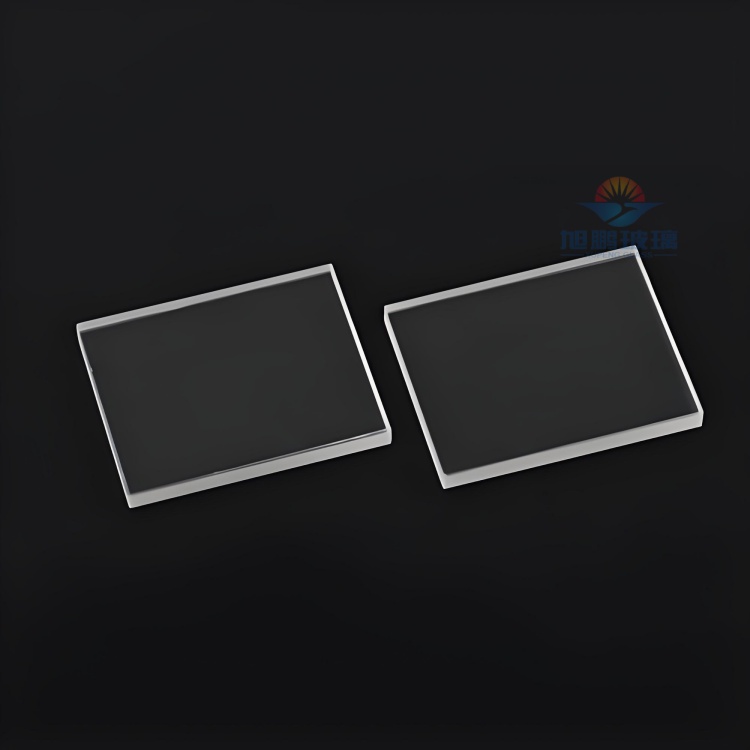
Tempered Glass Customized High Temperature Resistant, High Transparency and High Borosilicate Mirror Window Glass
High-borosilicate tempered mirror and window glass for heat-resistant viewing windows, fireplace applications, appliances and high-transparency covers. The material handles thermal stress better than standard soda-lime glass in selected designs.
View product
Wafer Glass Thickness Circuit Board Chip Solar Silicon Ingot Substrate
Wafer-thickness glass for circuit boards, chip carriers, solar silicon ingot substrates and related semiconductor fixtures. Buyers can discuss thickness, flatness, surface quality and cleaning requirements as a specification-driven project.
View product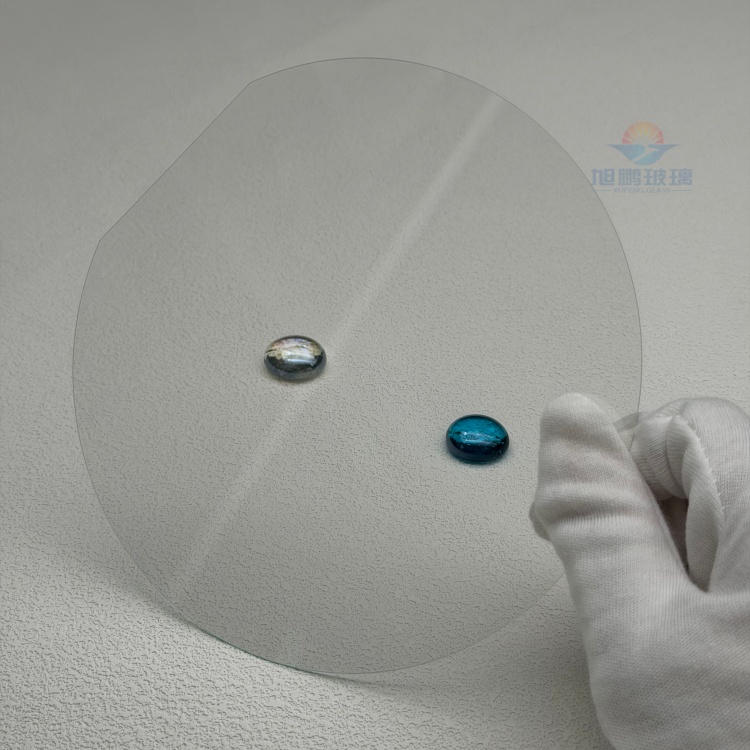
Ultra-thin Optical Glass Sheets Schott B270/D263T Semiconductor Electronic Glass Blank Cutting & Processing
Schott B270 and D263T ultra-thin glass blanks with cutting, edging, drilling and optional coating. These materials are widely used in display, electronic and optical assemblies, with handling and packing reviewed before quoting.
View productMatch Each Glass Cover Plate to Its Operating Environment
The fastest way to reduce sampling cycles is to specify by use environment. The matrix below translates common buyer intent into a recommended glass route; final selection still depends on drawings, tolerances and agreed test standards.
Display & HMI Cover Glass
For touch modules, control panels, kiosks and all-in-one PCs, start with ultra-clear low-iron tempered glass or AR-coated cover glass. Consider AG etching if the device is used under bright ambient light, and specify visible transmission, haze, gloss, flatness and print windows.
Appliance & Decorative Glass
For socket covers, switch plates, appliance fronts and architectural interfaces, ultra-white tempered glass with silk-screen printing and custom cut-outs is usually the most economical route. Edge polishing and back-lighting compatibility should be confirmed early.
Semiconductor & Optical Substrates
For wafers, sensor windows and optical fixtures, look toward Schott B270/D263T, K9, quartz, sapphire or Corning EXG substrates. Thickness tolerance, surface quality, cleaning and packing are more important than cosmetic appearance alone.
High-Temperature & UV Windows
For ovens, fireplaces, UV curing and disinfection equipment, select borosilicate or quartz glass and define thermal shock, UV transmission and sealing requirements. Tempering may not be appropriate for every high-temperature design, so engineering review is essential.
Procurement Trends OEM Buyers Should Plan for in 2025–2026
Buyer intent is shifting from “find a glass supplier” to “find a process partner who can prove capability.” These four procurement trends are shaping how custom OEM glass cover plates are sourced.
Consolidated Supplier Platforms
Buyers are reducing the number of glass vendors and asking one qualified factory to handle tempered, printed, coated and optical parts. Consolidation lowers audit costs, shortens communication loops and improves batch consistency across product families.
Documentation Before Price
RFQs increasingly include CAD, DXF, STEP, tolerance stacks, coating targets, ink codes, packing standards and inspection criteria. A supplier who can review manufacturability early is more valuable than a quote-only trader.
Lower-Risk Pilot Batches
New programs often start with samples or pilot batches before mass production. Flexible MOQs for coated and optical parts, clear sample timelines and traceable inspection records help buyers prove a design before committing tooling or large orders.
Resilient Export Logistics
Fragile glass sourcing now includes packing validation, Incoterm flexibility and multi-mode shipping. DDP, DDU, CIF, FOB and express options are compared not only on freight cost but on damage risk, customs clarity and replenishment speed.
Product Development Trends in Custom Glass Cover Plates
Material and finishing requirements are becoming more application-specific. The following trends are already visible in inquiries from display, appliance, optical and semiconductor-adjacent buyers.
Thinner, Stronger Cover Stacks
Ultra-thin glass and chemically strengthened or tempered configurations continue to move into foldable displays, wearables and compact sensors. Handling and edge quality become the limiting factors, so factory process discipline matters as much as material data.
Functional Coating Combinations
AR, AG, AF and selective metal coatings are increasingly specified together. Buyers want measurable optical targets: reflection, transmission, haze, gloss and color shift. Coating compatibility with printing and tempering must be tested as a stack.
Printed Glass as an Interface
Silk-screen printed glass is no longer only decorative. It defines icons, windows, light diffusion and hidden circuitry. High-temperature ceramic inks and multi-layer printing allow durable graphics that survive cleaning and outdoor use.
Semiconductor and UV Demand
Alkali-free, quartz and sapphire substrates are growing in sensor, UV and semiconductor-adjacent applications. Cleanliness, flatness and packing standards are becoming purchasing criteria, not afterthoughts.
Why AUVE Glass Works as Your OEM Factory & Wholesaler
The advantage is not a single machine or a single low price. It is the ability to translate a drawing into a repeatable process, then ship the result safely across borders. AUVE Glass combines a deep-processing production base in Dongguan with export-facing commercial support for OEMs, brand owners and distributors.
Engineering Review Before Production
Send CAD, DXF, PDF or STEP drawings. Engineers review thickness, tolerance, edge, hole, printing and coating requirements before production. This catches manufacturability issues early and reduces rework.
Integrated Process Chain
Cutting, CNC edging, drilling, tempering, silk-screen printing, AR/AG coating, polishing and inspection are coordinated under one quality system. Fewer handoffs mean clearer accountability.
Coating and Printing Depth
AR anti-reflective, AG anti-glare, mirror and functional coatings can be combined with tempered or optical substrates. High-temperature ceramic inks support durable logos, windows and icons.
Traceable Quality Control
Production follows defined process standards and a documented quality management system. Dimensional, visual and optical checks are recorded so batches can be traced from raw sheet to packed carton.
Verified Trade Profile
Buyers can review onsite verification, credit index, transaction level, trade capacity and buyer feedback before ordering. These public signals reduce supplier-vetting risk for first-time and repeat buyers.
Export Packing and Terms
FOB, CFR, CIF, EXW, DDP, DDU, DAF and express delivery are supported. Protective film, foam corners, wooden crates and batch labels are selected for fragile glass parts.
Buyers can verify AUVE Glass through the supplier assessment, credit index, transaction level, trade capacity and ratings & reviews before requesting a sample.



Factory Capability Data for OEM Buyers
The bars below summarize the production disciplines buyers most often audit. They are qualitative planning indicators, not a substitute for a drawing-specific process capability study.
Cutting
Automatic and CNC cutting from float, low-iron, borosilicate and optical stock.
CNC Shaping
Edging, beveling, grooving, drilling and laser punching against the drawing.
Tempering, Printing & Coating
Thermal tempering, ceramic ink printing and AR/AG or mirror coating routes.
QC & Export Packing
Dimensional, visual and optical checks, then protective packing for fragile glass.

Material and Process Selection Guide for Custom Glass Cover Plates
Use this table to shortlist a material and finishing route before sending a drawing. Final specifications are confirmed against thickness, tolerance, optical targets and agreed test standards.
| Application | Recommended Glass | Typical Finishing | Buyer Check |
|---|---|---|---|
| Display & HMI | Ultra-clear low-iron tempered glass; AR or AG coated cover glass | CNC shaping, printing, AR/AG coating, edge grinding | Reflection, transmission, haze, gloss, flatness, print windows |
| Appliance & decorative | Ultra-white or low-iron tempered glass | Silk-screen printing, drilling, cut-outs, edge polishing | Color consistency, cut-out tolerance, impact resistance |
| Semiconductor & optical | Schott B270/D263T, K9, quartz, sapphire, Corning EXG | Precision polishing, cutting, coating, wafer dicing | Thickness, flatness, surface quality, cleanliness, packing |
| High-temperature & UV | Borosilicate or quartz glass | Cutting, polishing, drilling, optional coating | Thermal shock, UV transmission, sealing method |
| Touch & AR windows | AR coated optical glass or ultra-clear tempered glass | Single/double-side AR, tempering, printing | Transmission gain, color shift, durability, coating side |
| Ultra-thin & flexible | Thin optical glass down to 0.03–1.1 mm | Precision cutting, edge strengthening, optional coating | Bend radius, edge quality, handling, packing method |
FAQ for Custom OEM Glass Cover Plate Buyers
Straight answers to the questions engineering and sourcing teams ask most often when qualifying a factory and wholesaler.
What is the MOQ for custom OEM glass cover plates?
MOQ depends on material and process. Many coated and optical glass parts can start from 10–50 pieces, while standard ultra-clear tempered parts often start around 100–500 pieces. For a new project, discuss sample or pilot quantities with the engineering team.
Can you manufacture from CAD, DXF, PDF or STEP drawings?
Yes. Send the drawing with thickness, tolerance, edge, hole, printing, coating and packing requirements. Engineers review manufacturability before production and flag features that may affect yield or cost.
Which glass types can AUVE process?
Flat and curved tempered glass, ultra-clear low-iron glass, laminated and painted glass, AR/AG coated glass, silk-screen printed glass, LCD and touch cover glass, LED lighting glass, instrument glass, K9, quartz, sapphire, borosilicate and Corning EXG alkali-free glass.
How should coatings and printing be specified?
Define optical targets such as transmission, reflection, haze or gloss; ink color, print side, window size and durability; and whether coating is single-side or double-side. The process route is confirmed against your test standard.
How do you pack fragile glass for export?
Protective film or paper interleaving, foam corner protection, batch labels and fumigation-free wooden crates or reinforced cartons are selected by part size and route. Packing can be reviewed with your forwarder.
Which markets and Incoterms do you support?
AUVE Glass exports to the United States, Canada, Russia, South Korea, Japan, Australia and other markets. FOB, CFR, CIF, EXW, DDP, DDU, DAF and express delivery are supported, with average response within 7 hours.
Have a Drawing? Get an Engineering Review Before You Commit to Tooling.
Share your size, thickness, tolerance, edge, hole, printing and coating requirements. AUVE Glass will confirm the material route, sample path, MOQ and lead time — usually within 7 hours.
Inquire Now