Custom OEM Tempered Glass Plate Exporters & Wholesaler
Factory-direct ultra-clear, AR/AG coated, silk-screen printed and precision optical glass — engineered to your drawings and shipped to six verified global markets.
8 Production-Ready Custom Glass Products Worth Quoting
Every item below is a live production build rather than a catalogue mock-up. Size, thickness, edge profile, hole pattern, printing and coating can all be adapted to your assembly drawing.
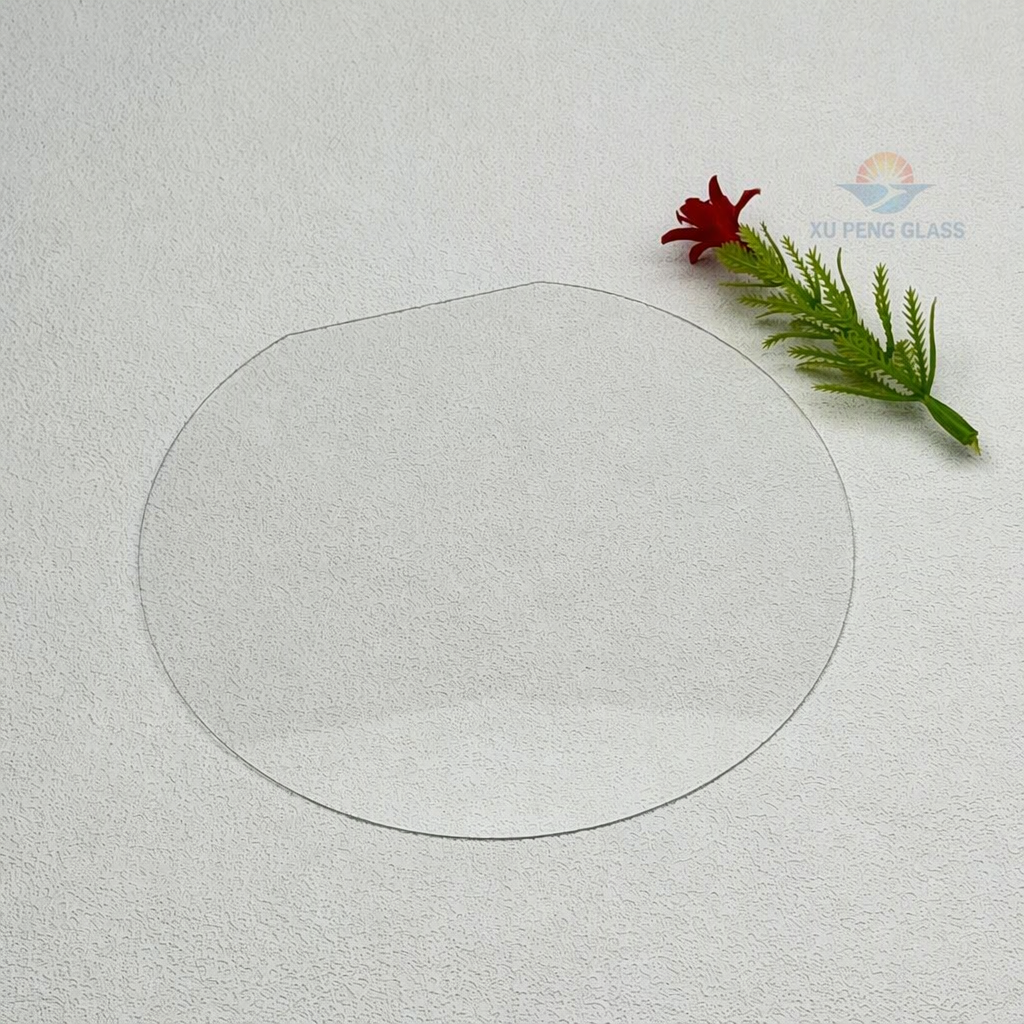 Optical
Ultra-thin High-precision Optical Glass Wafer, Corning / SCHOTT / Fused Silica
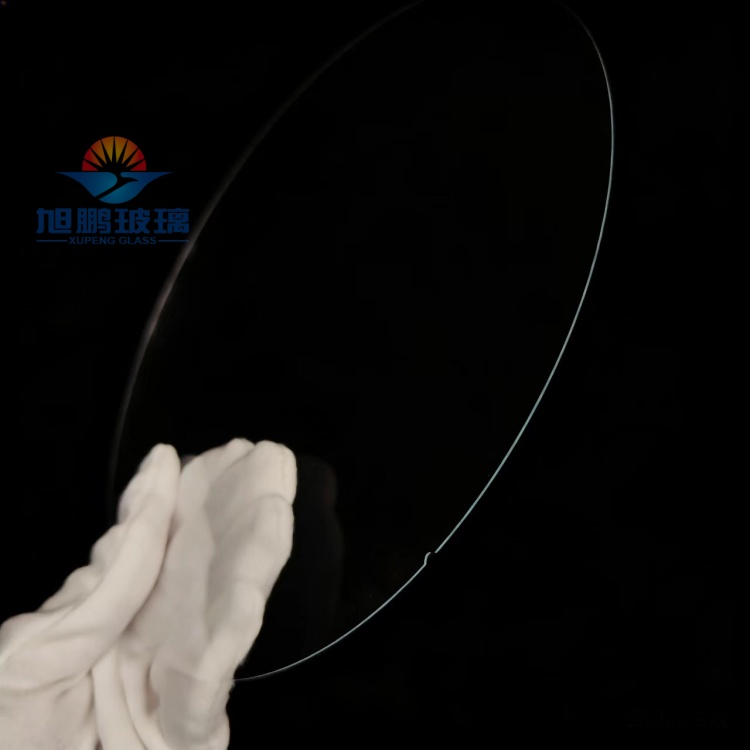 Semiconductor
Corning EXG Glass Wafer, Double-Sided Polished Custom Fabrication for Semiconductor Glass Wafers
 Coated
Round Aluminosilicate Glass with Chamfered Ground Edges and Metal Coating
 Filter
Welding Black Filter Glass, Beveled Edge Grinding, Long Irregular-shaped Welding Filter Glass
 Flexible
Ultra-thin Flexible UTG Glass, Bendable and Foldable, Suitable for Commercial Aerospace and New Energy Industries
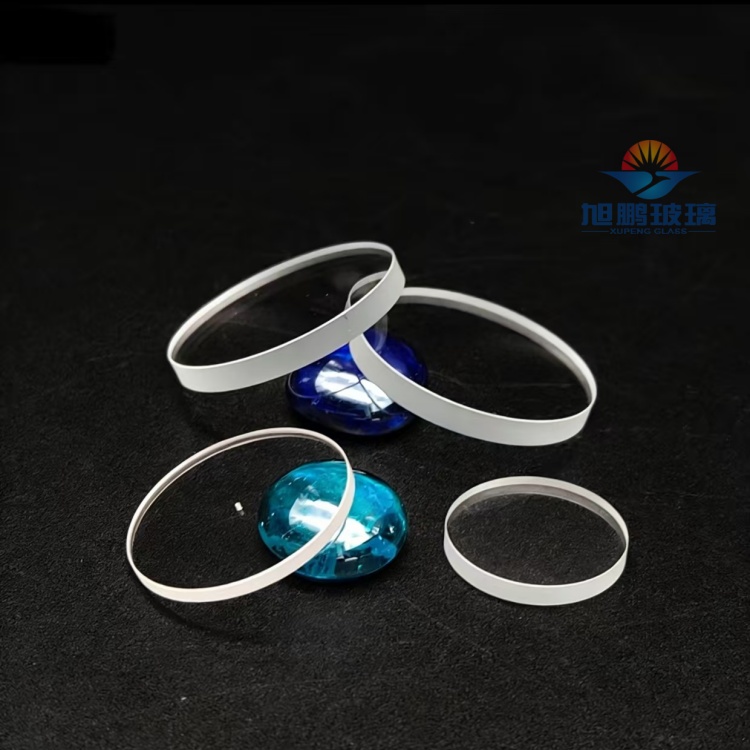 Sapphire
 Glass Step Window Wafers, High-Temperature Resistant & High Light Transmittance Optical Sapphire Lenses
 Tempered
Custom Ultra-White Clear Tempered Glass Socket Decorative Cover for Stairways
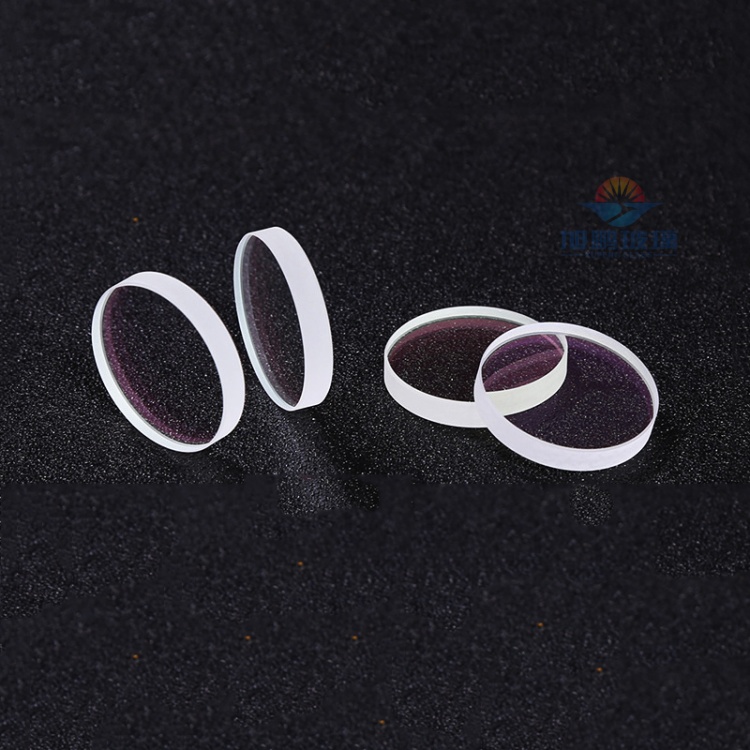 Best Seller
Ultra-clear Tempered Glass, Custom Processing Available: Drilling, Etching, AG Coating, Silk Printing, AR Coating
What Actually Makes a Custom Tempered Glass Plate OEM-Grade?
“Custom” means a different thing to every buyer — and the gap between them is where most sourcing projects fail.
To a display-module manufacturer, custom means 1.1 mm low-iron glass with a size tolerance held inside ±0.1 mm, a surface that survives repeated 2H-grade handling abrasion, and structural integrity that holds past a 55° bend across its own thickness. To an industrial-equipment buyer, it means a black silk-screen border that survives 1,200 cleaning cycles plus an IR-transparent window that stays optically clean under inspection.
A glass plate is not OEM-grade simply because it is sold under a customer part number. It is OEM-grade only when the glass is produced against your drawing, documented the way your own supplier quality system requires, and interchangeable with the part already sitting on your line — without redesigning assembly fixtures or renegotiating a quality agreement.
Four attributes separate a real OEM glass partner from a sheet cutter: reproducible tolerances, fired-in surface durability, a documented process route, and packaging engineered for glass — not for cartons.
Reproducible Dimensional Accuracy
Flatness, thickness and hole-position tolerances should be reported per batch, not promised verbally. A Cpk you can audit beats a spec sheet you cannot.
Durability That Does Not Fade
Silk-screen inks must be fired at tempering temperature — typically in the 680–720 °C range depending on the furnace — so graphics become part of the glass, not a film layered on top.
A Traceable Process Route
Cutting, edging, drilling, tempering, printing, coating, inspection. Every route step recorded against the batch that ships to you is what makes a recall survivable.
Glass-Friendly Export Packing
A cracked crate destroys more than cargo — it destroys your line schedule. If a supplier’s packaging cannot survive a forklift nudge, they have not designed for glass.
Why Global OEM Projects Award Glass Programs to AUVE
Dongguan AUVE Glass Co., Ltd. integrates R&D, design, production and export in one Songshan Lake facility — so the process route promised in the quotation is the route actually run on the floor.
Six Processes Under One Roof
Cutting, CNC edging and drilling, tempering, silk-screen printing and AR/AG coating all run inside the same plant. Lead times become commitments rather than external dependencies.
DFM Review Before Engineering Samples
CAD, DXF or PDF drawings are reviewed for manufacturability first. Tolerances, chamfer geometry and coating stacks are settled before tempering — not discovered after.
Verifiable Supplier Transparency
Onsite assessment status, credit index, transaction level, trade capacity and genuine buyer feedback are all publicly checkable before you release a PO.
Seven-Hour Average Response
Technical enquiries reach the same engineering team that quotes them. Cross-time-zone buyers get a workable answer inside one business cycle.
Six Proven Export Markets
The United States, Canada, Russia, Japan, South Korea and Australia — each with established packing standards, Incoterm experience and customs documentation routines.
Export Packing Engineered for Glass
Protective interleaving film, foam corner guards, fumigation-free wooden crates and batch labelling aligned to your inbound receiving and traceability format.



Inside the Facility Producing Your Glass
AUVE processes flat and curved tempered glass, ultra-white low-iron glass, laminated and painted glass, LCD and touch-screen cover glass, smart control panel glass, LED lighting glass, instrument glass, AR high-transmittance glass and AG anti-glare glass. Production follows a documented quality management system, so every batch is traceable from raw sheet to packed carton.
Guided by the philosophy of “focusing on high-end glass, pioneering and innovating,” the company continues to invest in skilled engineers and advanced deep-processing equipment to deliver complete glass solutions for OEMs, brand owners and distributors worldwide.
- Business Type
- Manufacturer & Exporter
- Location
- Songshan Lake, Dongguan, China
- Team Size
- 51 – 100 Employees
- Main Markets
- USA · Canada · Russia · Japan · Korea · Australia
From Raw Sheet to Export Carton: Six Controlled Gates
Each gate is run in-house, which shortens lead time, protects tolerances and lets engineers solve a problem before it reaches your assembly line.
Precision Cutting
Automatic and CNC cutting from float, low-iron, borosilicate and optical stock to your blank size.
CNC Edging & Drilling
Edge grinding, beveling, chamfering, grooving, countersinking and laser or CNC hole punching.
Tempering
Flat and curved thermal tempering for impact resistance and controlled thermal shock behaviour.
Silk-Screen Printing
High-temperature ceramic inks for borders, logos, IR windows and multi-colour instrument graphics.
AR / AG Coating
Anti-reflective, anti-glare, mirror and functional coatings applied to agreed optical targets.
QC & Export Packing
Dimensional, visual and optical checks, then interleaved, corner-protected crating for export.
How Custom OEM Tempered Glass Will Be Bought Through 2030
Purchasing behaviour in this category is shifting faster than the material itself. These six shifts are already visible in live RFQs.
Supplier Consolidation
Procurement teams are collapsing the glass category from forty small vendors down to four to six audited partners. One supplier able to cover display glass and precision optics — including sapphire and quartz — removes three supplier audits from the calendar.
Low-MOQ Pilot Orders
Regulatory delays and consumer-electronics SKU fragmentation push buyers to order 10–50 pieces for engineering validation before committing tooling. Willingness to run pilot quantities is becoming a shortlisting criterion, not a favour.
Documented, Traceable QC
More RFQs now demand thickness, flatness, transmittance and haze data against a target spec, tied to a batch number. Without that data, a factory cannot win aerospace, medical or semiconductor-adjacent programs.
Dual-Region Sourcing
Buyers are adding a second source while holding the original drawing and tolerance stack. Capable exporters now help customers build a process baseline so that parts from two regions are genuinely interchangeable.
Carbon Intensity Beyond Landed Cost
European and North American brands are beginning to request kg CO₂e figures for the deep-processing route. Electric-furnace tempering and in-house coating are becoming selling points rather than cost line items.
Digital Quoting
A drawing-upload-to-priced-quotation cycle measured in 48 hours is replacing two weeks of email ping-pong. Exporters who flag DFM issues at quotation stage simply win more of the bids they enter.
The Next Generation of Tempered and Precision Glass
Where glass is heading as a component — and what buyers should be specifying now to avoid a redesign in three years.
Ultra-Thin Flexible Glass (UTG)
Thickness has moved down to 0.03 mm for foldable displays and flexible electronics. As foldable form factors extend from phones into notebooks and automotive interiors, UTG demand is expected to climb sharply toward 2030.
Large-Format AR & AG Coating
Cover glass above 27 inches for commercial all-in-ones, digital signage and automotive clusters now needs double-sided coating with sub-1% reflection. Combined AG+AR stacks are becoming standard for touch modules in high-ambient-light environments.
Semiconductor-Grade Alkali-Free Substrates
Corning EXG and comparable alkali-free aluminoborosilicate wafers require double-sided polishing and a coefficient of thermal expansion matched to the wafer-level packaging flow — typically around 3.2 ppm/°C.
Sapphire & Quartz in Harsh Environments
Sapphire at Mohs 9 with a melting point near 2,040 °C, and thick-gauge UV-grade fused quartz, are moving out of the laboratory into production lines — sensor windows, UV curing chambers and disinfection equipment.
Functional and Decorative Combined
Buyers increasingly want one plate to carry structural, graphic and optical functions simultaneously — a printed border, an AR coating, a drilled mounting pattern and a chamfered edge — rather than sourcing three separate components.
Precision CNC Features as Standard
Irregular outlines, counterbores, step windows and chamfer-ground edges are turning glass from a simple cut panel into a precision mechanical part — a capability shift from flat-glass shops to CNC processors.
Glass Plate Selection Guide for Engineers and Sourcing Teams
Specifying the wrong substrate is the single most common cause of field failure and re-sourcing cost. Shortlist the right material before you send the drawing.
| Glass Type | Typical Key Property | Best-Fit Applications | Available Processing |
|---|---|---|---|
| Ultra-Clear (Low-Iron) Tempered | ≈91% visible light transmission, no green edge tint; tempered strength roughly 4–5× annealed | Smart control panels, appliance covers, LED fixtures, light boxes | CNC shaping, drilling, silk screen, AR/AG |
| AR Coated Glass | Surface reflection reduced to roughly 0.5–1% per side, higher display contrast | Touch screen modules, all-in-one PCs, museum and instrument windows | Single or double-side AR, tempering, printing |
| AG Anti-Glare Glass | Micro-textured surface diffuses glare; gloss and haze selectable | Outdoor LCDs, industrial HMIs, kiosks | Etched AG, combined AG+AR, tempering |
| Silk-Screen Printed Tempered | Fired ceramic ink fused into the glass for durable graphics | Instrument panels, home appliances, switch and socket covers | Multi-colour printing, IR window ink, holes |
| K9 Optical Glass | Borosilicate crown glass, refractive index nd ≈ 1.5168, low inclusion count | Lenses, prisms, optical instrument windows | Precision polishing, coating, CNC edging |
| Fused Quartz | High UV transmission with excellent thermal shock resistance | UV curing, UV disinfection, high-temperature viewports | Thick-gauge cutting, polishing, drilling |
| Sapphire Glass | Mohs hardness 9, melting point approximately 2,040 °C | Sensor covers, high-temperature and scratch-critical windows | Cutting, polishing, chamfering, step windowing |
| Corning EXG Alkali-Free | Alkali-free aluminoborosilicate, CTE around 3.2 ppm/°C | Semiconductor wafers, MEMS, display substrates | Double-side polishing, wafer dicing |
| Ultra-Thin Flexible Glass | Thickness down to 0.03 mm with controlled bendability | Foldable displays, flexible electronics, aerospace | Precision cutting, edge strengthening |
Values shown are typical reference data for material shortlisting only. Final specifications are confirmed against your drawing and the agreed test standard before mass production.
Frequently Asked Questions from Glass Buyers
The questions procurement and engineering teams actually raise during evaluation — answered without marketing language.
Can you manufacture custom OEM tempered glass plates to my own drawing?
Yes. Send a CAD, DXF or PDF drawing showing thickness, size, tolerance, edge profile, hole positions, printing artwork and coating requirements. Our engineers review manufacturability first, covering CNC cutting, edging, drilling, tempering, silk-screen printing and AR/AG coating, and come back with a process route and any DFM flags before a sample is made.
What is the typical minimum order quantity for a custom glass plate?
MOQ depends on material and process. Many coated and optical parts start from 10 to 50 pieces, while standard ultra-clear tempered parts typically start from 100 to 500 pieces. Sample and pilot quantities can be discussed for new projects, especially where a full production program is expected to follow.
Which glass materials can be quoted under one purchase order?
Ultra-clear low-iron tempered glass, flat and curved safety glass, laminated and painted glass, AR anti-reflective and AG anti-glare coated glass, silk-screen printed glass, LCD and touch-screen cover glass, LED lighting glass, instrument glass, plus optical materials including K9, fused quartz, sapphire, borosilicate and Corning EXG alkali-free glass.
Which Incoterms and shipping methods do you support?
FOB, CFR, CIF, EXW, DDP, DDU, DAF and express delivery are all supported. Export packing is designed specifically for fragile glass parts, with interleaving film, foam corner protection and fumigation-free wooden crates or reinforced cartons, so sea, air and courier shipments all arrive intact.
How is breakage controlled during international transport?
Each carton is built around the part rather than the pallet: protective film between plates, foam or EPE corner guards, edge reinforcement, and where required a wooden crate with internal dividers. Batch labels are applied so that a damaged carton can be traced back to its production run immediately.
How do you keep batch-to-batch consistency on repeat orders?
The approved drawing, process route and inspection plan are frozen at first article approval. Repeat batches run against the same parameters, with dimensional, visual and optical checks recorded per batch — so a reorder does not silently drift away from the part you qualified.
How quickly will I receive a technical response?
Average response time is within 7 hours. Sending a drawing together with target quantity, application and any test standard in the first message shortens the loop considerably, because engineering can respond with a route and a price rather than a clarification request.
Send a Drawing, Get an Engineering Review
Share your size, thickness, tolerance, edge profile and finishing requirements. Our team will confirm the material, the process route and the lead time — usually inside 7 hours — so you can compare a real quote against your current supplier instead of a generic price list.
Get a Quote