Eight Display and Optical Glass Products for OEM/ODM Programs
These production-ready formats cover the most common display, touch, appliance, semiconductor and precision optics requirements. Each item can be adapted by size, thickness, edge profile, holes, printing and coating.

Corning Ultra-Thin Glass Sheet, Optical Grade Glass Wafer Substrate with Chamfered Edge
Thin optical-grade wafer substrate with chamfered edge for precision display, sensor and optical assembly projects.
View specification
Corning EXG Glass Wafer Double-Sided Polished for Custom Semiconductor Glass Wafers & Solar Panels
Alkali-free EXG glass wafer with double-side polishing for semiconductor, MEMS and thin-film process development.
View specification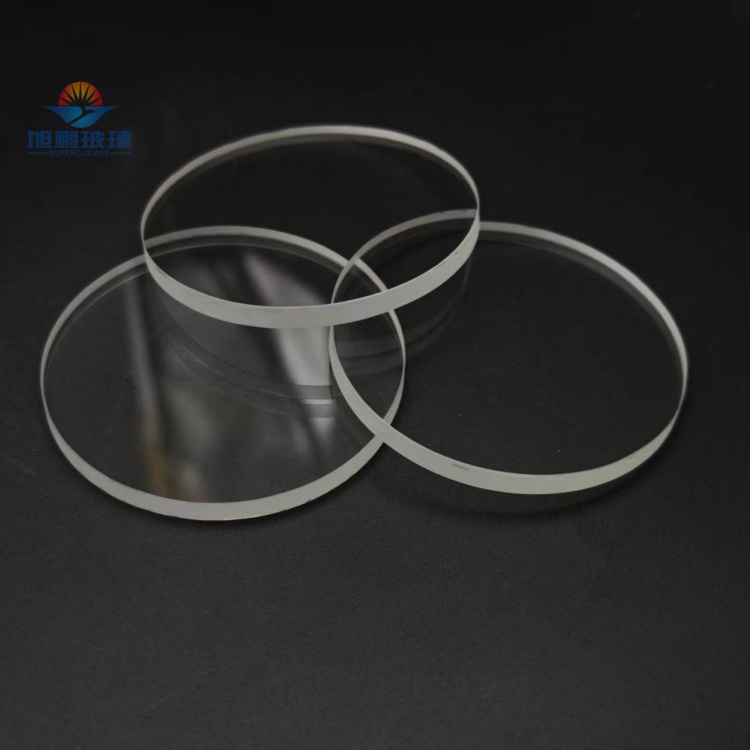
K9 Optical Glass (K9 Crystal Glass) for Optical Instruments
Borosilicate crown optical glass for lenses, prisms and instrument windows, with precision polishing and CNC edging options.
View specification
Round Aluminosilicate Glass with Chamfered Ground Edges and Metal Coating
Round aluminosilicate glass with ground chamfer and functional metal coating for display and sensor cover applications.
View specification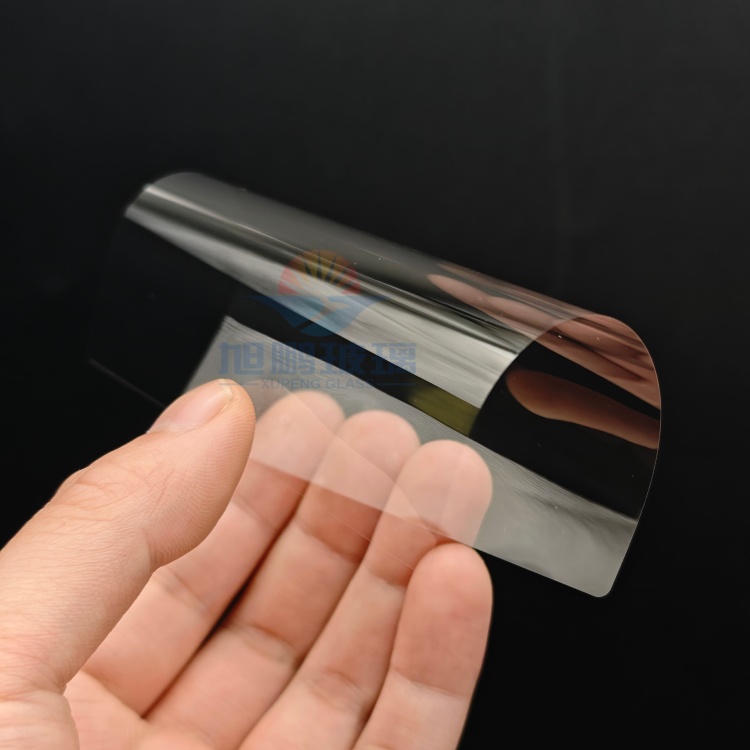
0.03 mm Ultra-thin Flexible Bendable Glass
Ultra-thin bendable glass for foldable display stacks, flexible electronics and next-generation human-machine interfaces.
View specification
High-transmittance Anti-Reflection Coated Glass
Anti-reflection coated glass for improved display contrast, lower surface reflection and cleaner optical bonding.
View specification
CNC Carved Low Iron Glass Sheet, High-temperature Screen Printed Tempered Glass, Drilled Glass Panel
Low-iron tempered panel with CNC carving, drilled holes and high-temperature ceramic printing for control and appliance fronts.
View specification
High-transmittance AR Coated Optical Glass, Ultra-clear Tempered Glass
Combined AR coating and ultra-clear tempered substrate for all-in-one PCs, touch monitors and high-end display windows.
View specificationWhat a Qualified OEM/ODM Display Glass Factory Must Prove
Display glass is no longer a simple cut-to-size commodity. It is an engineered interface between optics, touch sensing, mechanical assembly, decoration and brand perception.
Buyers are consolidating cover glass, touch windows, anti-reflective coatings, printed graphics and optical wafers into fewer qualified suppliers to reduce interface risk. A real OEM/ODM display glass factory should control drawing review, edge geometry, tempering, coating, printing, inspection and export packing — not only glass cutting. That is why factory qualification should begin with process ownership and evidence, not with the lowest FOB piece price.
A low piece price can be offset by edge chipping, coating haze variation, printed color mismatch, incoming inspection delays or a replenishment gap. A more accurate measure is total landed optics cost: delivered cost after yield, rework, incoming inspection, line-stoppage risk and replacement freight are considered. For high-volume programs, the supplier's ability to keep the drawing, process window and inspection method stable matters more than a one-time quotation.
Dongguan AUVE Glass Co., Ltd. is a deep-processing glass manufacturer integrating R&D, design, production and export in Songshan Lake, Dongguan, Guangdong. Established in 2018 with 51–100 skilled employees and a 1,001–2,000 m² facility, the company processes tempered, ultra-clear, AR/AG coated, silk-screen printed and precision optical glass for OEMs, brand owners and distributors. Our operating philosophy is “focusing on high-end glass, pioneering and innovating.”
Information Gain: The OMEC Review Framework
Before a sample is made, align engineering and procurement around four dimensions:
- Optical: transmittance, reflection, haze, gloss, color coordinates and coating adhesion.
- Mechanical: thickness, tolerance, edge condition, holes, flatness, strength and assembly fit.
- Environmental: thermal shock, humidity, UV exposure, cleaning chemicals and operating temperature.
- Commercial: MOQ, yield, packing, Incoterms, replenishment time and replacement cost.
Why AUVE Glass Fits OEM/ODM Display Glass Programs
Qualification is easier when one supplier can connect engineering review, deep processing, coating, printing, inspection and export packing under one roof.
Deep Processing Under One Roof
Flat and curved tempered glass, ultra-clear low-iron glass, laminated and painted glass, LCD and touch screen glass, smart control panel glass, LED lamp glass, instrument glass, AR high-transmittance glass and AG anti-glare glass can be coordinated in one production route.
Drawing-to-Product Engineering
Send CAD, DXF or PDF drawings with thickness, tolerance, edge, hole, printing and coating requirements. Engineers review manufacturability before production, covering cutting, edging, drilling, tempering, silk-screen printing and AR/AG coating.
Evidence Buyers Can Check
Onsite-checked supplier status, credit index, transaction level, trade capacity, trade history and genuine ratings and reviews are available for procurement due diligence. These signals help buyers evaluate capability before sampling and mass production.
Export-Ready Communication
Products are exported to the United States, Canada, Russia, South Korea, Japan, Australia and other markets. Supported delivery terms include FOB, CFR, CIF, EXW, DDP, DDU, DAF and express, with fragile-goods packing designed for international transit.
A Practical Alternative to Multi-Supplier Glass Sourcing
Display projects often involve several glass parts: a printed control panel, a coated display window, an optical wafer and an instrument window. Managing these parts across separate suppliers multiplies sample approvals, packaging standards, tolerances and claim routes. AUVE's deep-processing model allows buyers to consolidate overlapping processes while keeping material-specific process windows separate.
For optical materials, the company works with K9, quartz, sapphire, borosilicate and Corning EXG alkali-free glass. For display and appliance glass, the focus is ultra-clear low-iron glass, tempered cover glass, AR/AG coated glass and high-temperature silk-screen printed glass. This range supports both standard repeat parts and custom OEM/ODM programs.
Process Coverage Snapshot
Visual capability snapshot for procurement discussion, not a production yield claim.
Recommended Glass Routes by Display Application
Use these starting points to shortlist materials before confirming final transmission, haze, strength, thickness and tolerance targets with your engineering team.
AIO PC & Touch Monitor Cover Glass
Start with high-transmittance AR coated optical glass or ultra-clear tempered glass with single- or double-side AR. Confirm reflection target, color neutrality, edge chamfer and bonding compatibility.
Industrial HMI & Outdoor Display
For high ambient light, choose AG anti-glare glass or AG+AR hybrid coating on a tempered substrate. Define gloss, haze, abrasion resistance and cleaning chemical exposure during sampling.
Appliance & Smart Control Panels
Use ultra-clear low-iron tempered glass with CNC holes, laser-cut windows and high-temperature ceramic printing. Specify printed color under agreed lighting and control ink thickness at boundaries.
Foldable, Optical & Semiconductor Parts
For flexible devices, evaluate 0.03 mm ultra-thin flexible glass. For optics and semiconductor work, compare K9, quartz, sapphire and Corning EXG wafers by transmission, CTE, flatness and edge quality.
From Piece-Price Buying to Qualification-Driven Sourcing
Display glass procurement is shifting toward supplier qualification, data packages, dual sourcing and total landed cost — especially for coated and printed parts.
Supplier Consolidation With Scorecards
Buyers are reducing the number of glass interfaces and using scorecards for dimensional yield, coating consistency, print color, response time, packing quality and replacement cost. A factory that can document process ownership is easier to qualify than a broker with fragmented subcontracting.
Dual Sourcing With the Same Drawing
Critical display programs increasingly require a qualified primary supplier and a validated backup route. The best preparation is a drawing package that clearly defines material, coating, printing, edge, packing and inspection method so two process windows can be compared without ambiguity.
Total Landed Optics Cost
Procurement teams are moving beyond unit price to model yield loss, incoming inspection, coating rejects, line downtime, replacement freight and inventory carrying cost. For AR/AG and printed glass, the lowest quote often carries the highest hidden cost when the measurement method is vague.
Practical procurement action: require a sample report that states the test method, sampling plan, acceptance criteria and packing standard — not only a product photo.
Thinner, Harder, Lower-Reflection and More Integrated
Display glass development is converging around optical performance, mechanical robustness and tighter integration with touch, decoration and sensor packages.
Ultra-Thin Flexible Glass
0.03 mm ultra-thin glass is enabling bendable display stacks and flexible electronics. Handling, edge quality, lamination and yield control become more important than ever as thickness decreases.
AR/AG and Anti-Fingerprint Integration
Displays increasingly require lower reflection, controlled haze, anti-fingerprint performance and easy cleaning in one surface stack. Buyers should specify optical targets and durability tests together.
Low-CTE Alkali-Free Substrates
Corning EXG and similar alkali-free glass wafers support semiconductor, MEMS and display substrate work where low CTE and cleanliness matter. Double-side polishing and edge condition are key quality levers.
Large-Format Strengthened Covers
All-in-one PCs, kiosks and industrial displays continue to move toward larger cover glass with printed borders, AR/AG coatings and complex cut-outs. Flatness, edge strength and coating uniformity become critical.
Compare Display and Optical Glass Materials Before Sampling
Use this reference to align material choice with optical, mechanical and environmental requirements. Final specifications must be confirmed against your drawing and agreed test standard.
| Glass Type | Typical Property | Best-Fit Applications | Available Processing |
|---|---|---|---|
| Ultra-clear low-iron tempered | ~91% visible light transmission; no strong green edge tint; tempered strength typically 4–5× annealed glass | Smart control panels, appliance covers, LED fixtures, light boxes | CNC shaping, drilling, silk-screen printing, AR/AG coating |
| AR coated glass | Surface reflection reduced to roughly 0.5–1% per side depending on design; higher display contrast | Touch screen modules, AIO PCs, museum windows, instrument windows | Single- or double-side AR, tempering, printing |
| AG anti-glare glass | Micro-textured surface diffuses glare; gloss and haze selectable | Outdoor LCDs, industrial HMIs, kiosks, high-ambient-light displays | Etched AG, AG+AR, tempering |
| Silk-screen printed tempered glass | Fired ceramic ink fused into glass for durable graphics and light-blocking windows | Instrument panels, home appliances, switch and socket covers | Multi-color printing, IR/window ink, holes, CNC cut-outs |
| K9 optical glass | Borosilicate crown glass, refractive index nd ≈ 1.5168, low inclusions | Lenses, prisms, optical instrument windows | Precision polishing, coating, CNC edging |
| Fused quartz | High UV transmission and excellent thermal shock resistance | UV curing, UV disinfection, high-temperature viewports | Thick-gauge cutting, polishing, drilling |
| Sapphire glass | Mohs hardness 9; melting point approximately 2,040 °C | Sensor covers, scratch-critical windows, high-temperature windows | Cutting, polishing, chamfering |
| Corning EXG alkali-free glass | Alkali-free aluminoborosilicate with low CTE, typically around 3.2 ppm/°C | Semiconductor wafers, MEMS, display substrates | Double-side polishing, wafer dicing, edge finishing |
| Ultra-thin flexible glass | Thickness down to 0.03 mm with bendability | Foldable displays, flexible electronics, thin sensor stacks | Precision cutting, edge strengthening, handling and packing |
Reference values support early material selection only. Production requirements must be frozen in the approved drawing, inspection plan and sample report.
From Drawing Review to Export Packing
A repeatable process is what protects optical appearance, dimensional fit and on-time delivery across production batches.
1. Drawing & DFM Review
Review CAD, DXF or PDF files for thickness, tolerance, edge, hole, printing, coating and handling requirements before production.
2. Cutting, Edging & Drilling
CNC cutting, edge grinding, beveling, grooving, drilling and shape processing are aligned with the assembly interface.
3. Tempering & Printing
Flat and curved thermal tempering supports impact and thermal resistance; high-temperature ceramic inks create durable graphics and windows.
4. AR / AG & Optical Coating
Anti-reflective, anti-glare, mirror and functional coatings are checked for appearance, adhesion and agreed optical performance.
5. Inspection & Traceability
Dimensional, visual and optical checks are performed against the approved standard. Batch labeling supports traceability from raw sheet to packed carton.
6. Export Packing
Protective film, interleaving material, foam corner protection and fumigation-free wooden crates or reinforced cartons support fragile-glass export.
Clear Commercial Terms for Global Glass Buyers
Technical clarity and packing discipline matter as much as production capability when glass crosses borders.
Supported Delivery Terms
FOB, CFR, CIF, EXW, DDP, DDU, DAF and express delivery can be discussed according to destination, customs setup and order size. Export packing is designed for fragile glass parts.
Export Markets
The company exports to the United States, Canada, Russia, South Korea, Japan, Australia and other markets. Buyers can request a packing and labeling plan aligned with their warehouse or production-line requirements.
Technical Inquiry Response
Average response time is within 7 hours. Send drawings, target quantity, application environment and any existing inspection standard to speed up the engineering review.
For faster quotation, include thickness, tolerance, edge profile, hole positions, print artwork, coating target, quantity, destination and required delivery term.
Frequently Asked Questions for Display Glass Sourcing
These are the questions procurement and engineering teams ask most often during supplier qualification and sample approval.
What is the difference between OEM and ODM display glass manufacturing?
OEM display glass is made to the buyer's drawing and specification, with the factory acting as the manufacturing and process partner. ODM support can go further by helping adapt an existing glass format, coating stack, printed graphic or edge design to a new product. In both cases, the drawing, inspection method and packing standard should be frozen before mass production.
Can AUVE produce glass to my own drawing?
Yes. Send a CAD, DXF or PDF drawing with thickness, tolerance, edge, hole, printing and coating requirements. The engineering team reviews manufacturability before production, covering CNC cutting, edging, drilling, tempering, silk-screen printing and AR/AG coating.
What is the minimum order quantity?
MOQ depends on material and process. Many coated and optical glass parts start from 10 to 50 pieces, while standard ultra-clear tempered parts typically start from 100 to 500 pieces. Sample and pilot quantities can be discussed for new projects, especially when the drawing or coating stack is still being validated.
How are AR and AG coated glass validated?
The buyer and factory should agree on the measurement method for transmittance, reflection, haze, gloss, color coordinates, adhesion and appearance. A sample report should reference the test angle, light source, sampling plan and acceptance criteria. A generic “high transmittance” or “anti-glare” claim is not enough for a production specification.
Which glass materials can be processed?
AUVE processes flat and curved tempered glass, ultra-clear low-iron glass, laminated and painted glass, AR anti-reflective and AG anti-glare coated glass, silk-screen printed glass, touch screen and LCD cover glass, LED lighting glass, instrument glass, and optical materials such as K9, quartz, sapphire, borosilicate and Corning EXG alkali-free glass.
How is fragile glass packed and shipped?
Export packing typically uses protective film or paper interleaving, foam corner protection and fumigation-free wooden crates or reinforced cartons. The packing plan should be matched to part size, edge exposure, coating surface, quantity and transport mode. Supported delivery terms include FOB, CFR, CIF, EXW, DDP, DDU, DAF and express.
Which markets and Incoterms are supported?
Glass products are exported to the United States, Canada, Russia, South Korea, Japan, Australia and other markets. Delivery terms include FOB, CFR, CIF, EXW, DDP, DDU, DAF and express delivery. The final term depends on destination, order size, customs requirements and buyer preference.
How quickly can I receive a technical reply?
The average response time is within 7 hours. For a faster engineering review, provide the drawing, target quantity, operating environment, coating or printing requirements and any existing approved sample or inspection standard.
Send a Drawing. Get an Engineering Review.
Share your size, thickness, tolerance, edge, holes, printing, coating and target quantity. The team will confirm material, process route, packing and lead time — usually within 7 hours.
Contact Us