8 OEM/ODM Glass Component Lines for Immediate Shortlisting
The eight products below reflect real production capabilities rather than a catalogue collage. Each part can be adapted by size, thickness, edge profile, hole geometry, printing, coating and export packing. Product links preserve the original specification pages so engineers can compare data before an RFQ.

High-transmittance AR Coated Optical Glass, Ultra-clear Tempered Glass
Recommended for touch modules, all-in-one PCs, HMI windows and optical instruments where reflection control and clarity directly affect perceived contrast.

CNC Carved Low Iron Glass Sheet, High-temperature Screen Printed Tempered Glass, Drilled Glass Panel
A practical choice for appliance covers, industrial control panels and decorative electronics when drilled holes, high-temperature ink and low-iron clarity converge in one part.
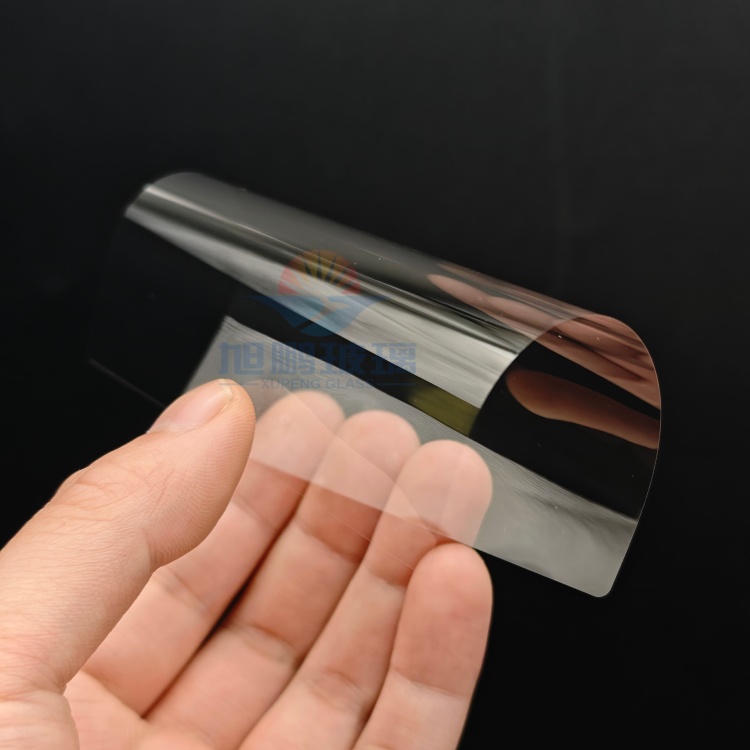
0.03 mm Ultra-thin Flexible Bendable Glass
For flexible display stacks, thin-film sensors and bendable device covers. Edge micro-cracks and handling methods often decide yield more than nominal thickness alone.

Corning Ultra-Thin Glass Sheet, Optical Grade Glass Wafer Substrate with Chamfered Edge
Corning ultra-thin glass with chamfered edge for precision optical assemblies, wafer carriers and semiconductor-adjacent inspection windows.
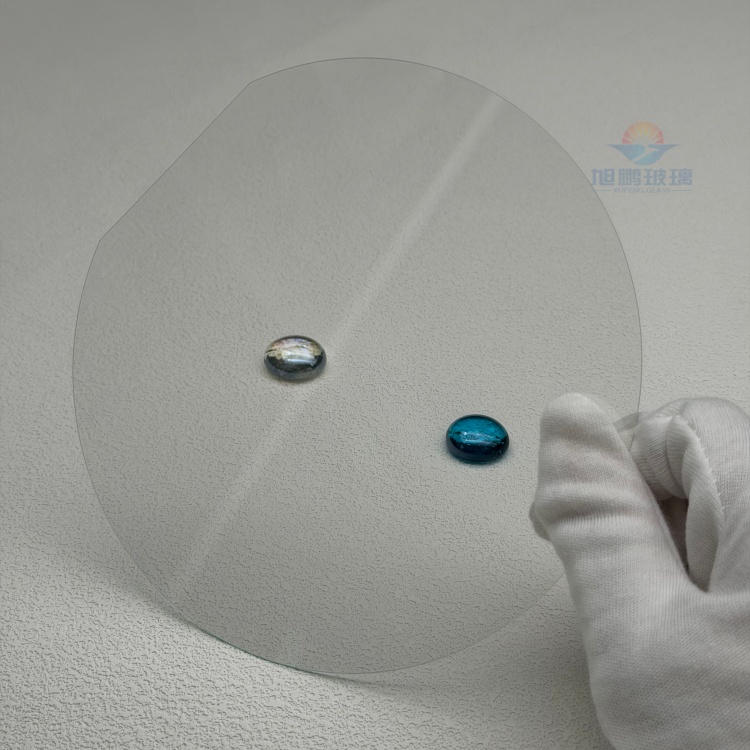
Ultra-thin Optical Glass Sheets Schott B270/D263T Semiconductor Electronic Glass Blank Cutting & Processing
B270/D263T blank cutting and processing for optical, electronic and semiconductor projects where material consistency and clean edges matter.
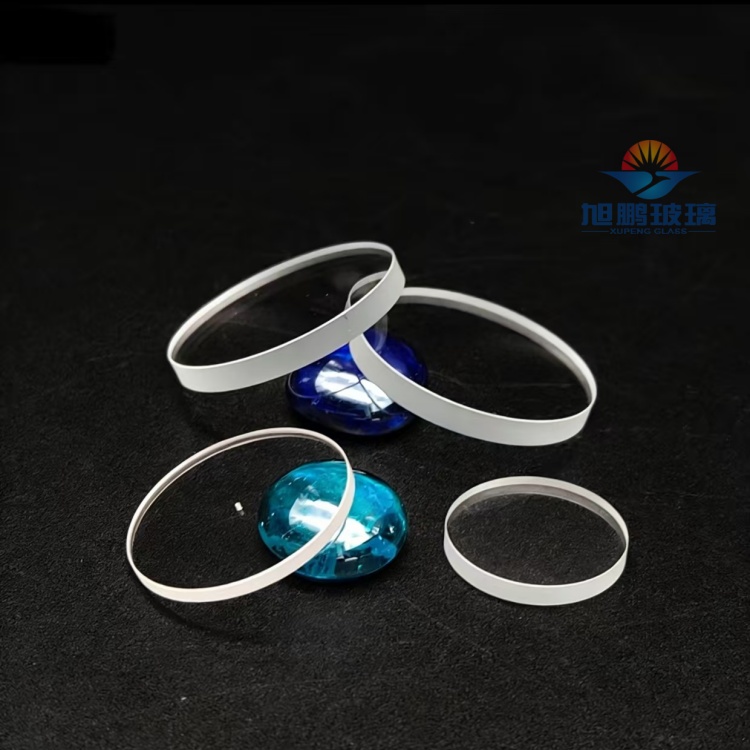
Sapphire Glass Step Window Wafers, High Temperature Resistant & High Light Transmittance Optical Sapphire Lenses
Step-window and lens formats for high-temperature sensors, scratch-critical windows and optical systems exposed to harsh service conditions.
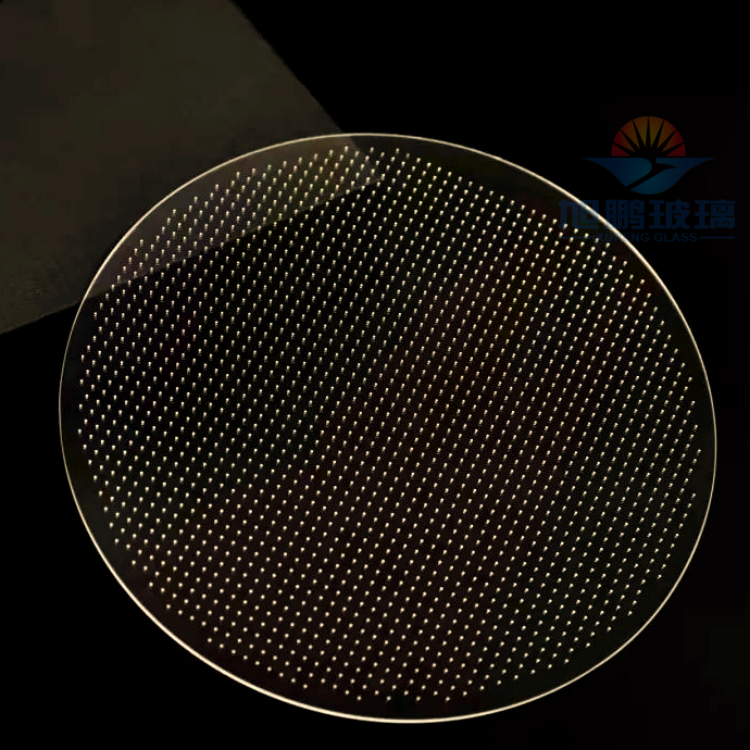
Schott BF33 TGV Microvia Glass Wafer, Packaging Substrate for Sensors & Chips
BF33 glass wafers with microvia structures for sensor and chip packaging. Via diameter, pitch, taper and metallization readiness should be reviewed at DFM stage.

White Ceramic Glass-Ceramic, 4mm & 6mm, High Temperature Resistant Glass-Ceramic
4 mm and 6 mm white glass-ceramic for high-temperature panels, appliance windows and industrial covers requiring opacity, thermal stability and clean appearance.
What OEM/ODM Glass Components Really Require in 2025
The phrase OEM/ODM glass components manufacturers & exporters contains two different buying journeys. Treating them as one usually creates quotations that look comparable but are not.
An OEM programme typically starts with a drawing, a tolerance stack, a qualified material and a repeat-order rhythm. An ODM programme often starts with an application problem: an outdoor display that washes out in sunlight, a sensor window that fails at high temperature, a foldable stack that needs thinner glass without edge chipping, or a semiconductor package that needs a low-CTE substrate. The strongest suppliers do not merely quote a sheet size; they translate the application into a manufacturing route.
For sourcing teams, the real cost is rarely the glass itself. It is the cost of qualification, yield loss, field failure, packing damage and engineering loops. A one-percent improvement in edge quality or coating durability can matter more than a five-percent difference in unit price. This is why experienced buyers evaluate a glass component manufacturer and exporter on five dimensions: material consistency, process breadth, inspection discipline, documentation, and export packing.
A useful way to distinguish real capability is to ask how the supplier will control the interface between glass and the next assembly. Hole-to-edge distance, chamfer geometry, print registration, coating shadow, flatness after tempering and protective-film residue all influence yield downstream. These details are rarely visible in a catalogue photo, but they determine whether a pilot run becomes a stable programme.
For high-end projects, the supplier should also explain its DFM logic. A TGV wafer request, for example, is not just a hole-drilling task; via diameter, pitch, taper, surface finish and downstream metallization compatibility must be aligned before samples are made. Likewise, an AR-coated display cover should be specified with a test method for reflection, transmission and adhesion — not only the words “AR coated.”
RFQ completeness checklist
- CAD, DXF or PDF drawing with critical dimensions identified.
- Material grade, thickness and acceptable material certificates.
- Edge, hole, chamfer and flatness tolerances — critical vs. cosmetic.
- Coating or printing test method: reflection, haze, adhesion, colour, registration.
- Annual volume, pilot quantity and target sample date.
- Destination, Incoterms and packaging validation expectations.
A complete RFQ usually shortens engineering review and reduces sample iterations.
Where These Glass Components Create Value
Material choice should follow the failure mode you are trying to prevent: glare, transmission loss, thermal shock, scratch, edge chipping, CTE mismatch or packaging damage.
Display & HMI
AR coated ultra-clear glass, AG etched glass and printed tempered covers for touch modules, kiosks, appliances and industrial panels.
Optical & Photonics
K9, quartz, sapphire and Corning ultra-thin substrates where transmission, flatness, surface quality and edge condition are critical.
Semiconductor & Packaging
Schott BF33 TGV, B270/D263T and alkali-free wafers for sensor, chip and MEMS packaging where CTE and cleanliness matter.
High-Temp & Industrial
Glass-ceramic, borosilicate and sapphire for appliance windows, high-temperature viewports and harsh-environment sensors.
OEM/ODM Glass Components Procurement Trends Buyers Should Plan For
These are not abstract market forecasts. They reflect recurring questions from OEM, ODM and distributor projects — and the criteria that separate a low-cost quote from a stable supply programme.
Directional emphasis in AUVE project reviews, 2024–2025. Not a statistical market forecast.
Consolidation around process breadth
Buyers are reducing the number of glass vendors because one qualified supplier handling cutting, CNC, tempering, printing, coating and inspection shortens engineering loops. Audit the process route, not only the catalogue.
From “coated” to testable optical performance
AR reflection targets, AG haze and gloss, colour shift and transmission after coating are increasingly written as test methods. “AR coated” alone is no longer enough for display or instrument programmes.
Documentation before samples
Procurement teams now ask for lot traceability, incoming material records, coating run logs and packing validation before releasing a drawing. Evidence reduces the risk hidden inside a low unit price.
China plus one — with process depth still decisive
Diversification is real, but advanced glass components remain process-dense. Buyers ask for buffer stock, flexible Incoterms and export-ready packing while keeping technical depth in the supply base.
Advanced packaging pulls glass into the roadmap
TGV, alkali-free wafers and ultra-thin glass are moving from research samples into packaging discussions. Early DFM on via geometry, handling and cleanliness prevents costly re-spins later.
Sustainability measured in damage rate
Fumigation-free crates, protective film and reinforced cartons are not only environmental choices; they reduce breakage and rework. Lower damage rate is one of the most credible sustainability gains in glass logistics.
Glass Component Development Trends, 2025–2030
The next procurement cycle will reward suppliers who can discuss failure modes, inspection methods and yield economics — not only material names.
AR/AG hybrid surfaces for outdoor HMI
Displays used outdoors need both low reflection and glare diffusion. Buyers are moving toward hybrid stacks with agreed haze, gloss and transmission limits.
Ultra-thin flexible glass moves to yield engineering
UTG is no longer only a demonstration material. Foldable programmes are focusing on edge strengthening, handling trays, particle control and bend-radius validation.
TGV and glass packaging substrates
Through-glass vias support sensor and chip packaging where high-frequency performance, CTE matching or hermeticity is valuable. Via taper and pitch define the process window.
Sapphire remains the harsh-environment answer
Where scratch resistance, high temperature and optical transmission intersect, sapphire remains a problem-solver — provided the design accounts for cost and processing constraints.
Glass-ceramic for high-temperature design
White and dark glass-ceramic panels continue to replace traditional materials in appliances and industrial covers where thermal stability and clean surfaces are required.
Alkali-free and semiconductor-grade substrates
Corning EXG, Schott BF33 and related alkali-free materials are being specified beyond traditional display use, with cleanliness and flatness increasingly tied to yield.
Which Glass Component Should You Shortlist?
Use the application risk as the starting point, then confirm thickness, edge condition, coating test method and packaging.
CNC low-iron tempered with high-temperature printing
Best when the part needs drilled holes, durable graphics, low colour shift and tempered strength. Review hole-to-edge distance before tooling.
AR-coated ultra-clear tempered glass
Shortlist this when reflection reduces readability or image contrast. Agree reflection, transmission and adhesion test methods before sampling.
BF33 TGV, Corning or Schott wafers
Use early DFM to align via geometry, flatness, cleanliness and handling. Samples should represent the intended metallization and assembly route.
Sapphire, quartz or glass-ceramic
Select sapphire for scratch-critical windows, quartz for UV and thermal shock, and white glass-ceramic where opacity and heat resistance matter.
Why Dongguan AUVE Glass Fits OEM/ODM Supply Programmes
Dongguan AUVE Glass Co., Ltd. is a deep-processing glass manufacturer integrating R&D, design, production and export in Songshan Lake, Dongguan — one of China’s dense electronics and optoelectronics clusters.

Founded in 2018, AUVE operates with 51–100 skilled employees in a 1,001–2,000 m² facility and serves buyers in the United States, Canada, Russia, South Korea, Japan, Australia and other markets. Its scope covers flat and curved tempered glass, ultra-clear low-iron glass, laminated and painted glass, LCD and touch cover glass, smart control panel glass, LED lighting glass, instrument glass, AR high-transmittance glass, AG anti-glare glass and optical materials such as K9, quartz, sapphire, borosilicate, Corning EXG and Schott B270/D263T/BF33.
The operating philosophy — “focusing on high-end glass, pioneering and innovating” — is meaningful only when it appears in process control rather than a slogan. That is why engineering review, in-house processing, quality inspection and export packing are treated as one system. Buyers can consolidate multiple glass operations with one qualified supplier and reduce the coordination risk that comes from splitting cutting, tempering, printing and coating across separate vendors.
AUVE also publishes verifiable supplier signals: onsite assessment, credit index, transaction level, trade capacity, ratings and trade history. For a procurement team, these are not decorative badges; they are evidence to check before releasing a drawing or a purchase order.
Factory-direct integration
R&D, design, production and export are coordinated under one roof, shortening communication between engineering changes and production planning.
Engineering review before quotation
CAD, DXF or PDF drawings are reviewed for manufacturability, covering CNC cutting, edging, drilling, tempering, printing and AR/AG coating.
Precision processing in one route
Cutting, CNC edging, drilling, tempering, silk-screen printing and functional coating reduce hand-offs that can introduce scratches or tolerance drift.
AR/AG and functional coating know-how
Anti-reflective, anti-glare, mirror and other functional coatings are matched to the viewing condition, cleaning method and durability requirement.
Quality traceability
Dimensional, visual and optical checks can be aligned with agreed acceptance criteria, with batch traceability from raw sheet to packed carton.
Export packing & flexible Incoterms
FOB, CFR, CIF, EXW, DDP, DDU, DAF and express delivery are supported, with protective packing designed for fragile glass components.
Verified Signals Buyers Can Check
E-E-A-T is not a badge placed on a page; it is evidence a buyer can inspect. Use these records to validate the commercial side of the relationship before releasing a drawing or purchase order.
Six Controlled Stages from Drawing to Export Carton
Each stage is reviewed as part of one process window. A change in edge profile, ink colour or coating target can affect the next operation, so engineering and production must communicate before the first sheet is cut.
Precision cutting
Automatic and CNC cutting from float, low-iron, borosilicate and optical stock, with material identification before processing.
CNC edging & drilling
Edge grinding, beveling, grooving, hole drilling and laser punching. Hole-to-edge distance and micro-crack control are reviewed here.
Tempering
Flat and curved thermal tempering for impact and thermal resistance. Distortion and roller-wave limits should be agreed where optical reflection is critical.
Silk-screen printing
High-temperature ceramic inks, logos, windows and icons. Registration, ink thickness and firing parameters influence durability and appearance.
AR / AG coating
Anti-reflective, anti-glare, mirror and functional coatings. Coating stack, cleaning method and durability test should be defined before sampling.
QC & export packing
Dimensional, visual and optical checks, then protective film, interleaving, foam corners and crates or reinforced cartons suited to the route.
Material Selection Guide for OEM Glass Components
Final specifications must be confirmed against the drawing and agreed test standard. The values below are typical reference points for early shortlisting.
Low-iron tempered glass
Visible transmission around 91%; tempered strength typically 4–5× annealed glass, with reduced green edge tint.
Anti-reflective glass
Surface reflection can be reduced to roughly 0.5–1% per side depending on the coating stack and substrate.
Anti-glare etched glass
Micro-textured surface diffuses glare; haze and gloss can be selected for the viewing environment.
Silk-screen tempered glass
Fired ceramic ink is fused into the glass for durable graphics, windows and icons that resist handling and cleaning.
K9 optical glass
Borosilicate crown glass with refractive index nd approximately 1.5168 and low inclusions for polished optics.
Fused quartz glass
High UV transmission and excellent thermal shock resistance for UV curing, disinfection and sight-glass applications.
Sapphire glass
Mohs hardness 9 and melting point around 2,040 °C for scratch-critical and high-temperature optical windows.
Alkali-free / TGV / Corning / Schott
Low-CTE substrates and TGV wafers for semiconductor, MEMS and sensor packaging where cleanliness and via geometry matter.
OEM/ODM Glass Components: Procurement FAQ
Direct answers to the questions engineering and sourcing teams ask most often before sampling or releasing a purchase order.
What does OEM/ODM mean for glass components?
In glass components, OEM means the buyer controls the drawing or specification and the manufacturer reproduces it consistently. ODM means the manufacturer contributes material selection, DFM, process design and sometimes application-specific geometry. Most projects sit between the two: the buyer owns the interface, while the supplier owns the process window.
Can you produce to my drawing, and what tolerances are realistic?
Yes. Send CAD, DXF or PDF with thickness, edge, hole, chamfer, print and coating requirements. Realistic tolerances depend on material, size and process; tight tolerances should be identified as critical rather than applied to every dimension. Our engineers review manufacturability before quotation and flag risks such as edge chipping, hole-to-edge distance and coating shadow.
What is the minimum order quantity?
MOQ depends on material and process. Many coated and optical glass parts start from 10 to 50 pieces; standard ultra-clear tempered parts often start from 100 to 500 pieces. Sample and pilot quantities can be discussed for new projects, especially when the process route is being qualified.
How do you control optical quality, appearance and packaging?
Inspection can cover dimensional checks, edge condition, surface defects, transmission or reflection targets, haze and gloss where relevant, print registration and packing validation. Protective film, interleaving, foam corners and fumigation-free wooden crates or reinforced cartons are specified according to part fragility and shipping route.
Which Incoterms, markets and response times apply?
AUVE supports FOB, CFR, CIF, EXW, DDP, DDU, DAF and express delivery. Products are exported to the United States, Canada, Russia, South Korea, Japan, Australia and other markets. Average response time is within 7 hours; a drawing plus quantity is enough to start an engineering review.
What information turns an inquiry into a useful quote?
Send the drawing, material grade, thickness, critical tolerances, surface finish, coating or printing specification, annual volume, pilot quantity, destination and target delivery date. If the part mates with a display, housing or sensor, include a section view or stack-up. This usually eliminates several clarification rounds and reduces sample iterations.
Have a drawing? Turn it into a manufacturable glass component.
Share your drawing, target volume and destination. AUVE’s engineering team will review material, process route, inspection criteria and packing before quoting — usually within 7 hours. For the fastest response, include critical tolerances and the test method for any coating or printing.
No obligation. Drawing-based review. OEM/ODM projects welcome. Email: info@auveglass.com