8 Round Tempered Glass Products for OEM/ODM Buyers
These production-ready examples cover precision CNC holes, semiconductor wafers, mirror coating, ultra-clear panels, chamfered edges, optical glass, UV windows and anti-reflection coating. Sizes, thickness, tolerances, printing and packaging can be customized to your drawing.

Precision CNC Cut & Holed, High-temperature Silk Screen Tempered Glass, Drilled Ultra-clear Small Round Glass Discs
Small round tempered discs with drilled holes, printed graphics and ultra-clear finishing for control panels, sensor windows and instrument interfaces.
View product
Schott BF33 TGV Microvia Glass Wafer, Packaging Substrate for Sensors & Chips
Glass wafer substrate with microvia capability for sensor packaging and chip-level integration where dimensional stability and material consistency matter.
View product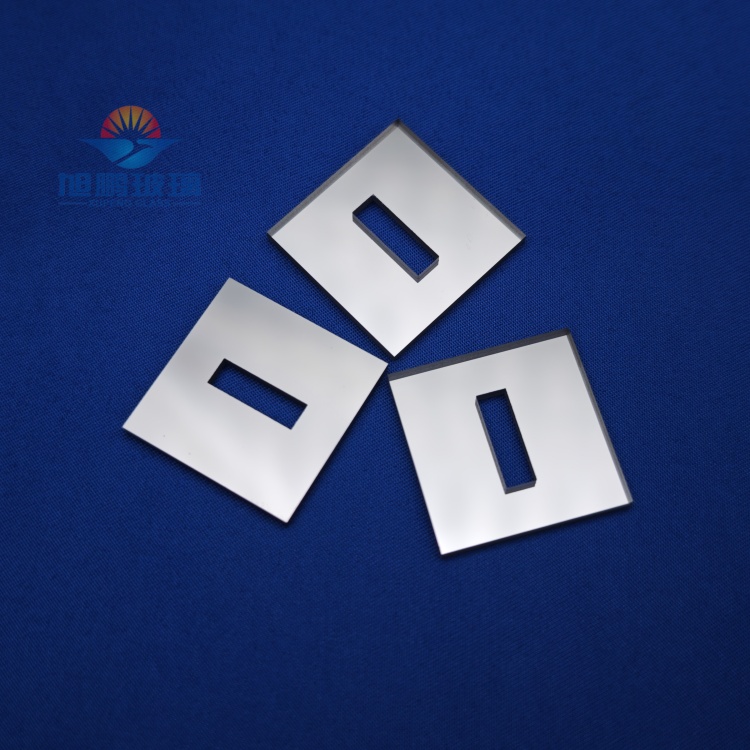
Silver-coated Mirror, Grooved at the Center of Glass
Silver-coated mirror glass with a central groove for decorative, sensing and optical assemblies requiring reflective surfaces plus precise mechanical features.
View product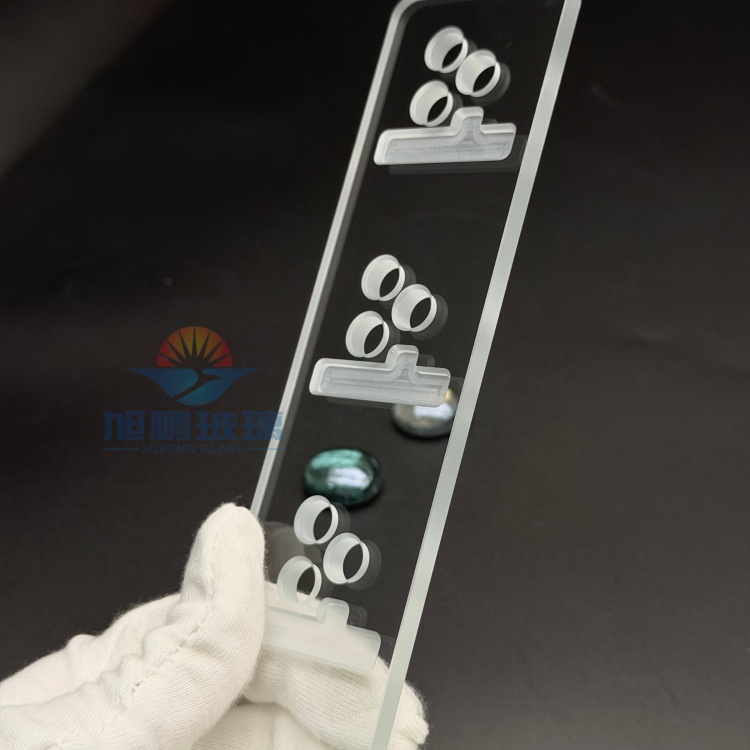
Ultra Clear High Light Transmission Tempered Glass Panel, CNC Arc Polishing, Drilling & Grooving
Low-iron ultra-clear tempered glass with CNC edge polishing, drilling and grooving for smart control panels, appliance covers and light fixtures.
View product
Round Aluminosilicate Glass with Chamfered Ground Edges and Metal Coating
Aluminosilicate round glass with controlled chamfered edges and metal coating for demanding electrical, thermal and mechanical environments.
View product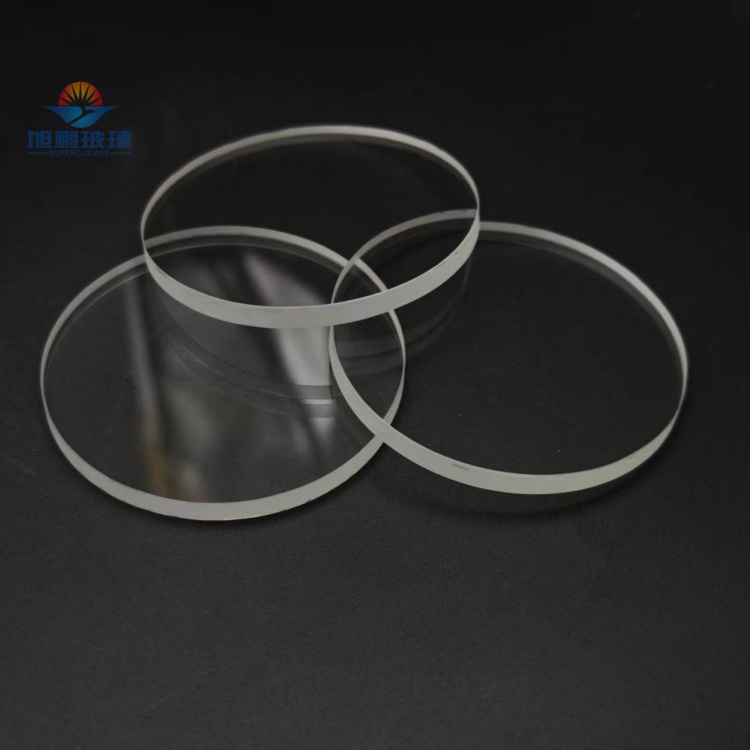
K9 Optical Glass (K9 Crystal Glass) for Optical Instruments
K9 borosilicate crown glass for lenses, prisms and instrument windows where refractive consistency, polish quality and edge finish are important.
View product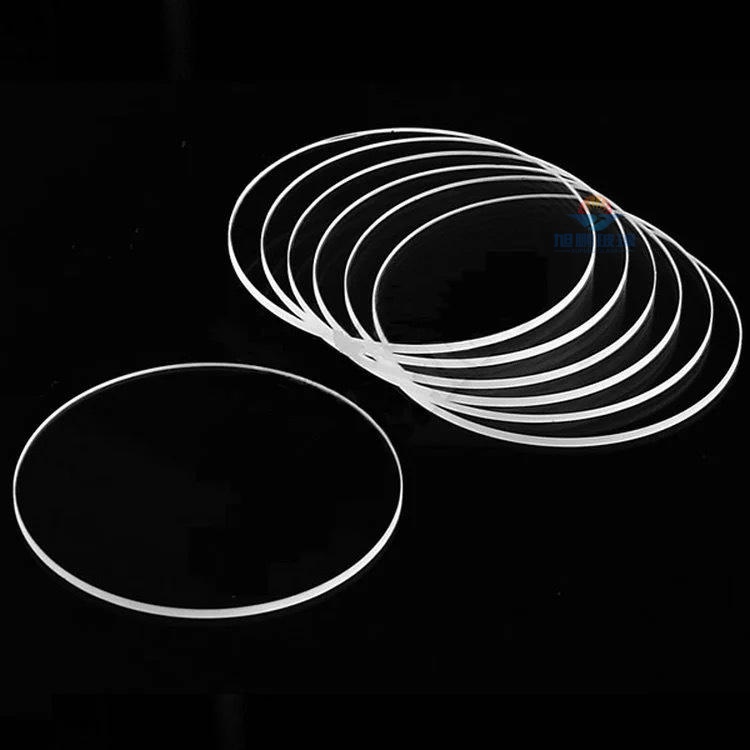
Corning EXG Alkali-Free Glass, UV High-Transmittance Optical Window Substrate
Alkali-free glass substrate for UV-transmission windows, sensor covers and optical components requiring low thermal expansion and stable performance.
View product
High-transmittance Anti-Reflection Coated Glass
AR-coated glass for display windows, touch modules and optical instruments where low surface reflection and higher visible transmission improve readability.
View productNeed a custom round glass size, mixed wholesale program or engineering review before quotation? Send your drawing, annual volume and finishing requirements.
Round Tempered Glass Is No Longer a Generic Purchase
OEM/ODM round tempered glass exporters and wholesalers are now evaluated on engineering depth, process control, coating capability and supply reliability — not unit price alone.
A decade ago, many buyers sourced round tempered glass with a simple request: diameter, thickness, quantity and target price. Today, a serious RFQ is more specific. It asks for low-iron ultra-clear material, CNC-drilled holes with defined tolerances, chamfered or ground edges, high-temperature silk-screen printing, AR or AG coating, flatness control, protective packing and batch traceability. The change reflects a broader shift: glass is becoming an engineered component, not a commodity accessory.
The round format itself matters. Circular parts often sit inside control panels, sensor assemblies, optical instruments, lighting fixtures, wearable devices, appliance interfaces and semiconductor packaging. Because there are no corners to hide stress concentration, the quality of edge grinding, thermal tempering, hole drilling and coating uniformity has a direct effect on yield and field reliability. A supplier that can cut a circle is not necessarily a supplier that can deliver a repeatable round glass component at scale.
This is where search intent and supplier selection meet. Buyers begin with broad queries such as “round tempered glass supplier” or “tempered glass exporter,” then narrow to “CNC drilled round glass discs,” “AR coated round glass,” “high-temperature silk screen round glass,” “ultra-clear round tempered glass wholesaler” and finally to “OEM/ODM round tempered glass exporters & wholesalers.” The winning supplier must answer all of those intents with verifiable process detail, material options, examples and commercial clarity.
What Buyer Intent Reveals About the Round Glass Category
Semantic search behavior shows that round glass buyers rarely search with a single material keyword. They search by application, process and risk. A display engineer may look for “high-transmittance AR coated round glass for touch panels.” A procurement manager may look for “round tempered glass wholesale supplier with export packing.” A semiconductor packaging team may search for “TGV glass wafer substrate” or “Corning EXG alkali-free glass wafer.” An instrument manufacturer may compare “K9 optical glass round window” with “quartz round window” and “sapphire glass disc.”
These query clusters reveal three layers of intent. The first layer is component discovery: what material or geometry can solve the optical, mechanical or thermal problem? The second layer is process validation: can the supplier cut, drill, edge, temper, print and coat to the required tolerance? The third layer is commercial confidence: can the exporter handle samples, MOQ, inspection, packing, Incoterms and repeat orders without creating hidden risk?
AUVE Glass addresses these layers through a factory-direct model that integrates R&D, design, production and export. As a deep-processing glass manufacturer based in Dongguan, Guangdong, the company processes flat and curved tempered glass, ultra-clear low-iron glass, painted and laminated glass, AR and AG coated glass, silk-screen printed glass, LCD and touch screen cover glass, LED lighting glass, instrument glass and optical materials such as K9, quartz, sapphire, borosilicate and Corning EXG alkali-free glass. For OEM and ODM buyers, that means one qualified source can cover multiple round glass requirements instead of fragmenting the supply base.
How to Specify Round Tempered Glass by Application
Use this recommendation framework to shortlist the right material and process route before requesting samples or a bulk quotation.
Ultra-clear round glass for control panels
For smart home panels, appliance interfaces and instrument covers, specify low-iron ultra-clear tempered glass with high visible transmission, controlled flatness, CNC-polished edges and optional anti-fingerprint treatment. Keep the glass thickness compatible with the housing, gasket and touch module stack-up.
CNC-drilled round tempered discs
When the part needs mounting holes, slots, counterbores or grooves, provide a CAD, DXF or PDF drawing with hole positions, diameter tolerances, edge breaks and whether the holes are introduced before or after tempering. DFM review should happen before production because hole-to-edge distance affects breakage risk.
AR-coated round display windows
AR coating is the right recommendation for display windows, optical instruments and touch modules where surface reflection reduces contrast. Single-side and double-side AR coating can be combined with tempered ultra-clear glass, edge polishing and selective printing. Confirm the expected reflection target and the inspection angle before quoting.
AG anti-glare round glass for harsh light
Outdoor kiosks, industrial HMIs, medical displays and instrument panels often need AG anti-glare treatment rather than AR alone. A micro-etched surface diffuses glare while preserving readability. Buyers should agree on haze, gloss and surface appearance, especially when AG is combined with printing or AR.
High-temperature silk-screen printed round glass
For appliance panels, switch covers, instrument graphics and indicator windows, ceramic ink printing can be fired into the glass surface for durable appearance and scratch resistance. Specify color codes, print side, window clearances, IR ink requirements and whether the print must survive tempering.
Specialty optical and technical round glass
K9, quartz, sapphire, borosilicate, aluminosilicate and Corning EXG substrates serve optical instruments, UV equipment, sensor covers, semiconductor packaging and high-temperature windows. Selection depends on transmission range, thermal expansion, hardness, chemical resistance and required surface quality.
2025–2030 Procurement Trends for Round Tempered Glass Wholesalers
Forward-looking buyers are redesigning supplier scorecards around resilience, traceability and application engineering — not only price per piece.
Evidence-based dual sourcing
Wholesalers will maintain qualified primary and backup glass suppliers to protect assembly lines from coating capacity, energy restrictions or logistics disruption. The backup must prove comparable process capability, not simply quote a similar price.
Small-batch ODM and faster sampling
Brand owners are launching more variants with less inventory. Suppliers that support small pilot batches, rapid drawings review and mixed finishing options will win ODM programs. MOQ flexibility across coated, printed and optical parts becomes a competitive advantage.
Digital RFQ and batch traceability
Drawings, tolerance tables, coating targets and inspection criteria are becoming digital from the first inquiry. Future wholesale programs will expect batch labeling, material records, inspection data and change-history documentation as standard parts of the supply relationship.
Total landed cost and protective packing
Glass breakage is a silent cost multiplier. Export packaging with interleaving film, foam protection, reinforced cartons or fumigation-free crates will remain a key qualification point. Incoterms flexibility — FOB, CIF, DDP and express — helps wholesalers serve different customer sizes.
Product Development Trends Shaping the Next Generation of Round Glass
As applications become more compact, optical and thermally demanding, round tempered glass is developing along six major lines.
Low-iron clarity and higher transmission
Ultra-clear low-iron glass reduces the green edge tint associated with conventional float glass. Combined with AR coating, it supports brighter displays, better camera windows and cleaner LED lighting. Buyers increasingly request transmission targets alongside dimensional tolerances.
Integrated coating stacks
AR, AG, anti-fingerprint, metal coating and hard-coat options are being combined on the same round glass part. The challenge is not simply adding a coating; it is ensuring adhesion, durability, optical consistency and compatibility with tempering, printing and cleaning processes.
Precision holes, chamfers and grooves
Round parts are expected to arrive closer to final assembly. CNC drilling, chamfered ground edges, arc polishing and grooving reduce secondary operations for OEM customers. Tolerance discussions should include hole position, edge chip limits and flatness after processing.
Functional printing and durable graphics
Silk-screen printing is moving beyond decoration. High-temperature ceramic inks can create light windows, masking zones, indicator graphics and brand details that survive harsh cleaning. For appliance and instrument panels, print durability is often as important as glass strength.
Advanced substrates for optical and semiconductor use
K9, quartz, sapphire, borosilicate, aluminosilicate, Corning EXG and TGV wafers are expanding the definition of round glass. These materials require supplier knowledge in polishing, dicing, microvia capability, cleaning and contamination control.
Sustainable packing without sacrificing protection
Fragile glass cannot be packed casually. The development trend is to reduce packaging waste while retaining impact protection through better corner protection, interleaving materials and right-sized crates. Wholesale buyers should evaluate breakage rate and unpacking efficiency, not just material cost.
Why AUVE Glass Fits OEM/ODM Round Glass Programs
For procurement teams, trust is a set of checkable signals: factory capability, engineering response, export experience and verifiable supplier data.



Factory-direct deep processing, export-ready support
Dongguan AUVE Glass Co., Ltd. is a deep-processing glass manufacturer integrating R&D, design, production and export. The company is located in Songshan Lake, Dongguan — an electronics and optoelectronics cluster that gives buyers access to skilled engineering support and a mature export ecosystem.
Production covers flat and curved tempered glass, ultra-white low-iron glass, laminated and painted glass, touch screen and LCD cover glass, smart control panel glass, LED lamp glass, instrument glass, AR high-transmittance glass and AG anti-glare glass. For round glass projects, the relevant capability is not one machine but the coordination between cutting, CNC machining, edge finishing, tempering, printing, coating, inspection and export packing.
Guided by the philosophy “focusing on high-end glass, pioneering and innovating,” AUVE continues to invest in engineers, equipment and process control. Buyers can verify supplier credentials through the company profile, supplier assessment, credit index, transaction level, trade capacity, trade history and buyer feedback. These public trust signals are important for first-time OEM and wholesale buyers evaluating a new glass partner.
When you send a drawing, include material grade, thickness, diameter, tolerances, edge profile, hole requirements, print colors, coating specification, quantity and packaging needs. AUVE’s engineering review is designed to confirm manufacturability before quotation, reducing the risk of costly changes after tooling or production begins.
Integrated process coverage
Cutting, CNC edging, drilling, grooving, tempering, silk-screen printing, AR/AG coating, inspection and export packing are coordinated under one supplier relationship. This reduces handoff risk and gives buyers a clearer route from drawing to repeat order.
Engineering review before production
Send CAD, DXF or PDF drawings with thickness, tolerance, edge, hole, printing and coating requirements. The team reviews manufacturability before production so that circular geometry, hole spacing, edge quality and coating limits are understood early.
Verifiable supplier trust signals
Public supplier data — onsite-checked status, credit index, transaction level, trade capacity, trade history and ratings — gives procurement teams a starting point for due diligence. For new projects, sample approval and documented specifications remain the practical verification path.
Export experience across key markets
AUVE glass products are exported to markets including the United States, Canada, Russia, South Korea, Japan and Australia. Accepted delivery terms include FOB, CFR, CIF, EXW, DDP, DDU, DAF and express delivery, with packing designed for fragile glass parts.
Fast technical communication
Average response time is within 7 hours. For active OEM/ODM programs, fast clarification on drawings, tolerances, samples and lead time can be as valuable as the quotation itself. Clear communication reduces rework and keeps engineering and purchasing aligned.
Broad material and finishing options
From ultra-clear tempered and AR/AG coated glass to K9, quartz, sapphire, borosilicate, aluminosilicate and Corning EXG, buyers can consolidate multiple projects with one glass partner. This is especially useful for distributors serving several application segments.
What to Send Before You Request a Round Glass Quotation
Clear input prevents slow quotes and rework. The checklist below helps engineering and purchasing teams brief an OEM/ODM round tempered glass supplier efficiently.
Drawing and geometry
Provide CAD, DXF or PDF files with diameter, thickness, flatness, edge profile, hole positions, groove details, chamfer requirements and critical tolerances. Mark which dimensions are functional and which are reference.
Material and optical requirements
Specify low-iron ultra-clear, conventional clear, aluminosilicate, K9, quartz, sapphire or Corning EXG. For coated parts, define transmission, reflection, haze, gloss, coating side and test angle so the supplier can confirm the correct coating stack.
Printing and finishing
Define print side, ink color, window areas, IR ink, gloss level, scratch expectations and whether printing occurs before or after tempering. For edges, state whether a polished, chamfered, ground or beveled finish is required and which visible surface is cosmetic.
Quantity, packing and Incoterms
Share annual volume, first order quantity, sample needs and delivery schedule. Confirm Incoterm preference and whether the packing must support sea freight, air freight, express or distributor stock handling. Mention any labeling or barcode requirements.
For coated and optical glass parts, MOQ often starts from 10 to 50 pieces. Standard ultra-clear tempered parts may start from 100 to 500 pieces depending on size and processing. Sample and pilot quantities can be discussed for new projects. Final specifications are confirmed against the drawing and agreed inspection standard before mass production.
Frequently Asked Questions from Round Glass Buyers
Straight answers for engineering teams, brand owners and wholesale distributors evaluating an OEM/ODM round tempered glass partner.
01What does OEM/ODM round tempered glass supply mean?
It means the supplier manufactures round glass to your drawing or jointly develops a custom part for your housing, display or instrument. OEM supply usually follows your specification, while ODM support may include material selection, DFM review, edge design, coating choice and packaging optimization.
02Can you produce round glass to my own drawing?
Yes. Send a CAD, DXF or PDF drawing with thickness, tolerances, edge, hole, printing and coating requirements. The engineering team reviews manufacturability before production, covering CNC cutting, edging, drilling, tempering, silk-screen printing and AR/AG coating.
03What is the minimum order quantity?
MOQ depends on material and process. Many coated and optical glass parts start from 10 to 50 pieces, while standard ultra-clear tempered parts often start from 100 to 500 pieces. New projects, samples and pilot quantities can be discussed based on the drawing and annual volume.
04Which finishes can be added to round tempered glass?
Options include CNC grounding or polishing, chamfered edges, drilled holes, grooving, high-temperature silk-screen printing, AR anti-reflection coating, AG anti-glare etching, metal coating, silver mirror coating and protective films. The process route depends on the material and application environment.
05How are quality and export packing controlled?
Production follows documented process standards and quality checks before packing. Export packing can include interleaving film or paper, foam corner protection, reinforced cartons and fumigation-free wooden crates with batch labeling, depending on part size and shipping method.
06Which markets and trade terms are supported?
Products are exported to markets including the United States, Canada, Russia, South Korea, Japan and Australia. Supported terms include FOB, CFR, CIF, EXW, DDP, DDU, DAF and express delivery. Technical inquiries average a response within 7 hours.
Have a Round Glass Drawing or Wholesale Program?
Share your material, diameter, thickness, tolerance, edge, hole, printing and coating requirements. Get an engineering review and product catalog for your OEM or ODM round tempered glass project.