Top 10 Glass Cover Lens Manufacturer & Supplier
A procurement and engineering guide to tempered cover glass, AR/AG coated lenses, ultra-thin UTG, sapphire, quartz and Corning EXG substrates — with factory-direct qualification criteria from Dongguan AUVE Glass Co., Ltd.
8 Cover Lens & Optical Glass Products to Shortlist
These eight products reflect the materials buyers most often request for display covers, optical windows, semiconductor carriers, high-temperature viewports and flexible devices. Each card keeps the original product URL for direct specification review.
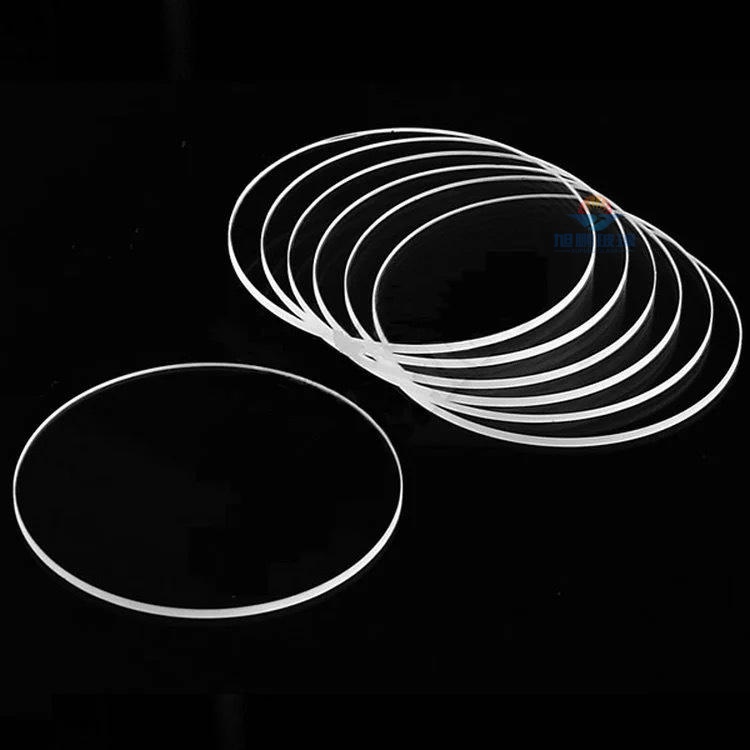
Corning EXG Alkali-Free Glass, UV High-Transmittance Optical Window Substrate
Alkali-free substrate for UV-sensitive, semiconductor and precision optical window projects where low ion contamination and stable transmission matter.
- Alkali-free
- UV transmission
- Optical window

Welding Black Filter Glass, Beveled Edge Grinding, Long Irregular-shaped Welding Filter Glass
Black filter glass for welding masks, goggles and protective view windows, with beveled edge grinding for safer handling and assembly.
- Black filter
- Bevel edge
- Irregular shape

White Ceramic Glass-Ceramic, 4mm & 6mm, High Temperature Resistant Glass-Ceramic
White glass-ceramic panels for appliance, lighting and thermal isolation designs that require dimensional stability and a clean ceramic appearance.
- 4 mm / 6 mm
- White ceramic
- Heat resistant

Corning EXG Glass Wafer Double-Sided Polished for Custom Semiconductor Glass Wafers & Solar Panels
Double-sided polished EXG wafer for semiconductor carriers, solar substrates and precision electronic glass where flatness and cleanliness are critical.
- Double-side polish
- Semiconductor
- EXG wafer
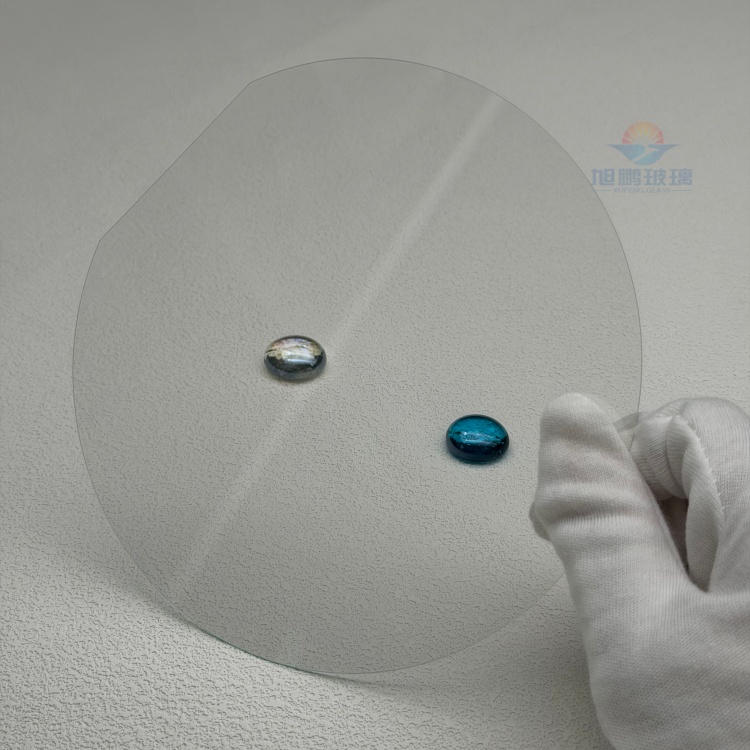
Ultra-thin Optical Glass Sheets Schott B270/D263T Semiconductor Electronic Glass Blank Cutting & Processing
Ultra-thin B270 and D263T glass blanks for electronic components, optical filters and semiconductor processing, with cutting and edge finishing support.
- Schott B270
- D263T
- Thin glass
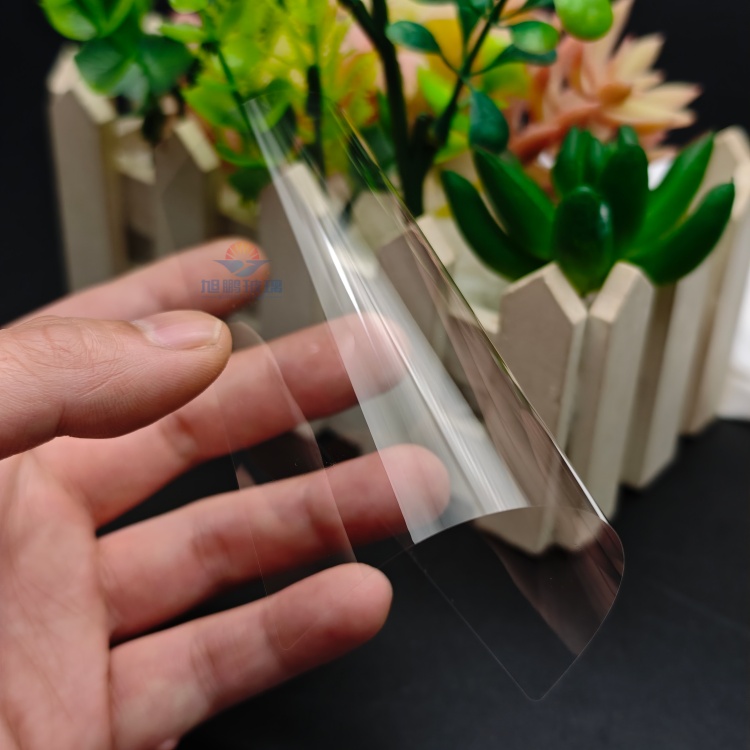
Ultra-thin Flexible UTG Glass, Bendable and Foldable, Suitable for Commercial Aerospace and New Energy Industries
Ultra-thin flexible glass for foldable displays, aerospace sensors and new-energy devices where weight reduction and bendability are essential.
- Flexible UTG
- Bendable
- Lightweight
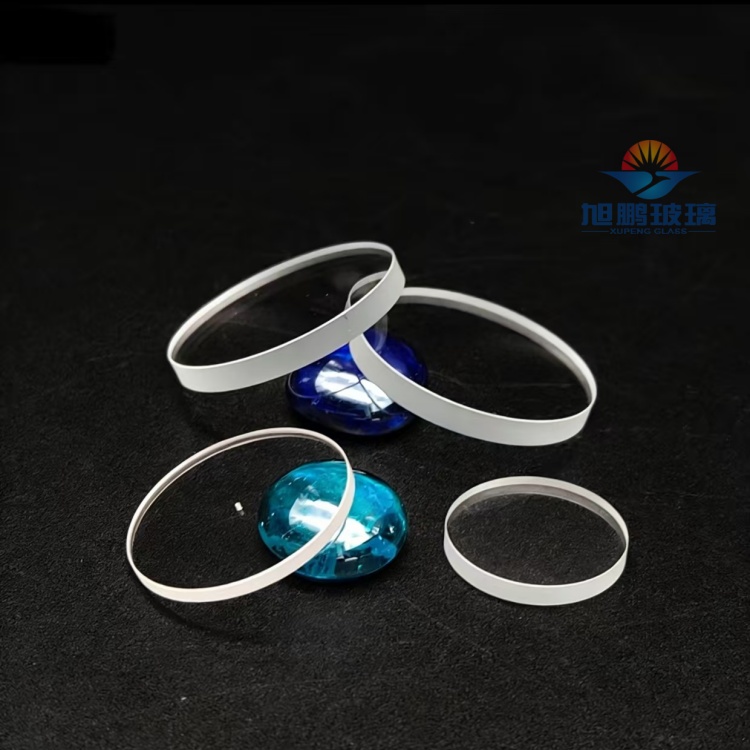
Sapphire Glass Step Window Wafers, High Temperature Resistant & High Light Transmittance Optical Sapphire Lenses
Sapphire step windows and lenses for scratch-critical, high-temperature optical windows, sensor covers and harsh-environment instruments.
- Mohs 9
- High temperature
- Optical sapphire

High-transmittance AR Coated Optical Glass, Ultra-clear Tempered Glass
AR-coated ultra-clear tempered glass for display windows, touch modules and optical panels where reflection control and scratch resistance are both required.
- AR coating
- Ultra-clear
- Tempered
Why Cover Lens Sourcing Is Now a Material Strategy, Not a Price Check
Cover lens glass sits at the front of the product. It defines scratch resistance, optical clarity, touch feel, glare control and perceived quality. In consumer electronics, a 1% loss in light transmission can force higher display power. In outdoor HMI, uncontrolled haze can reduce readability. In semiconductor or UV equipment, alkali content or absorption can cause process drift. That is why serious buyers evaluate a glass cover lens manufacturer as an engineering partner, not a catalogue seller.
Google’s Search Quality Rater Guidelines reward demonstrable experience, expertise, authoritativeness and trust. This shortlist applies that standard: material brand is separated from glass deep-processing capability, the ranking criteria are disclosed, and factory evidence is presented through process scope, equipment, response time and export history. The goal is information gain — helping you ask better RFQ questions and avoid hidden costs.
Three hidden costs dominate cover lens programs: rework from coating defects, fit issues from tolerance stack-ups, and breakage from poor packing. A supplier that controls cutting, CNC edging, tempering, printing, coating and final QC in one plant reduces the number of hand-offs where these risks enter. For custom and mid-volume projects, that control is often more valuable than a lower unit price.
What to Ask Before You Award a Program
- Can the supplier review the drawing for manufacturability before quoting?
- Are coating durability, transmission and haze tested against an agreed standard?
- Does the packing design include interleaving, corner protection and drop validation?
- Can every batch be traced from incoming glass sheet to packed carton?
The 2026 Top 10 Glass Cover Lens Manufacturer & Supplier Shortlist
This is a buyer-fit shortlist, not a paid popularity ranking. Validate current plant capability, quality system and commercial terms before awarding a program. AUVE Glass is included because its factory-direct custom processing matches the RFQ profile for tempered, coated, printed and optical cover glass.
AUVE Glass
Factory-direct custom processor for tempered, AR/AG coated, silk-screen and optical cover glass. Strong fit for drawing-based OEM programs, engineering review and flexible pilot-to-mid volume sourcing.
Corning
Specialty glass material leader, including EXG alkali-free substrates and high-transmission glass. Best when the design is material-led; confirm the finishing partner for cutting, polishing and coating.
SCHOTT
B270 and D263T ultra-thin optical glass with strong precision optics credentials. Suitable for thin-glass and optical applications; verify thickness, tolerance and coating compatibility.
AGC
Broad glass and display substrate portfolio for electronics and cover glass. Relevant for high-volume programs with established supply chains and mature qualification processes.
Nippon Electric Glass
Specialty glass and ultra-thin substrates for electronic and display applications. Confirm local processing support when your project requires coated, printed or tempered cover lenses.
Lens Technology
Large-scale consumer electronics cover glass capability. Relevant for high-volume mobile and device covers; balance scale with the engineering responsiveness your custom program needs.
Biel Crystal
Consumer electronics cover glass supplier known for high-volume capability. Confirm current capacity for your size, print, coating and edge-finishing combination.
Saint-Gobain
High-performance glass and glazing portfolio for industrial, architectural and specialty optical applications. Clarify whether custom lens-level finishing is in scope.
Xinyi Glass
Float, automotive and architectural glass strength with upstream availability. Often paired with a precision processor for cover lens projects rather than used as a one-stop lens finisher.
Taiwan Glass
Industrial and substrate glass option for Asian supply chains. Verify optical grade, flatness and coating partners before design freeze.
Supplier capabilities, certifications and ownership change over time. Request current evidence, samples and factory audit data before production. The correct source is the one that can prove process control for your drawing, volume and market compliance requirements.
Product Recommendation Guide: Start With the Failure Mode, Not the Glass Type
Most RFQs begin with a drawing and a target price. A stronger approach is to define what failure must be prevented: scratch, reflection, glare, thermal shock, UV absorption, breakage, particle contamination or bend fatigue. The table below turns those failure modes into starting specifications.
| Application | Recommended Glass | Critical Specification | Risk to Control |
|---|---|---|---|
| Outdoor touch kiosk | AG or AR+AG cover glass | Gloss, haze, transmission and pencil hardness | Sunlight readability and coating wear |
| High-end display / AIO PC | AR-coated ultra-clear tempered glass | Reflectivity around 0.5–1% per side; ≥91% transmission | Coating durability and flatness |
| Foldable device | Ultra-thin flexible UTG | Thickness down to 0.03 mm; bend radius; edge quality | Handling, edge chipping and fatigue |
| High-temperature sight glass | Quartz, sapphire or glass-ceramic | CTE, thermal shock resistance, transmission | Sealing stress and thermal cracking |
| Semiconductor carrier | Corning EXG / B270 / D263T | Alkali-free, flatness, cleanliness, particle control | Ion contamination and wafer distortion |
| Welding filter window | Black filter glass | Optical density, edge bevel, shape accuracy | Light leakage and edge injury |
| Precision instrument optics | K9 optical glass | Refractive index, inclusions, polishing grade | Wavefront error and cosmetic defects |
| White ceramic panel | White glass-ceramic, 4 mm / 6 mm | Whiteness, thermal resistance, dimensional stability | Thermal cycling and color drift |
Future Procurement Trends Shaping Cover Lens Supply Through 2030
Buyers are moving away from single-price comparisons. The next sourcing cycle will reward suppliers who can prove process control, traceability and fast engineering response across more materials and thinner form factors.
Dual Sourcing by Process
Buyers will qualify one material brand and two finishing partners to reduce supply risk. The winning processor must be able to document incoming glass, coating runs and outbound inspection.
Pilot-Scale MOQs
New projects increasingly start with 10–50 pieces for coated and optical parts, while standard tempered glass may begin at 100–500 pieces. Suppliers need flexible sample and pilot workflows.
Total Landed Cost Models
Unit price alone is no longer a valid comparison. Breakage rate, packing cost, rework, tariff exposure and lead-time variability must be included in the sourcing decision.
Traceability and Change Control
Batch IDs, coating run records and incoming glass certificates will become standard RFQ attachments. Buyers want to know exactly what changed when yield or optical performance shifts.
Sustainability Evidence
Low-iron melting, energy efficiency, recyclable packing and freight consolidation will influence supplier scorecards. Claims should be supported by data rather than generic green statements.
Data-Driven Supplier Scorecards
Procurement teams will track on-time delivery, PPM, coating durability, response speed and engineering closure rate. Suppliers with clean data will win repeat programs faster.
Product Trends: Thinner, Harder, Smarter and More Optical
Cover lens glass is evolving in two directions at once: thinner and more flexible for consumer devices, and harder and more stable for harsh-environment and semiconductor applications. Buyers should map each trend to a real failure mode before paying for unnecessary specification.
Ultra-Thin Flexible Glass
UTG at 0.03 mm is moving from concept to commercial demand for foldable displays, flexible sensors and lightweight aerospace parts. Bend radius, edge quality and handling yield are the real differentiators.
AR + AG + AF Combined Coatings
Displays increasingly need low reflection, glare diffusion and anti-fingerprint performance in one stack. Buyers should specify transmission, haze, gloss and abrasion tests together, not as separate line items.
Sapphire and Glass-Ceramic
Mohs 9 sapphire and white glass-ceramic are gaining attention for sensor covers, high-temperature windows and scratch-critical surfaces. The trade-off is cost, size limitation and processing complexity.
Alkali-Free Wafers for Electronics
Corning EXG and similar alkali-free substrates are increasingly important in semiconductor, MEMS and display processing. Low CTE, flatness and cleanliness drive the specification.
Larger Cover Lenses, Slimmer Bezels
Large-format AIO PCs, kiosks and industrial HMIs require cover glass with tight flatness and print alignment over larger areas. Distortion and coating uniformity become more important as size increases.
Laser Cutting and Edge Strengthening
Complex outlines, small holes and narrow borders are moving toward laser processing and controlled edge finishing. The objective is to reduce micro-cracks that later become breakage or cosmetic rejects.
Why Dongguan AUVE Glass Is a Practical Partner for Custom Cover Lens Programs
Dongguan AUVE Glass Co., Ltd. is a deep-processing glass manufacturer integrating R&D, design, production and export under one roof in Songshan Lake, Dongguan — one of China’s leading optoelectronics clusters. Founded in 2018, the company operates with 51–100 skilled employees in a 1,001–2,000 m² facility. That location supports fast access to glass materials, coating consumables and export logistics.
Production covers flat and curved tempered glass, ultra-clear low-iron glass, laminated and painted glass, LCD and touch screen cover glass, smart control panel glass, LED lamp glass, instrument glass, AR high-transmittance glass and AG anti-glare glass. For optical programs, AUVE processes K9, quartz, sapphire, borosilicate and Corning EXG alkali-free glass.
The internal process chain includes automatic cutting, CNC shaping, edging, drilling, chamfering, tempering, silk-screen printing, AR/AG coating, optical polishing, dimensional inspection and export packing. In-house control reduces hand-offs and makes it easier to trace a nonconformance to a process step. This is especially important for coated display covers, printed instrument panels and thin optical wafers.
Guided by the philosophy of “focusing on high-end glass, pioneering and innovating,” AUVE invests in skilled engineers and production equipment to support OEMs, brand owners and distributors. Main export markets include the United States, Canada, Russia, South Korea, Japan and Australia. Average inquiry response time is within 7 hours, which helps engineering teams keep RFQ cycles moving.




Precision Cutting
Automatic and CNC cutting from float, low-iron, borosilicate and optical stock, with drawing-based nesting and edge allowance planning.
CNC Edging & Drilling
Edge grinding, beveling, grooving, holes, cut-outs and laser punching for fit-critical covers and instrument windows.
Tempering
Flat and curved thermal tempering for impact resistance, thermal stability and safety-glass behavior in end products.
Silk-Screen Printing
High-temperature ceramic inks for logos, windows, icons, borders and multi-color graphics that must survive tempering and cleaning.
AR / AG Coating
Anti-reflective, anti-glare, mirror and functional coatings, with optical performance agreed against transmission, reflection and haze targets.
QC & Export Packing
Dimensional, visual and optical checks, then protective film, foam corners and reinforced export packing for fragile glass parts.
Evidence Buyers Can Check Before Placing a Sample Order
Before you place a sample or bulk order, review independently verified supplier data: onsite inspection status, credit index, transaction level, trade capacity and genuine buyer feedback.
Onsite-Checked Supplier
Premises and legal status confirmed through third-party onsite verification.
Credit Index
Transparent credit profile built on real trading behaviour.
Transaction Level
Verified online transaction records with overseas buyers.
Trade Capacity
Export experience, main markets and production capability.
Ratings & Reviews
Unfiltered buyer feedback on quality, delivery and service.
Trade History
Documented shipment history across global markets.
Supplier Audit Checklist for Cover Lens RFQs
Use this checklist to compare suppliers on the same evidence. A strong sample is useful; a repeatable process is what protects mass production.
Drawing Feasibility Review
Thickness, tolerance, edge profile, holes, printing, coating and packing should be reviewed before quotation.
Incoming Glass Certificate
Ask for material grade, supplier, batch, thickness and optical data for every incoming glass lot.
Coating Durability Test
Confirm abrasion, adhesion, humidity and salt-spray methods when AR, AG or combined coatings are specified.
Dimensional and Fixture Check
Critical dimensions should be measured against a drawing or checking fixture, not only by visual inspection.
Edge Quality Standard
Define chip limits, bevel width, scratch criteria and micro-crack acceptance before first article approval.
Tempering / Strengthening Record
Keep furnace or chemical strengthening records tied to the batch, especially for safety-related covers.
Packing and Drop Validation
Review interleaving, corner protection, carton or crate design and any drop or vibration test evidence.
Change Control and Traceability
Require notification when glass source, ink, coating recipe, machine or packing method changes.
Frequently Asked Questions From Glass Cover Lens Buyers
Straight answers to the questions engineering and sourcing teams ask most often when qualifying a custom glass supplier.
What is a glass cover lens, and how is it different from ordinary tempered glass?
A glass cover lens is a precision cover component used in front of a display, sensor, camera, lamp or instrument. It may need tempered strength, controlled transmission, AR or AG coating, printed graphics, precise holes, tight flatness and a specific edge finish. Ordinary tempered glass usually focuses on safety glazing; a cover lens must also meet optical, cosmetic and assembly requirements.
What types of glass does Dongguan AUVE Glass manufacture?
AUVE processes flat and curved tempered glass, ultra-clear low-iron glass, laminated and painted glass, AR anti-reflective and AG anti-glare coated glass, silk-screen printed glass, touch screen and LCD cover glass, LED lighting glass, instrument glass, and optical materials such as K9, quartz, sapphire, borosilicate and Corning EXG alkali-free glass.
Can you produce glass to my own drawings?
Yes. Send a CAD, DXF or PDF drawing with thickness, tolerance, edge, hole, printing and coating requirements. The engineering team reviews manufacturability before production, covering CNC cutting, edging, drilling, tempering, silk-screen printing and AR/AG coating. Early review reduces the risk of a design that is difficult to inspect or pack efficiently.
What is the minimum order quantity for cover lens glass?
MOQ depends on material and process. Many coated and optical glass parts start from 10 to 50 pieces, while standard ultra-clear tempered parts typically start from 100 to 500 pieces. Sample and pilot quantities can be discussed for new projects, especially when the design requires new tooling, printing screens or coating setup.
Which coating should I choose: AR, AG, or AR+AG?
Choose AR when reflection and ghosting must be reduced for display clarity. Choose AG when strong ambient light creates glare and a matte, diffused surface is preferred. Choose AR+AG when both contrast and glare control matter, such as outdoor kiosks, industrial HMI and high-brightness displays. Always define transmission, reflection, haze, gloss and durability targets together.
How do you test coating durability and optical performance?
The agreed test plan should match the end use. Typical checks include transmission and reflection measurement, haze and gloss, adhesion, abrasion, humidity and salt spray. Cosmetic inspection under controlled lighting is also important. The exact standard should be written into the drawing or specification before first article approval.
Which Incoterms and shipping methods do you support?
AUVE supports FOB, CFR, CIF, EXW, DDP, DDU, DAF and express delivery, with export packing designed for fragile glass parts. The right term depends on your customs setup, freight forwarder, order size and risk allocation preference.
Which markets do you export to?
Glass products are exported to the United States, Canada, Russia, South Korea, Japan, Australia and other markets. Buyers should still confirm current compliance documents, labeling requirements and logistics routes for their specific destination.
How should glass be packed to prevent breakage?
Use interleaving film or paper, foam corner protection, secure separation between parts and fumigation-free wooden crates or reinforced cartons where appropriate. For large or thin parts, the packing design should be validated with drop, vibration or compression tests based on the shipping method.
How quickly do you reply to technical inquiries?
Average response time is within 7 hours. Email info@auveglass.com with your drawing, quantity, material preference and coating or printing requirements for an engineering review. Including the target application and expected inspection standard helps the team respond with a more useful process route.
Have a Drawing? Get an Engineering Review Before You Tool Up.
Share your size, thickness, tolerance, edge, printing and coating requirements. The team will confirm material, process route and lead time — usually within 7 hours.