8 High-Value Glass Disc and Panel Products for 2025 Procurement
These buyer-ready products reflect the practical range of a deep-processing glass manufacturer: anti-reflection display glass, welding filter glass, CNC-processed low-iron glass, optical glass, ultra-white tempered glass, large-format AIO PC cover glass and precision round glass panels. Each product URL is preserved for direct evaluation.
 AR Display Glass
High-transmittance Anti-Reflection Coated Glass
AR-coated low-iron glass for display windows, touch modules and instrument covers. The coating lowers surface reflection to improve contrast under strong ambient light.
View product Welding Filter
Welding Black Filter Glass, Beveled Edge Grinding, Long Irregular-shaped Welding Filter Glass
Long, irregular-shaped black welding filter glass with beveled edge grinding. Suitable for welding masks, goggles and protective optical assemblies requiring controlled light filtration.
View product CNC Tempered
CNC Carved Low Iron Glass Sheet, High-temperature Screen Printed Tempered Glass, Drilled Glass Panel
CNC-carved low-iron glass with high-temperature screen printing and drilled features. A practical choice for control panels, appliance fronts and HMI windows.
View product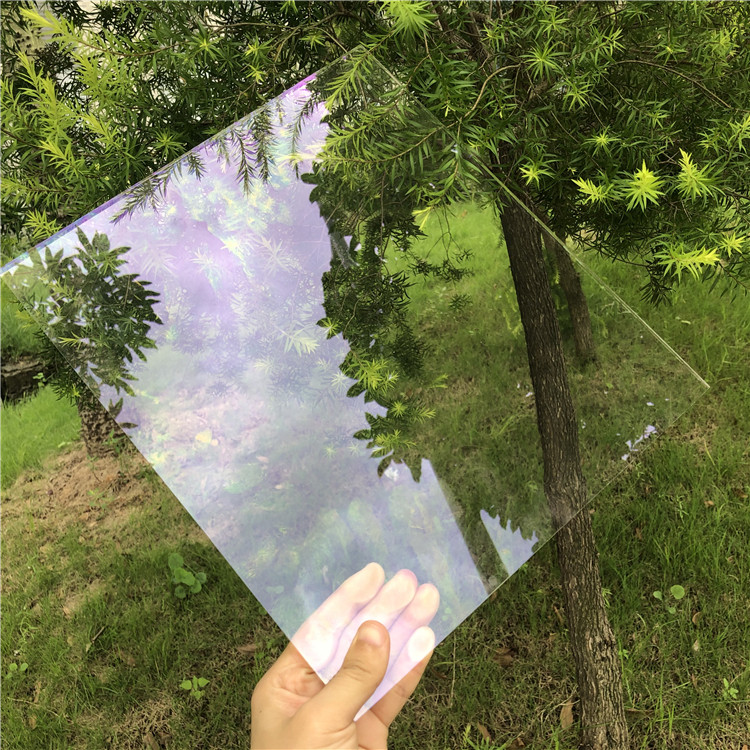 Optical AR
High-transmittance Anti-Reflection (AR) Coated Optical Glass
High-transmittance AR-coated optical glass for imaging, sensing and display stacks. Specify single- or double-side coating, transmission target and surface quality.
View product Ultra-White
Ultra-white Tempered Glass, AR Anti-Reflection Coatable, High Light Transmittance & Anti-reflective
Ultra-white tempered glass that can be AR-coated for high light transmittance and anti-reflective performance. Ideal for bright display and lighting covers.
View product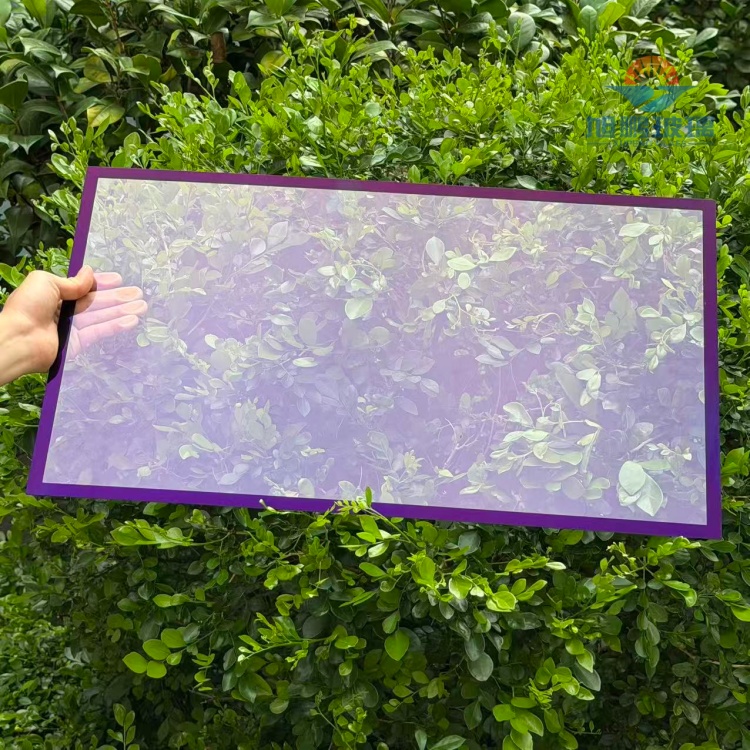 27-inch AIO
27-inch All-in-One PC AR Coated Glass
Large-format 27-inch AR-coated cover glass for all-in-one PCs, monitors and commercial display terminals. Edge profile, cut-outs and coating must be defined at drawing review.
View product Decorative
Custom Ultra-White Clear Tempered Glass Socket Decorative Cover for Stairways
Custom ultra-white clear tempered glass socket and switch decorative cover for stairways. Combines high clarity, cut-outs and decorative finishing for architectural interiors.
View product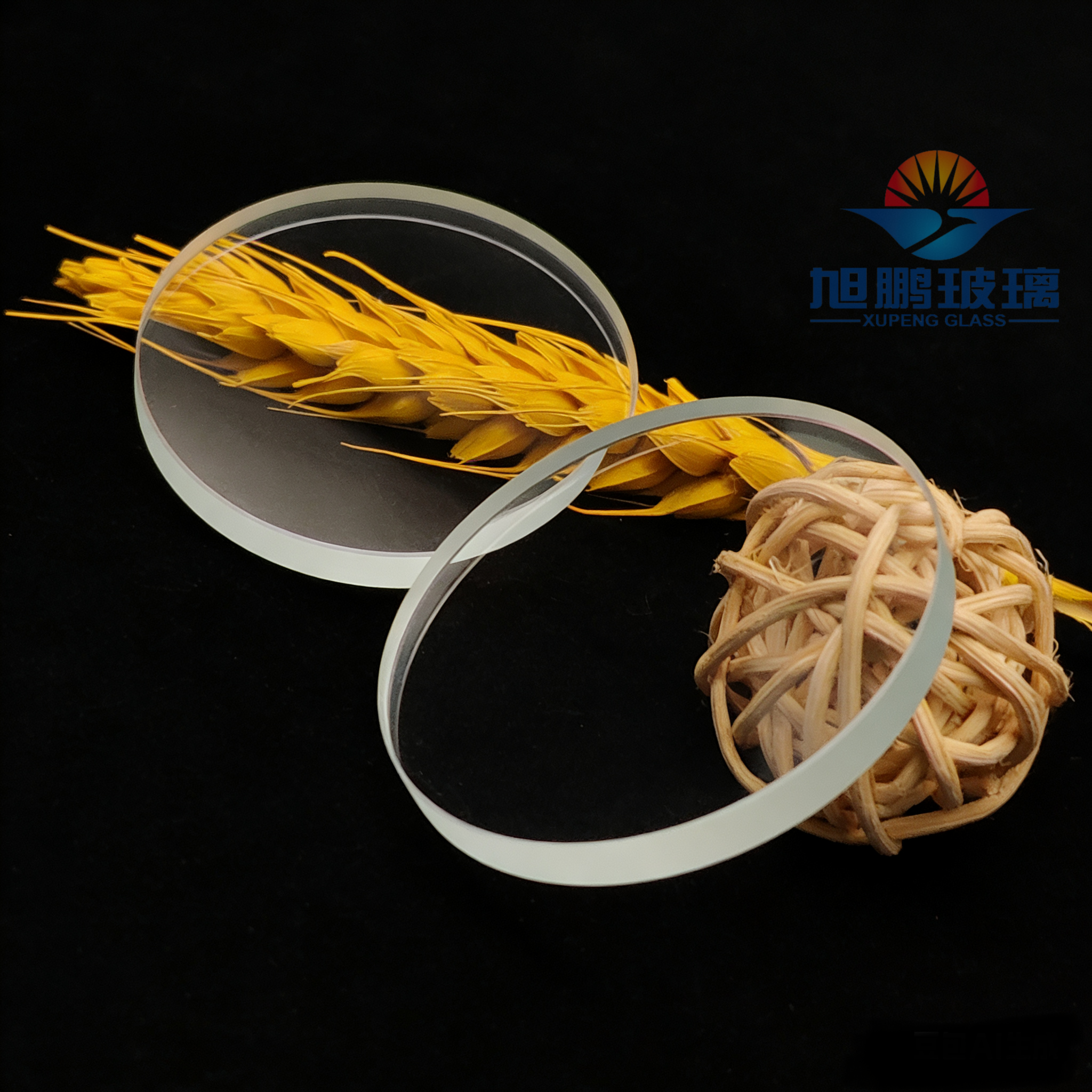 Round Disc
Low Iron Round High Transmittance Tempered Glass Panel with Precision Polished Edges, Flat Clear Glass
Round low-iron tempered glass panel with precision polished edges and high transmittance. A strong reference product for sensor windows, lighting and instrument discs.
View productWhat Makes a Top 10 Glass Disc Manufacturer & Exporter?
A supplier can look like a top-10 candidate on a directory page yet fail at the drawing-review stage. For glass discs, the strongest shortlist is built on verifiable process control, measured optical performance and export reliability — not on a single price sheet.
Drawing review before price
Top suppliers review CAD, DXF or PDF drawings for thickness, tolerance, edge profile, holes, coating, printing and assembly stack-up before quoting.
In-house CNC shaping
Cutting, edging, beveling, chamfering, grooving and drilling under one roof reduce handling damage and tolerance drift between subcontractors.
Tempering process control
Flat and curved tempering should be supported by edge-quality checks, fragment standards and batch records for repeat industrial orders.
AR, AG and optical coating depth
Reflection, transmission, haze and adhesion must be measured and tied to the agreed specification — especially for display and instrument windows.
Material breadth with real discipline
Low-iron, borosilicate, K9, quartz, sapphire and Corning EXG each demand different CTE, hardness and polishing knowledge.
Printing and decoration capability
High-temperature ceramic inks, logos, IR windows, hidden-display graphics and multi-color printing require alignment control and firing know-how.
QC and batch traceability
Incoming glass, dimensional inspection, visual checks, optical measurement and packing verification should be documented batch by batch.
Export packing and Incoterms
Glass discs are fragile at edges. Interleaving film, foam protection and crates should align with FOB, CFR, CIF, EXW, DDP, DDU, DAF or express delivery.
Verified credentials
Onsite inspection status, credit index, transaction level, buyer reviews and trade history give procurement teams third-party context before sampling.
Response speed and scalability
A supplier should answer technical questions quickly, support pilot quantities and scale to repeat OEM production without changing the process route.
The most useful shortlist is not the longest list. It is the one where every supplier can prove drawing-to-production control, measured optical performance and export-ready packing. Dongguan AUVE Glass Co., Ltd. fits this framework through factory-direct deep processing, engineer-led manufacturability review and a material portfolio that covers tempered, ultra-clear, AR/AG coated, printed and precision optical glass.
Which Glass Disc Should You Specify for Your Application?
Glass discs are usually part of an assembly, not a stand-alone purchase. Use the application path below to shortlist the right starting product before sending a drawing.
Displays and touch cover
Start with the AR-coated high-transmittance glass or the 27-inch AIO PC cover glass. Define transmission, reflection target, color neutrality, hardness, edge profile and cut-outs.
- AR-coated display glass
- Ultra-white AR-coatable glass
- Large-format AIO cover
Industrial HMI and control panels
Specify CNC-processed low-iron tempered glass when the part needs holes, high-temperature printing, stepped edges or durable graphic windows for appliances and equipment.
- Tempering and printing
- Drilled and carved features
- Low-iron clarity
Optical and sensor windows
Use AR-coated optical glass or precision round low-iron glass when flatness, surface quality, edge polish and transmission consistency are critical to the instrument.
- Optical AR coating
- Round glass disc
- Polished edges
Welding and protective optics
Choose black welding filter glass with beveled edge grinding for masks, goggles and shields. Confirm optical density, visible-light transmission, shape and edge finish.
- Welding filter glass
- Long irregular shapes
- Beveled edge
Glass Disc Procurement Trends Buyers Should Plan For
Purchasing teams are moving from simple piece-price comparison to risk-adjusted sourcing. The trends below are especially visible in display, industrial HMI, optical instrument and decorative glass categories.
Total landed cost replaces piece price
Breakage, rework, inspection delays and replacement shipments can erase a low unit price. Buyers increasingly model packing quality, freight risk, duty and supplier response time together.
Faster prototypes with smaller MOQ
Engineering teams want pilot quantities for validation before mass production. Coated and optical parts often start at 10 to 50 pieces, while standard tempered parts commonly begin around 100 to 500 pieces.
Integrated finishing from one partner
Cutting, CNC shaping, tempering, printing and AR/AG coating under one roof reduce handling, shorten lead times and keep the tolerance chain under a single quality system.
Dual-source and continuity planning
Critical glass discs are increasingly qualified with a primary and secondary source. Material certificates, process records and consistent coating recipes make the switch practical.
Traceability and inspection documentation
Batch IDs, thickness records, coating measurements and packing checks are becoming standard requirements in industrial, automotive and medical-adjacent supply chains.
Sustainable and protective packing
Export packing must reduce damage without creating unnecessary waste. Recyclable interleaving, foam protection, labeled crates and fumigation-free packaging are becoming buying criteria.
Product Development Trends in Technical Glass Discs
Glass disc specifications are becoming tighter as devices become brighter, thinner and more integrated. The following development directions are shaping new RFQs from OEM and brand-owner teams.
Thinner, stronger low-iron substrates
Low-iron glass with improved tempering and edge quality supports thinner control panels, lighting covers and display windows without sacrificing clarity.
AR/AG hybrid and easy-clean coatings
Outdoor displays and industrial HMIs increasingly combine anti-reflection, anti-glare and easy-clean surface properties to improve readability and maintenance.
Precision optical material demand
K9, quartz, sapphire and Corning EXG substrates are specified for optical instruments, UV equipment and semiconductor-adjacent applications where standard glass is insufficient.
Ultra-thin flexible glass
Foldable and flexible devices are pushing demand for ultra-thin glass, precision edge strengthening and handling methods that protect surfaces during processing and shipping.
Functional printing and hidden windows
High-temperature ceramic inks enable dead-front graphics, IR windows, icons and sensor openings. Printing is becoming a functional part of the glass stack, not decoration alone.
Larger formats with tighter edge quality
27-inch and larger AIO PC covers, commercial displays and HMI windows demand flatter sheets, controlled chamfers and packaging that protects long edges during transit.
Why Dongguan AUVE Glass Co., Ltd. Fits a Top-Tier Glass Disc Supply Chain
Dongguan AUVE Glass Co., Ltd. is a deep-processing glass manufacturer integrating R&D, design, production and export in Songshan Lake, Dongguan — one of China’s leading electronics and optoelectronics clusters. The company was established in 2018 and operates with 51–100 skilled employees in a 1,001–2,000 m² facility.
Factory-direct manufacturing
Deep-processing glass production and export are handled under one organization, giving buyers a direct technical and commercial channel.
Engineer-led DFM review
CAD, DXF or PDF drawings are checked for thickness, tolerance, edge, hole, printing and coating feasibility before production.
Broad substrate portfolio
Low-iron, ultra-white, borosilicate, K9, quartz, sapphire and Corning EXG can be discussed against the application’s optical and thermal needs.
In-house finishing depth
CNC cutting, edging, drilling, tempering, silk-screen printing, AR/AG coating and mirror finishing support complex glass disc assemblies.
Quality records and traceability
Production follows defined process standards and a documented quality management approach, with batch traceability from raw sheet to packed carton.
Flexible order structures
Minimum order quantity depends on material and process. Many coated and optical parts start from 10–50 pieces; standard tempered parts often start from 100–500 pieces.
Export packing and terms
FOB, CFR, CIF, EXW, DDP, DDU, DAF and express delivery are supported, with fragile-goods packing designed for glass discs and panels.
Verified supplier data
Onsite-checked supplier status, credit index, transaction level, trade capacity, trade history and buyer reviews help procurement teams verify capability.
Guided by the philosophy of “focusing on high-end glass, pioneering and innovating,” AUVE continues to invest in skilled engineers, process equipment and quality discipline. Its glass products are exported to markets including the United States, Canada, Russia, South Korea, Japan and Australia, and technical inquiries are typically answered within seven hours.
From Drawing to Delivery: Six Controlled Steps
Drawing and DFM review
Review material, thickness, diameter, tolerance, edge, holes, printing and coating requirements before quotation.
Cutting and CNC shaping
Automatic and CNC cutting from float, low-iron and optical stock, followed by precise profiling.
Edging, drilling and polishing
Edge grinding, beveling, chamfering, grooving, holes and polishing are controlled to the drawing.
Tempering and thermal control
Flat and curved tempering improve impact and thermal resistance; process records support repeat orders.
Printing and AR/AG coating
High-temperature ceramic inks, anti-reflection, anti-glare, mirror and functional coatings are applied to specification.
QC and export packing
Dimensional, visual and optical checks are followed by protective packing for fragile glass parts.
Frequently Asked Questions About Glass Disc Manufacturing and Export
Straight answers to the questions engineering and procurement teams ask most often before sampling or placing a custom glass order.
What is a glass disc, and when should I choose it over a rectangular panel?
A glass disc is a circular or specially profiled glass component used as a window, cover, filter, sensor lens, decorative insert or instrument part. Choose a disc when the assembly needs radial symmetry, a round viewing area, a lens-like profile or a clean edge without corner stress concentration.
Can you manufacture glass discs to my CAD drawing?
Yes. Send a CAD, DXF or PDF drawing with diameter, thickness, tolerance, edge profile, holes, printing, coating and surface requirements. Our engineers review manufacturability before production, covering CNC cutting, edging, drilling, tempering, silk-screen printing and AR/AG coating.
Which glass material should I use for a high-transmittance disc?
Low-iron or ultra-white glass is usually the starting point for high visible-light transmission and reduced green edge tint. For optical instruments, K9, quartz, sapphire or Corning EXG may be more appropriate depending on refractive index, UV transmission, hardness and thermal expansion requirements.
What is the difference between AR and AG coating?
AR means anti-reflection: the coating reduces surface reflection and improves display contrast. AG means anti-glare: the surface diffuses reflected light to reduce glare and fingerprint visibility. Some projects combine AR and AG properties, so the reflectance, haze and gloss targets should be agreed before sampling.
What tolerances and edge finishes can be specified?
Tolerance depends on size, thickness, material and process. Drawings should define outside dimensions, hole positions, edge chamfer or bevel, surface quality, flatness, coating area and printing alignment. Final capability is confirmed against the agreed drawing and inspection method.
What is the minimum order quantity for custom glass discs?
MOQ depends on material and process. Many coated and optical glass parts start from 10 to 50 pieces, while standard ultra-clear tempered parts typically start from 100 to 500 pieces. Sample and pilot quantities can be discussed for new projects.
How do you control quality and batch traceability?
Quality control can include incoming glass inspection, dimensional checks, visual inspection, edge inspection, optical measurement and packing verification. Batch records help connect finished parts to material, process route and inspection results, especially for repeat OEM orders.
How are glass discs packed for export?
Fragile glass parts are protected with interleaving film or paper, foam corner protection and fumigation-free wooden crates or reinforced cartons. Packing is designed to reduce edge chipping, surface scratching and breakage during sea, air or express transport.
Which Incoterms and export markets do you support?
Supported delivery terms include FOB, CFR, CIF, EXW, DDP, DDU, DAF and express delivery. Products are exported to markets including the United States, Canada, Russia, South Korea, Japan and Australia, with other destinations supported on request.
How fast can I receive a technical quote?
Our average response time is within seven hours. For the fastest engineering review, include your drawing, quantity, material preference, coating or printing requirements, target application and required delivery date. Email info@auveglass.com or use the inquiry button on this page.
Send Your Drawing, Get a Manufacturability Review
Share material, thickness, diameter, tolerance, edge, hole, printing and coating requirements. Our team will confirm the process route, material recommendation, MOQ and lead time for your glass disc or custom glass panel project.
Inquire Now