Eight Product Families Buyers Shortlist First
These are practical starting points for buyers comparing China tempered glass exporters and wholesalers. Each item below uses the original product link and production image so sourcing teams can move from research to a drawing-based RFQ without losing context.
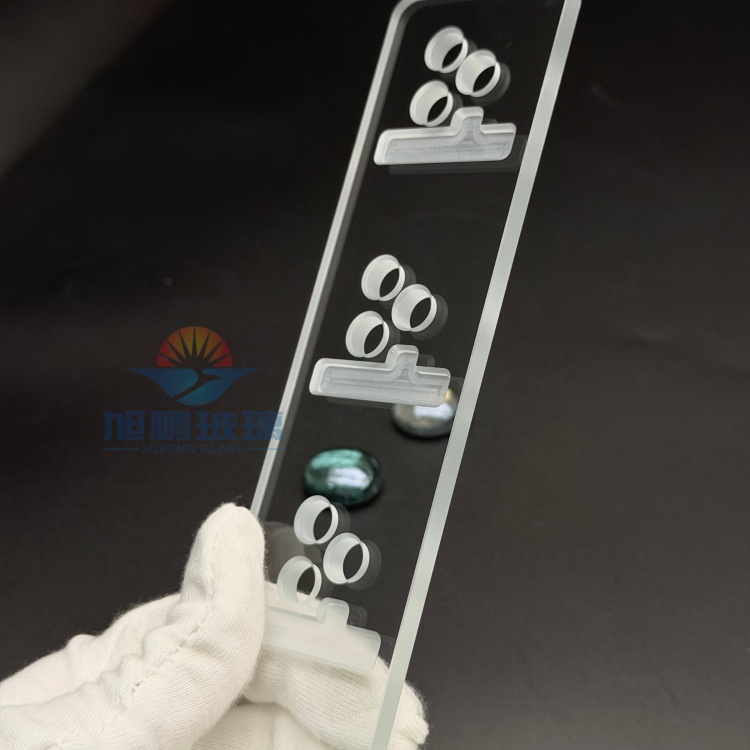
Ultra Clear High Light Transmission Tempered Glass Panel, CNC Arc Polishing, Drilling & Grooving
A low-iron tempered panel for control panels, light boxes and display covers. CNC arc polishing, drilling and grooving reduce secondary machining and handling risk.
View product details →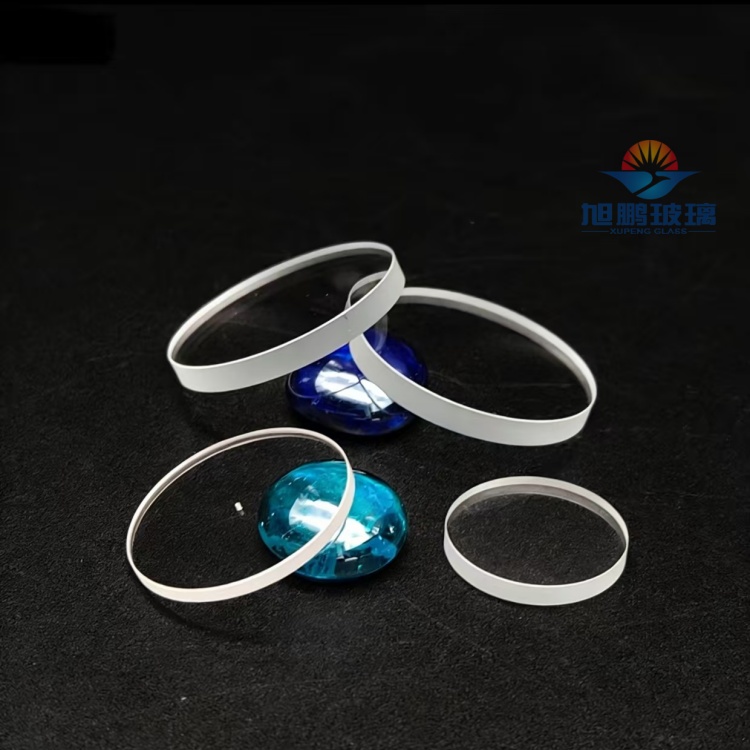
Sapphire Glass Step Window Wafers, High Temperature Resistant & High Light Transmittance Optical Sapphire Lenses
Sapphire step windows are specified when scratch resistance and optical clarity must survive elevated temperatures. Typical inquiries involve sensor windows and instrument viewports.
View product details →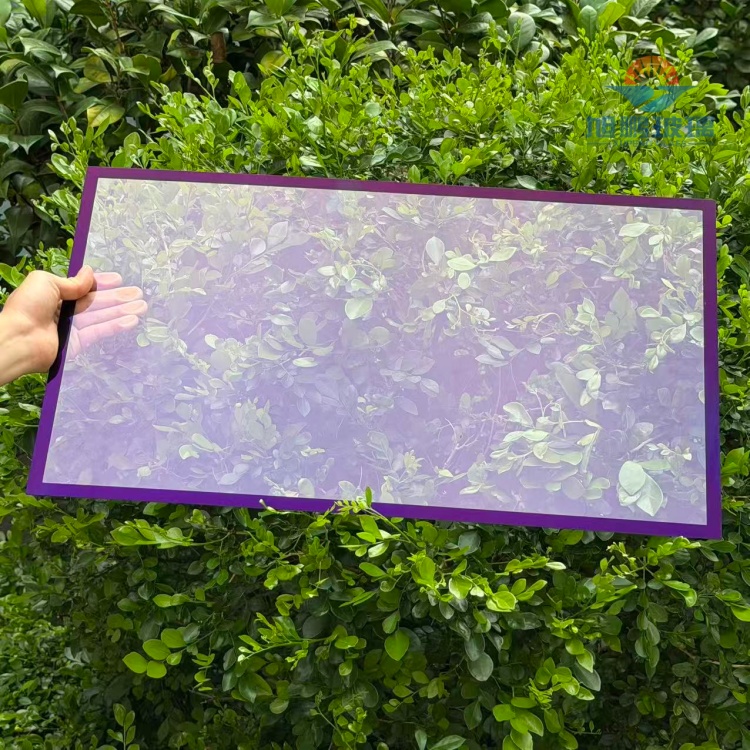
27-inch All-in-One PC AR Coated Glass
A large-format AR-coated cover glass for all-in-one PCs and interactive displays. Buyers should compare reflection control, flatness, edge quality and packing yield.
View product details →
Ultra-white Tempered Glass, AR Anti-Reflection Coatable, High Light Transmittance & Anti-reflective
An ultra-white tempered substrate prepared for AR coating. It fits display windows and instrument covers where high transmission and neutral colour matter.
View product details →
Round Aluminosilicate Glass with Chamfered Ground Edges and Metal Coating
Round aluminosilicate glass with chamfered edges and metal coating. Suitable for industrial windows and decorative technical parts that need edge safety and robustness.
View product details →
Corning Ultra-Thin Glass Sheet, Optical Grade Glass Wafer Substrate with Chamfered Edge
A Corning ultra-thin optical wafer substrate for wafer-level optics, MEMS and precision optical assemblies where thickness control and surface quality matter.
View product details →
High-transmittance AR Coated Optical Glass, Ultra-clear Tempered Glass
AR-coated ultra-clear tempered glass for high-transmission optical windows. Confirm transmission target, coating side, tempering sequence and environmental test.
View product details →
High-transmittance Anti-Reflection Coated Glass
High-transmittance anti-reflection coated glass for display and optical uses. A drawing review should clarify reflectance, haze, scratch requirements and edge treatment.
View product details →Why China Tempered Glass Exporters Remain Strategic
China tempered glass exporters are often grouped under one search phrase, but the market is not homogeneous. A wholesaler may stock standard sheets; an exporter may coordinate fabrication; a deep-processing manufacturer controls cutting, CNC, tempering, printing, coating and inspection. For OEM buyers, the most reliable sourcing decision is usually the supplier that can prove process control from raw sheet to packed part.
From 2025 to 2030, purchasing will move further away from catalogue orders and toward drawing-led co-engineering. Buyers are consolidating glass requirements into fewer qualified suppliers, then using dual sourcing only at the finished-part level. They are asking for batch traceability, coating data, packing validation, Incoterms flexibility and faster engineering feedback. The reason is simple: a lower unit price cannot compensate for a 3% yield loss, a late engineering change or a broken pack.
A top China tempered glass exporter should be judged on information quality, not just price. The winning suppliers will be those that can show how a drawing becomes a repeatable part, how deviations are detected, and how fragile glass is protected in transit. This is also why semantic search phrases such as “tempered glass manufacturer China”, “AR coated glass supplier” and “custom optical glass wafer” increasingly reward suppliers that publish process detail rather than generic product lists.
For procurement teams, the best evaluation sequence is: define the application, shortlist the material, request DFM feedback, approve a sample, validate packing, then release volume. The sections below translate that sequence into a practical buying model for tempered glass, AR/AG coated glass and precision optical glass.
What Top Exporters Prove, Not Just Claim
Use this six-point evidence frame during RFQ review. It separates a documented glass manufacturer from a trading profile that relies on subcontractors.
Drawing-first DFM
A true manufacturing partner reviews thickness, tolerance, edge profile, hole spacing, print registration and coating sequence before final quotation. Good DFM feedback prevents cosmetic or fit failures after tooling.
In-house chain control
Cutting, CNC edging, drilling, tempering, silk-screen, coating and final inspection should be planned as one route. Every hand-off is a potential scratch, chip or schedule risk.
Batch traceability
Ask how raw sheet, coating lot, process parameters and inspection results connect to a carton label. Traceability turns a defect discussion into a corrective action.
Inspection evidence
Dimensional checks are only the start. For coated glass, request transmission, reflectance, haze, adhesion and abrasion evidence; for tempered glass, confirm stress or fragmentation criteria where applicable.
Export packing discipline
Fragile glass should be specified like a component. Interleaving, corner protection, moisture control, crate design, label placement and transport validation all affect landed yield.
Checkable credentials
Onsite verification, credit profile, transaction level, trade history and buyer reviews help validate an exporter before a pilot order. Treat credentials as inputs to a decision, not decoration.
Recommended Glass Product Fit by Application
Product recommendations should begin with the assembly environment, not with a stock list. The same glass substrate can fail in one application and perform well in another depending on coating, edge treatment, tempering and packing.
Smart Control Panels & Appliances
Start with ultra-clear tempered glass and high-temperature silk-screen printing. Add AR for high-contrast displays or AG for harsh lighting. Confirm ink colour, window tolerance and surface hardness.
Touch Displays, AIO PCs & Kiosks
The 27-inch AR-coated AIO glass and high-transmittance AR optical glass are natural starting points. For outdoor kiosks, compare AR + AG combinations rather than AG alone.
High-Temperature & Sensor Windows
Sapphire step window wafers and aluminosilicate glass suit high-temperature or scratch-critical windows. Specify transmission range, sealing method and thermal cycling because the window is usually part of a housing assembly.
Semiconductor & Optical Wafers
Corning ultra-thin optical wafer substrates, K9 and polished optical glass are selected for surface quality and dimensional control. Ask for wafer thickness, chamfer, flatness and cleaning or packing requirements.
LED Lighting, Light Boxes & Decorative Panels
Ultra-white tempered glass and metal-coated round glass support lighting and decorative technical applications. Low-iron content helps reduce the green edge tint visible in thick or edge-lit designs.
Instruments, Cameras & Optical Windows
High-transmittance AR coated optical glass and anti-reflection coated glass reduce ghosting and improve contrast. Confirm coating durability, angle of incidence and environmental exposure.
Six Procurement Shifts Reshaping China Glass Sourcing
The next buying cycle will reward sourcing teams that can compare suppliers on evidence, not only on price per square metre.
Drawing-first RFQs
Buyers are attaching CAD, DXF or PDF drawings with tolerance stacks instead of asking for generic quotes. This reduces rework and makes supplier comparisons more meaningful.
Dual sourcing with one approved process
Dual sourcing is increasingly used only at the finished-part level. The goal is not to split orders randomly but to qualify a second route that can match material, coating and packing requirements.
Audit-ready supplier data
Onsite verification, trade history, transaction records and reviews are becoming part of the sourcing file. Procurement teams want evidence that can be reviewed before a pilot order.
Smaller validation lots
Pilot quantities and sample approvals are used to test edges, coating, printing and packing before volume release. This is especially important for large-format or coated glass.
Total landed cost governance
The comparison is moving from unit price to cost per accepted part. That includes yield loss, breakage risk, inspection, freight, duty and engineering-change cost.
Packaging and sustainability specifications
Packaging is no longer an afterthought. Buyers specify protective film, corner guards, crates, moisture control and label data to reduce damage and improve receiving efficiency.
What Buyers Should Specify Now
Glass development is moving toward thinner substrates, larger formats, integrated coatings and more demanding environmental performance.
Low-iron clarity as a premium default
Ultra-clear low-iron glass is increasingly specified for edge-lit designs, light boxes and appliance panels where green tint or dark edges would reduce perceived quality.
AR and AG move from option to system requirement
Display contrast, outdoor readability and touch experience make AR and AG coatings part of the system specification, not a cosmetic add-on. Coatings must be matched to the display stack.
Large-format and edge-to-edge designs
All-in-one PCs, kiosks and control panels are pushing larger glass formats. Flatness, coating uniformity, edge quality and packing become more critical as size increases.
Thinner, stronger, flexible glass
Ultra-thin glass and strengthened thin substrates are being evaluated for flexible displays and lightweight assemblies. Handling and edge quality often determine success as much as material choice.
Sapphire, quartz and aluminosilicate for harsh duty
High-temperature windows, scratch-critical sensors and optical instruments require materials beyond ordinary tempered glass. Material selection should be confirmed with test conditions.
Process convergence
Buyers increasingly want CNC, tempering, printing and AR/AG coating coordinated by one supplier. Process convergence shortens the supply chain but requires disciplined route planning.
The Hidden Cost of Choosing on Unit Price Alone
A lower quote can create higher landed cost when engineering changes, breakage, coating rework and duplicated inspection are not controlled. The model below is illustrative and intended for supplier-review workshops.
Illustrative procurement-risk model for discussion. It is not a market statistic and should be replaced with your own landed-cost data.
A 100-Point Scorecard for Tempered Glass RFQs
Use a weighted scorecard to compare China tempered glass exporters and wholesalers consistently. Adjust the weights to reflect your product category and risk tolerance.
| Criteria | Weight | What Good Looks Like | Evidence to Request |
|---|---|---|---|
| Process capability | 25 | Control of thickness, tolerance, hole edges, chamfer, flatness and surface quality. | Capability study, sample inspection record, edge photos. |
| Quality and traceability | 20 | Batch ID connects raw sheet, process route, operator and inspection result. | QC flow chart, batch labels, inspection template. |
| Coating and optical competence | 15 | AR/AG performance is specified by transmission, reflectance, haze and durability. | Coating test data, sample comparison, environmental test plan. |
| Export packing and logistics | 15 | Fragile-glass packing is validated and matched to Incoterms and destination. | Packing drawing, crate photos, shipment history. |
| Engineering communication | 15 | DFM feedback is specific, documented and returned with clear assumptions. | Marked-up drawing, assumption list, response time sample. |
| Commercial transparency | 10 | MOQ, tooling, yield, lead time and exclusions are explained without ambiguity. | Quotation breakdown, sample plan, change-control terms. |
Weights are a starting point. For safety-critical or optical applications, increase process capability and inspection weighting.
Pre-Order Verification Checklist
Before releasing a purchase order, ask for evidence on the eight points below. A supplier that can answer clearly is usually easier to scale with than one that only sends a price.
Drawing and tolerance review
Confirm dimensions, tolerance stack, edge profile, hole positions and critical cosmetic zones.
Edge and micro-crack inspection
Check chip limits, chamfer quality, polishing and handling protection after CNC.
Tempering verification
Confirm stress or fragmentation criteria where applicable, and verify that coating or printing sequence does not undermine tempering.
Coating performance
Request transmission, reflectance, haze, adhesion and abrasion data for AR or AG requirements.
Print registration and ink durability
Verify colour, registration, window edges and high-temperature ink performance.
Flatness, warpage and dimensional control
Define measurement method and sampling plan; large-format parts need explicit flatness limits.
Packing validation
Approve interleaving, corner protection, crate design, moisture control and label placement.
Traceability and documentation
Confirm batch labels, inspection records, packing list and corrective-action workflow.
Inside the AUVE Glass Advantage
Dongguan AUVE Glass Co., Ltd. is a deep-processing glass manufacturer integrating R&D, design, production and export at Songshan Lake, Dongguan, Guangdong. The company was established in 2018, operates with 51–100 skilled employees, and works from a 1,001–2,000 m² facility.

AUVE processes flat and curved tempered glass, ultra-white, laminated and painted glass, LCD and touch screen glass, smart control panel glass, LED lamp glass, instrument glass, AR high-transmittance glass and AG anti-glare glass. Its stated operating philosophy is “focusing on high-end glass, pioneering and innovating.” For buyers, that philosophy has a practical test: whether the supplier can translate a drawing into a controlled process route.
AUVE reviews CAD, DXF and PDF drawings, then plans CNC cutting, edging, drilling, tempering, silk-screen printing and AR/AG coating before production. This drawing-based review helps catch edge, hole and coating conflicts early, when changes are still inexpensive. Production follows defined process standards and a documented quality management system so every batch can be traced from raw sheet to packed carton.
Export service covers the United States, Canada, Russia, South Korea, Japan, Australia and other markets. Supported terms include FOB, CFR, CIF, EXW, DDP, DDU, DAF and express delivery. The team’s average response time is within seven hours. MOQs are material- and process-dependent: many coated and optical parts start from 10–50 pieces, while standard ultra-clear tempered parts typically start from 100–500 pieces; sample and pilot quantities can be discussed for new projects. Export packing is designed around fragile glass rather than generic cartons.
Credentials to review include the onsite-checked supplier profile, credit index, transaction level, trade capacity, trade history and ratings & reviews. These are not a substitute for your own sample approval, but they shorten the first-pass screening process and support a more evidence-based sourcing decision.
Factory-direct process integration
One route can cover cutting, CNC, tempering, printing, AR/AG coating and inspection, reducing hand-off risk between subcontractors.
Engineering review before production
Send CAD, DXF or PDF drawings; manufacturability review covers thickness, tolerances, edges, holes, printing and coating.
Verified supplier data
Onsite-checked profile, credit index, transaction level, trade capacity, trade history and reviews are available for due diligence.
Export terms for real projects
FOB, CFR, CIF, EXW, DDP, DDU, DAF and express delivery are supported, with packing planned for fragile glass.
Responsive technical communication
Average response within seven hours. Clear assumptions and drawing markups are more valuable than a fast, vague quote.
Flexible sampling and MOQ
Coated and optical parts often start from 10–50 pieces; standard ultra-clear tempered parts often start from 100–500 pieces. Pilot quantities can be discussed.
Due diligence links: Supplier Assessment · Credit Index · Transaction Level · Trade Capacity · Trade History · Ratings & Reviews
Common Questions from Tempered Glass Buyers
Direct answers for procurement, engineering and quality teams comparing Chinese glass manufacturers.
What is the difference between China tempered glass exporters and wholesalers?
Exporters coordinate cross-border shipment, documentation, Incoterms and export packing. Wholesalers may hold stock or aggregate supply. A deep-processing manufacturer can also export, but controls the process route. For custom parts, evaluate the actual production and inspection chain, not only the business label.
How can I verify an exporter before placing an order?
Start with onsite verification, credit profile, transaction records, trade history, buyer reviews and product-video evidence. Then request a drawing review, a sample with inspection report, and packing photographs. Confirm batch labelling and the corrective-action process before volume release.
What should I include in a tempered glass RFQ?
Send CAD, DXF or PDF drawings with dimensions, thickness, tolerance, glass type, edge and corner profile, holes or grooves, tempering requirement, printing colours, coating targets such as transmission or reflectance, surface quality, packing, quantity and destination. A clear tolerance stack prevents later disputes.
What MOQs are typical for custom glass?
MOQ depends on material, coating, printing and yield. Many coated and optical glass parts start from 10–50 pieces, while standard ultra-clear tempered parts typically start from 100–500 pieces. Sample and pilot quantities can be discussed for new projects.
Which Incoterms and shipping methods are supported?
AUVE supports FOB, CFR, CIF, EXW, DDP, DDU, DAF and express delivery. Choose the term that matches your customs and risk plan, and confirm export packing for fragile glass before shipment.
Which export markets are served?
Products are exported to the United States, Canada, Russia, South Korea, Japan, Australia and other markets. For a new destination, confirm the shipping route, packing standard and any destination-specific documentation before quotation.
How quickly can I receive technical feedback?
The average response time is within seven hours. Include a drawing and estimated quantity so the reply can address manufacturability, material choice and process route rather than general pricing only.
Can tempering, silk-screen printing, CNC and AR/AG coating be combined?
Yes, a production route can combine cutting, CNC edging and drilling, tempering, high-temperature silk-screen printing and AR/AG coating. Sequence matters, especially for coated and tempered parts, so confirm the route on the drawing and agree the inspection standard.
How should I compare quotations from different suppliers?
Convert each quote to cost per accepted part. Add expected yield loss, packing, freight, inspection, duty and engineering-change cost. A quote with a clear assumption list is usually safer than a lower price with undefined exclusions.
What lead time should I expect?
Lead time depends on material, process, quantity and coating schedule. After drawing review, request a sample plan, production milestones and a packing approval step. Pilot quantities can be scheduled before volume release.
Have a Drawing? Turn It Into a Qualified Glass Quote.
Send CAD, DXF or PDF with thickness, tolerance, edge, hole, printing and coating requirements. The engineering team will review material, process route and packing before quotation, usually within seven hours.
Prefer email? info@auveglass.com