Eight Custom Glass Products Buyers Source Most Often
Every part below is a real production item from Dongguan AUVE Glass Co., Ltd. — not a stock photo catalogue. Size, thickness, edge profile, drilling, silk-screen printing and optical coating can all be adapted to your drawing.

Ultra-thin Flexible UTG Glass — Bendable & Foldable
Sub-0.1 mm chemically strengthened substrate for foldable displays, aerospace and new-energy assemblies.
View product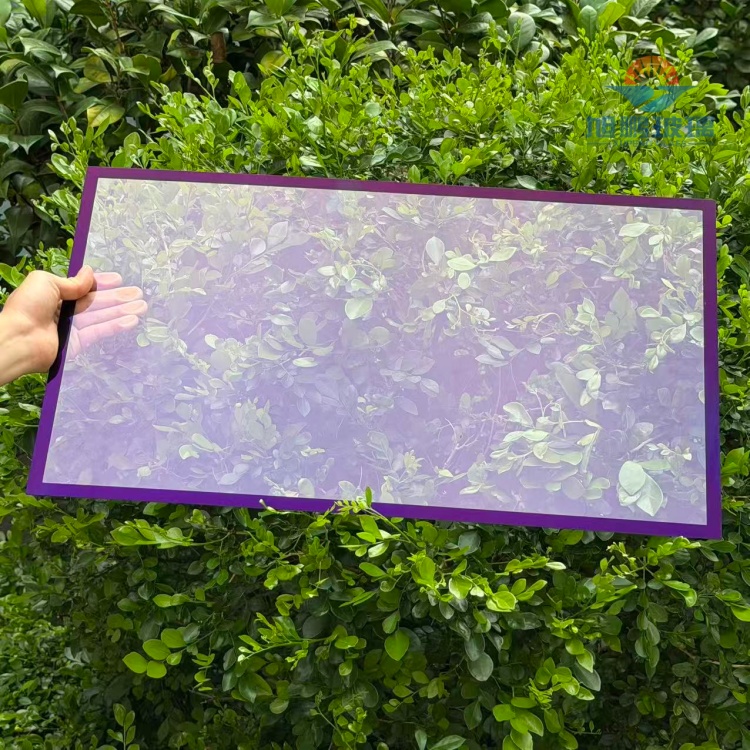
27-inch All-in-One PC AR Coated Glass
Large-format anti-reflective cover glass that lifts contrast and cuts on-screen reflections for AIO terminals.
View product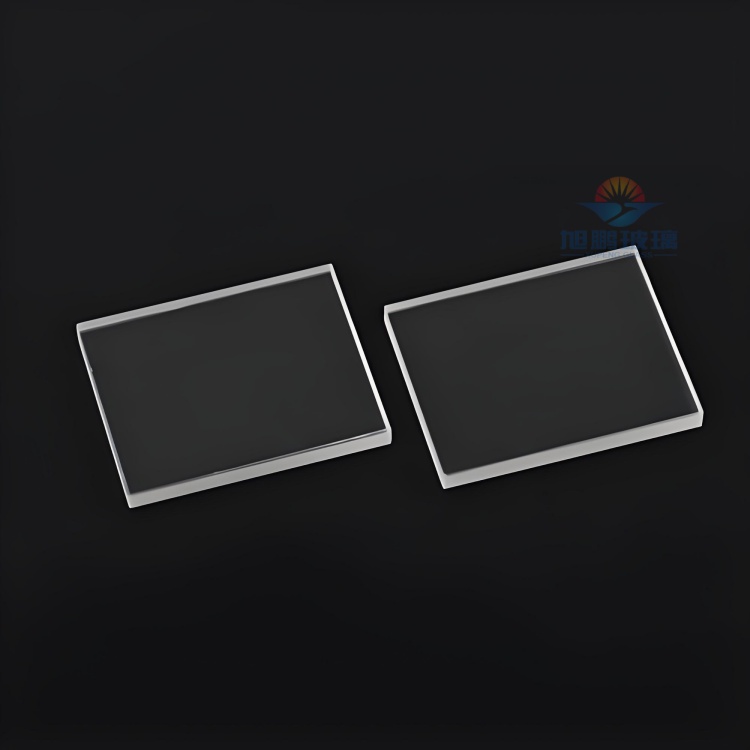
High Borosilicate Tempered Window Glass
Heat-resistant, high-transparency mirror window glass for ovens, appliances and industrial viewports.
View product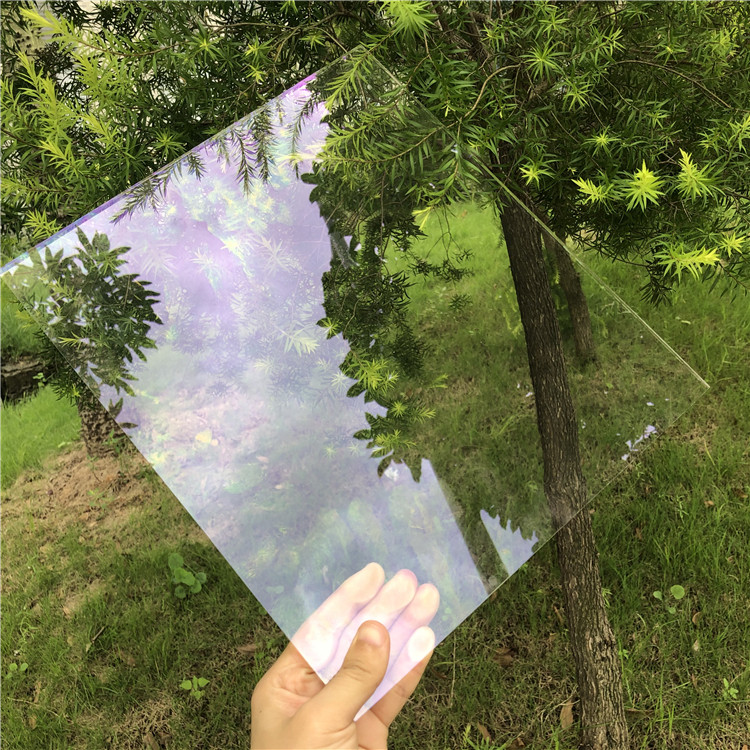
High-Transmittance Anti-Reflection (AR) Optical Glass
Single or double-side AR coating that pushes surface reflection below one percent per face.
View product
Ultra-thin Schott B270 / D263T Glass Processing
Precision blank cutting, CNC edging and polishing of borosilicate and alkali-free wafer substrates.
View product
High-Transmittance AR Coated Ultra-Clear Tempered Glass
Low-iron base glass combined with AR coating and thermal tempering for display and instrument windows.
View product
Ultra-white Tempered Glass, AR Coatable
High light transmittance and anti-reflective readiness for control panels, light boxes and LED fixtures.
View product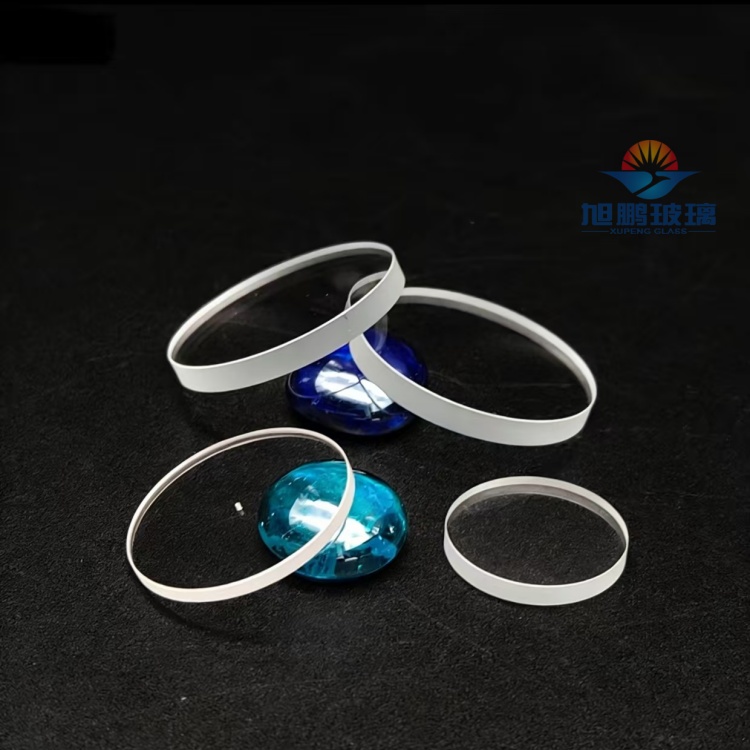
Sapphire Step Window Wafers & Optical Lenses
Mohs 9 hardness windows for high-temperature, high-pressure and scratch-critical sensor apertures.
View productWhy “Trusted” Became the Hardest Word in Custom Glass Sourcing
Custom glass is not a commodity. A 27-inch AR-coated cover panel, a 0.03 mm flexible UTG sheet destined for a foldable device, and a sapphire step window for a high-temperature sensor may all leave the same building — yet each is governed by a completely different set of tolerances, coating stacks and handling rules. Buyers who treat glass like a catalogue purchase usually discover the difference only after a container arrives with haze on the coating, chipped edges, or a transmission curve that misses the drawing by four percentage points.
That is exactly why the phrase “trusted custom glass manufacturer” has become the most contested term in the industry. Trust in this category is not built on a logo or a certificate hanging in a reception area. It is built on a chain of verifiable evidence: a factory that genuinely performs the processes it advertises, an engineering team that reads a drawing and flags manufacturability problems before tooling begins, documented process control at every stage, and a packing standard that survives a forty-day ocean voyage without a single broken corner.
For procurement teams, the question has quietly shifted from “who can make glass?” to “who can make this specific glass, at this specific tolerance, repeatably, with evidence I can hand to my quality department?” That reframing changes what you evaluate, what you ask for in an RFQ, and how quickly you can disqualify a supplier who looks impressive on a marketplace listing but cannot answer a basic coating-durability question.
This guide is written from the supplier side of that conversation. Dongguan AUVE Glass Co., Ltd. has been deep-processing tempered, ultra-clear, coated and optical glass since 2018 in Songshan Lake, Dongguan — one of China’s densest optoelectronics and electronics manufacturing clusters. What follows is not a sales brochure. It is the material selection logic, the procurement trends and the supplier-evaluation criteria that our own engineers and export team apply when a new drawing arrives.
Which Custom Glass Product Actually Fits Your Application?
Specifying the wrong substrate is the single most common cause of field failure and re-sourcing cost. Use this reference to shortlist a material before you send a drawing.
| Glass Type | Typical Key Property | Best-Fit Application | Available Processing |
|---|---|---|---|
| Ultra-clear low-iron tempered | ≈91% visible light transmission, neutral edge colour, strength 4–5× annealed glass | Smart control panels, appliance covers, LED fixtures, advertising light boxes | CNC shaping, drilling, silk-screen, AR/AG coating |
| AR anti-reflective coated | Surface reflection reduced to roughly 0.5–1% per face; higher contrast ratio | Touch modules, all-in-one PCs, instrument and museum display windows | Single/double-side AR, tempering, edge grinding |
| AG anti-glare glass | Micro-textured surface diffuses specular glare; gloss and haze selectable | Outdoor LCDs, industrial HMIs, kiosks, transportation displays | Etched AG, AG + AR hybrid, chemical strengthening |
| Silk-screen printed tempered | Ceramic ink fired into the glass surface for permanent graphics | Instrument panels, home appliances, switch and socket covers | Multi-colour printing, IR-transparent window ink, holes |
| High borosilicate | Low thermal expansion, resistant to repeated thermal cycling | Oven doors, heating appliances, industrial sight glasses | Tempering, polishing, edge chamfering |
| K9 optical glass | Borosilicate crown, nd ≈ 1.5168, low bubble and inclusion count | Lenses, prisms, precision instrument windows | Precision polishing, optical coating, CNC edging |
| Fused quartz | High UV transmission and excellent thermal shock resistance | UV curing, UV disinfection, high-temperature viewports | Thick-gauge cutting, polishing, drilling |
| Sapphire | Mohs hardness 9, melting point ≈ 2,040 °C, scratch immune | Sensor covers, high-pressure windows, wear-critical apertures | Cutting, lapping, polishing, chamfering |
| Ultra-thin flexible glass | Thickness down to 0.03 mm with controlled bend radius | Foldable displays, flexible electronics, aerospace laminates | Precision cutting, edge strengthening, lamination |
Figures above are typical reference values for material shortlisting. Final specifications are locked against your drawing and agreed test standard before mass production.
Six Procurement Trends Reshaping Custom Glass Supply
Sourcing behaviour in this category has changed materially since 2022. These are the shifts that show up most consistently in inbound RFQs from North America, Europe and Asia-Pacific.
Dual-Sourcing With Regional Redundancy
Buyers no longer award a full programme to one factory. Most now qualify a primary and a secondary glass supplier and split volume 70/30, so a single furnace shutdown or coating-line maintenance window cannot stop an assembly line.
Drawing-Led RFQs Replace Chat Quotes
Serious buyers now attach CAD, DXF or PDF drawings with tolerance, edge, hole and coating requirements on the first message. Suppliers who cannot respond with a manufacturability review rather than a bare price are filtered out early.
Total Landed Cost Beats Unit Price
Breakage rate, rework cost, customs delays and inspection labour now sit inside the comparison. A quote that is 8% cheaper per piece but arrives with a 3% chip rate is no longer considered cheaper at all.
Verifiable Supplier Data as a Gate
Onsite inspection status, credit index, transaction level and genuine buyer reviews are now checked before a sample is even requested. Procurement teams want evidence they can screenshot and file — not adjectives.
Small-Batch, High-Mix Production
Product life cycles have shortened. Instead of one 50,000-piece order, buyers place four 5,000-piece orders across variants. Factories with flexible CNC set-up and short changeover time win that business.
Documentation as Part of the Product
Material certificates, coating thickness reports, transmission curves and RoHS/REACH declarations are now expected deliverables. A supplier who cannot produce a test report on request becomes a compliance risk, not just a quality risk.
Where Custom Glass Technology Is Heading Next
Four material and process directions are already moving from prototype into mainstream purchasing discussions.
Thinner, Stronger, Bendable
Ultra-thin glass below 0.1 mm is moving out of foldable-phone exclusivity into aerospace laminates, flexible sensors and curved automotive interiors. Thickness control and edge strengthening become the decisive process capabilities.
Optical Coatings as the Differentiator
Base glass is increasingly interchangeable; the coating stack is not. Multi-layer AR, AG+AR hybrids and anti-fingerprint top coats are where display performance, warranty exposure and margin are actually decided.
Alkali-Free & Semiconductor Substrates
Corning EXG, Schott D263T and B270-class materials are appearing in more RFQs as MEMS, microfluidics and sensor packaging move toward glass. Low CTE, alkali-free chemistry and double-side polishing define the spec.
Functionally Printed Glass
Silk-screen printing is no longer decorative only. Conductive traces, capacitive touch zones, hidden-window inks and IR-transparent apertures turn a cover glass into a functional component in a single lamination step.
Why Dongguan AUVE Glass Qualifies as a Trusted Export Partner
Trust is a checklist, not a claim. These are the six capabilities our buyers verify before placing a production order — and the six we are structured around.
Factory-Direct Deep Processing Under One Roof
Cutting, CNC edging, drilling, tempering, silk-screen printing, AR/AG coating, polishing and inspection all run inside the same 1,001–2,000 m² facility in Songshan Lake. Nothing critical is subcontracted, so tolerances and lead times stay inside our control.
Engineering Review Before Tooling
Send CAD, DXF or PDF with thickness, tolerance, edge, hole, printing and coating requirements. Our engineers review manufacturability and come back with process route, risk points and lead time — not just a price. This step prevents most downstream failures.
Verifiable Credentials, Not Marketing Copy
Onsite-checked supplier status, credit index, transaction level, trade capacity, trade history and unfiltered buyer ratings are all published and independently maintained. You can audit them before you commit a single sample budget.
Broad Optical & Technical Material Portfolio
K9 optical glass, fused quartz, sapphire, high borosilicate, Corning EXG alkali-free glass, Schott B270 and D263T, plus ultra-clear low-iron float. One qualified supplier across display, appliance, instrument and semiconductor projects.
Fragile-Goods Export Engineering
Interleaving film, foam corner protection, fumigation-free wooden crates and reinforced cartons, with batch labelling on every box. FOB, CFR, CIF, EXW, DDP, DDU, DAF and express delivery are all supported.
≤7-Hour Response Discipline
Technical inquiries receive a substantive reply within an average of seven hours, including drawings reviewed against our process capability. Our glass already ships to the United States, Canada, Russia, South Korea, Japan and Australia.
Founded in 2018, Dongguan AUVE Glass Co., Ltd. operates on a simple internal principle: “focus on high-end glass, pioneer and innovate.” In practice that means we keep investing in the engineers, measurement equipment and coating lines that let us hold tolerances on difficult parts — the folded UTG sheet, the large-format AR panel, the sapphire window with a stepped profile — rather than competing purely on the price of plain float glass.
Our production follows defined process standards and a documented quality management system, so every batch can be traced from raw sheet to packed carton. That traceability is what procurement teams actually need when something goes wrong six months later.
Frequently Asked Questions About Custom Glass Procurement
Straight answers to the questions engineering and procurement teams ask us most often.
What types of custom glass does Dongguan AUVE Glass manufacture?
We deep-process flat and curved tempered glass, ultra-clear low-iron glass, laminated and painted glass, AR anti-reflective and AG anti-glare coated glass, silk-screen printed glass, touch screen and LCD cover glass, LED lighting glass, instrument glass, and technical materials including K9 optical glass, fused quartz, sapphire, high borosilicate, Corning EXG alkali-free glass and Schott B270/D263T wafers.
Can you produce glass to my own drawing and tolerance?
Yes — this is our standard mode of operation. Send a CAD, DXF or PDF drawing specifying thickness, dimensional tolerance, edge profile, hole positions, printing colours and coating requirements. Our engineers review manufacturability before production and confirm the process route across CNC cutting, edging, drilling, tempering, silk-screen printing and AR/AG coating.
What is the minimum order quantity for custom glass parts?
MOQ depends on material and process complexity. Many coated and optical glass parts start from 10 to 50 pieces, while standard ultra-clear tempered parts typically start from 100 to 500 pieces. Sample and pilot quantities can be discussed for new programmes, especially where a new tooling or printing screen is required.
How do you control optical coating quality such as AR and AG?
Coating thickness, adhesion, abrasion resistance and transmission are checked against the agreed specification before packing, and test data can be provided with the shipment on request. If your project has a defined haze value, gloss level, reflectivity target or specific test standard, include it in the RFQ so it is built into the process card rather than verified after the fact.
Which Incoterms and shipping methods do you support?
We support FOB, CFR, CIF, EXW, DDP, DDU, DAF and express delivery. Export packing is engineered for fragile glass parts — interleaving film or paper, foam corner protection, and fumigation-free wooden crates or reinforced cartons depending on size and route.
Which export markets do you currently serve?
Our glass products are exported to the United States, Canada, Russia, South Korea, Japan, Australia and additional markets across Europe and Asia-Pacific. Export documentation and labelling can be adapted to destination customs requirements.
How quickly will I receive a technical response?
Our average response time is within seven hours. Including your drawing, target quantity and any required test standard in the first message lets us return a manufacturability review and indicative lead time rather than a generic acknowledgement.
How do I start an RFQ or request samples?
Prepare four things: a drawing with tolerances, the substrate or glass type you have in mind, an estimated annual or first-order quantity, and your destination country. With those four inputs we can quote material, process route, packing method and delivery term in a single reply.
Have a Drawing? Get an Engineering Review Within 7 Hours.
Share your size, thickness, tolerance and finishing requirements. Our team will confirm the material, process route, packing method and lead time — and flag any manufacturability risk before tooling starts.
Contact Us