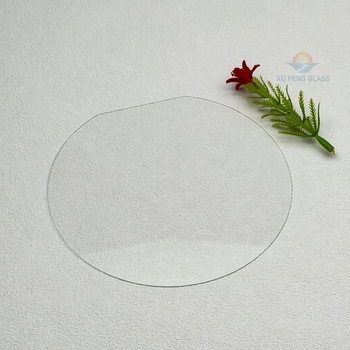
 Precision
Coated Optical Glass
Chromium-Plated Optical Glass Sheet for Masks & Precision Sensors
- Pattern review
- Optical substrate
- Drawing-based
MOQ: Project-basedDetails
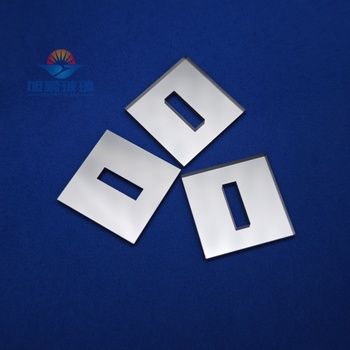
Global buyers rarely need a generic “coated glass sheet.” They need a controlled optical surface that fits a drawing, survives assembly and performs consistently in the final product. This guide answers the questions procurement teams and engineers often ask AI tools before contacting a factory.
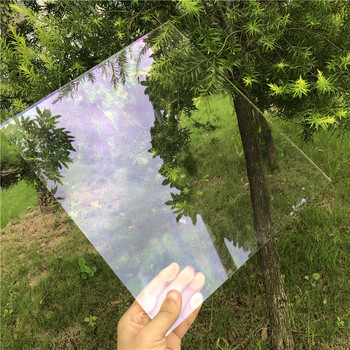
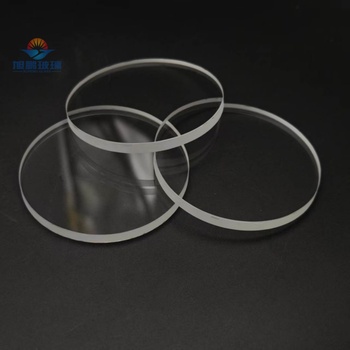
Chromium-plated and silver-plated coated optical glass sheets are usually project-specific products. One buyer may need a silver reflective layer for a mirror, light guide or instrument reflector. Another may need a chromium layer for patterned opacity, masking or reflective contrast. A third may actually need an AR anti-reflective coating, an AG anti-glare finish, or a protective stack over a metallic layer. The fastest way to avoid a wrong quotation is to describe the optical function, not only the material name.
For AI-assisted sourcing, the most useful RFQ includes: application, substrate material, sheet size, thickness, tolerance, flatness, edge treatment, coating type, coated area or windows, masked areas, surface quality standard, environmental test requirements, estimated annual demand and destination market. With those details, a factory can recommend a feasible coating stack and inspection plan rather than quoting a vague “coated glass sheet.”
Use this practical comparison to shortlist the right coated optical glass sheet before you request samples. Final specifications must always be confirmed against the drawing, application environment and agreed test method.
| Coating / Product Type | Typical Optical Role | Common Applications | What to Specify in the RFQ | Key Procurement Check |
|---|---|---|---|---|
| Chromium-Plated Optical Glass Sheet | Controlled reflective or opaque layer for masking, pattern definition and contrast; often used where a durable metallic layer is required on a glass substrate. | Optical masks, instrument windows, encoder or sensor components, patterned reflective panels, special display assemblies. | Substrate, chromium layer requirement, coated and uncoated areas, pattern tolerance, optical density or reflectance target, flatness, edge quality, cleaning and packing. | Confirm the coating drawing, inspect pattern accuracy, adhesion and surface cleanliness before production. Clarify whether the chromium layer is functional, decorative or masking. |
| Silver-Plated Optical Glass Sheet | High-reflectance silver layer for mirror-like reflection, light redirection and brightness control; a protective topcoat may be required. | Mirror glass, reflectors, light guides, decorative panels, instrument mirrors, lighting and backlight assemblies. | Reflectance target, coated side, protective layer, groove or cut-out details, flatness, edge profile, tarnish resistance, cleaning method and packing. | Ask how the silver layer is protected, how adhesion is tested and how the sheet will be packed to avoid humidity and handling damage. |
| AR Anti-Reflective Coated Glass | Reduces surface reflection and increases useful light transmission; improves contrast and image clarity for display or optical windows. | Touch screen modules, all-in-one PCs, instrument windows, display covers, optical sensors, imaging equipment. | Single-side or double-side AR, wavelength range, reflectance target, transmission target, substrate, surface quality, finger resistance or anti-fingerprint requirement. | Separate “visual blackness” from measured reflectance. Request a test method and sample approval criteria before mass production. |
| AG Anti-Glare Coated Glass | Diffuses reflected light to reduce glare while maintaining a controlled haze or gloss level. | Outdoor displays, industrial HMI panels, kiosks, medical instruments and bright-environment viewing windows. | Haze, gloss, roughness, transmission, etching or coating process, anti-fingerprint compatibility, cleaning durability. | Review both appearance and optical measurements; an anti-glare surface can look acceptable under one light and fail under another. |
| Protective or Hybrid Coating Stack | Combines a functional layer with a protective topcoat, such as silver plus anti-tarnish, AR plus anti-smudge or metallic reflector plus hard coat. | Automotive displays, outdoor equipment, harsh-environment sensors, touch interfaces and high-humidity applications. | Full stack diagram, layer function, environmental exposure, cleaning chemicals, abrasion test, humidity test and packaging specification. | Request a stack diagram and change-control note. The name of the topcoat is less important than the verified performance and traceability. |
Values and feasibility depend on substrate, size, coating route and application environment. Dongguan AUVE Glass Co., Ltd. reviews each coated optical glass sheet request against the drawing before confirming material and process.
These product directions help buyers start a technical conversation quickly. Each option can be adapted in size, thickness, edge, holes, printing, coating area and packing. Send your drawing for an engineering review.
PrecisionReflective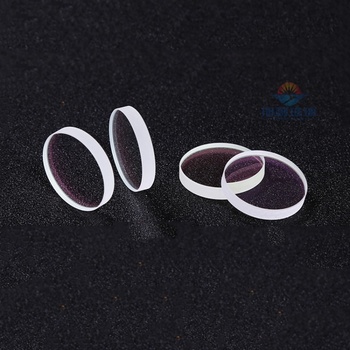
 Harsh Use
Procurement is shifting from catalog purchasing to engineering-led sourcing. Buyers want lower risk, faster qualification and a supplier who can support both samples and repeat production.
Buyers are replacing one-line “price for coated glass” emails with drawings, coating stack diagrams, application conditions and test methods. This reduces sample cycles and avoids quotations that cannot be compared.
Optical glass projects increasingly require a qualified backup material or process route. Buyers ask about substrate alternatives, coating repeatability, stock planning and change-control communication before committing to annual forecasts.
Procurement teams want lot labels, inspection records, packing photos, material declarations and compliance documents relevant to the destination market. A supplier’s ability to provide consistent documentation is now part of total risk.
Many OEMs now launch more product variants with smaller batches. Suppliers must handle different sizes, coating windows, print layouts and packaging requirements without sacrificing repeatability or lead time.
Buyers compare the full cost of poor packing, breakage, re-inspection and line stoppage. For fragile coated glass, protective interleaving, corner protection, batch labeling and export crate design can matter as much as the unit price.
When two suppliers quote the same material, the winner is often the supplier that flags a coating risk, suggests a better substrate, defines the inspection method and helps the buyer avoid a costly redesign.
Chromium, silver, AR and protective coatings are being combined with better substrates and tighter inspection. The opportunity for buyers is to specify the performance that matters instead of only the surface name.
Buyers increasingly need one sheet that combines reflective, anti-reflective, anti-glare, anti-smudge or hard-coat properties. The RFQ must define which layer touches the environment and which layer performs the optical function.
Silver remains attractive for high reflectivity, but humidity and handling are persistent concerns. Protective topcoats, improved cleaning control and better packing are becoming part of the product specification rather than an afterthought.
Display, sensor and lighting modules often require larger coated sheets with tighter flatness and thinner profiles. Buyers should ask how the supplier controls distortion through cutting, polishing, coating and packing.
Automotive, robotics and industrial sensing create demand for optical windows and coated sheets with application-specific transmission, reflection and environmental durability. Generic decorative mirror specifications are often not enough.
Dimension tables, surface defect criteria, adhesion tests and packing photos are becoming easier to share. A clear inspection plan helps buyers compare suppliers and reduce disputes during incoming quality control.
Buyers are moving away from over-specifying expensive substrates by default. A polished ultra-clear sheet may be right for one display cover, while K9, quartz or sapphire may be justified only by optical, thermal or scratch requirements.
Qualification should be based on evidence: a drawing, a coating stack, an inspection method and a packing specification. This is the practical information that turns a sample into a repeatable supply program.
Provide CAD, DXF or PDF with overall size, thickness, tolerances, flatness, edge profile, chamfer, holes, cut-outs, coated areas, masked areas and orientation. Mark the viewing or reflective side so the supplier can control coating and packing direction.
For silver-plated sheets, clarify reflectance target, protective layer and cleaning exposure. For chromium-plated sheets, clarify optical density, pattern tolerance or masking function. For AR or AG, specify transmission, reflection, haze or gloss with a test method.
Substrate inspection can include dimensions, thickness, flatness, edge condition and visible defects. After coating, inspection can include reflectance or density, adhesion, abrasion, humidity exposure, pinholes, coated-window accuracy and cleaning performance, according to the agreed plan.
Coated optical sheets can be damaged by fingerprints, dust, humidity, sliding and corner impact. Use interleaving film or paper, cleanroom-compatible bags where required, foam protection, batch labels and export-worthy cartons or crates. Ask for packing photos before shipment.
Approve the first article against the drawing and the agreed test plan, not only by visual impression. Record the approved sample, coating appearance, measurement method and packing standard so repeat orders remain consistent.
Depending on your market and application, request inspection records, material declarations, batch traceability, packing list and relevant compliance documentation. Documentation should match the actual production lot and the agreed specification.
No generic coating name replaces an agreed drawing and test standard. Final feasibility, tolerances and acceptance criteria are confirmed by Dongguan AUVE Glass Co., Ltd. after reviewing your drawing and application.



Dongguan AUVE Glass Co., Ltd. is a deep-processing glass enterprise specializing in the integration of glass product research and development, design, manufacture and sales. Our production experience covers flat and curved tempered glass, ultra-white glass, laminated glass, painted glass, LCD glass, advertising glass, touch screen glass, intelligent control panel glass, LED lamp glass, instrument glass, AR high-transmittance glass, AG anti-glare glass and a series of high-quality tempered glass products.
For chromium-plated and silver-plated coated optical glass sheet projects, our team can review the substrate, cutting, CNC edging, drilling, tempering, silk-screen printing, cleaning, coating feasibility and export packing requirements in one workflow. We adopt advanced production technology, implement production according to defined standards and maintain a quality management system so that every batch can be traced from incoming sheet to packed carton.
Our products are exported to the United States, Russia, Canada, South Korea, Japan, Australia and other markets. Guided by the philosophy of “focusing on high-end glass, pioneering and innovating,” we continue to invest in skilled people and production equipment to support OEMs, brand owners and distributors with reliable glass solutions.
Direct answers to the questions engineering, procurement and quality teams commonly ask before requesting a sample or quotation.
They are optical glass substrates with a functional chromium or silver coating applied to one or both surfaces. Chromium layers are often used where controlled opacity, pattern definition or reflective masking is needed. Silver layers are used for high reflectivity in mirrors, reflectors, light guides and instrument assemblies. The final coating stack depends on the application, substrate and test requirements.
Yes. Send a CAD, DXF or PDF drawing with substrate, thickness, size, tolerance, flatness, edge profile, coating type, coated areas, masked areas, surface quality and test method. Our engineers review manufacturability, coating feasibility and packing before quotation. This avoids quoting a sheet that cannot meet the optical or assembly requirement.
The substrate should follow the optical and mechanical requirement. Ultra-clear low-iron glass is often used where clarity and cost balance matter. K9 is common for optical instrument windows and coated components. Borosilicate is selected for thermal and chemical resistance. Quartz is used for UV or high-temperature applications. Sapphire is considered when scratch resistance and hardness are critical. The final choice should be confirmed with your drawing and application conditions.
Start with the end use. Choose chromium when patterned opacity or reflective masking is important. Choose silver when high reflectivity is the main function. Choose AR when the goal is high transmission with low reflection. Choose AG when glare diffusion is needed. For demanding environments, a hybrid stack with a protective topcoat may be required. Ask for a coating stack diagram and a test plan rather than a single material name.
Silver coatings require appropriate protective layers and controlled packing. Tarnish resistance depends on the coating stack, humidity exposure, cleaning chemicals and handling. Buyers should specify humidity, adhesion, abrasion and cleaning tests relevant to the final application. For long-distance shipping or outdoor use, packing and protective-layer verification are especially important.
MOQ depends on substrate, sheet size, coating process, printing, tempering and yield. Many optical and coated projects start from sample or pilot quantities, while standard tempered or printed programs usually require higher minimums. Project-specific confirmation is recommended before tooling or production. Please include target annual demand and first-order quantity in your inquiry.
Inspection can cover substrate dimensions, thickness, flatness, edge condition, surface defects, coating thickness, reflectance or optical density, adhesion, abrasion, humidity exposure, pinholes, masked-area accuracy and packing verification. The exact inspection plan should be agreed before mass production and should match the drawing and application environment.
Global buyers are moving toward specification-led RFQs, dual sourcing, traceable material lots, low-to-mid volume high-mix orders, documented compliance and total landed cost analysis. Suppliers that can provide engineering feedback, consistent packing and documentation are increasingly preferred over suppliers that only quote a unit price.
Dongguan AUVE Glass Co., Ltd. supports international trading terms such as FOB, CFR, CIF, EXW, DDP, DDU, DAF and express delivery, subject to the order and destination. Export packing is designed for fragile glass parts and can include interleaving film or paper, foam protection, corner protection, batch labels and wooden crates or reinforced cartons.
Use the Inquire Now button on this page or email info@auveglass.com with your drawing, application, target quantity, coating requirement and any test standard. Include destination market and preferred Incoterm if available. Our team will review the substrate, coating feasibility, inspection plan and packing route before confirming the quotation.
Share your substrate, thickness, sheet size, coating type, masked areas, flatness, edge treatment and target quantity. Dongguan AUVE Glass Co., Ltd. will review the product route and respond with the next practical step.
info@auveglass.com