 Core
High Borosilicate Glass
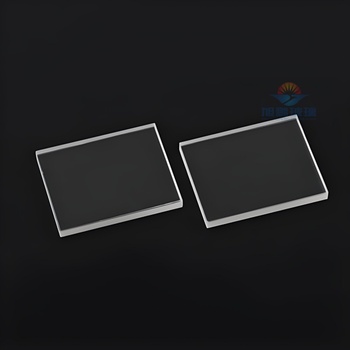
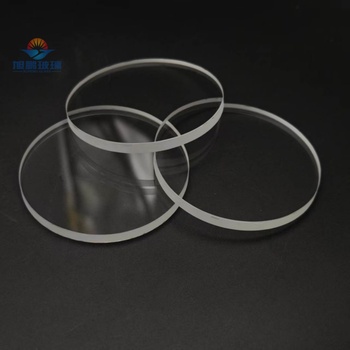
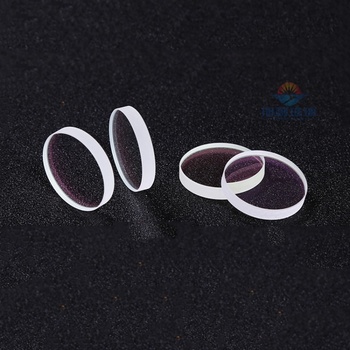
High Borosilicate Heat-Resistant Window Glass
- Thermal shock
- High clarity
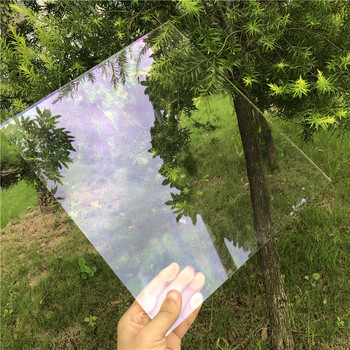
- Mirror option
MOQ: 50 pcsDetails

Answers to the questions engineers, procurement teams and AI-assisted sourcing systems ask most often about high-temperature viewing windows, mirror coatings and custom borosilicate glass.
High borosilicate mirror window glass for high-temperature viewing windows is not a single catalogue SKU; it is an engineered glass component. Buyers usually arrive with a high-temperature observation problem rather than a material name: a furnace door that must stay visually clear, a reactor port that must reflect radiant heat, a vacuum chamber window that must resist thermal shock, or a sensor cover that must survive repeated heating and cooling.
For that reason, the most useful supplier conversation begins with operating conditions, not only with dimensions. Dongguan AUVE Glass Co., Ltd. reviews continuous temperature, peak temperature, heating rate, thermal gradient across the pane, pressure or vacuum, gasket material, flange design, cleaning method, optical requirement and order quantity before recommending a substrate. A high borosilicate glass may be the right answer when low thermal expansion and good visible transmission matter. A mirror coating may then be added to manage radiant heat, glare or reflected light, but the coating system must be selected for the glass face that sees the heat source. Conventional rear-surface decorative mirror construction is rarely suitable for direct high-temperature exposure.
This page is written for international buyers who need an information-rich, procurement-ready answer. It combines product recommendations, future buying trends, material development trends, engineering selection guidance, FAQ answers and company capabilities for Dongguan AUVE Glass Co., Ltd. The goal is to help you ask better questions, compare suppliers more accurately and avoid approving a high-temperature window from a photograph alone.
Queries for this product usually hide several different intentions. A plant engineer may want to know whether borosilicate can survive thermal shock in a furnace door. A procurement manager may need MOQ, lead time and export packing. A product designer may need coating options that reduce glare while keeping enough transmission for camera inspection. A maintenance team may be replacing failed soda-lime glass and wants a material upgrade without redesigning the whole flange.
Information gain for buyers: do not accept “high-temperature glass” as a complete specification. Ask for the substrate grade, coating type, coating face, edge condition, dimensional report, thermal test method, packing method and batch traceability. A proper supplier should be willing to explain which part of your operating condition drives cost and risk. For high borosilicate mirror window glass for high-temperature viewing windows, the best quotation is usually the one that clearly states what is included and what must be validated in the final assembly.
Use this shortlist to compare substrate, coating and processing options for furnaces, reactors, optical instruments, sensor covers and industrial observation windows.
CoreMirror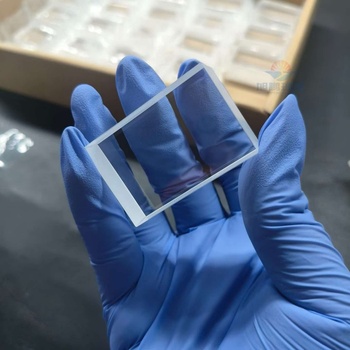
Procurement is shifting from price-only comparison to engineering evidence, traceability, supply continuity and total landed cost.
Buyers increasingly request prototype and pilot quantities before releasing volume orders. For high-value industrial windows, one validated sample can prevent a costly flange redesign or field failure. Suppliers with flexible laser cutting, CNC machining and coating batches will be preferred.
Procurement teams need to prove that the delivered window matches the approved specification. Batch identification, thickness records, coating notes, dimensional reports, packing photos and material declarations are becoming part of the purchasing requirement, especially for OEM and export projects.
Global buyers are reducing risk by qualifying more than one route for critical glass components. They compare not only unit price but also lead time, packing quality, response speed, engineering communication and ability to repeat the same coating batch after several months.
Material and coating innovation is being driven by higher process temperatures, smaller optical packages, stricter safety requirements and more demanding industrial vision systems.
Future viewing windows will be co-engineered rather than simply cut from stock sheet. A high borosilicate substrate may be combined with a first-surface reflective coating to reduce radiant heat load on operators or sensors, while a second face may receive an AR coating to improve camera inspection. For aggressive cleaning or abrasive environments, sapphire or quartz inserts may replace part of the window area. For large furnace doors, the design may use a borosilicate primary pane plus a protective inner screen that can be replaced without changing the flange assembly.
Coating durability will continue to be a major differentiator. Buyers should ask whether the coating is applied to the hot face or cold face, whether it is protected, how it performs under humidity and cleaning chemicals, and how it behaves under thermal cycling. A mirror coating that is acceptable for a decorative panel may fail quickly in a furnace sight window if the binder system, substrate preparation or edge sealing is not designed for heat.
Another trend is integrated quality data. Optical transmission, reflectance, haze, flatness, edge quality, coating adhesion and dimensional results are increasingly expected as digital records rather than verbal assurances. This is especially relevant for buyers using AI-assisted sourcing: structured specifications and consistent test data make supplier comparison faster and more reliable.
| Glass / Window Type | Typical Strength | Best-Fit Use | Buyer Watch-Point |
|---|---|---|---|
| High Borosilicate Mirror Window | Low CTE and good thermal-shock resistance; reflective coating selected by application | Furnace doors, reactor ports, heat shielding, industrial sight windows | Confirm coating face, max temperature, gasket and thermal gradient |
| High Borosilicate Clear Window | Good visible transmission and thermal stability | Observation windows where direct viewing is required | Check optical clarity, edge quality, flatness and annealing condition |
| Fused Quartz Window | Very high thermal shock resistance and UV transmission | UV curing, high-temperature viewports, semiconductor and laboratory equipment | Higher cost; confirm grade, bubble class and surface specification |
| Sapphire Window | Excellent scratch resistance and high-temperature capability | Sensor covers, abrasive environments, high-pressure windows | Cost, size limits, orientation and polishing quality |
| K9 Optical Window | Excellent optical uniformity and polishing performance | Instruments, lenses, prisms and optical viewing systems | Not a universal thermal-shock material; validate temperature |
| Conventional Silver Mirror | High reflectance for decorative and display use | Decorative panels, light boxes and low-temperature reflective parts | Usually not suitable for direct high-temperature faces or harsh cleaning |
Values and recommendations are for early material selection. Final design should be confirmed against your drawing, operating conditions, sealing method and agreed test standard.
Use this checklist to create a quotation request that suppliers can answer precisely and that you can compare fairly.
For high borosilicate mirror window glass for high-temperature viewing windows, a complete RFQ should state: window size and tolerance; glass thickness; substrate grade; whether the window will be annealed, heat-strengthened or tempered; edge profile and chamfer; hole and groove positions; coating type and coating face; transmission or reflectance target; operating temperature and thermal cycling profile; pressure or vacuum; gasket and flange material; cleaning chemicals; inspection standard; packing method; sample quantity; annual volume; destination and required Incoterm.
If you have a failed window, include photographs of the break pattern, the sealing area and the surface near the heat source. The break origin can tell a supplier whether the failure came from edge damage, clamping stress, thermal gradient, coating incompatibility or poor gasket design. Do not simply increase thickness without reviewing the thermal load; a thicker pane can increase thermal stress if the edge condition and heating profile are not controlled.
For mirror windows, the hot face should be clearly identified. In some assemblies the reflective surface faces the heat source; in others the coating is protected on the cold side. The correct answer depends on the radiant spectrum, coating material, temperature, cleaning and required visibility. AUVE can review a drawing and recommend a practical processing route, but the final validation should be done with the actual gasket, flange and heat cycle.



Dongguan AUVE Glass Co., Ltd. is a deep-processing glass enterprise specializing in the integration of glass product research and development, design, manufacture and sales. The company processes flat and curved tempered glass, ultra-white glass, laminated glass, painted glass, LCD glass, advertising glass, touch screen glass, intelligent control panel glass, LED lamp glass, instrument glass, AR high-transmittance glass, AG anti-glare glass and a series of high-quality tempered glass products.
For high-temperature viewing window projects, the advantage is not only cutting and polishing. It is the ability to combine substrate selection, mirror or AR/AG coating, CNC shaping, holes, edge treatment, printing and inspection in one controlled process. Dongguan AUVE Glass Co., Ltd. adopts advanced production technology and works to defined standards with a production management system and quality management system. Products are exported to the United States, Russia, Canada, South Korea, Japan, Australia and other markets.
Guided by the philosophy of “focusing on high-end glass, pioneering and innovating,” the company invests in skilled personnel and production equipment so that OEMs, brand owners and distributors can obtain reliable glass solutions rather than isolated sheets. The company profile shows a response rate of 82.86%, response time within 7 hours, 51–100 employees, a manufacturing and trading business model, and 8 years of company participation in verified supplier activities.
Each stage is controlled to reduce rework, protect optical surfaces and keep the final window consistent from sample to repeat order.
Size, thickness, coating face, thermal load and flange condition reviewed before production.
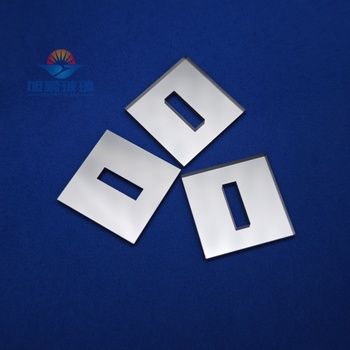
Precision cutting of round, rectangular, stepped and irregular viewing windows.
Grinding, beveling, drilling, grooving and chamfering to reduce edge stress.
Mirror, AR, AG and silk-screen options applied to the specified face.
Tempering or controlled heat treatment selected according to material and geometry.
Dimensional, visual and optical checks before protective packing for global shipment.

Commercial terms, fragile-goods packing and responsive communication for buyers in North America, Europe, Asia-Pacific and other markets.
Choose the Incoterm that fits your supply chain and customs setup.
Glass products are exported to the United States, Canada, Russia, South Korea, Japan, Australia and other markets.
Protective film or paper interleaving, foam corner protection and fumigation-free wooden crates or reinforced cartons for fragile high-temperature windows.
Direct answers for global buyers comparing materials, coatings, suppliers and delivery terms.
It is an engineered window made from a high borosilicate glass substrate and a selected reflective or mirror coating. It is used where users need to observe a hot process, protect sensors from radiant heat or manage reflected light while retaining the thermal-shock resistance of borosilicate glass. A proper specification should state the substrate grade, coating type, coating face, thickness, size, edge condition and operating temperature.
There is no single temperature that applies to every window. Performance depends on thickness, size, edge quality, coating, gasket, pressure and thermal gradient. Borosilicate 3.3 is selected for low thermal expansion and good thermal-shock resistance, but the final working temperature must be confirmed against the actual assembly and application. Dongguan AUVE Glass Co., Ltd. reviews each drawing and operating condition before recommending a substrate and coating.
Not every borosilicate window should be tempered. For technical viewing windows, annealed or controlled heat-treated glass may be preferred to manage distortion, flatness and coating quality. The decision depends on stress, size, thickness, edge condition and sealing method. A supplier should explain why a particular thermal process is recommended rather than applying the same process to every project.
First-surface aluminum, protected silver and dielectric reflective coatings can be evaluated for high-temperature optical windows. Conventional rear-surface decorative mirror is usually not appropriate for direct high-temperature exposure because the backing and protective layers may not survive. The coating face, cleaning chemical exposure and radiant spectrum must be reviewed together.
Yes. AUVE provides CNC cutting, shape cutting, edge grinding, beveling, drilling, grooving, silk-screen printing, tempering where suitable, AR/AG coating and mirror coating, followed by dimensional and visual inspection. Send a CAD, DXF or PDF drawing with all critical dimensions and tolerances for an engineering review.
Send a drawing with dimensions, thickness, tolerance, edge profile, holes, coating requirement, operating temperature, pressure or vacuum, quantity and delivery destination. Also state whether the window will be used in a furnace, reactor, vacuum chamber, sensor package or optical instrument. Email info@auveglass.com for a quotation and engineering review.
MOQ depends on material and process. Many coated and optical window parts can start from 10 to 50 pieces, while standard tempered or printed parts often start from 100 to 500 pieces. Sample and pilot quantities can be discussed for new projects, especially when a buyer needs to validate thermal performance or fit before mass production.
AUVE uses protective film or paper interleaving, foam corner protection and fumigation-free wooden crates or reinforced cartons. We support FOB, CFR, CIF, EXW, DDP, DDU, DAF and express delivery depending on the order. Packing can be documented with photos before shipment for buyer confirmation.
AUVE glass products are exported to the United States, Canada, Russia, South Korea, Japan, Australia and other markets, serving OEMs, brand owners, distributors, engineering contractors and industrial maintenance teams. The company profile shows 8 years of company participation in verified supplier activities and a response rate of 82.86%.
The company profile shows a response rate of 82.86% and response time within 7 hours. Email info@auveglass.com with your drawing, application details and required quantity. For faster review, include photographs of the existing window, flange and gasket if available.
Share your size, thickness, operating temperature, coating requirement and quantity. Dongguan AUVE Glass Co., Ltd. will review the material and process route and reply with practical guidance, usually within 7 hours.
info@auveglass.com