Eight processed glass products available below the banner
Hanoi mirror glass buyers rarely purchase one isolated sheet. A single fit-out package can include tempered panels, CNC-drilled low-iron glass, AR-coated display windows, filter glass, and precision optical substrates. The eight products below reflect AUVE Glass’s factory-direct processing range; each product URL is preserved for direct technical review.
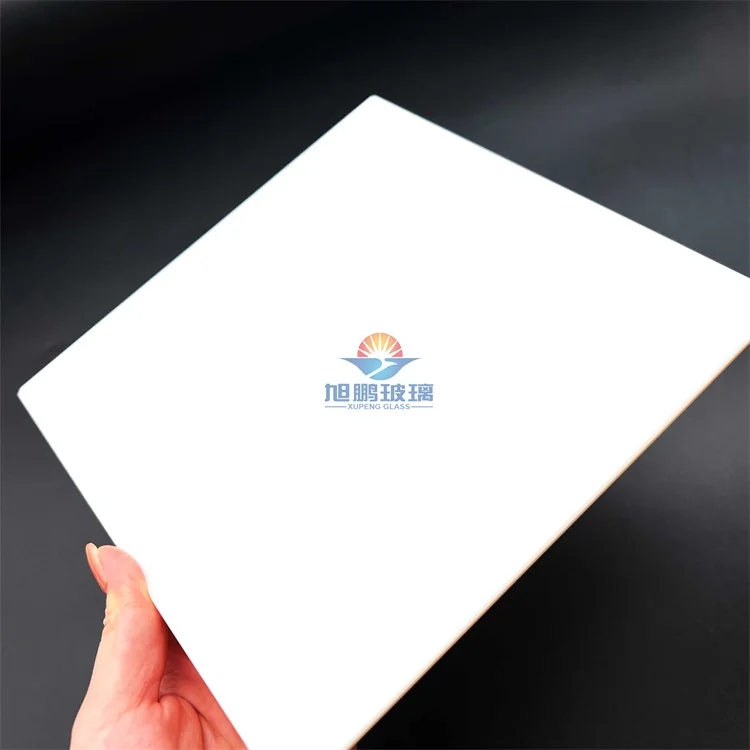 High-temp
White Ceramic Glass-Ceramic, 4mm & 6mm, High Temperature Resistant Glass-Ceramic
For heat-exposed view windows, appliance panels, and hospitality equipment where thermal stability matters.
View product → CNC
CNC Carved Low Iron Glass Sheet, High-temperature Screen Printed Tempered Glass, Drilled Glass Panel
For design-led partitions, control panels, and custom openings that need clean edges and repeatable drilling.
View product → AR coated
High-transmittance Anti-Reflection Coated Glass
For display windows, viewing panels, and optical interfaces where reflection control improves visibility.
View product → Filter glass
Welding Black Filter Glass, Beveled Edge Grinding, Long Irregular-shaped Welding Filter Glass
For welding masks, industrial eye protection, and equipment windows requiring shaped filter glass.
View product →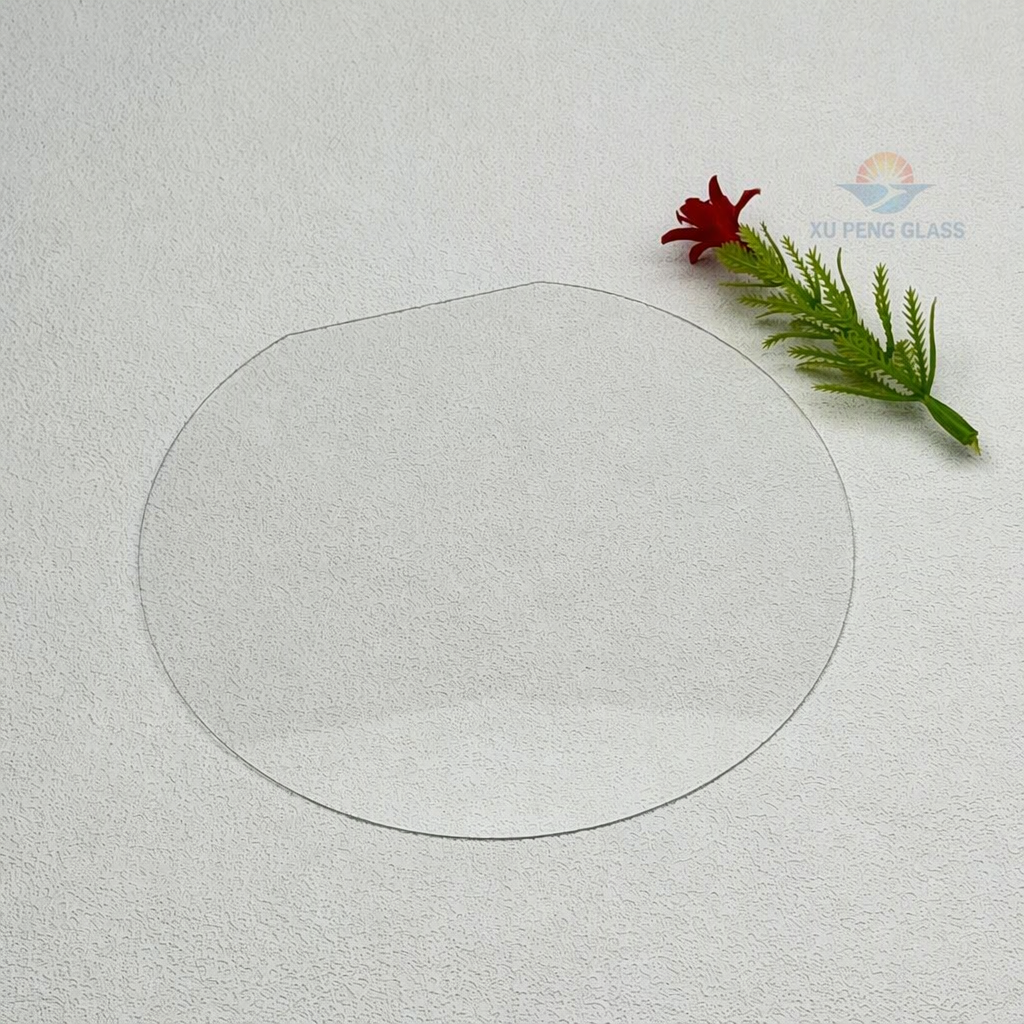 Optical
Ultra-thin High-precision Optical Glass Wafer, Corning / SCHOTT / Fused Silica
For sensor packaging, optical instruments, and thin-glass engineering review before pilot production.
View product → B270 / D263T
Ultra-thin Optical Glass Sheets Schott B270/D263T Semiconductor Electronic Glass Blank Cutting & Processing
For electronics, semiconductor, and display-related projects requiring clean cutting and controlled handling.
View product → AR tempered
High-transmittance AR Coated Optical Glass, Ultra-clear Tempered Glass
For premium display covers, instrument windows, and high-clarity architectural details.
View product → TGV wafer
Schott BF33 TGV Microvia Glass Wafer, Packaging Substrate for Sensors & Chips
For advanced sensor and chip packaging discussions where glass vias and substrate handling are critical.
View product →Hanoi’s humidity turns mirror-glass buying into an engineering decision
A low unit price is not a full cost if mirror edges fail after installation. For Hanoi projects, the real purchasing questions are moisture exposure, edge protection, adhesive compatibility, distortion control, safety backing, and how quickly replacement panels can be supplied.
What Hanoi buyers mean when they search for “aluminum mirror glass supplier”
Hanoi is not a generic tropical market. Its humid summers, damp winter spells, dense urban construction, and high volume of hotel, retail, office, and residential fit-out work create a specific mirror-glass demand profile. A search for an aluminum mirror glass manufacturer or supplier in Hanoi usually carries several overlapping intents: a factory price per sheet, a humidity-resistant mirror specification, a supplier who can cut to drawing, and a partner who understands delivery to northern Vietnam.
Aluminum mirror glass is widely selected for interior decoration, wardrobe doors, bathroom vanities, elevator interiors, retail displays, and light-box surfaces because it offers a practical balance between reflectivity and project cost. However, mirror failure in humid conditions often begins at the edge. If the backing protection, edge sealing, storage, and installation adhesive are not specified correctly, black spots, edge creep, and delamination can appear even when the glass itself looked perfect at delivery.
For Hanoi projects, we recommend treating mirror glass as a system component, not a commodity sheet. The drawing should state thickness, edge finish, backing type, safety-film requirement, hole positions, installation method, and the cleaning chemicals that will be used after handover. This is where a manufacturer with in-house cutting, edging, drilling, coating, and packing control creates more value than a trading-only supplier.
A practical local decision is to separate areas into low-exposure interiors, intermittent humidity zones, and high-exposure washroom or hospitality zones. Decorative wardrobe fronts can often use a cost-controlled aluminum mirror build, while hotel bathrooms, spa areas, and premium retail washrooms should be reviewed for moisture-resistant backing and sealed edges. For public spaces, safety-backed mirror glass or tempered mirror assemblies should be discussed with the installer and project consultant early.
- Ask for a written mirror build, not only a thickness and price.
- Confirm who seals edges and whether the sealer is compatible with the backing.
- Use neutral-cure sealants and avoid direct contact with fresh cement or strongly alkaline materials.
- Plan storage and installation gaps so trapped moisture can escape.
Hanoi project-fit signals
Typical sourcing priorities observed in commercial and residential mirror-glass inquiries for Hanoi and northern Vietnam.
Use these signals as a starting point for your Hanoi specification meeting, then confirm final requirements against your installer’s method statement and project warranty.
Recommended aluminum mirror glass builds for Hanoi applications
The following recommendation matrix is intended for early-stage sourcing. Final dimensions, tolerances, backing, safety film, edge treatment, and packaging should be confirmed with AUVE’s engineering team before production.
Standard interior mirror build
For wardrobes, furniture fronts, decorative wall panels, and cost-sensitive residential fit-outs in Hanoi. A 3–4 mm aluminum mirror with clean polished edges and protective backing is often the starting point. For large panels, increase thickness or add safety backing after engineering review.
Humidity-ready bathroom and hotel build
For Hanoi hotels, serviced apartments, spas, and premium residential bathrooms. Specify moisture-resistant backing, sealed edges, neutral-cure adhesive, and a ventilated installation detail. Anti-fog LED mirror integration should be discussed together with electrical safety and service access.
Design and safety-backed mirror
For retail fitting rooms, elevator interiors, gyms, dance studios, and public corridors. Options can include beveled edges, grooved patterns, tinted mirror, safety film, or tempered processing where the project standard requires it. Fixing methods must be coordinated with the glass build.
| Hanoi use case | Practical mirror build to review | Why it fits | Installation note |
|---|---|---|---|
| Hotel bathroom vanity | 4–5 mm aluminum or copper-free silver mirror; sealed edge; moisture-resistant backing | Combines clarity with better humidity control in wet areas | Use neutral-cure silicone and avoid trapping water behind the mirror |
| Retail fitting room | 4–5 mm mirror with safety backing; polished or beveled edge | Improves public safety and premium visual finish | Confirm fixing points and floor-to-mirror gap with the fit-out contractor |
| Elevator interior | 3–4 mm mirror; scratch-resistant handling; optional safety film | Lightweight decorative reflection for compact spaces | Avoid adhesive systems that stress the backing; protect edges during installation |
| Residential wardrobe | 3–4 mm aluminum mirror; protective backing; clean edge | Cost-effective reflection for large-volume residential projects | Keep the back ventilated and avoid direct contact with damp walls |
| Gym or dance studio | 5–6 mm mirror; safety backing; low-distortion specification | Large visual surfaces require flatter reflection and impact planning | Use a professional mirror fixing system and check wall flatness before ordering |
| Signage and light-box feature | 2–3 mm mirror or specialty coated glass; edge and heat review | Creates bright decorative effects in retail and hospitality | Check LED heat, ventilation, and service access before finalizing the build |
Values are practical starting points for specification discussion. Final product selection depends on drawing tolerance, installation method, local safety requirements, and the warranty terms agreed for the project.
Where aluminum mirror glass is used across Hanoi’s fit-out market
Hanoi’s mix of heritage retail streets, new Grade A offices, high-rise housing, and hospitality refurbishment creates demand for both standard and custom mirror-glass solutions.
Hotels and serviced apartments
Bathroom mirrors, wardrobe fronts, lobby feature walls, and elevator interiors in districts such as Hoan Kiem, Ba Dinh, Tay Ho, and Cau Giay. Humidity control and edge sealing should be specified early.
Retail and showroom displays
Fitting rooms, display backdrops, cosmetic counters, and branded store interiors. Safety-backed mirror and consistent reflection quality help protect the customer experience in high-traffic retail spaces.
Elevators and lobbies
Mirror panels make compact elevator cars feel larger and brighter. For public buildings, specify safety film or other protective measures according to the project’s safety approach and maintenance plan.
Offices and co-working floors
Partitions, reception features, washrooms, and meeting-room walls in Hanoi’s growing office supply. Mirror glass should be coordinated with lighting design to reduce glare and visual fatigue.
Residential wardrobes and vanities
Sliding wardrobe doors, dressing mirrors, vanity walls, and decorative panels in new apartments and renovations. Ventilation behind the mirror is as important as the mirror grade itself.
Gyms, studios, and wellness spaces
Large mirror walls require flatness control, safe fixing, and careful joint planning. For Hanoi’s humid months, the wall cavity and cleaning regime should be reviewed together with the mirror specification.
Four trends shaping mirror-glass demand in Hanoi and northern Vietnam
These trends affect what buyers should ask for in a quotation, not only which supplier offers the lowest sheet price.
Humidity-conscious specification
Buyers increasingly ask for sealed edges, moisture-resistant backing, and installation guidance. This is a positive shift: it moves the conversation from price per sheet to total installed performance.
Large-format and backlit mirrors
Hotels, retail, and residential projects are requesting larger mirror panels and integrated LED mirror designs. Large formats require stricter handling, packing, flatness checks, and installation planning.
Safety and public-space accountability
Retail, gyms, hotels, and office landlords are paying closer attention to breakage behavior, safety backing, edge protection, and documented installation methods in public-facing areas.
Supply-chain responsiveness
Hanoi fit-out schedules can be tight. Buyers benefit from a supplier who can review drawings, confirm packaging, combine multiple glass products in one shipment, and respond to technical questions quickly.
Why AUVE Glass fits Hanoi mirror-glass and processed-glass sourcing
Dongguan AUVE Glass Co., Ltd. is a deep-processing glass manufacturer integrating R&D, design, production, and export in Songshan Lake, Dongguan, China. Founded in 2018, the company operates with 51–100 skilled employees in a 1,001–2,000 m² facility and focuses on high-end glass processing for OEMs, brand owners, distributors, and project buyers.
The factory processes flat and curved tempered glass, ultra-clear low-iron glass, laminated and painted glass, LCD and touch-screen cover glass, smart control panel glass, LED lighting glass, instrument glass, AR anti-reflective glass, AG anti-glare glass, and optical materials including K9, quartz, sapphire, borosilicate, and Corning EXG alkali-free glass. For Hanoi mirror-glass inquiries, this broad process base matters because a single project often requires mirror panels, tempered glass, printed glass, and specialty coated glass from the same supply chain.
AUVE’s production philosophy is “focusing on high-end glass, pioneering and innovating.” In practice, that means reviewing manufacturability before production, controlling the process route from cutting through packing, and giving buyers a technical response rather than only a price list. The company’s verified supplier credentials include onsite-checked supplier status, credit index, transaction level, trade capacity, ratings and reviews, and trade history pages that Hanoi buyers can review before requesting samples or pilot quantities.
Useful review pages: Supplier Assessment, Credit Index, Transaction Level, Trade Capacity, Ratings & Reviews, and Trade History.


Production and quality-inspection views from the AUVE Glass manufacturing base in Dongguan, China.

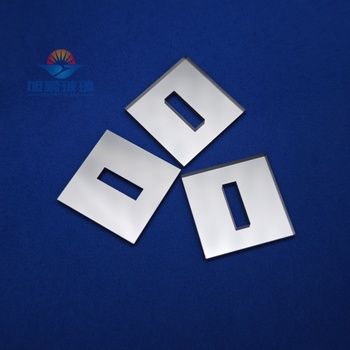
Factory-direct process control
Cutting, CNC edging, drilling, tempering, silk-screen printing, AR/AG coating, and QC are coordinated under one production system, reducing hand-off risk between suppliers.
Drawing-based engineering review
Send CAD, DXF, or PDF drawings with thickness, tolerance, edge, hole, printing, coating, and packing requirements. Engineers review manufacturability before production.
Export packing for fragile glass
Protective film, interleaving material, foam corner protection, and export-grade crates or reinforced cartons are planned around the product and route to Vietnam.
Flexible trade terms
AUVE supports FOB, CFR, CIF, EXW, DDP, DDU, DAF, and express delivery. Hanoi buyers can choose the term that fits their customs and project delivery setup.
Proven export markets
Products are exported to the United States, Canada, Russia, South Korea, Japan, Australia, and other markets, with documentation and communication handled by an export desk.
Responsive technical communication
The average response target is within 7 hours. For best results, include application, installation method, quantity, target date, and drawing files in the first inquiry.
Precision cutting
Automatic and CNC cutting from float, low-iron, mirror, and optical stock according to the approved drawing.
CNC edging and drilling
Edge grinding, beveling, grooving, hole drilling, and shape processing for installation-ready parts.
Tempering and safety review
Flat and curved thermal tempering, plus discussion of safety backing or film where the application requires it.
Silk-screen printing
High-temperature ceramic inks for logos, borders, icons, IR windows, and appliance or instrument graphics.
AR, AG, and functional coating
Anti-reflective, anti-glare, mirror, and related functional surface options reviewed against the end use.
QC and export packing
Dimensional, visual, and optical checks, followed by protective packing engineered for fragile glass shipments.
For mirror-glass projects, the process route is confirmed around edge sealing, backing protection, installation compatibility, and replacement-panel planning. Share your drawing and Hanoi site conditions for a focused review.
Questions Hanoi buyers ask before ordering aluminum mirror glass
These answers reflect common technical and commercial questions from project buyers, contractors, and distributors in Vietnam.
Can AUVE ship aluminum mirror glass to Hanoi and northern Vietnam?
Yes. AUVE supports export shipping to Vietnam through sea, air, and express channels, with Incoterms including FOB, CFR, CIF, EXW, DDP, DDU, DAF, and express delivery. For Hanoi projects, the export desk can discuss packing, documentation, and the most suitable delivery arrangement based on panel size, quantity, and project schedule. The importer should confirm local VAT, customs classification, and any project-specific testing requirements.
How should I choose between aluminum mirror and silver mirror for Hanoi humidity?
Aluminum mirror is often cost-effective for interior decoration, wardrobes, furniture, and general wall panels. Silver mirror can offer higher reflectivity for premium hospitality, retail, and bathroom applications, but the full build matters more than the name alone. For humid Hanoi conditions, specify edge sealing, moisture-resistant backing, compatible adhesive, and a ventilated installation detail. Confirm the final mirror type with your installer and project consultant.
What thickness is commonly reviewed for Hanoi fit-out work?
Thickness depends on panel size, fixing method, safety requirement, and visual flatness. Small decorative panels may start at 3 mm, while larger wall mirrors, bathroom mirrors, elevator panels, and public-area installations often require 4–6 mm or a safety-backed assembly. Large-format and overhead applications need engineering review before ordering. Do not select thickness from price alone.
How can black edge corrosion be reduced in humid conditions?
Edge protection is critical. Specify sealed or protected edges, avoid direct contact with fresh cement, use neutral-cure sealants, keep the back of the mirror ventilated, and prevent water from sitting behind the panel. Storage before installation should be dry and well ventilated. Cleaning chemicals should be neutral and used according to the mirror supplier’s guidance. A small edge defect can grow quickly in a humid bathroom or washroom.
Can you cut, drill, bevel, temper, print, or laminate mirror glass to drawing?
AUVE’s deep-processing capability covers CNC cutting, edging, drilling, tempering, silk-screen printing, AR/AG coating, and related glass processing. For mirror-glass projects, the exact route is reviewed against the drawing because some processes must be completed before coating or backing. Send a CAD, DXF, or PDF drawing with thickness, tolerance, edge profile, hole positions, safety-film requirement, and packing instructions.
What is the minimum order quantity, and are samples available?
MOQ depends on material and process. Many coated and optical glass parts start from 10–50 pieces, while standard ultra-clear tempered parts may start from 100–500 pieces. Sample and pilot quantities can be discussed for new projects. For a faster review, include the application, target quantity, annual demand if known, and the project stage for your Hanoi site.
How is mirror glass packed for export to Vietnam?
Export packing is planned around fragility, panel size, edge exposure, and transport route. Typical protection includes surface film, interleaving material, foam corner protection, and export-grade wooden crates or reinforced cartons. Batch labeling helps the installer match panels to rooms or elevations. If your project requires special moisture protection or site-delivery sequencing, state it in the inquiry.
How quickly can I receive a technical response and quotation?
AUVE’s average response time is within 7 hours for technical inquiries. To help the engineering and export team respond accurately, include drawings, glass type, dimensions, quantity, edge and hole requirements, installation environment, delivery city in Vietnam, and desired Incoterm. For projects in Hanoi, also mention whether the mirror will be installed in bathrooms, elevators, retail fit-outs, gyms, or residential wardrobes.
Technical review by the AUVE Glass engineering and export team, Dongguan, China. Email: info@auveglass.com. Please include your drawing and project location for the most useful response.
Planning an aluminum mirror glass package for a Hanoi project?
Send your drawing, panel sizes, quantity, installation area, and target delivery city. AUVE can review the mirror build, edge protection, packing, and combined glass sourcing route against your project requirements.
Typical technical response target: within 7 hours · Export packing for fragile glass · Factory-direct processing in Dongguan, China