Eight AR & Optical Glass Families Ordered Most Often by Calgary Buyers
Each product below can be re-cut in thickness, re-coated to a different reflectance target or re-printed to your artwork. Every card links to the full specification page so your engineering team can compare substrates before requesting a quote.
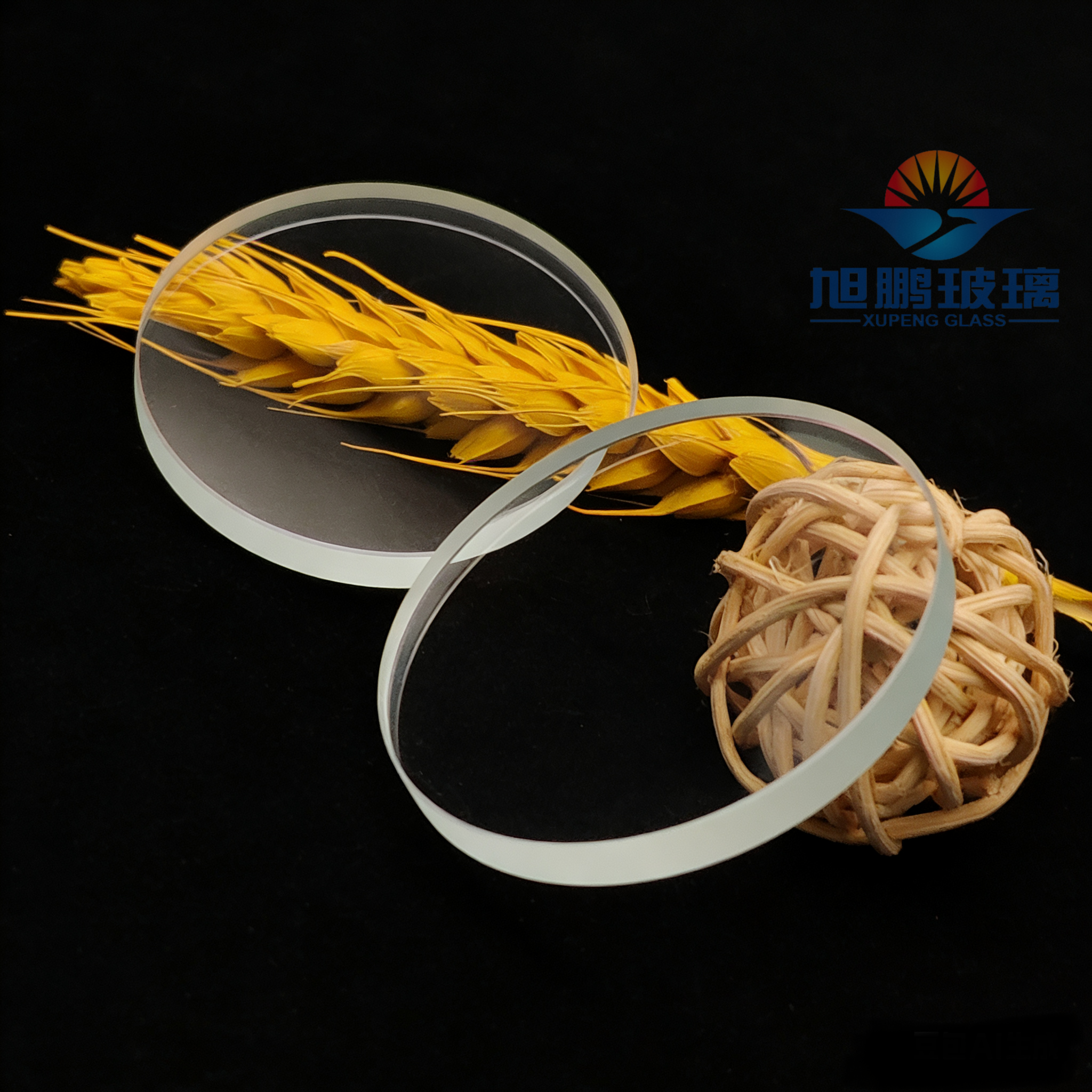
Low Iron Round High Transmittance Tempered Glass Panel with Precision Polished Edges
Low-iron round panel with polished edges and roughly 91% visible light transmission, with no green edge tint. The clean base substrate behind most Calgary HMI covers, sensor windows and machine-viewing glass.

Corning Ultra-Thin Glass Sheet, Optical Grade Glass Wafer Substrate with Chamfered Edge
Alkali-free ultra-thin substrate for sensors, micro-optics and display R&D. The chamfered edge reduces chipping during wafer handling, dicing and cleanroom processing.

Precision CNC Cut & Holed, High-temperature Silk Screen Tempered Glass Discs
Small ultra-clear discs drilled to drawing and printed with fired ceramic ink that will not peel in service. Used for instrument windows, appliance panels, dials and indicator covers.
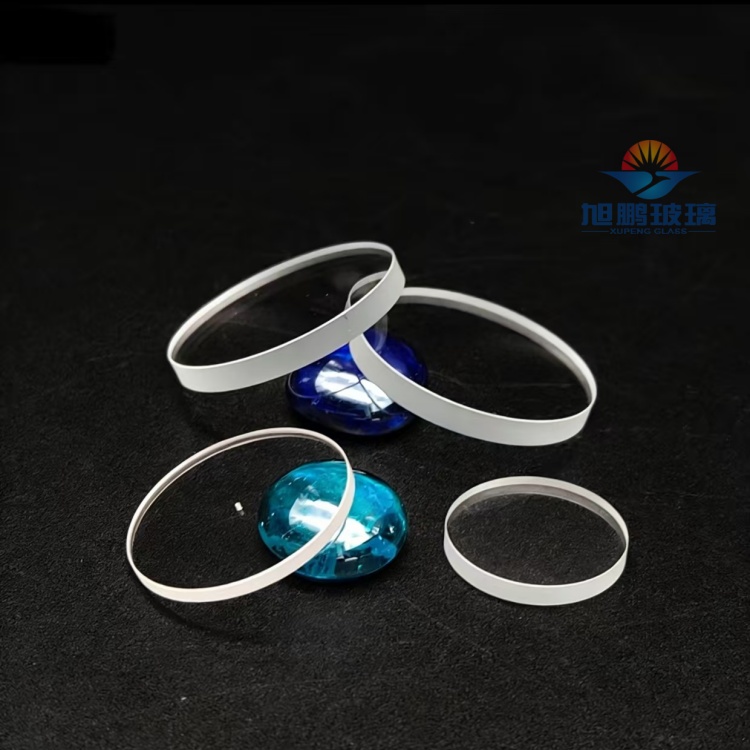
Sapphire Glass Step Window Wafers, High Temperature Resistant Optical Sapphire Lenses
Mohs 9 windows for high-temperature, high-pressure or abrasive sensor environments where soda-lime cover glass would scratch, haze or fail outright. Chamfered step geometry available.

Ultra-white Tempered Glass, AR Anti-Reflection Coatable, High Light Transmittance
Ultra-white substrate prepared for single or double-side AR coating. This is usually the starting point for Calgary display, kiosk and signage cover glass where colour neutrality matters as much as clarity.

High-transmittance Anti-Reflection Coated Glass
Broadband AR coating that pulls surface reflection below one percent per side while pushing transmitted light past 98% on low-iron substrate — the core product for glare-sensitive Calgary installations.
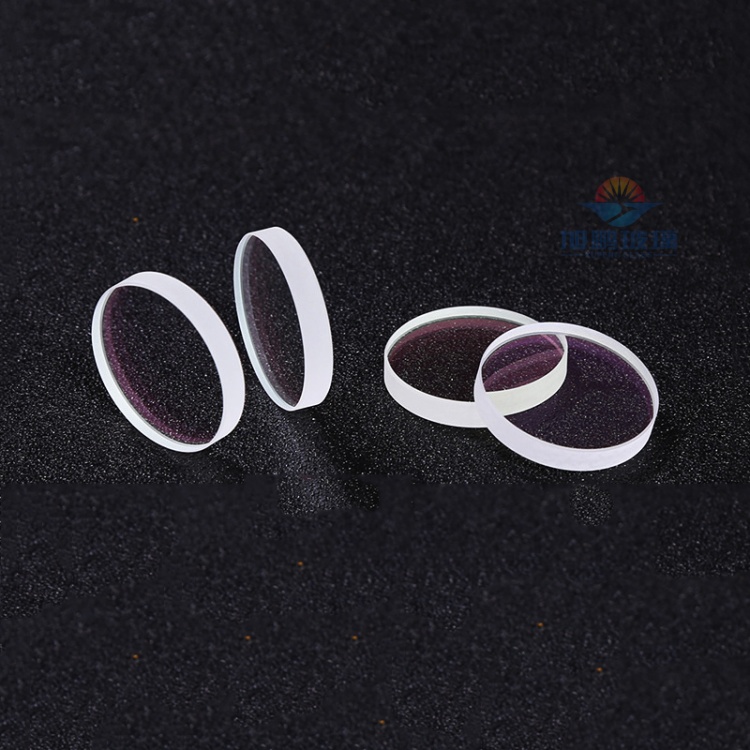
Ultra-clear Tempered Glass with Custom Processing: Drilling, Etching, AG and AR Coating
One substrate, several finishes. Drilling, etching, AG anti-glare, AR coating and silk printing run in a single production route, which keeps tolerances and lead times under control.

Round Aluminosilicate Glass with Chamfered Ground Edges and Metal Coating
Aluminosilicate carries better thermal shock resistance than standard soda-lime glass, while the metal coating supports sealing, shielding and optical filter builds for harsh-duty instruments.
Where AR Coated Glass Earns Its Keep in Calgary
Calgary is a hard place to design a display. At roughly 1,045 m elevation the city receives intense direct sun, up to 16.5 hours of daylight in June, and a low winter sun angle that reaches deep into glazed lobbies. Snow cover bounces that light back into outdoor screens, while dry cold and Chinook freeze–thaw cycles test every coating interface. Add interiors full of LED downlights and window walls, and an uncoated cover glass quietly becomes the weakest link in the visual chain.
Energy Control Rooms & HMI Panels
Reflections from ceiling grids and window walls wash out alarm colours on operator consoles. Low-haze AR cover glass keeps contrast stable at low brightness, so control-room teams in Calgary's energy sector read trends and alarms without leaning into the screen.
Outdoor Digital Signage & Transit Shelters
Low winter sun plus high-albedo snow is the worst glare combination in Canada. An AR and AG stack keeps content legible at noon and at 22:00 without pushing panel brightness, which also lowers power draw and heat load inside the enclosure.
Medical Imaging & Diagnostic Displays
Veiling glare hides low-contrast structures. AR glass lifts the effective contrast of grayscale studies viewed on diagnostic monitors and imaging review stations in Calgary clinics, where reading accuracy cannot depend on where the room lights happen to sit.
Museum, Gallery & Interpretive Displays
Spotlights on artifacts create hot reflections on ordinary case glass. Laminated AR glass removes them and, with UV-filtering interlayers, reduces fade risk for collections and interpretive exhibits where the object matters more than the glazing.
Retail, Showroom & Commercial Interiors
Track lighting on display cases produces mirror images that hide product detail. AR glass keeps merchandise visible from oblique angles, improves the perceived quality of the fixture and reduces the re-merchandising time staff spend fighting glare.
Instrumentation & Cold-Climate Test Windows
Sensor viewports and environmental chamber windows need transmission plus thermal shock resistance. Sapphire, quartz, borosilicate and aluminosilicate options cover duties from −35 °C field exposure to high-temperature lab cycling.
Calgary Sourcing Trends Reshaping AR Glass Specifications
Procurement at Calgary OEMs and integrators has moved from buying "a piece of glass" to specifying a documented optical and durability performance. Six trends come up in almost every quote request we handle from Western Canada.
Landed-Cost Thinking
Buyers ask for a delivered-to-Calgary price rather than an FOB number they have to rebuild with freight, duty and brokerage. We quote DDP so the real landed cost is visible on day one, not after the container clears.
Cold-Climate Durability Evidence
Chinook freeze–thaw turns coating adhesion into a technical question rather than a marketing claim. Requests now include tape-adhesion, abrasion and thermal cycling data alongside the optical figures.
AR + AG Hybrid Stacks
Outdoor kiosks and transit screens in Calgary need both low reflectance and glare diffusion. Combining an AG etched surface with AR coating is becoming the default specification instead of an either-or choice.
Larger and Thinner Formats
27-inch and 32-inch cover glass for all-in-one PCs and signage is now routine, while ultra-thin glass below 0.2 mm appears in sensor, wafer-level and foldable display prototypes.
Per-Batch Optical Data
A single transmission number on a datasheet is no longer accepted. Buyers want measured reflectance, transmission and haze reported for the specific batch they will receive and inspect.
Smaller Pilot Runs First
Product teams want 10 to 50 piece prototypes before committing to tooling. Pilot quantities and mass-production quantities are quoted separately so the first build does not carry the whole tooling cost.
Reference Optical Performance: Coated vs Uncoated Substrate
Figures are reference values for material comparison only. Final reflectance, transmission, haze and durability targets are confirmed against your drawing and the agreed test method before mass production.
AR Coating Specification Reference for Calgary Engineering Teams
Use this table as a shortlisting tool, not a final datasheet. Every row is negotiable against your drawing and confirmed during the engineering review before a price is issued.
| Parameter | Typical Capability | Calgary Design Note |
|---|---|---|
| Substrates | Low-iron tempered, ultra-white, borosilicate 3.3, aluminosilicate, K9, fused quartz, sapphire, Corning ultra-thin | Match the substrate to the thermal duty first. AR coating applied to the wrong base glass is an expensive lesson to learn in the field. |
| Thickness | 0.03 mm ultra-thin through 19 mm tempered, per drawing | Thicker is not automatically safer in cold-climate glazing. Tempering quality and edge finish drive real strength. |
| Reflectance | Broadband AR at roughly 0.5–1.0% per side | State the wavelength band and whether one or both faces are coated; the two choices price very differently. |
| Transmission | Up to 98%+ visible light transmission on low-iron substrate | Ask for a batch-measured value rather than a catalogue headline number. |
| Haze | ≤0.2% for display-grade AR | Haze above roughly 0.5% softens fine text, thin line graphics and small iconography. |
| Coating durability | Tape adhesion, abrasion and thermal cycling to an agreed test method | Chinook freeze–thaw makes cycling data more relevant than a lab-only adhesion claim. |
| Part size | Approximately 1,800 × 1,000 mm; larger formats reviewed case by case | Large-format covers change packing, crate design and freight class, so flag them early. |
| Edge & hole processing | CNC polished, chamfered, drilled, counterbored, grooved | Standardise edge calls on the drawing. Edge quality is the most common cause of transit breakage. |
Why Calgary Buyers Shortlist Dongguan AUVE Glass
We are a deep-processing manufacturer rather than a trading desk. Research, design, production and export sit under one roof in Songshan Lake, Dongguan, which is why a drawing revision reaches the production line the same day instead of waiting in an email chain between three suppliers.
Factory-Direct Since 2018
Founded in 2018 with 51 to 100 skilled employees on a 1,001–2,000 m² site. Tempered, ultra-clear, AR/AG coated, silk-printed and optical glass are produced under one documented quality system.
In-House Process Chain
Cutting, CNC edging and drilling, flat and curved tempering, high-temperature silk-screen printing, AR/AG coating and final inspection stay with one team — so the drawing, the coating recipe and the inspection report never drift apart.
Verifiable Credentials
Onsite-checked supplier status, credit index, transaction level, trade capacity, trade history and buyer ratings are published and can be reviewed before you commit a purchase order.
Engineering-First Quoting
Send CAD, DXF, PDF or STEP with thickness, tolerance, edge, hole, print and coating requirements. Our engineers review manufacturability before a price is issued, and average response time stays within seven hours.
Export Logistics to Alberta
FOB, CFR, CIF, EXW, DDP, DDU, DAF and express delivery are available. Fragile-goods packing uses interleaving film, foam corner protection and fumigation-free crates, with sea–rail routing via Vancouver or air freight into YYC.
Markets That Already Test Us
Glass ships to the United States, Canada, Russia, South Korea, Japan and Australia. Canadian labelling, packing expectations and customs paperwork are part of the normal working routine, not a first-time experiment.
How a Calgary AR Glass Order Actually Runs
Six controlled steps, each with an owner and a check point, so nothing is discovered late in the schedule.
Drawing Review
CAD, DXF or PDF reviewed for manufacturability, tolerance stack and coating feasibility.
Material Selection
Substrate and thickness confirmed against the optical, thermal and strength requirement.
Cutting & CNC
Precision cutting, edge grinding, beveling, drilling and grooving to the approved drawing.
Tempering
Flat or curved thermal tempering for impact and thermal resistance, with process records kept.
Printing & Coating
High-temperature ceramic inks, then AR, AG, mirror or metal coating to the agreed target.
QC & Export Packing
Dimensional, visual and optical checks, batch labelling, then protective packing for the route.
Questions Calgary Buyers Ask Before Ordering AR Coated Glass
Straight answers to the questions procurement, engineering and logistics teams in Alberta raise most often.
How long does AR coated glass take to reach Calgary?
Production typically runs 15 to 25 working days after drawing approval, depending on the coating batch schedule and tempering load. Sea freight to Vancouver followed by rail to Calgary usually adds 18 to 28 days, while air freight into YYC is faster but materially more expensive for dense glass. A schedule is confirmed with the quotation, not after the order is placed.
Do you ship DDP to Calgary and handle customs clearance?
Yes. We quote FOB, CFR, CIF, EXW, DDP, DDU and DAF, and can deliver DDP to a Calgary address with freight, duty and brokerage consolidated into one landed price. Mention the consignee, delivery constraints such as dock access, forklift availability and appointment windows when you request the quote.
What is the minimum order quantity for AR coated glass?
Coated and optical parts commonly start from 10 to 50 pieces, while standard ultra-clear tempered parts usually start around 100 to 500 pieces because tempering and coating runs are batched. Pilot quantities for a new Calgary product launch can be discussed separately from mass production.
Can you supply glass to meet Canadian safety glazing requirements?
We manufacture to the specification you nominate and supply dimensional, optical and process records with the shipment. If your project falls under Canadian safety glazing rules, name the standard and the authority having jurisdiction in your RFQ, and our engineers will confirm what the drawing and the test documentation must show before production starts.
Can you match a specific reflectance or transmission target?
Yes. Give us the target reflectance or visible transmission figure, the wavelength band and whether one or both surfaces are coated. We will confirm the achievable window and the measurement method during the engineering review, and report measured values per batch.
How is the AR coating protected during shipping to Alberta?
Coated faces receive interleaving film or paper, foam corner protection and either reinforced cartons or fumigation-free wooden crates. Long multi-modal routes are exactly where weak packing shows up, so packing is specified per order rather than copied from a template.
Do you supply samples before mass production?
Yes. Sample and pilot quantities are quoted separately from mass production. For coated parts we can supply a small coupon set taken from the same coating run so your team can test handling, cleaning and optical performance before committing to tooling.
Which files and details do you need for a Calgary quotation?
A two-dimensional drawing in CAD, DXF or PDF, plus thickness, tolerance, edge profile, hole positions, print artwork, coating target and quantity. Add the application and the operating temperature range, and we can recommend a substrate rather than simply pricing what was asked for.
Send Your Drawing for a Calgary-Specific Quote
Tell us the size, thickness, coating target and quantity. You will receive an engineering review, a proposed process route and a landed-cost option — usually within seven working hours.
info@auveglass.com