Eight Display & Optical Glass Products for Montreal Automotive Programs
Montreal buyers rarely need a generic glass sheet. They need a part that fits a display stack, survives a Quebec operating environment and arrives with reliable documentation. The eight products below cover instrument clusters, touch modules, HUD optics, sensor windows and precision optical components.
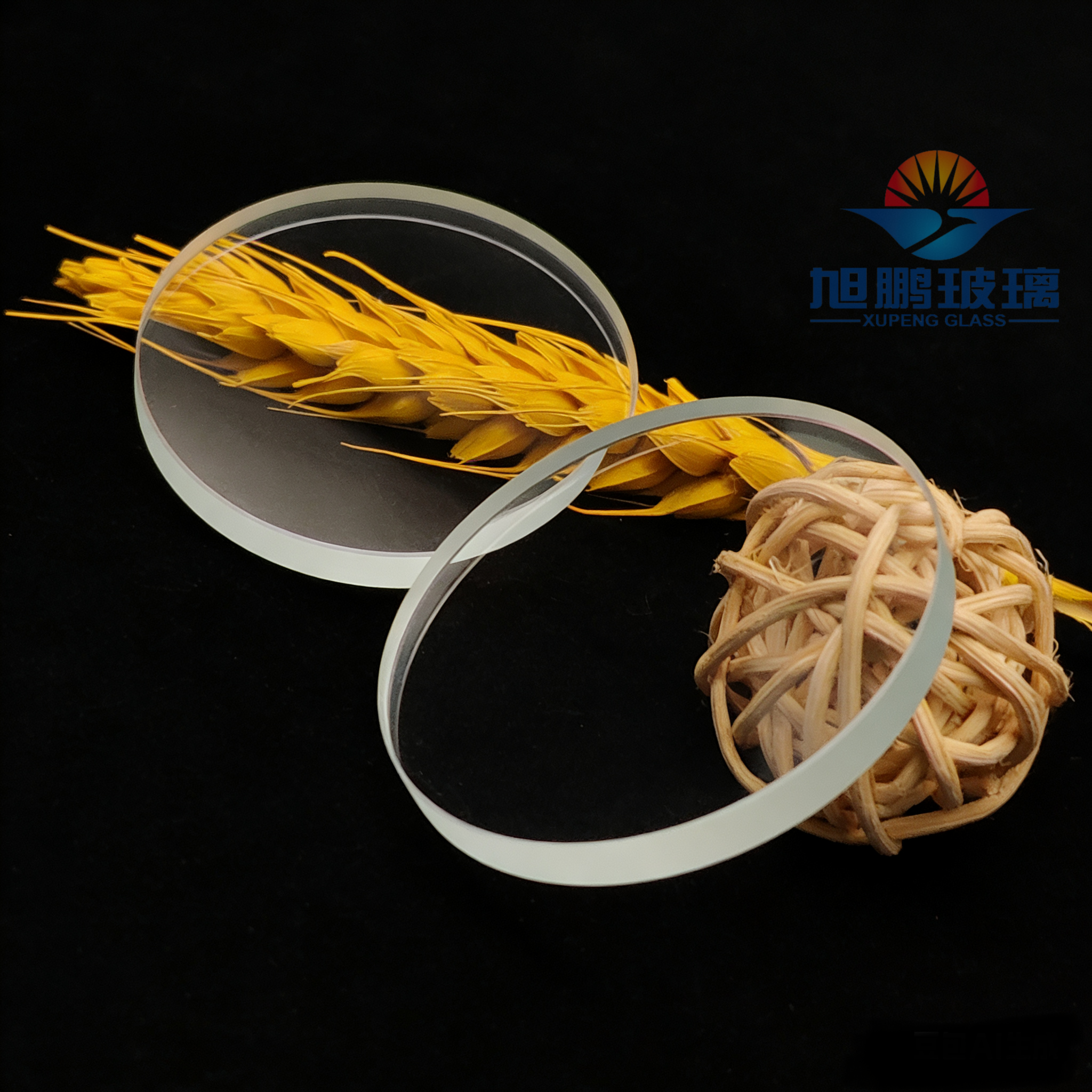
Low Iron Round High Transmittance Tempered Glass Panel with Precision Polished Edges
A clear low-iron round panel for circular HMI dials, gauge lenses and instrument-cluster windows. Thermal tempering supports durability, while precision polished edges help reduce chip-initiation risk during handling, bonding and thermal cycling. Specify transmission, edge profile, print window and coating compatibility before sample approval.

CNC Carved Low Iron Glass Sheet, High-temperature Screen Printed Tempered Glass
Custom-shaped low-iron glass with CNC carving, drilled holes and high-temperature ceramic screen printing for automotive control panels, display bezels, touch windows and decorative HMI surfaces. Print registration, ink color, flatness, hole position and edge quality can be reviewed against the drawing before tooling and production.

Ultra-thin Optical Glass Sheets Schott B270/D263T Semiconductor Electronic Glass Blank Cutting
Thin optical glass blanks cut and processed from SCHOTT B270/D263T-type materials for display stacks, HUD windows, sensor lenses and precision electronic glass components. The value lies in controlled cutting, edge quality, cleanliness and optical consistency. Final thickness, flatness, coating and cleaning method should match the bonding process.

Schott Ultra-thin Optical Glass Sheets, 0.1 mm, 0.5 mm, 0.7 mm, 1.1 mm Raw Substrates
Ultra-thin electronic glass substrates in multiple thickness formats for display, semiconductor and optical-module prototyping. Montreal engineering teams can use these materials to validate a thin window, filter or cover concept before production tooling. Buyers should define thickness tolerance, surface quality, dicing dimensions and clean-pack requirements.

High Transmittance Sapphire Glass, Scratch Resistant & High Temperature Resistant Sapphire Glass Sheets
Sapphire sheets for exposed camera windows, sensor covers, high-temperature viewports and scratch-critical surfaces. Sapphire is relevant where abrasion, road debris or thermal load could degrade a lower-hardness window. Confirm crystal orientation, thickness, chamfer, surface finish and transmission target; it is a premium material, not a blanket replacement for tempered glass.
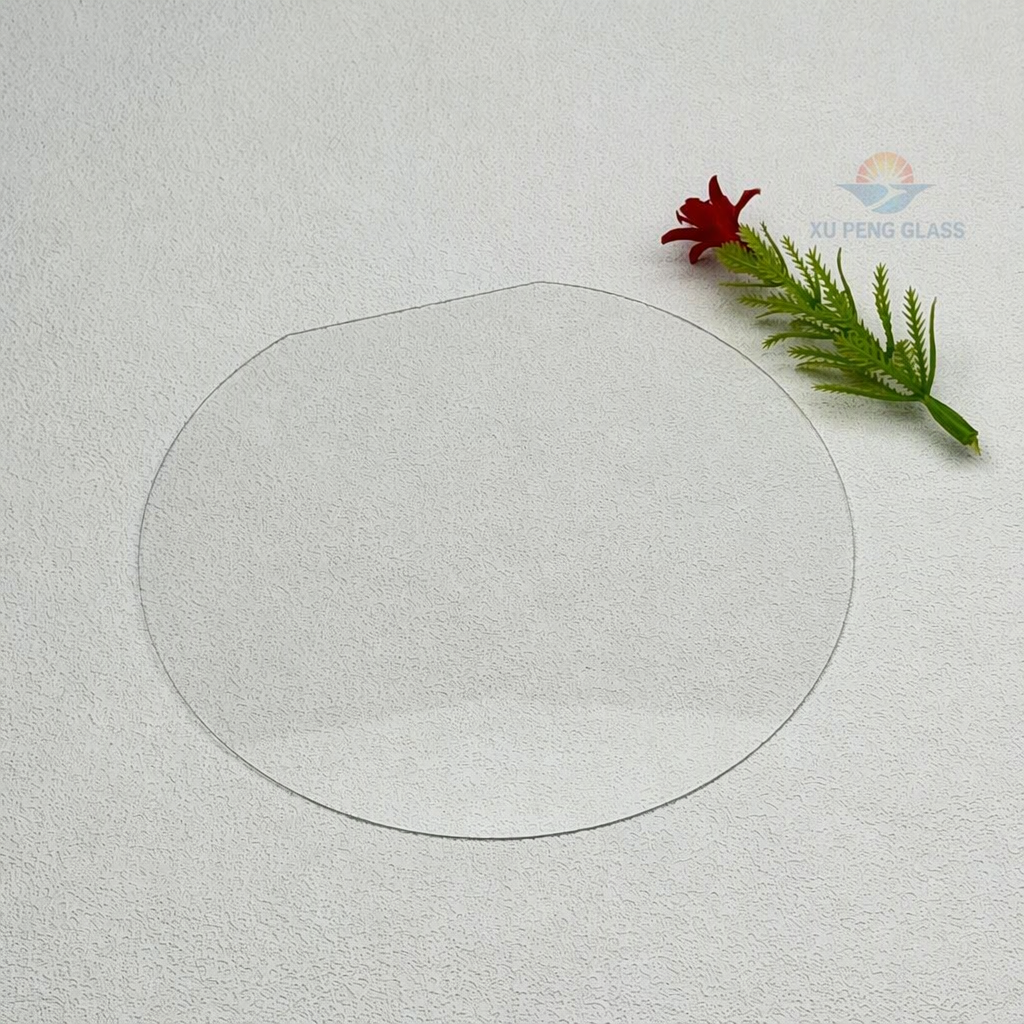
Ultra-thin High-precision Optical Glass Wafer, Corning / SCHOTT / Fused Silica
High-precision wafers in Corning, SCHOTT and fused silica options for optical instruments, camera modules, sensor packages and display-related optical stacks. Wafer geometry, total thickness variation, roughness and edge condition matter before coating or bonding. AUVE reviews cutting, polishing and handling requirements for downstream compatibility.
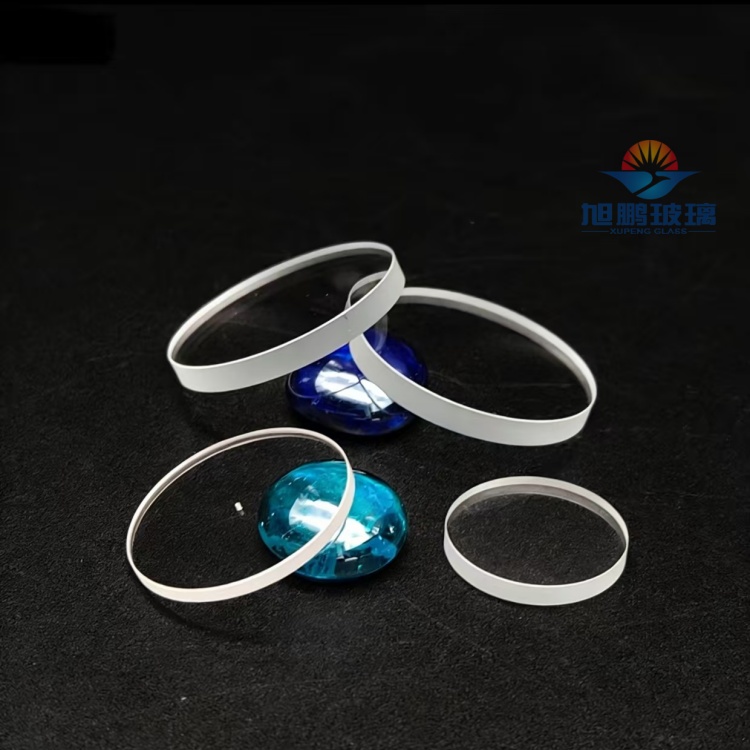
Sapphire Glass Step Window Wafers, High Temperature Resistant & High Light Transmittance Optical Lenses
Stepped sapphire windows and lenses for high-temperature, high-transmission sensor and optical packages. A stepped profile can support seating, bonding and window-to-housing integration in compact automotive sensing assemblies. Define step dimensions, chamfer, surface finish, coating and cleanliness before quoting, especially for sealed optical paths.

High-transmittance AR Coated Optical Glass, Ultra-clear Tempered Glass
Anti-reflective coated ultra-clear tempered glass for central displays, touchscreens, digital clusters and display windows where reflection control and image contrast matter. AR performance depends on coating design, substrate clarity, surface flatness and edge treatment. Agree on reflection, haze, adhesion and cleaning test methods during sample approval.
Why Greater Montreal Is a Strategic Market for Automotive Display Glass
The Montreal opportunity is not simply about buying glass at a lower unit price. It is about matching optical performance, mechanical strength, local validation expectations and import practicality in one qualified supply chain.
Greater Montreal is a design, engineering and advanced-manufacturing gateway for Canada’s electric mobility, transport electronics and industrial HMI supply chain. Buyers across Saint-Laurent, Laval, Longueuil, Boucherville and Mirabel work within aerospace-grade validation cultures and increasingly apply similar discipline to automotive human-machine interfaces. A display cover that looks acceptable at incoming inspection can still fail after thermal cycling if the edge is micro-chipped, the print adhesion is marginal or the AR coating is not compatible with the bonding process.
Automotive display glass should be treated as an engineered multilayer component, not a commodity sheet. The visible surface may include low-iron tempered glass, ceramic printed graphics, anti-reflective or anti-glare treatment, adhesive, touch sensor and a housing interface. Each layer influences reflection, haze, color neutrality, impact resistance, sealing and field reliability. For Montreal automotive display glass programs, the strongest supplier is one that can translate a drawing into a controlled process route rather than simply quote a thickness.
Montreal’s operating profile includes freeze-thaw cycles, de-icing salt, summer UV, strong seasonal daylight and large cabin temperature swings. For exterior camera covers, sensor windows and interior displays exposed to solar load, buyers should discuss salt-mist, humidity, thermal-shock and abrasion validation rather than cosmetics alone. Tempered glass may be the right answer for cluster and control-panel covers; sapphire may be justified for exposed scratch-critical windows; SCHOTT B270/D263T or fused silica may be more appropriate for HUD and optical relay paths.
Because many Quebec buyers import from Asia, total landed cost is affected by packaging, breakage risk, customs documentation, Incoterms and replenishment time. The exporter’s location matters less than its ability to control the drawing, the process and the shipment. Factory-direct communication shortens the feedback loop when an edge profile, print registration or coating requirement needs clarification. AUVE’s export experience to Canada and other markets is relevant, but it must be combined with sample approval, change notification and packaging discipline.
A practical sourcing decision therefore asks three questions. First, can the factory process the material and finish required by the display stack? Second, can it provide evidence of dimensional and visual control before shipment? Third, can it support the commercial route to Montreal without turning fragile glass into a freight-risk problem? The sections below answer those questions with product-specific recommendations, local trends and a procurement checklist.
Information Gain: What Most Supplier Pages Miss
Most glass websites list equipment and generic applications. A stronger sourcing proposal shows how a part will be validated: which requirements are controlled by the drawing, which depend on process capability and which must be proven by sample testing.
- Edge quality is a reliability variable, not only a cosmetic detail.
- AR and AG performance must be specified with haze, reflection and adhesion test methods.
- Printed glass should be reviewed for ink firing, registration and window alignment.
- Cold-climate validation should be agreed before mass production.
- Export packing and documentation are part of the product quality definition.
Product Recommendations by Automotive Display Application in Montreal
Use the application first, then the drawing. This avoids over-specifying an expensive material where tempered low-iron glass is sufficient, or under-specifying an exposed optical window that needs sapphire.
EV Cluster & Instrument Display Covers
Low-iron tempered glass with polished edges and optional AR coating improves clarity behind digital clusters and circular gauges. Specify transmission, edge profile, print window and bonding surface so the cover remains stable through thermal cycling and cleaning.
Center-Stack Touch Modules
AR-coated ultra-clear tempered glass is a strong fit for central information displays where reflection reduces contrast. If daylight glare or fingerprint visibility is the dominant issue, discuss an AG or AG/AR route with the coating supplier and agree on haze, gloss and durability tests.
Camera, LiDAR & Sensor Windows
Exposed automotive sensors face road debris, salt spray, UV and thermal load. Sapphire step windows or high-transmission sapphire sheets may be justified for scratch-critical surfaces, while optical wafers support camera and sensor modules requiring tight geometry and surface quality.
HUD & Optical Relay Windows
Head-up display and optical relay paths are sensitive to flatness, thickness variation, inclusions and coating quality. SCHOTT B270/D263T-type ultra-thin optical glass and high-precision wafers in Corning, SCHOTT or fused silica should be reviewed against the optical drawing and assembly method.
Montreal-Area Trends Shaping Automotive Display Glass Demand
Three trends are changing how Quebec buyers evaluate display glass suppliers: more display area, colder-climate validation and stronger documentation discipline.
More Display Area, Higher Optical Expectations
Software-defined cockpits, EV interfaces and premium interiors are pushing displays into larger sizes and more visible locations. Buyers increasingly care about low-iron clarity, AR reflection control, print precision and edge quality because the display becomes a brand-quality signal. A glass part that looked acceptable on a small instrument window may reveal color shift, haze or reflection defects when scaled to a center-stack cover.
Cold-Climate Durability Becomes a Buying Criterion
Montreal’s freeze-thaw exposure and road-salt environment make edge strength, coating adhesion and sealing more important. Buyers should ask how the supplier controls micro-chips, how printed ink is fired, how AR/AG durability is checked and how the part is packed against condensation and handling damage. Environmental validation should be agreed before mass production, not discovered after field returns.
Resilient Supply and Bilingual Documentation
Procurement teams in Quebec increasingly value suppliers that can support clear drawings, change control, bilingual labeling discussions and practical Incoterms. A factory-direct exporter should be able to quote FOB, CFR, CIF, EXW, DDP, DDU, DAF or express delivery and explain fragile-glass packing. Documentation discipline reduces customs friction and protects the buyer when a drawing changes.
Why AUVE Glass Fits Montreal Sourcing Requirements
Dongguan AUVE Glass Co., Ltd. combines factory-direct deep processing, drawing-led engineering and export experience. For Montreal buyers, the value is not simply a product catalogue; it is a process partner that can clarify manufacturability before production.
Factory-Direct Deep Processing
AUVE was founded in 2018 and operates as a deep-processing glass manufacturer integrating R&D, design, production and export. The company is based in Songshan Lake, Dongguan, an electronics and optoelectronics cluster, with a stated team size of 51–100 employees and a 1,001–2,000 m² facility.
Drawing-Led Engineering Review
Send CAD, DXF or PDF drawings with thickness, tolerance, edge, hole, printing and coating requirements. The engineering review covers manufacturability before production, including CNC cutting, edging, drilling, tempering, silk-screen printing and AR/AG coating. This reduces late-stage surprises for Montreal project teams.
Integrated Process Chain
Capabilities span flat and curved tempered glass, ultra-clear low-iron glass, laminated and painted glass, AR anti-reflective and AG anti-glare coated glass, silk-screen printed glass, touch screen and LCD cover glass, instrument glass, K9 optical glass, quartz, sapphire, borosilicate and Corning EXG alkali-free glass.
Verified Supplier Credentials
Buyers can review onsite verification, credit index, transaction level, trade capacity, trade history and buyer feedback. These credentials do not replace sample approval, but they shorten the initial due-diligence cycle for procurement teams comparing a new exporter against incumbent suppliers.
Export Support for Canada
AUVE reports export experience to the United States, Canada, Russia, South Korea, Japan, Australia and other markets. Accepted delivery terms include FOB, CFR, CIF, EXW, DDP, DDU, DAF and express delivery, with export packing designed for fragile glass parts.
Fast Technical Communication
The stated average response time is within 7 hours. For Montreal inquiries, include the drawing, target quantity, annual volume, validation expectations and required Incoterm in the first message. Faster input means a faster material and process recommendation, especially for coated, printed or optical parts.
 Deep-processing workshop environment
 Cutting, CNC, edging and finishing equipment
 Dimensional and visual inspection before packing
From Drawing to Delivered Display Glass: Six Controlled Steps
Each production step can affect optical yield, mechanical strength or assembly fit. Controlling the process route is how a glass exporter moves from “can you make it?” to “can you repeat it?”
Precision Cutting
Automatic and CNC cutting from float, low-iron, optical and other selected stock. The drawing is checked for outline, holes, window openings and grain direction before cutting.
CNC Edging & Drilling
Edge grinding, beveling, grooving, drilling and laser punching shape the part for bonding and housing fit. Edge condition is especially important for tempered parts and cold-climate durability.
Tempering
Flat and curved thermal tempering can improve impact and thermal resistance for suitable glass types. Thickness, hole quality, edge finish and print firing must be compatible with the tempering route.
Silk-Screen Printing
High-temperature ceramic inks can create durable graphics, black borders, icons, windows and logos. Registration, ink color, light-blocking performance and window alignment should be approved on the sample.
AR / AG Coating
Anti-reflective, anti-glare, mirror and other functional coatings can be reviewed against reflection, haze, adhesion and cleaning requirements. Coating compatibility with the bonding adhesive is part of the specification.
QC & Export Packing
Dimensional, visual and optical checks are followed by protective packing for fragile glass. Interleaving film or paper, foam corner protection and wooden crates or reinforced cartons help protect the shipment to Montreal.
Automotive Display Glass Selection Matrix for Montreal Engineering Teams
Use this table to shortlist a material and process route before requesting a sample. Final specifications must be confirmed against the drawing, bonding method and agreed validation standard.
| Material / Process | Typical Display Application | Montreal-Focused Engineering Check | Relevant AUVE Product |
|---|---|---|---|
| Low-iron thermally tempered glass | Instrument cluster covers, control panels, appliance-style HMI windows | Edge polish, visible-light transmission, print firing, thermal-shock compatibility | Low Iron Round High Transmittance Tempered Glass Panel |
| CNC carved and screen-printed low-iron glass | Shaped display bezels, touch windows, backlit icons, interior control surfaces | Hole position, ink registration, window alignment, flatness after tempering | CNC Carved Low Iron Glass Sheet, High-temperature Screen Printed Tempered Glass |
| AR-coated ultra-clear tempered glass | Center-stack touchscreens, digital clusters, reflective display windows | Reflection, haze, coating adhesion, cleaning durability, bonding compatibility | High-transmittance AR Coated Optical Glass, Ultra-clear Tempered Glass |
| AG or AG/AR coated glass | High-glare HMI, industrial displays, bright-room or outdoor-visible interfaces | Gloss and haze balance, fingerprint visibility, anti-glare texture consistency | AR/AG coated display glass program — confirm surface target |
| Sapphire glass | Camera windows, exposed sensors, high-temperature or scratch-critical viewports | Hardness, salt/debris abrasion, transmission, chamfer and sealing surface | High Transmittance Sapphire Glass; Sapphire Glass Step Window Wafers |
| SCHOTT B270/D263T, Corning or fused silica optical glass | HUD optics, sensor lenses, camera modules, optical relay windows | Thickness tolerance, flatness, total thickness variation, inclusions, coating | Ultra-thin Optical Glass Sheets; Ultra-thin High-precision Optical Glass Wafer |
Typical reference only. For automotive programs, confirm material grade, surface quality, environmental validation and documentation requirements before production.
What Montreal Buyers Should Verify Before Approving a Display Glass Exporter
Supplier qualification should be evidence-based. These six checkpoints help procurement and engineering teams compare offers beyond unit price.
Drawing Control and CTQs
Confirm that the supplier reviews CAD, DXF or PDF drawings and identifies critical-to-quality features: outline, edge profile, holes, print windows, coating zones, flatness and cleanliness. Ask how deviations are raised before production.
Material and Optical Clarity
Low-iron glass is not identical across all suppliers. Define visible-light transmission, edge color, inclusions, surface quality and any need for AR, AG or printed light-blocking windows. For optical parts, require thickness and flatness data.
Coating, Print and Bonding Compatibility
AR/AG coatings and ceramic inks must survive cleaning, humidity and assembly. Confirm adhesion, haze, gloss, pencil hardness or abrasion tests that will be used on the approved sample, and verify that the coating is compatible with the selected optical adhesive.
Cold-Climate Validation Plan
For Montreal programs, discuss thermal cycling, humidity, salt exposure, abrasion and cleaning before mass production. The goal is not to add tests without purpose; it is to prove that edge finish, print and coating remain stable in the intended vehicle environment.
Packing and Shipping to Quebec
Fragile glass needs more than a carton. Ask about interleaving, protective film, foam corner protection, crate design and labeling. For Montreal, confirm Incoterm, port or door delivery, transit mode and whether the packaging protects against condensation and handling abrasion.
Documentation and Change Control
Agree on drawing revision control, sample approval records, batch identification and notification before material or process changes. If French/English labels or project documentation are needed, discuss them before the order rather than after shipment.
Montreal Automotive Display Glass Purchasing FAQs
Direct answers for procurement teams comparing factory-direct glass suppliers for Quebec programs.
Can AUVE supply automotive display glass to Montreal and Quebec?
Yes. Dongguan AUVE Glass Co., Ltd. is a China-based deep-processing glass manufacturer and exporter. The company reports exports to Canada as well as the United States, Russia, South Korea, Japan and Australia. For Montreal delivery, AUVE can discuss FOB, CFR, CIF, EXW, DDP, DDU, DAF and express delivery options before booking. Provide the drawing, destination postal code, annual volume and preferred Incoterm so the commercial route can be reviewed properly.
Which glass should I choose for a Montreal automotive display?
Start with the display function. Low-iron tempered glass is often suitable for instrument clusters and printed control panels. AR-coated ultra-clear tempered glass is a strong candidate for center-stack touchscreens where reflection reduces contrast. AG may be considered where glare diffusion is more important. Sapphire is reserved for exposed sensor windows or scratch-critical surfaces, while SCHOTT B270/D263T, Corning or fused silica options fit HUD and optical relay paths. The final choice must match thickness, bonding, strength and validation targets.
How do you reduce failure risk from Quebec winter, road salt and freeze-thaw?
The first step is careful design and drawing review: adequate edge finish, suitable thickness, compatible coating and print, and a bonding method that respects thermal expansion. The second step is sample validation for the actual use environment. For exterior sensor windows or exposed surfaces, discuss salt-mist, humidity, thermal-shock, abrasion and cleaning tests. Packaging also matters; edge damage in transit can become a field failure later. AUVE can review the project requirements before quoting, but validation criteria should be agreed in writing.
What information is needed for an accurate quotation?
Send a CAD, DXF or PDF drawing with material, thickness, overall dimensions, tolerance, edge requirement, holes, cut-outs, print details, coating target, flatness and surface quality. Include annual quantity, prototype quantity, destination, preferred Incoterm and any validation or documentation requirements. For curved or stepped parts, provide a 3D file if available. Clear inputs let the engineering team review manufacturability before price and lead time are confirmed.
What are the minimum order quantity and sample process?
MOQ depends on material and process. According to AUVE’s product information, many coated and optical glass parts start from 10 to 50 pieces, while standard ultra-clear tempered parts typically start from 100 to 500 pieces. Sample and pilot quantities can be discussed for new projects. The practical path is to share the drawing, target quantity and validation stage first; the supplier can then recommend whether an off-tool sample, pilot batch or production-order route is appropriate.
Which Incoterms and shipping methods apply to Montreal orders?
AUVE supports FOB, CFR, CIF, EXW, DDP, DDU, DAF and express delivery, with export packing designed for fragile glass parts. For Montreal, the best option depends on package size, delivery address, customs setup and urgency. Express is convenient for samples and small optical parts; sea or air freight may be more practical for larger batches. The buyer and supplier should confirm who handles customs clearance, insurance and final-mile delivery before the order is placed.
Request an Engineering Review for Your Montreal Display Glass Program
Share your drawing, material preference, size, thickness, tolerance, edge profile, holes, printing, coating target, annual volume and required delivery terms. The AUVE team will review manufacturability and the commercial route, usually with an average response time within 7 hours.
Automotive display glass · Montreal market · Tempered, AR/AG coated, low-iron, sapphire and optical glass · Factory-direct export support from Dongguan AUVE Glass Co., Ltd.