8 Factory-Direct Glass Products for Düsseldorf Sourcing Teams
This is not a catalogue dump. The eight product lines below map directly to Düsseldorf and North Rhine-Westphalia applications such as automotive HMI, medtech, optical instruments, display covers, semiconductor substrates, UV equipment and flexible electronics. Product URLs are preserved so your team can move from material shortlist to technical review.

Round Aluminosilicate Glass with Chamfered Ground Edges and Metal Coating
A round aluminosilicate window with chamfered edges and metal coating for sensor housings, optical spacers and display bezels where edge quality and coating adhesion matter. Useful for compact Düsseldorf optics and instrument assemblies.
View product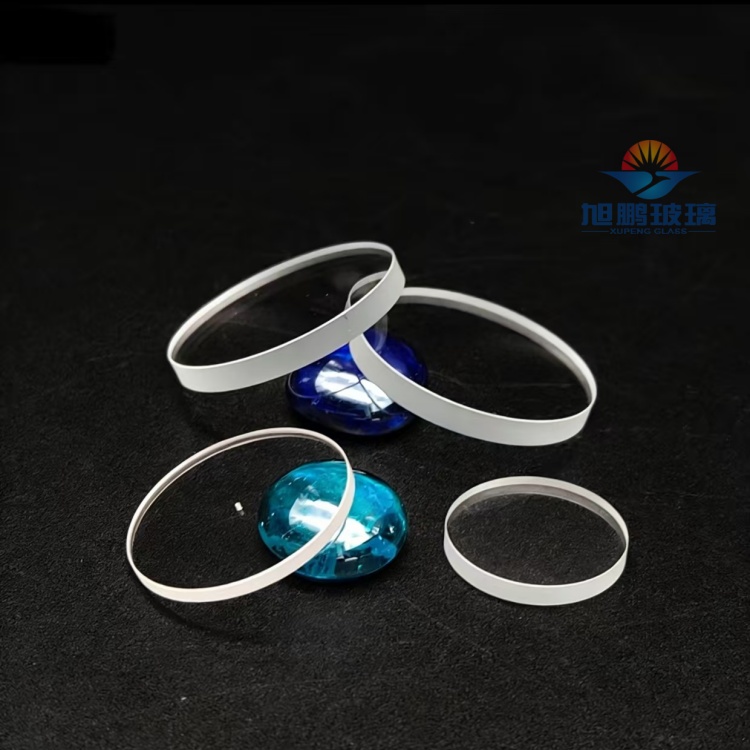
Sapphire Glass Step Window Wafers, High Temperature Resistant & High Light Transmittance Optical Sapphire Lenses
Step-window sapphire wafers combine high-temperature resistance with high light transmittance. They are relevant for analytical instruments, laser viewports and sensor windows, and the stepped geometry supports registration and sealing in optomechanical modules.
View product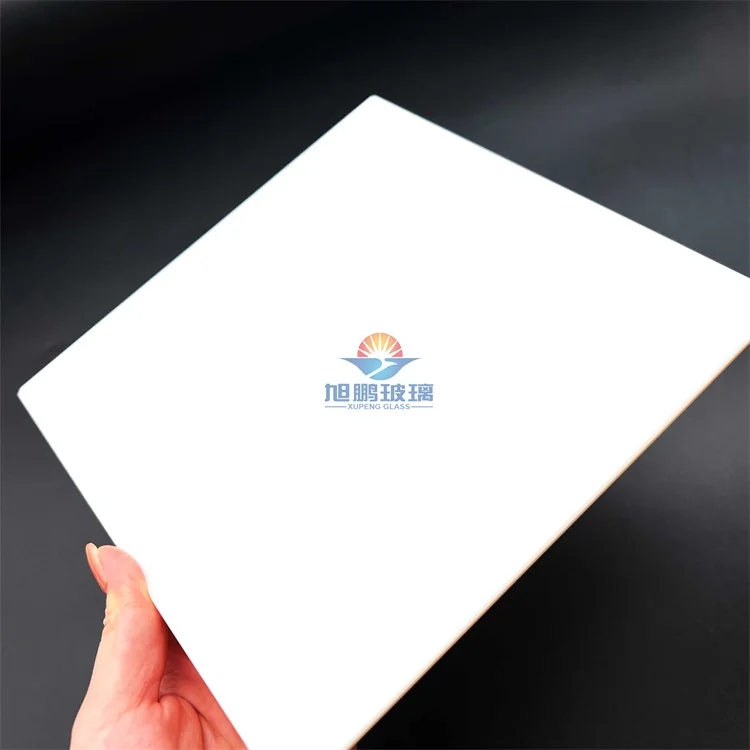
White Ceramic Glass-Ceramic, 4mm & 6mm, High Temperature Resistant Glass-Ceramic
White glass-ceramic in 4 mm and 6 mm formats for high-temperature panels, diffusers and thermal isolation windows. A practical choice for appliance, lighting and industrial design teams that need a clean white appearance without sacrificing heat resistance.
View product
High Transmittance Sapphire Glass, Scratch Resistant & High Temperature Resistant Sapphire Glass Sheets
High-transmittance sapphire sheets with scratch resistance and high-temperature stability. Use this route for sensor covers, inspection windows and wear-critical optical faces where standard glass or polymer covers would degrade too quickly.
View product
Ultra-thin Flexible UTG Glass, bendable and foldable, suitable for commercial aerospace and new energy industries
Ultra-thin, bendable UTG for flexible displays, aerospace payloads and new-energy research. Düsseldorf teams can prototype curved or foldable HMI concepts with a glass substrate rather than plastic, then validate handling, lamination and edge finish.
View product
High-transmittance AR Coated Optical Glass, Ultra-clear Tempered Glass
Ultra-clear tempered glass with high-transmittance AR coating. It is aimed at display windows, touch modules and instrument covers that need lower surface reflection and stronger contrast under bright trade-show or industrial lighting.
View product
Wafer Glass Thickness Circuit Board Chip Solar Silicon Ingot Substrate
Wafer-thickness glass for circuit-board, chip, solar silicon ingot and substrate carrier applications. Relevant to semiconductor, photonics and electronics R&D in the Rhine-Ruhr corridor, where flatness, cleanliness and protective packing matter.
View product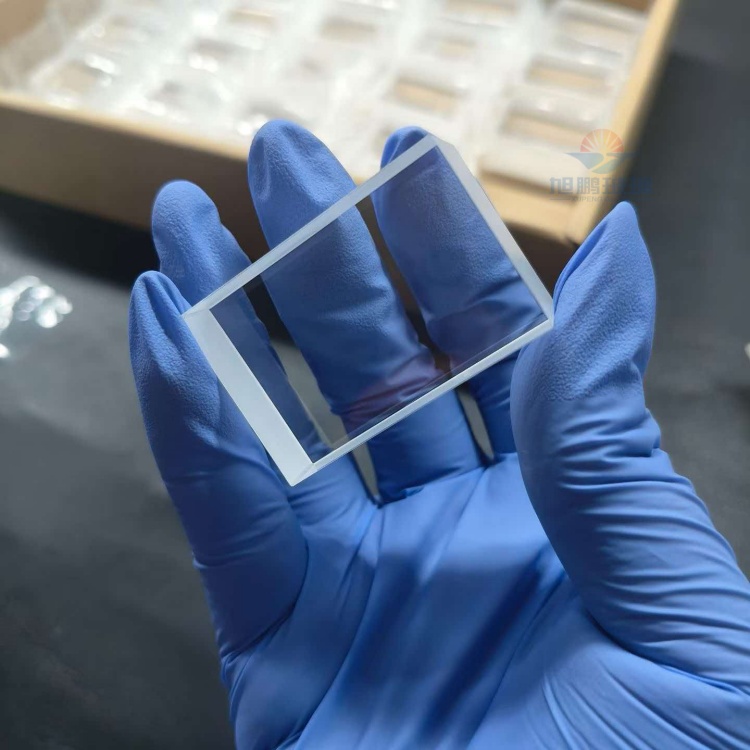
High UV Transmission Thick Gauge Thick Quartz Glass Plate
Thick-gauge quartz plate with high UV transmission for UV curing, disinfection equipment, analytical instruments and high-temperature viewports where thermal shock resistance and optical clarity are critical.
View productSend a CAD, DXF or PDF drawing with thickness, tolerance, edge, hole, printing, coating and target quantity requirements.
Figures reflect AUVE Glass’s published supplier profile. Current capacity, certifications and chemical-strengthening feasibility should be confirmed against your drawing during the RFQ.
Chemically Strengthened Glass vs. Thermal Tempering: Specify by Failure Mode, Not by Name
Düsseldorf engineering teams often use “strengthened glass” as a generic term. In practice, chemical strengthening, thermal tempering, sapphire, fused quartz and glass-ceramic solve different problems. The first RFQ decision should be the failure mode and environment, not the label.
What chemical strengthening actually does
Chemical strengthening is an ion-exchange process. Smaller sodium ions near the glass surface are replaced by larger potassium ions, placing the surface in compression. The result can be a thin, optically clear part with improved resistance to impact and flexural stress. It is commonly associated with aluminosilicate and ultra-thin glass formats, but the final route must be confirmed for the specific substrate, thickness and geometry.
Thermal tempering heats and quenches thicker glass. It provides safety fragmentation and strength for many architectural, appliance and industrial parts, but it is limited by thickness, edge quality, holes, roller wave and flatness. Sapphire, fused quartz and glass-ceramic are separate material families and should be compared on hardness, UV or IR transmission, coefficient of thermal expansion, thermal shock and cost—not on tempering language alone.
The most expensive mistake is to assume every “strengthened glass” quotation is chemically strengthened. For a Düsseldorf project, ask for the proposed substrate, strengthening route, edge condition, coating stack and inspection criteria in the same document.
- Ion-exchange route: confirm substrate chemistry, salt and bath control, compressive stress and depth targets where specified.
- Thermal route: confirm thickness, edge quality, roller wave, flatness and fragmentation expectations.
- Coating compatibility: AR, AG, metal or printed layers must survive the strengthening and cleaning sequence.
- Düsseldorf documentation: request material declaration, dimensional report and batch traceability for the approved route.
| Material / geometry | Likely route | What to validate |
|---|---|---|
| 0.3–1.1 mm aluminosilicate or UTG | Chemical strengthening / ion exchange | Surface compression, edge micro-cracks, handling, lamination and coating adhesion. |
| 3–12 mm low-iron or float glass | Thermal tempering | Roller wave, flatness, fragmentation, hole-to-edge distance and print registration. |
| Sapphire, fused quartz or glass-ceramic | Not a simple “tempering” decision | Hardness, UV/IR transmission, CTE, thermal shock, chemical resistance and cost. |
Localized Application Scenarios Across Düsseldorf and North Rhine-Westphalia
Düsseldorf sits inside one of Europe’s densest industrial and research regions. The glass decision is rarely isolated—it is linked to display readability, cleanroom protocol, adhesive selection, thermal cycling and the way a component is unpacked at the line.
Automotive & EV engineering
Automotive and EV clusters around Düsseldorf need display covers, touch surfaces and decorative glass that survive vibration, temperature cycling and cleaning. Chemically strengthened thin glass can reduce weight and improve impact resistance, but adhesive choice, edge quality and final assembly validation must be confirmed with the Tier 1 or OEM specification.
Medtech & laboratory
Düsseldorf’s medtech and laboratory suppliers require cleanable, chemically resistant windows for analysers, sensors and diagnostic equipment. Sapphire, quartz and glass-ceramic options should be selected against cleaning agents, autoclave cycles and optical requirements, with batch traceability and packing that protects polished surfaces.
Optical & photonics
Optics and photonics teams in the Rhine-Ruhr research corridor specify AR-coated windows, sapphire viewports and K9-type optical components. The critical questions are not only transmission; they are wavefront, surface quality, coating durability, chamfer quality and the ability to reproduce the same finish from pilot to production.
Display, kiosks & HMI
Trade fairs, retail kiosks, industrial HMIs and museum displays around Düsseldorf demand low-reflection and anti-glare surfaces. AR-coated ultra-clear glass improves contrast; AG etched glass diffuses reflections. Printing, holes and edge treatments should be reviewed together so the display module fits without rework.
Semiconductor & electronics
Semiconductor, photonics and electronics R&D in NRW uses wafer-thickness glass carriers, substrates and inspection windows. Buyers should confirm flatness, thickness tolerance, cleanliness, dicing or polishing route and packaging, because particle contamination can matter as much as the glass itself.
UV, energy & industrial
UV curing, disinfection, new-energy and aerospace projects use high-UV quartz plates and flexible UTG. Düsseldorf buyers should test transmission at the actual wavelength, confirm thermal shock conditions, and agree handling and fixturing before scaling from prototype to production.
Localized Trends: What Düsseldorf Buyers Are Asking for in 2025–2026
Procurement behaviour in Düsseldorf is shaped by engineering depth, trade-fair deadlines and cross-border supply risk. The strongest suppliers are responding with clearer process data, not just lower prices.
Resilient, dual-source supply
Düsseldorf procurement teams are shortening decision cycles but widening supplier qualification. They ask for drawing-based quotations, sample timelines and an exit from single-source glass. Factory-direct suppliers that show verified profiles and repeatable inspection reduce the risk of requalifying late.
Coating convergence
AR, AG, printed graphics and strengthening are increasingly specified as one integrated part. The trend is driven by display-heavy HMI, EV interiors and premium industrial design. Buyers should insist on a process-sequence review because coating before or after strengthening can change adhesion and optical results.
Documentation and clean packing
EU buyers are asking earlier for material declarations, batch labels, dimensional reports and fragile-goods packing plans. In Düsseldorf, the practical issue is often not the glass itself but the last 100 metres: unpacking, line-side handling and avoiding scratches before assembly.
Why AUVE Glass Is a Practical Factory-Direct Partner for Düsseldorf Projects
The supplier is in Dongguan, China—not a Düsseldorf stockist. The advantage is factory-direct deep processing, drawing review and export experience, not local inventory. That distinction matters for buyers who need honest lead times and traceable process steps.
Deep-processing under one roof, from Dongguan to Düsseldorf
Dongguan AUVE Glass Co., Ltd. was established in 2018 and operates in Songshan Lake, Dongguan, Guangdong—one of China’s electronics and optoelectronics clusters. The company integrates R&D, design, production and export. Its published manufacturing scope includes flat and curved tempered glass, ultra-clear low-iron glass, laminated and painted glass, LCD and touch-screen cover glass, smart control panel glass, LED lighting glass, instrument glass, AR high-transmittance glass and AG anti-glare glass.
AUVE also lists optical materials such as K9, quartz, sapphire, borosilicate and Corning EXG alkali-free glass. For Düsseldorf buyers evaluating chemically strengthened glass, the practical value is the ability to review the part as a system: substrate, edge, holes, printing, coating, strengthening route, cleaning and packing. Final chemical-strengthening feasibility and any required test standard should always be confirmed against the drawing before mass production.
Guided by the stated philosophy of “focusing on high-end glass, pioneering and innovating,” the company presents itself as a deep-processing partner for OEMs, brand owners and distributors rather than a generic trading desk. Production is described as following defined process standards and a documented quality management system, with batch traceability from raw sheet to packed carton.
- Business typeManufacturer & trading
- LocationSongshan Lake, Dongguan, Guangdong, China
- Team size51–100 employees
- Facility1,001–2,000 m²
- Main marketsUSA, Canada, Russia, South Korea, Japan, Australia
- ResponseStated average ≤7 hours

Factory-direct from Dongguan with export support for Düsseldorf; local stock is not implied.
Drawing-led DFM
CAD, DXF or PDF review before production. The team can discuss CNC cutting, edging, drilling, tempering, silk-screen printing, AR/AG coating and optical polishing as one route, reducing the risk of incompatible process steps.
Verified supplier signals
Düsseldorf procurement teams can check the onsite-verified profile, credit index, transaction level, trade capacity, ratings and trade history. These are useful trust signals, but they do not replace your own sample and inspection plan.
Fast technical response
Average response time is stated as ≤7 hours. For a useful first reply, include material, thickness, size, tolerance, edge and hole requirements, print or coating details, application temperature and target quantity.
Export and fragile packing
FOB, CFR, CIF, EXW, DDP, DDU, DAF and express delivery are supported. Packing typically uses interleaving film or paper, foam corner protection and fumigation-free wooden crates or reinforced cartons. Düsseldorf delivery terms are quoted per order.
From Drawing to Packed Glass: A Six-Step Qualification Path for Düsseldorf Buyers
The most reliable way to compare a chemically strengthened glass factory is to compare process discipline. Use this sequence to keep technical and commercial assumptions aligned before tooling or bulk release.
Define the application
Start with the failure mode and environment: impact, scratch, thermal shock, UV wavelength, display contrast, cleaning agents, load and adhesion. The same drawing can require a different glass route if the application changes.
Select material and route
Shortlist chemically strengthened aluminosilicate or UTG, thermally tempered low-iron, sapphire, fused quartz, glass-ceramic or wafer glass. Confirm what is actually being strengthened or coated, not just the trade name.
Review DFM and tolerance
Check edge profile, hole-to-edge distance, chamfer, flatness, print registration and coating masking. Thin strengthened glass is sensitive to edge micro-cracks and point contact, so handling and fixturing belong in the review.
Approve samples and first article
Agree dimensional, visual, optical and coating tests before mass production. For Düsseldorf projects, include packing and unpacking checks because scratches can appear after the factory gate.
Control the process and inspection
The production route should define cutting, edging, drilling, strengthening or tempering, cleaning, printing or coating and final inspection. Record batch ID and deviation handling so the approved route remains repeatable.
Plan export packing and documents
Confirm Incoterm, crate type, desiccant, corner protection, labels and documents. Sea, air and express each require different protection against vibration and humidity on the way to Düsseldorf.
Düsseldorf RFQ checklist
Send seven data points in the first email so the factory can respond with a credible material route, process review and shipping option.
Frequently Asked Questions from Düsseldorf Glass Buyers
These are the practical questions procurement and engineering teams ask when comparing a factory-direct glass supplier for Düsseldorf delivery.
Can Düsseldorf buyers order chemically strengthened glass directly from AUVE?
Yes, for projects that fit the factory’s published deep-processing scope. AUVE is located in Dongguan, China, not Düsseldorf; the working model is factory-direct export. Share the drawing first so the team can confirm substrate, strengthening route, coating, edge and packing. If ion-exchange strengthening is required, it must be explicitly included in the approved process route; do not assume every “tempered glass” quotation is chemically strengthened.
What is the difference between chemically strengthened glass and tempered glass?
Chemical strengthening uses ion exchange to create surface compression and is often used for thin aluminosilicate or ultra-thin glass. Thermal tempering heats and quenches thicker glass and is common for safety glazing, appliances and industrial guards. They are different routes with different design limits. The drawing, thickness, edge condition, hole pattern and application load should determine the route.
What documents can Düsseldorf procurement teams request?
Typical documents include a commercial invoice, packing list, dimensional and visual inspection report, material declaration or RoHS/REACH declaration where applicable, batch labels and shipping documents. Certification needs vary by application, so agree the exact document list before the purchase order. Do not rely on a generic certificate that is not tied to the approved drawing.
What is the MOQ and lead time from this factory?
MOQ depends on material and process. The published range suggests many coated and optical parts start from 10–50 pieces, while standard ultra-clear tempered parts often start from 100–500 pieces. Prototype and pilot quantities can be discussed. Lead time starts after drawing approval, sample approval and material availability; confirm it per project rather than using a generic catalogue figure.
How is glass packed for shipment to Düsseldorf?
Fragile-goods packing typically uses interleaving film or paper, foam corner protection and fumigation-free wooden crates or reinforced cartons. For coated or polished parts, agree surface protection and cleaning instructions. Sea freight needs humidity and vibration protection; express needs impact protection. Ask for a packing photo before shipment if the part is difficult to replace.
Can AR/AG coating, printing, CNC holes and optical polishing be combined?
Often yes, but sequence matters. Confirm whether the coating is applied before or after strengthening or printing, how masking is done, and what inspection standard applies. Sending the full assembly drawing—not just the glass outline—helps the factory flag interference, registration and handling risks before quotation. This is especially important for Düsseldorf display, medtech and optical projects.
Request a Düsseldorf-Ready Glass Quotation
Send a CAD, DXF or PDF drawing with thickness, tolerance, edge, hole, printing or coating details, target quantity and delivery city. The factory can respond with a material route, process feasibility, packing plan and shipping options for Düsseldorf.
Average response time is stated as within 7 hours. Please include the target Incoterm so the reply is commercially actionable.