8 Product Platforms for CNC-Drilled Device View Windows and Precision Glass Assemblies
Vietnam procurement teams rarely need a generic glass sheet. They need a drawing-compliant optical window that survives assembly, cleaning, drop tests and humid outdoor use. The eight platforms below are production references from AUVE Glass. For the core application in this guide — CNC-drilled ultra-clear tempered glass discs for device view windows — start with the ultra-clear tempered panel and laser-drilled / TGV substrate, then combine with AR, mirror or ultra-thin glass as the optical stack requires.

Ultra-thin Optical Glass Sheets Schott B270/D263T Semiconductor Electronic Glass Blank Cutting & Processing
- 0.1–1.1 mm
- B270 / D263T
- Cut & polish
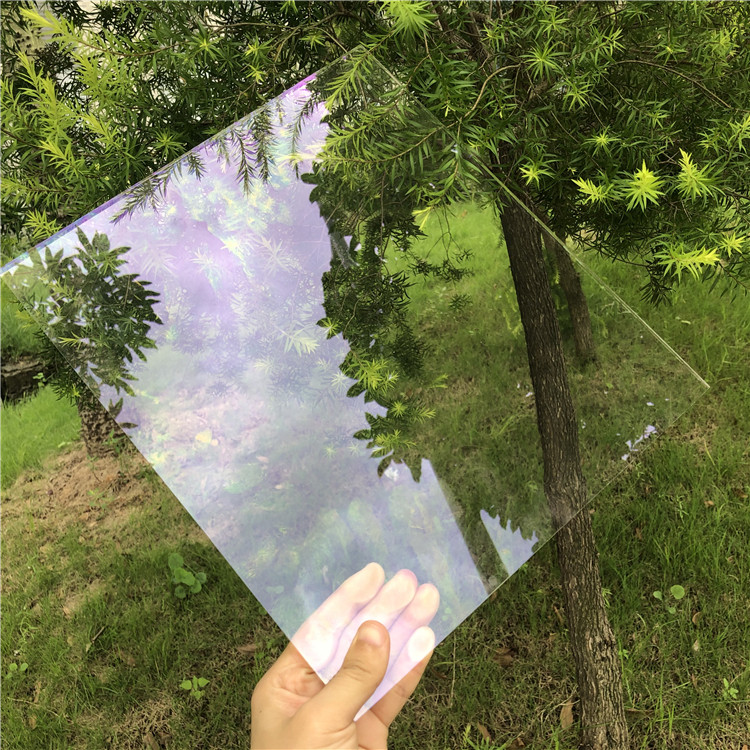
High-transmittance Anti-Reflection (AR) Coated Optical Glass
- High transmission
- Low reflection
- Display windows
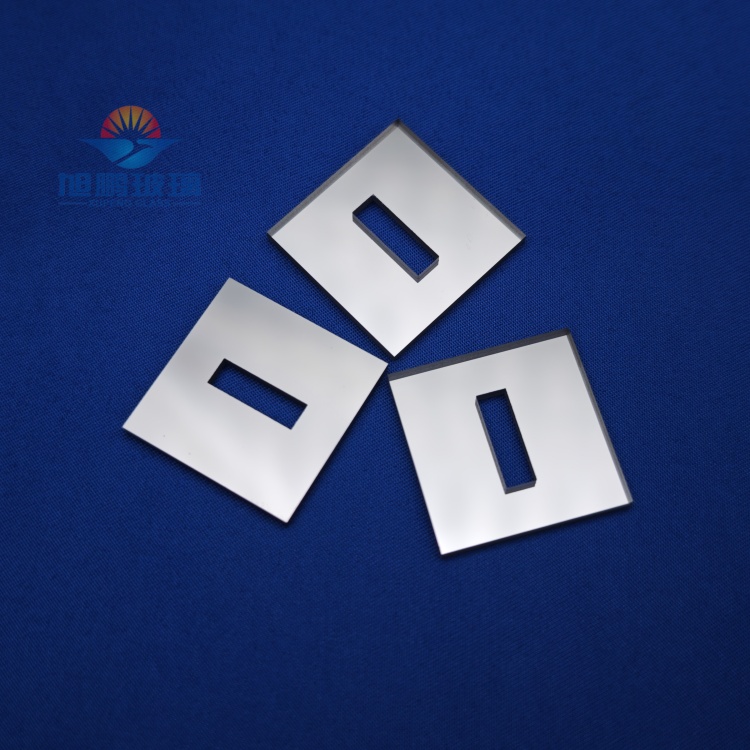
Silver-coated Mirror, Grooved at the Center of Glass
- Center groove
- Silver coated
- Custom shape
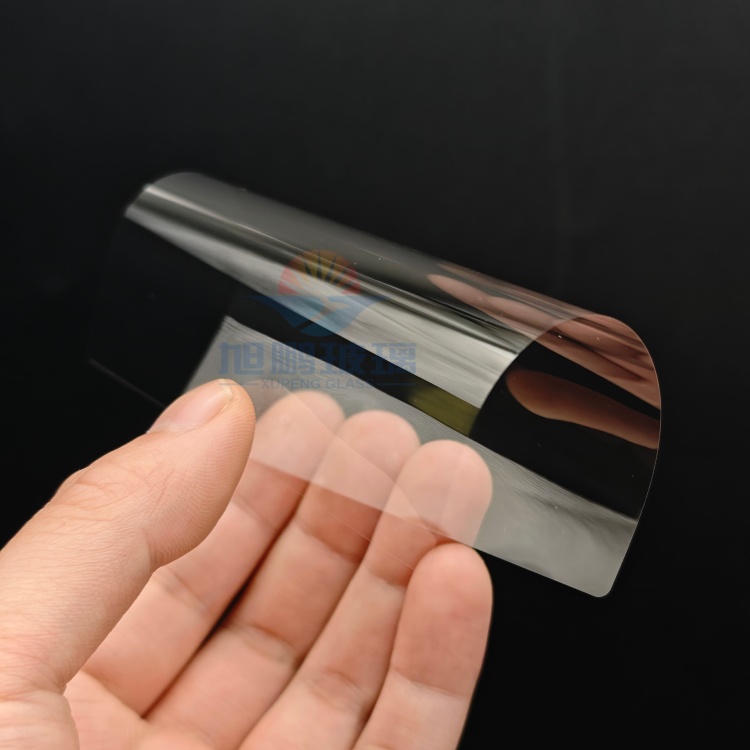
0.03 mm Ultra-thin Flexible Bendable Glass
- 0.03 mm
- Bendable UTG
- Precision cutting

Round Aluminosilicate Glass with Chamfered Ground Edges and Metal Coating
- Chamfered edge
- Metal coating
- Round disc

Schott Ultra-thin Optical Glass Sheets, 0.1mm, 0.5mm, 0.7mm, 1.1mm, Raw Semiconductor Electronic Glass Substrates
- 0.1–1.1 mm
- Raw substrate
- Optical grade
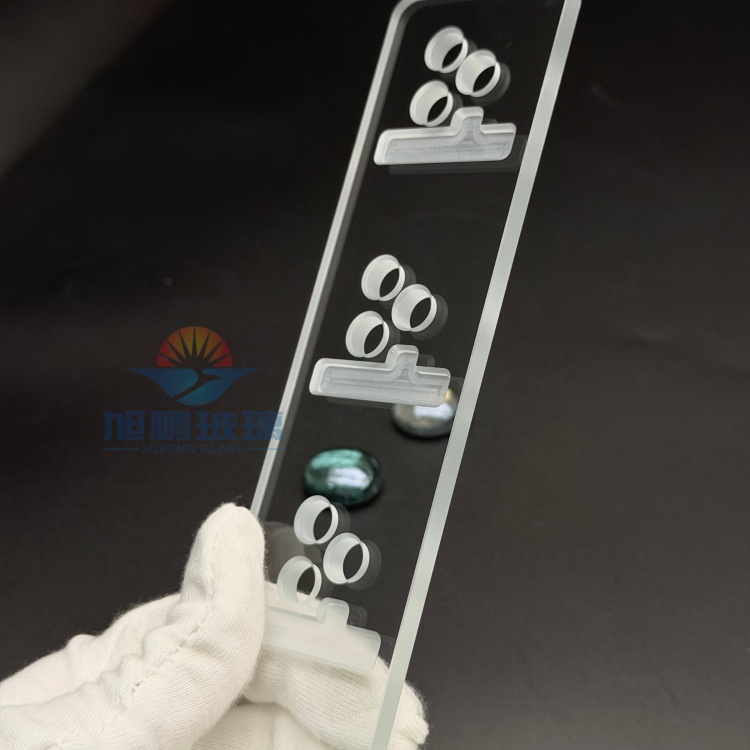
Ultra Clear High Light Transmission Tempered Glass Panel, CNC Arc Polishing, Drilling & Grooving
- Ultra-clear
- CNC drilling
- Arc polish / grooving
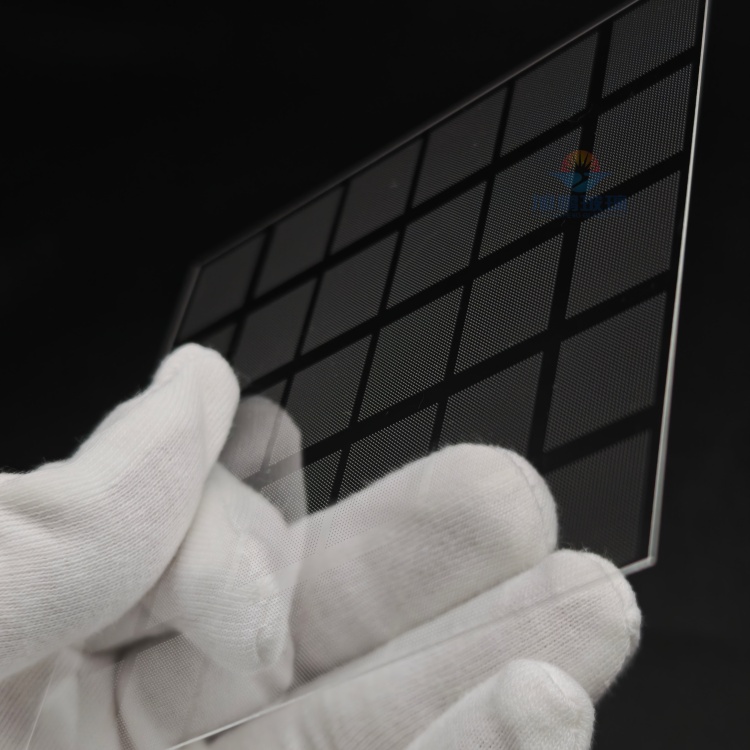
TGV Drilled Packaging Glass Substrate, Precision Laser Microvia Glass
- Laser drilled
- TGV substrate
- Microvia
Manufacturing Signals Vietnam Buyers Can Verify Before Sampling
For imported device windows, supplier capability must be visible before mass production. These are core indicators from the AUVE Glass factory profile and export program.
Why CNC-Drilled Ultra-Clear Tempered Glass Discs Are Not Commodity Glass
A device view window sits directly in the optical path and the mechanical stack. It affects display contrast, camera or sensor accuracy, sealing, impact resistance and final assembly yield. A low-cost disc that looks clear on a table can still fail after tempering, coating, cleaning or humidity exposure. That is why the specification must be engineered around the device, not selected only by thickness and diameter.
Ultra-clear low-iron glass reduces the green edge tint common in standard float glass and typically supports high visible light transmission. For view windows, however, transmission is only one variable. The correct balance includes haze, flatness, edge quality, hole position, tempering stress, coating durability and printing registration. In Vietnam’s crowded electronics and industrial device supply chain, these variables directly influence incoming inspection and line yield.
CNC drilling must be planned before tempering. Holes, slots and cut-outs create stress concentration points. If the hole-to-edge distance, corner radius or edge finish is wrong, breakage can occur during assembly, thermal cycling or field use. AUVE Glass reviews the drawing first, then agrees the process route: CNC cutting, drilling, edge grinding, chamfering, tempering, coating, printing and final inspection. For thin or microvia designs, laser processing can be evaluated against the required feature size and cleanliness.
For Vietnam, humidity and heat add another layer. Glass itself is stable, but packed stacks can suffer staining, ink adhesion problems or coating damage when moisture control is weak. Export packing therefore needs protective film, interleaving, foam protection, desiccant and batch labeling. A view-window supplier should be able to discuss both the glass and the journey.
Typical custom view-window brief
- Substrate: ultra-clear low-iron, aluminosilicate, B270, D263T, K9, quartz or sapphire
- Format: round disc, square, oval, stepped or irregular CNC outline
- Thickness: commonly 0.5–6 mm; thinner options reviewed by project
- Holes and slots: CNC or laser microvia; hole-to-edge rule checked at DFM
- Edge: ground, chamfered, polished, pencil edge or arc polish
- Optics: AR, AG, mirror, IR ink, silk-screen, anti-fingerprint
- Quality: dimensional, visual, transmission and coating checks
- Packing: film, foam, desiccant, wooden crate or reinforced carton
These are starting points, not a blanket specification. Final tolerances are confirmed against your drawing, assembly stack, cleaning process and test standard.
Vietnam Application Scenarios for CNC-Drilled Ultra-Clear View Windows
Vietnam’s device ecosystem is not concentrated in one city. Electronics assembly, industrial controls, smart-home products and outdoor equipment each place different demands on the view window. These scenarios help sourcing teams match the glass specification to the real use environment.
Consumer electronics and display modules
In Bac Ninh, Bac Giang, Hai Phong and Ho Chi Minh City, display module makers need clean, high-transmission discs that fit bezels and support automated assembly. CNC hole position, flatness and edge quality matter as much as optical clarity.
Industrial HMI and outdoor kiosks
Factories, ports and smart-city projects in Vietnam require readable interfaces under strong light. AR coating reduces reflection, AG etching diffuses glare, and tempered glass improves durability for touch panels, kiosks and control cabinets.
Smart home and access-control windows
Smart locks, video doorbells, intercoms and appliance panels need small glass windows with accurate apertures. Ultra-clear discs, IR-transparent ink and selective printing help protect sensors while preserving a premium exterior.
Medical, laboratory and analyzer windows
Diagnostic equipment, analyzers and laboratory instruments need scratch-resistant, easy-clean view windows. Aluminosilicate, K9, quartz or sapphire options can be evaluated depending on chemical exposure, cleaning and optical requirements.
EV charging and automotive displays
EV chargers, two-wheeler dashboards and in-cabin controls are expanding in Vietnam. These windows need impact resistance, UV-stable printing and reliable sealing against dust and rain. Tempered, printed and AR/AG options can be combined.
IoT sensors, cameras and outdoor enclosures
Camera windows, environmental sensors and smart-city devices demand repeatable optical performance. Precision discs with clean holes, selective coating and batch traceability reduce rework during local assembly and field replacement.
Vietnam Market Trends That Favor Localized Glass Disc Supply
Vietnam buyers are increasingly comparing total landed quality, not only unit price. The signals below reflect common inquiry priorities for device view windows and precision glass components.
FDI electronics expansion
HighNew electronics and optoelectronics programs increase demand for custom view windows, CNC holes and fast sample-to-production transitions.
Dual-source risk reduction
HighBrands and EMS teams want a qualified China manufacturer that can support Vietnam assembly while keeping cost and delivery stable.
Miniaturization and brightness
RisingSmaller devices and brighter displays push stricter limits on hole tolerance, edge chips, AR reflection and printing registration.
Humidity and UV durability
RisingOutdoor kiosks, chargers and smart-city devices require coating adhesion, ink durability and moisture-safe packaging for tropical climates.
Traceability and documents
RisingIncoming quality teams expect batch labels, inspection records, packing lists and export documents that match the purchase order.
Small-batch NPI speed
StablePilot runs and design iterations need responsive engineering review, flexible MOQ discussion and clear process feedback before tooling investment.
These bars are qualitative prioritization signals based on custom glass inquiries, not statistical market forecasts.
From Drawing to Tempered Disc: What Vietnam Buyers Should Specify
Use this matrix to align the drawing, the process route and the incoming inspection plan. It is especially useful for devices where the window is also a sensor aperture, a touch surface or a sealing component.
| Design requirement | AUVE process control | Why it matters for device view windows |
|---|---|---|
| Substrate and optical grade | Low-iron ultra-clear sheet; B270, D263T, K9, quartz, sapphire or Corning EXG reviewed on request. | Clarity, colour neutrality and transmission define display contrast and sensing accuracy. |
| Disc and outline geometry | CNC cutting for round, oval, rounded-rectangle and irregular outlines; first-article checks against CAD. | Correct fit against bezel, gasket and housing avoids assembly stress and light leakage. |
| CNC holes and slots | Drilling and slotting before tempering; hole pitch, diameter and edge distance verified; laser microvia for TGV and thin-glass projects. | Controls stress concentration and reduces breakage during screw fastening, cleaning and thermal cycling. |
| Edge and chamfer | Flat edge, pencil edge, chamfer, arc polish or ground edge with agreed chip and micro-crack limits. | Edge quality affects impact strength, operator safety and appearance of the finished device. |
| Tempering | Flat and curved thermal tempering; stress and fragmentation controls agreed for the application. | Provides safety-glass behaviour and durability for transportation, installation and daily use. |
| AR / AG coating | Single- or double-side AR, etched AG, AR plus AG and anti-fingerprint options; reflection and haze targets confirmed. | Improves readability, reduces glare and supports outdoor or high-brightness HMI use in Vietnam. |
| Silk-screen and IR ink | High-temperature ceramic ink, IR/window ink, multi-colour icons and registration inspection. | Protects sensor zones, hides borders and creates durable graphics that survive cleaning. |
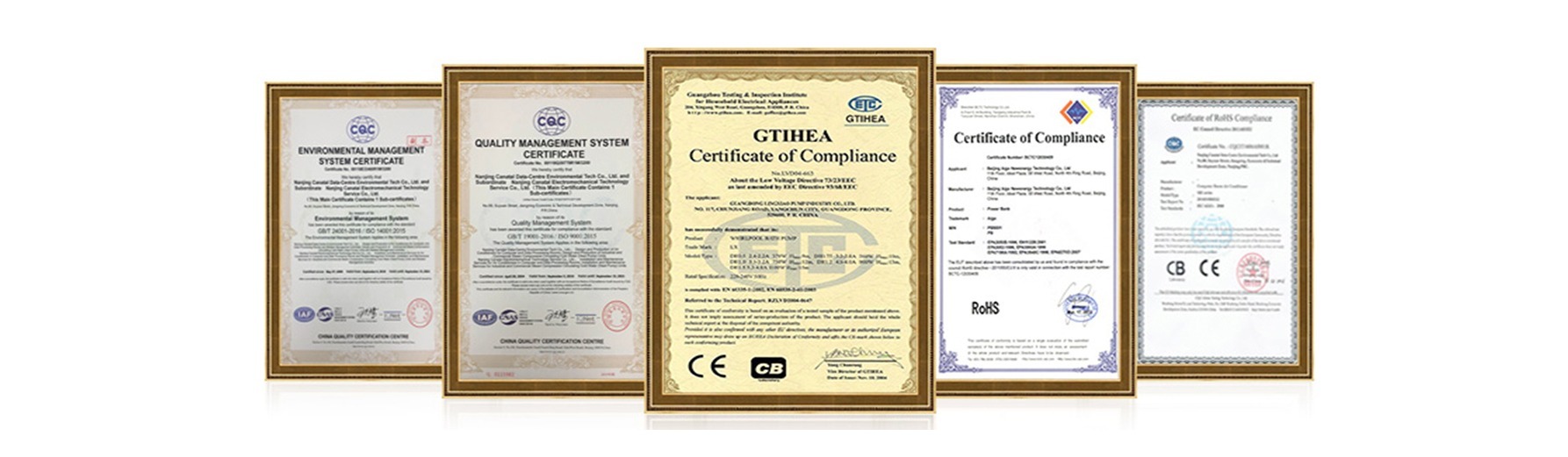
| Inspection and documentation | Dimensional, visual, transmission, haze/gloss, adhesion and abrasion checks as applicable; batch labels and inspection records. | Gives Vietnam incoming QC a clear basis for acceptance and supplier comparison. |
| Export packing | Protective film, interleaving, foam corners, desiccant, moisture barrier and wooden crate or reinforced carton. | Reduces breakage and humidity-related staining after sea freight to Hai Phong or Cat Lai. |
Typical hole and outline tolerances are commonly quoted in the ±0.1–0.2 mm range for suitable geometry, but micro-features, ultra-thin glass and coating stacks require DFM review. Final specifications are confirmed against your drawing and test standard.
CNC Drilling, Tempering and Inspection Workflow
Each step is reviewed in-house so tolerances, optics and packing are not separated across uncontrolled suppliers. This is how AUVE Glass moves from a Vietnam buyer’s drawing to an export-ready glass disc.
Drawing and DFM review
CAD, DXF or PDF drawings are checked for hole-to-edge distance, slot radius, thickness, edge type, coating and print sequence before quotation.
Substrate selection
Ultra-clear, aluminosilicate, B270, D263T, K9, quartz or sapphire is matched to transmission, strength and cleaning requirements.
CNC cutting and drilling
Discs, outlines, holes and slots are machined with controlled tool wear and first-article verification before the batch proceeds.
Edge finishing
Grinding, chamfering, arc polishing or beveling is applied to reduce chipping and improve handling safety and appearance.
Tempering, coating and printing
Parts are tempered, then AR/AG coated or silk-screen printed according to the agreed optical and graphic specification.
QC and export packing
Final dimensions, appearance, optics, printing and packing are checked. Batch labels, inspection records and export documents are prepared.
Why Choose Dongguan AUVE Glass for Vietnam Projects?
Dongguan AUVE Glass Co., Ltd. is a deep-processing glass manufacturer integrating R&D, design, production and export under one roof in Songshan Lake, Dongguan — one of China’s leading electronics and optoelectronics clusters. Established in 2018, the company works with a 51–100 person team and a 1,001–2,000 m² production facility focused on custom glass for OEMs, brand owners and distributors.
Production covers flat and curved tempered glass, ultra-clear and ultra-white glass, laminated and painted glass, LCD and touch screen glass, smart control panel glass, LED lamp glass, instrument glass, AR high-transmittance glass and AG anti-glare glass. The company also processes optical materials including K9, quartz, sapphire, borosilicate and Corning EXG alkali-free glass. In-house capabilities include cutting, CNC edging, drilling, grooving, tempering, silk-screen printing, AR/AG coating and inspection.
Guided by the philosophy of “focusing on high-end glass, pioneering and innovating,” AUVE invests in engineering review and process control before production. For Vietnam buyers, this means a supplier that can discuss drawings, tolerances, packing and export terms together — not only quote a glass dimension. The average technical response time is within 7 hours, and products are exported to markets including the United States, Canada, Russia, South Korea, Japan and Australia.
- Factory-direct deep-processing manufacturer
- Drawing-based engineering review
- CNC, tempering, printing and coating processes
- Export packing for fragile glass parts
- Supplier assessment, credit index and transaction pages available for verification
- Incoterms: FOB, CFR, CIF, EXW, DDP, DDU, DAF and express



Drawing-first engineering
Manufacturability, hole rules, edge profile, coating and packing are reviewed before mass production — reducing late-stage surprises.
Full-process control
Cutting, CNC machining, tempering, printing, coating and inspection are coordinated to protect tolerances and optical quality.
Export-ready supply
Fragile-goods packing, Incoterm flexibility, documented quality and responsive communication support Vietnam import workflows.
Vietnam Buyer FAQ: CNC Drilling, MOQ, Shipping and Humidity
These are the practical questions procurement, engineering and quality teams ask when sourcing custom device view windows from China for Vietnam assembly.
Can you supply CNC-drilled ultra-clear tempered glass discs to Vietnam?
Yes. Send a CAD, DXF or PDF drawing with disc diameter, thickness, hole and slot positions, edge profile, coating, printing and target quantity. AUVE Glass reviews the drawing for manufacturability and confirms the process route, including CNC cutting, drilling, edge grinding, tempering, AR/AG coating or silk-screen printing as required.
What tolerance can you hold on drilled holes and disc outlines?
For suitable geometry, holes and outlines are commonly quoted in the ±0.1–0.2 mm range. The final tolerance depends on glass thickness, hole diameter, distance to the edge, whether the part is tempered, and the inspection method. Ultra-thin glass, microvia features and complex slots require an engineering review before a tolerance is confirmed.
What is the MOQ for a Vietnam pilot run?
MOQ depends on material and process. Many coated and optical glass parts can start from 10 to 50 pieces, while standard ultra-clear tempered parts often start from 100 to 500 pieces. Sample and pilot quantities can be discussed for new projects, especially when the drawing requires new tooling, printing screens or coating setup.
How do you ship glass discs to Vietnam and which Incoterms do you support?
We support FOB, CFR, CIF, EXW, DDP, DDU, DAF and express delivery. Sea freight can route to Vietnam ports such as Hai Phong or Cat Lai, while air and express are used for samples and urgent pilot quantities. The best method depends on part size, packing volume, required date and the buyer’s customs setup.
What documents are normally needed for Vietnam customs clearance?
Typical export documents include a commercial invoice, packing list, bill of lading or airway bill, and certificate of origin where applicable. HS code and product description should be aligned before shipment. Our team can coordinate the export documents with your freight forwarder or import broker.
How do you protect glass discs from humidity and breakage during shipping?
Export packing can include protective film, interleaving paper or film, foam corner protection, desiccant, moisture-barrier material and fumigation-free wooden crates or reinforced cartons. Batch labels and packing lists are included so Vietnam incoming QC can match the shipment to the purchase order.
Can AR coating, AG etching and silk-screen printing be combined on one view window?
Yes, many projects combine ultra-clear substrate, tempering, AR or AG treatment and high-temperature ceramic printing. The sequence must be planned carefully because coating and printing affect reflection, haze, colour, adhesion and sensor transmission. The final stack is confirmed against your optical and durability requirements.
What is the sample and production lead time?
Lead time depends on material availability, CNC programming, hole complexity, coating, printing and quantity. A drawing review can usually begin immediately, and technical response is typically within 7 hours. After the specification is confirmed, the sample and production schedule are agreed in writing before the order is released.
How do I start a quotation for a Vietnam device view window project?
Send the drawing, target quantity, preferred glass type, thickness, surface finish, coating, printing, packing requirement and destination in Vietnam. If the drawing is not final, share the application and assembly constraints so our engineers can recommend a practical specification before quotation.
Have a Drawing? Get an Engineering Review Before You Order.
Share your disc diameter, thickness, CNC hole layout, edge profile, coating, printing and destination in Vietnam. Our team will confirm material, process route, packing and lead time — typically within 7 hours.