China Wholesale Glass Polishing Supplier & Wholesalers for Canada
Custom tempered, AR/AG coated, CNC-polished and ultra-thin glass from Dongguan AUVE Glass — engineered to your drawing, export-packed for Canadian OEMs, distributors and project buyers.
Eight Engineered Glass Products for Canadian Wholesale Programmes
These eight production-relevant products cover semiconductor wafers, flexible glass, tempered decorative glass, optical display glass and AR-coated windows. Product URLs are preserved so your engineering team can review specifications before requesting a Canadian quotation.

Corning EXG Glass Wafer Double-Sided Polished for Custom Semiconductor Glass Wafers & Solar Panels
Double-side polished alkali-free glass wafer option for semiconductor glass substrates, sensor packaging development and solar panel research. Confirm wafer size, thickness, flatness, edge treatment and cleaning standard in the RFQ.
Review product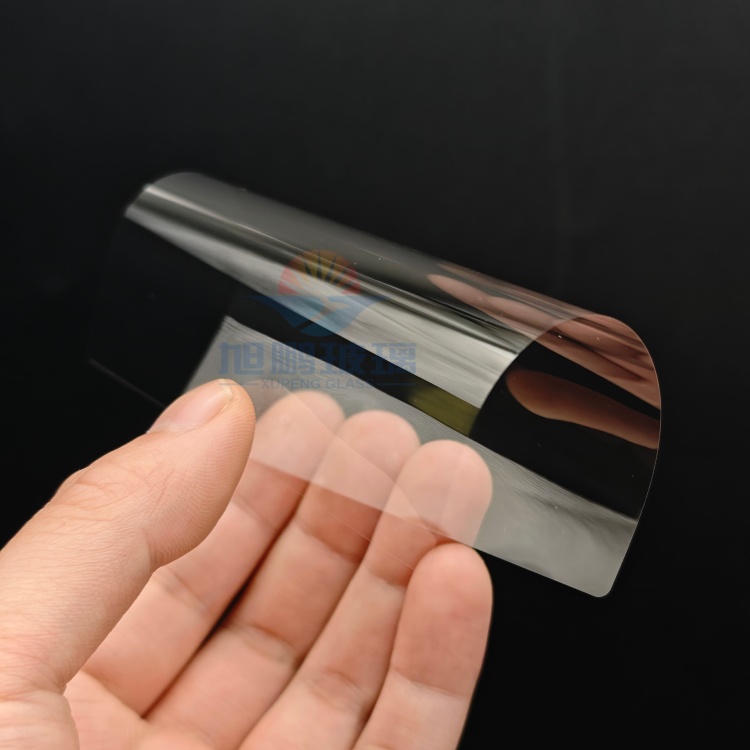
0.03 mm Ultra-thin Flexible Bendable Glass
Ultra-thin bendable glass for flexible display concepts, wearable electronics and thin-film device prototyping. Canadian R&D teams should specify bend radius, handling method, edge quality and protective film before sampling.
Review product
Custom Ultra-White Clear Tempered Glass Socket Decorative Cover for Stairways
Ultra-white tempered glass cover for stairway socket and switch decorative applications. Suitable for Canadian interior designers, lighting distributors and electrical accessory brands needing custom cut-outs, printing and edge polishing.
Review product
Schott BF33 TGV Microvia Glass Wafer, Packaging Substrate for Sensors & Chips
TGV glass wafer substrate for sensor, MEMS and chip packaging evaluation. For Canadian advanced-packaging teams, define via geometry, wafer dimensions, surface quality, dicing method and inspection criteria before quoting.
Review product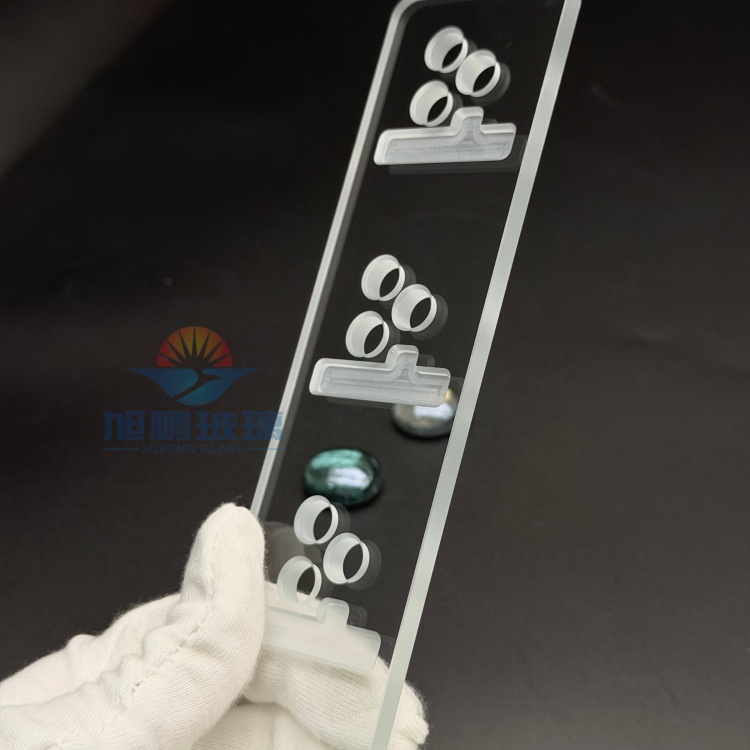
Ultra Clear High Light Transmission Tempered Glass Panel, CNC Arc Polishing, Drilling & Grooving
Low-iron tempered glass with CNC shaping, arc polishing, drilling and grooving for control panels, appliance covers and display windows. A strong fit when Canadian buyers need polished edges, precise cut-outs and repeatable batch production.
Review product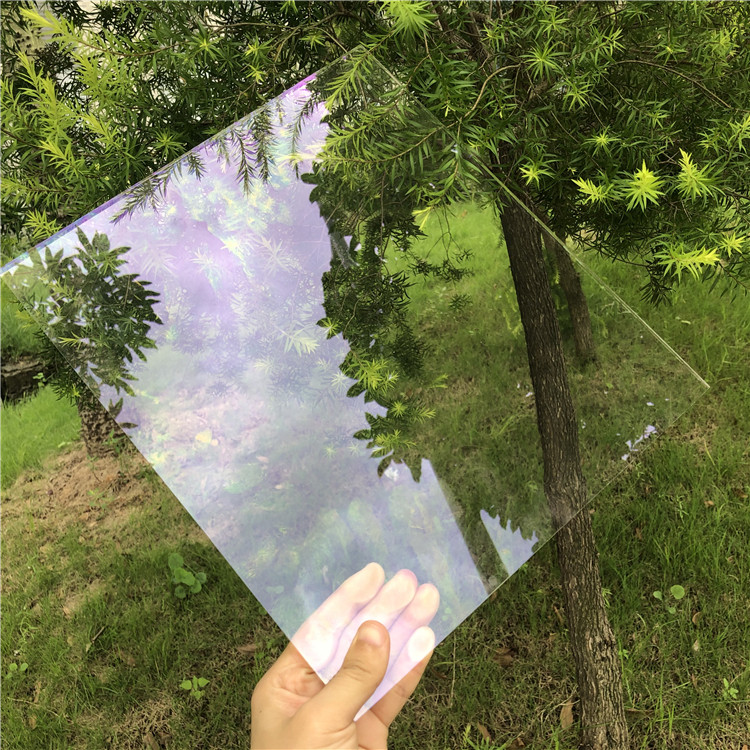
High-transmittance Anti-Reflection (AR) Coated Optical Glass
AR-coated optical glass for touch modules, display windows, instrument viewports and high-contrast optical assemblies. Specify single-side or double-side AR, reflectance target, transmission range, coating durability and visible cosmetic zone.
Review product
Ultra-white Tempered Glass, AR Anti-Reflection Coatable, High Light Transmittance & Anti-reflective
Ultra-white tempered glass substrate with high light transmission for AR coating, display enhancement and premium cover-glass projects. Good for buyers seeking a bright neutral substrate before anti-reflective finishing.
Review product
Ultra-thin Flexible UTG Glass, Bendable and Foldable, Suitable for Commercial Aerospace and New Energy Industries
UTG glass for foldable, bendable and lightweight design concepts in commercial aerospace and new-energy equipment. Canadian innovation teams should define environmental exposure, handling fixtures, bend requirements and packaging protection.
Review productChina Wholesale Glass Polishing Supply for Canada: Compare More Than Piece Price
Canadian buyers usually start by comparing a unit price, but engineered glass is a fit-and-risk purchase. Edge quality, coating uniformity, packing survival, customs terms and first-article approval can change the real landed cost far more than a few cents per part.
Dongguan AUVE Glass Co., Ltd. is a deep-processing glass manufacturer integrating R&D, design, production and export in Songshan Lake, Dongguan — an electronics and optoelectronics cluster in Guangdong, China. For Canadian OEMs, distributors and project buyers, the value is not simply “wholesale glass”; it is the ability to translate a drawing into a stable process route: cutting, CNC shaping, edging, drilling, tempering, silk-screen printing, AR/AG coating, inspection and export packing.
A Canadian buyer may need 20 semiconductor wafers for a Toronto sensor programme, 500 ultra-white socket covers for a Quebec interior project, or repeat batches of AR-coated display glass for a British Columbia equipment brand. The common thread is engineering communication before the quotation. AUVE's average response target is within seven hours, and the company profile states exports to the United States, Canada, Russia, South Korea, Japan and Australia.
This guide is written for procurement and engineering teams who need to compare China wholesale glass polishing suppliers without treating all “custom glass” offers as equal. Brand names such as Corning EXG and SCHOTT BF33 appear as product-grade identifiers; final material equivalence, availability and project compliance should always be confirmed against the buyer's drawing and approved source specification.
What AUVE recommends Canadian RFQs compare
Illustrative evaluation weighting for buyer education — not a market statistic. Adjust the weights for safety-critical, aerospace, semiconductor or decorative projects.
Engineering Translation
Send CAD, DXF or PDF with thickness, tolerance, edge profile, holes, printing, coating and visible cosmetic zones. Our engineers review manufacturability before production, reducing the risk of an approved sample that cannot repeat at volume.
Polishing Consistency
For polished glass, the critical controls are usually edge chips, scratch visibility, flatness or bow, hole quality, coating haze and batch traceability. AUVE's process chain combines CNC edging, drilling, tempering, printing and AR/AG coating under a documented quality-management approach.
Canada-Ready Logistics
AUVE supports FOB, CFR, CIF, EXW, DDP, DDU, DAF and express delivery, with export packing designed for fragile glass. For Canadian buyers, request a delivered-cost comparison to the destination city, not only an ex-works unit price.
Glass Polishing Applications Across Canadian Regional Industries
Canada is not one market. A buyer in Ontario may need display glass for connected equipment; a buyer in Quebec may require aerospace-grade handling discipline; a buyer in British Columbia may focus on premium interior finishes; energy and agriculture buyers in the Prairies often care about cold-climate reliability. The same supplier should adapt documentation, packing and process controls to the final use.
Ontario & Greater Toronto
EV charging, industrial HMI, medical equipment, smart control panels and display modules often need AR-coated glass, AG anti-glare glass and ultra-clear tempered covers. Buyers should define outdoor readability, fingerprint visibility, impact expectations and replacement-part logistics.
- AR optical display windows
- CNC-polished tempered panels
- Silk-screen printed control glass
Quebec & Montreal
Aerospace, transport, research and sensor companies frequently require ultra-thin UTG, optical wafers and high-precision substrates. A specification package should include handling instructions, first-article inspection, packaging validation and change-control expectations.
- UTG for aerospace concepts
- Corning EXG wafers
- Schott BF33 TGV substrates
British Columbia
Interior design, architectural lighting, retail display and premium equipment brands can use ultra-white tempered glass, decorative socket covers and light-transmission panels. Outdoor installations may need anti-glare or AR treatment plus salt-air and condensation-conscious packing.
- Ultra-white tempered glass
- Decorative socket covers
- High-clarity display panels
Prairies & Atlantic Canada
Energy, agriculture, marine and environmental monitoring equipment can face wide temperature swings, UV exposure and condensation. Glass windows and sensor covers should be specified with thermal shock, coating durability and packing protection in mind — especially where replacement lead time is costly.
- Optical glass windows
- AR/AG coated covers
- Custom polished components
Localized Trends Reshaping Glass Polishing Demand in Canada
Canadian purchasing behaviour is moving toward fewer, better-documented suppliers that can support both prototype learning and repeat production. Price remains important, but risk, transparency and application fit increasingly decide the award.
Dual Sourcing & De-Risking
Canadian buyers are increasingly keeping a domestic distributor for urgent replacement parts while adding a factory-direct China polishing supplier for custom sizes, coatings and cost control. This makes verifiable supplier data essential: onsite assessment, credit index, transaction level, trade capacity, trade history and buyer reviews are now part of the sourcing file.
AUVE's public supplier profile includes onsite-checked information and review pages that Canadian procurement teams can inspect before sampling. That transparency is more useful than a generic “ISO-style” claim without a project-specific scope.
AR / AG Readability Outdoors
EV chargers, outdoor kiosks, heat-pump controls, industrial displays and public-facing equipment must remain readable under strong daylight and low-angle glare. Buyers now request AR-coated glass, AG anti-glare glass or combined treatments, plus clearer reflectance, transmission and haze targets in the RFQ.
For Canada, snow reflection and long summer daylight can make uncontrolled glare more visible in field use. A sample evaluation under representative lighting is often more valuable than a catalogue photo.
Cold-Climate Durability & Traceability
From Alberta energy sites to Atlantic marine environments, buyers ask about coating durability, condensation, packing protection and thermal shock. At the same time, procurement teams want batch labels, material declarations where available and change-control procedures to support audits and customer approvals.
Sustainable packing is also rising: fumigation-free crates or reinforced cartons, recyclable interleaving materials and reduced packaging waste can be reviewed alongside protection performance.
Material & Process Selection for Canadian Glass Buyers
Use this reference to shortlist a substrate before contacting a China wholesale glass polishing supplier. Values are typical educational data and must be confirmed against the final drawing, application environment and agreed inspection standard.
| Glass / Material | Typical Property | Best-Fit Canadian Applications | Available Processing Focus |
|---|---|---|---|
| Ultra-Clear Low-Iron Tempered Glass | Approx. 91% visible light transmission; neutral edge appearance; tempered strength about 4–5× annealed glass | Smart control panels, appliance covers, LED light fixtures, light boxes, premium display windows | CNC cutting, arc polishing, drilling, grooving, silk-screen, AR/AG coating |
| AR Coated Optical Glass | Surface reflection can be reduced to roughly 0.5–1% per side, improving contrast and reducing ghost reflections | Touch modules, all-in-one PCs, instrument viewports, museum glazing, medical display covers | Single/double-side AR, tempering, printing, precise edge finishing |
| AG Anti-Glare Glass | Micro-textured surface diffuses reflected light; gloss and haze can be selected | Outdoor LCDs, industrial HMIs, kiosks, EV charging interfaces, bright retail environments | Etched AG, AG+AR, tempered cover glass, printed borders |
| Silk-Screen Printed Tempered Glass | Ceramic ink fired into glass for durable graphics, windows and icons | Instrument panels, home appliances, switch and socket covers, control overlays | Multi-colour printing, IR/window ink, holes, CNC edge polishing |
| K9 Optical Glass | Borosilicate crown glass with refractive index nd ≈ 1.5168 and low inclusions | Lenses, prisms, optical instrument windows and laboratory equipment | Precision polishing, coating, CNC edging and dimensional inspection |
| Fused Quartz | High UV transmission and excellent thermal shock resistance | UV curing, disinfection equipment, high-temperature viewports and analytical instruments | Thick-gauge cutting, polishing, drilling and edge treatment |
| Sapphire Glass | Mohs hardness 9 and melting point around 2,040°C | Sensor covers, scratch-critical windows and high-temperature observation ports | Cutting, polishing, chamfering and dimensional control |
| Corning EXG Alkali-Free Glass | Alkali-free aluminoborosilicate with low CTE around 3.2 ppm/°C | Semiconductor wafers, MEMS, display substrates and advanced packaging R&D | Double-side polishing, wafer dicing, cleaning and packing |
| Ultra-Thin Flexible Glass | Thickness can reach 0.03 mm with bendability for flexible designs | Foldable displays, flexible electronics, aerospace concepts and new-energy devices | Precision cutting, edge strengthening, protective film and safe packing |
| Schott BF33 TGV Wafer | Glass substrate with microvia capability for sensor and chip packaging | Sensor packaging, chip substrates, MEMS and advanced electronics development | TGV evaluation, polishing, dicing, inspection and clean packing |
Important: Canadian safety glazing, electrical, medical, marine or transport applications may require project-specific standards, testing and certification of the final assembly. AUVE can process glass to drawings and provide available material documentation, but the buyer must confirm applicable compliance with its engineer, importer or certification body.
How AUVE Controls Polished Glass from Drawing to Export Carton
Every custom glass project is a chain of decisions. A polished edge that looks acceptable on one sample may fail at volume if the tool path, wheel wear, handling or packing is not controlled. Our process is designed to expose those risks before shipment.
01 · Drawing & DFM Review
We review glass type, thickness, dimensions, tolerance, edge profile, hole positions, printing, coating and handling risks. For Canadian projects, we also confirm destination city, Incoterm and whether DDP comparison is required.
02 · Cutting & CNC Shaping
Automatic and CNC cutting shape float, low-iron and optical glass into blanks. Complex outlines, recesses, holes and grooves are programmed before polishing and tempering so the process route matches the finished part.
03 · Edge, Hole & Surface Polishing
Edge grinding, beveling, arc polishing and hole finishing reduce chipping risk and improve appearance. Critical cosmetic surfaces can be protected with film during handling, especially for AR-coated, ultra-white and optical-grade parts.
04 · Tempering & Functional Finishing
Flat and curved thermal tempering, high-temperature silk-screen printing, AR/AG coating and other finishing steps are sequenced according to the drawing. Coating targets such as reflectance, transmission or haze should be stated before sampling.
05 · Inspection & First Article
Typical controls include dimensions, edge condition, visual cosmetics, coating appearance, print alignment and packing checks. For new Canadian programmes, a first-article report and approved golden sample can reduce disputes at receiving inspection.
06 · Export Packing & Traceability
Protective film, interleaving paper, foam corners and fumigation-free wooden crates or reinforced cartons can be specified for fragile glass. Batch labels and packing lists help Canadian buyers trace parts through receiving, assembly and after-sales inventory.
Why Canadian Buyers Shortlist Dongguan AUVE Glass
AUVE is not presented as an anonymous trading page. The company information is specific enough for a sourcing team to verify: founding year, location, team size, export markets, processing scope and supplier-profile links.
Factory-Direct Since 2018
Dongguan AUVE Glass Co., Ltd. integrates R&D, design, production and export. The company profile lists 51–100 employees and a 1,001–2,000 m² facility, supporting both custom development and repeat wholesale production.
Canada Export Experience
The company states exports to Canada as well as the United States, Russia, South Korea, Japan and Australia. That matters for documentation, packing expectations, Incoterm discussion and English-language technical communication.
Broad Deep-Processing Range
Tempered glass, ultra-clear glass, AR anti-reflective glass, AG anti-glare glass, silk-screen printed glass, electronic display glass, optical glass, K9, quartz, sapphire, borosilicate, Corning EXG and ultra-thin flexible glass can be routed through one supplier conversation.
Verifiable Supplier Profile
Buyers can review onsite-checked supplier status, credit index, transaction level, trade capacity, trade history, transaction history and ratings & reviews from the public company profile. These checks support E-E-A-T expectations for Canadian procurement.
Engineering Response Target
The average response target is within seven hours. For faster review, send one email containing drawing, quantity, annual demand, destination city, application, coating target and any required inspection standard. This single package lets us reply with a manufacturable route.
Export Packing for Fragile Glass
Glass does not fail only at the polishing stage; it can fail in transit. Export packing can include protective film, interleaving, foam protection, reinforced cartons or wooden crates, plus labels that help Canadian receiving teams inspect without unpacking every piece.
Frequently Asked Questions from Canadian Glass Buyers
These are the practical questions procurement, engineering and import teams ask when evaluating a China wholesale glass polishing supplier for Canadian projects.
Can Dongguan AUVE Glass ship custom polished glass to Canada?
Yes. The company profile states exports to Canada, the United States, Russia, South Korea, Japan, Australia and other markets. For a Canadian quotation, provide the destination city or province, preferred Incoterm, annual volume, drawing and whether DDP landed-cost comparison is required.
What is the minimum order quantity for a Canadian wholesale order?
MOQ depends on material and process. The AUVE FAQ states that many coated and optical glass parts start from 10 to 50 pieces, while standard ultra-clear tempered parts typically start from 100 to 500 pieces. Sample and pilot quantities can be discussed for new Canadian projects; final MOQ must be confirmed against the drawing and production route.
How should Canadian buyers compare landed cost?
Ask for the same drawing, the same coating specification and the same Incoterm from every supplier. Compare piece price, tooling, sample fee, export packing, freight, insurance, duties and taxes, brokerage, and inventory carrying cost. A DDP indication for the destination city is often more useful than a low EXW or FOB price without packing detail.
Do you support samples, first articles and golden samples?
Yes, sample and pilot quantities can be discussed. For new Canadian production programmes, an approved golden sample and a first-article inspection record help align appearance, dimensions, edge quality, printing, coating and packing before mass production. Specify the visible cosmetic zone and inspection lighting conditions in advance.
Which Incoterms and shipping methods do you support?
AUVE supports FOB, CFR, CIF, EXW, DDP, DDU, DAF and express delivery. For fragile glass, sea freight with reinforced packing is common for volume orders, while air or express may suit urgent samples and high-value optical parts. The best method depends on size, weight, packing protection, destination and project schedule.
How do you pack glass for Canadian winter and long-distance transit?
Packing should be agreed according to part size and fragility. Protective film, interleaving paper or film, foam corner protection, moisture-conscious packing and fumigation-free wooden crates or reinforced cartons can be reviewed. Canadian winter transit and multi-handling can increase condensation and impact risk, so buyers should request a packing photo and test-unpacking before the first bulk shipment.
Can you provide documentation for Canadian compliance reviews?
Available material and process documentation can be discussed item by item. However, compliance depends on the final application and the assembled product. Canadian safety glazing, electrical, medical, transport or marine requirements may require project-specific testing and certification by the buyer or its certification body. AUVE can process glass to the approved drawing and provide available material documentation for your review.
How fast can we receive a technical response and quotation?
The average response target is within seven hours. To avoid delay, send the glass type, thickness, size, tolerance, edge finishing, holes, printing, coating requirements, anti-reflective or anti-glare target, quantity, destination, Incoterm and application environment. If you have a drawing, attach CAD, DXF or PDF rather than only an image. Email info@auveglass.com or use the quotation button on this page.
RFQ checklist: drawing file, glass material, thickness, dimensions, tolerance, edge profile, holes/grooves, coating target, printing, cosmetic criteria, annual volume, sample quantity, destination city, Incoterm and required documentation. Sending these together gives your Canadian project a faster, more accurate engineering review.
Get a QuoteHave a Canadian Glass Project? Start with a Drawing Review.
Share your drawing, target volume and destination. We will review material, polishing route, coating, packing and Incoterm — usually within seven hours — so your Canada quote is built on manufacturable specifications, not guesses.