Coated Glass Supplier & Exporter in the Hat Yai Market
AR, AG, tempered, silk-screen and optical coated glass for Hat Yai OEMs, architects, distributors and project buyers — engineered to your drawing and supported by an average reply time within 7 hours.
8 Custom Coated Glass Products for Hat Yai Sourcing Teams
These are real production items from our custom glass line, covering coated display glass, tempered panels, precision drilled discs, metal-coated components and optical wafers. Each product can be adapted in size, thickness, edge profile, holes, printing and coating to match your assembly drawing.
 Filter Glass
Welding Black Filter Glass, Beveled Edge Grinding, Long Irregular-shaped Welding Filter Glass
Shade-critical black filter glass for welding masks, goggles and OEM eye-protection assemblies. Beveled edge grinding and irregular outlines help match original equipment, while batch traceability supports industrial safety distributors in Hat Yai and across Southern Thailand.
- Beveled edge
- Irregular shape
- OEM drawing
 Tempered
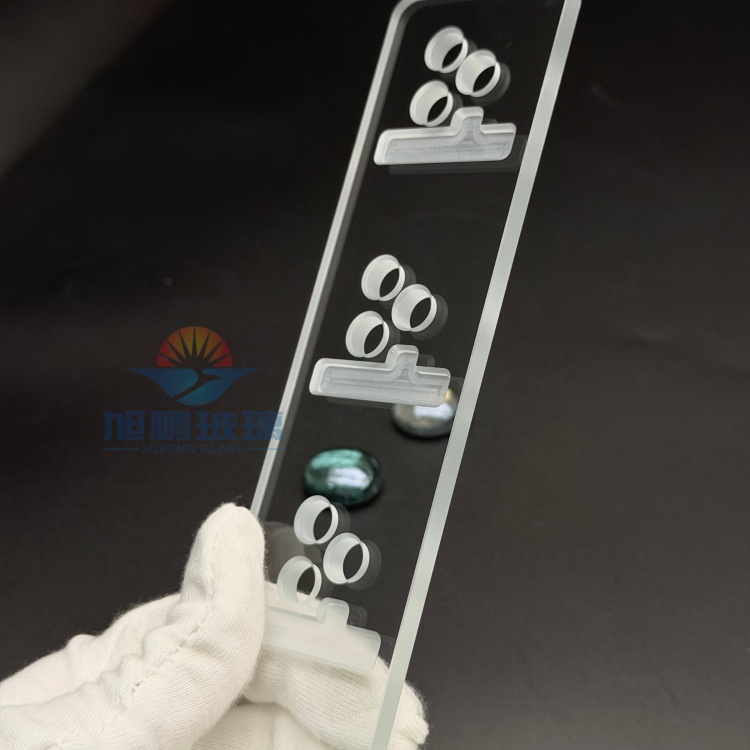
Ultra Clear High Light Transmission Tempered Glass Panel, CNC Arc Polishing, Drilling & Grooving
A high-clarity tempered panel for control covers, display windows and architectural fittings. CNC arc polishing, drilling and grooving support precise assembly in humid coastal conditions, where edge quality and dimensional consistency matter as much as light transmission.
- CNC arc polish
- Drilling
- Grooving
 AR Coating
Ultra-white Tempered Glass, AR Anti-Reflection Coatable, High Light Transmittance & Anti-reflective
Low-iron ultra-white tempered glass with an AR anti-reflection option for high-contrast screens, kiosks, shop windows and optical windows. For bright Hat Yai retail and outdoor environments, this specification helps reduce surface reflections and preserve visual clarity.
- Ultra-white
- AR coatable
- Tempered
 EXG Wafer
Corning EXG Glass Wafer Double-Sided Polished for Custom Semiconductor Glass Wafers & Solar Panels
Double-sided polished Corning EXG glass wafers for semiconductor, solar and precision optical development. The alkali-free substrate is suited to dimensional stability, flatness and clean processing requirements when your project moves from prototype to repeat production.
- Double-side polish
- Alkali-free
- Custom wafer
 CNC Drilled
Precision CNC Cut & Holed, High-temperature Silk Screen Tempered Glass, Drilled Ultra-clear Small Round Glass Discs
Small round glass discs with CNC drilling and high-temperature silk-screen graphics for sensors, instrument windows, appliance panels and device viewports. This format is useful for Hat Yai electronics assemblers that need visual alignment, durable legends and repeatable hole positions.
- CNC holes
- High-temp ink
- Small discs
 Metal Coated
Round Aluminosilicate Glass with Chamfered Ground Edges and Metal Coating
A round aluminosilicate glass component with chamfered ground edges and metal coating for sensor, electrode, insulation and high-temperature window applications. Chamfering helps reduce edge chipping risk during packing, handling and assembly in tropical service environments.
- Metal coating
- Chamfered edge
- Aluminosilicate
 Sapphire
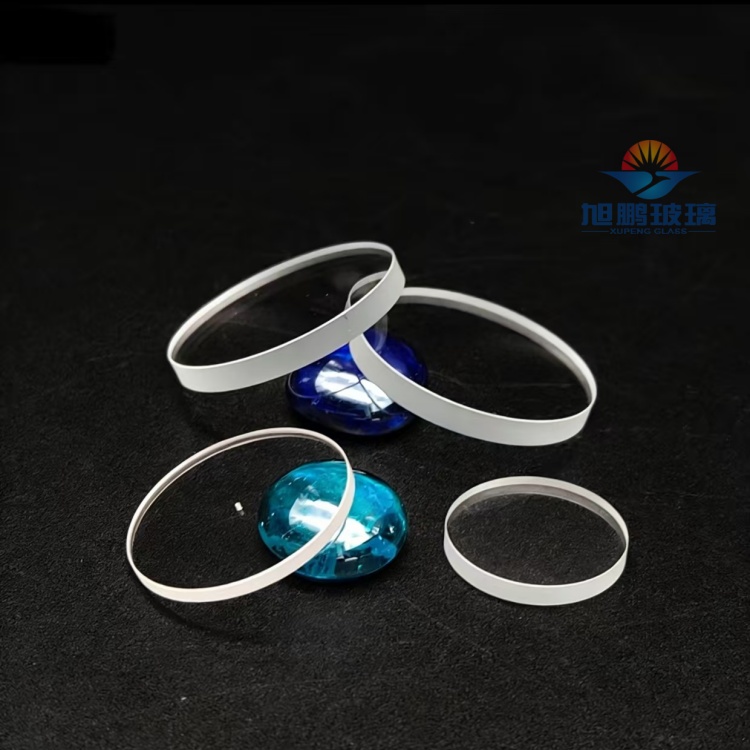
 Glass Step Window Wafers, High Temperature Resistant & High Light Transmittance Optical Sapphire Lenses
Sapphire step window wafers and optical lenses for high-temperature, scratch-resistant and high-transmittance windows. They are relevant to sensor makers, equipment integrators and R&D teams that need a hard optical material instead of standard display glass.
- High temp
- Scratch resistant
- Optical window
 Custom Wafer
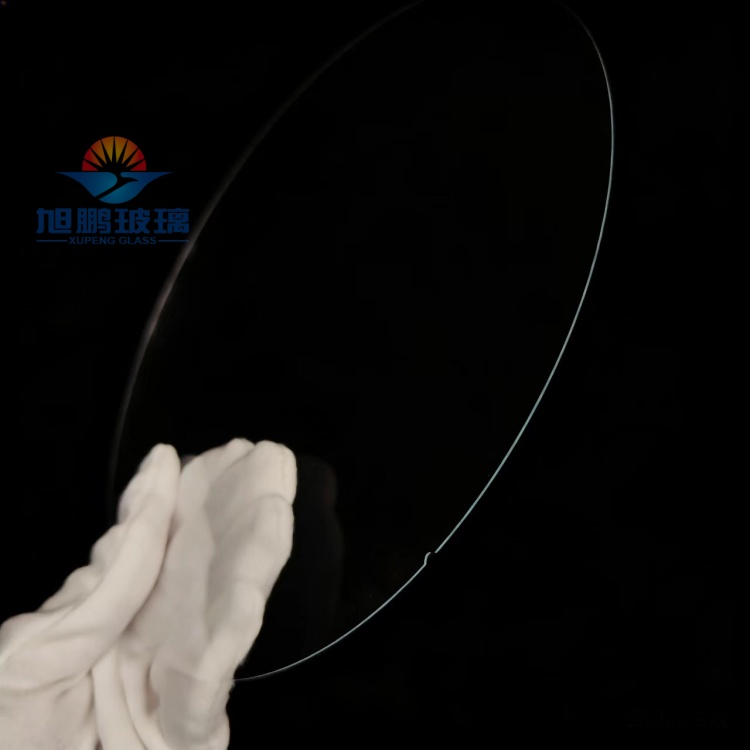
Corning EXG Glass Wafer, Double-Sided Polished Custom Fabrication for Semiconductor Glass Wafers
Custom Corning EXG double-sided polished wafers for semiconductor glass wafer and solar panel applications. Drawing-based fabrication supports diameter, thickness, flatness, edge and surface requirements, with engineering review before production.
- Custom size
- Polished surface
- Drawing review
Why Coated Glass Decisions in Hat Yai Are Different
Hat Yai is more than a local retail centre. It is a commercial gateway for Songkhla Province and the wider Southern Thailand border-trade region. For coated glass buyers, climate, logistics and end-use diversity create specification risks that a generic catalogue page cannot solve.
A coated glass part can look perfect in a showroom and still underperform after months of exposure to intense sunlight, high humidity, seasonal rain and salt-laden air. That is why this guide focuses on application fit, coating durability, edge quality and export packing — not only unit price. The information below is written for engineering, procurement and project teams that need a defensible supplier decision.
Heat, rain and humidity
Hat Yai’s tropical monsoon climate means strong solar load, frequent rain and high humidity. Coating adhesion, edge condition and packing protection should be reviewed before a container is released. Buyers should ask for coating type, target transmission or reflection, test method and storage guidance, not only a price per square metre.
Cross-border commercial gateway
Hat Yai connects Southern Thailand with Malaysia through Sadao and Padang Besar. Orders may serve Thai retail demand and Malaysian distribution at the same time, so repeatability, batch labelling and packing lists matter. A supplier that documents dimensions, coating runs and quantities reduces re-inspection at the border.
Industrial and hospitality base
Rubber, seafood, food processing, tourism, healthcare, automotive and electronics create different glass requirements. The right specification may be AG glass for sunlit signage, ultra-clear tempered panels for control equipment, or sapphire and Corning EXG wafers for precision devices.
Which Coated Glass Fits Which Hat Yai Application?
Use this matrix to shortlist a material and process route before you request a quotation. Final specifications should always be confirmed against your drawing, installation method and agreed inspection standard.
| Hat Yai application | Recommended glass | Why it fits | Procurement note |
|---|---|---|---|
| Sunlit retail, kiosk and signage | AG anti-glare or AR ultra-white tempered glass | AG diffuses veiling glare; AR raises contrast and transmission for high-end display windows. | Confirm gloss, haze, coating side and target transmission. |
| Smart control panels and appliance covers | Ultra-clear tempered glass with CNC drilling and silk screen | Combines optical clarity, tempered strength and durable printed legends in one part. | Provide hole positions, ink colour, window zones and tolerance. |
| Hospitality, café and decorative interiors | Ultra-white tempered, metal-coated or mirror-coated glass | Supports premium visual finishes while allowing custom shaping and coating. | Approve sample colour and edge appearance under local lighting. |
| Medical, sensor and instrument windows | Sapphire, AR glass, K9 or Corning EXG wafers | Hardness, temperature resistance, optical clarity and flatness can be matched to the device. | Share wavelength, temperature and cleaning requirements. |
| Semiconductor, solar and optical R&D | Corning EXG double-sided polished wafers | Alkali-free substrate with dimensional stability for repeatable wafer processing. | Specify diameter, thickness, flatness, edge and surface quality. |
| Welding and industrial eye protection | Black welding filter glass with beveled edge | Shade performance and edge finish are matched to protective assemblies and OEM replacements. | Confirm shade, visible size and irregular outline before tooling. |
| Rubber, seafood and food-processing HMI | AG tempered glass with silk-screen borders | Improves readability under strong lighting while providing a cleanable front surface. | Review cleaning agents and printing durability with our engineers. |
| Cross-border retail distribution | Modular coated panels and small precision discs | Supports mixed product programmes, repeat orders and consistent batch labelling. | Discuss packaging, labels and mixed-model inspection before order release. |
Selection data is indicative and intended for early engineering discussion. Production specifications are finalised against your drawing and the mutually agreed test method.
Indicative Application Fit for Hat Yai Conditions
Qualitative fit score based on typical tropical retail, industrial and optical requirements. This is not a performance guarantee.
Where Coated Glass Creates Value in Hat Yai
Local buyers rarely purchase glass in isolation. They buy a component that must survive installation, cleaning, transport and daily use. These six scenarios show where material choice and process control affect the total cost of ownership.
Retail, malls and kiosks
Hat Yai’s shopping centres, hotel lobbies and high-street stores use glass for signage, display windows, self-service kiosks and decorative partitions. AR glass improves contrast for high-end screens, while AG glass reduces glare where sunlight or ceiling lights reflect across the display. For project buyers, the critical questions are viewing angle, ambient light, cleaning method and whether the coating is on the front or rear surface.
Hotels, cafés and tourism
Tourism and hospitality projects use ultra-white tempered glass, coated decorative panels and mirror glass for signage, tabletops, lift interiors and feature walls. In a humid climate, edge finishing and protective packing are essential because a small chip can become a visible defect after installation. We recommend approving the edge appearance, coating colour and cleaning guidance before bulk production.
Healthcare and diagnostic equipment
Clinics, laboratories and medical-device suppliers need windows and display covers that can be cleaned repeatedly and maintain optical clarity. Sapphire, AR glass and K9 optical components are useful where scratch resistance, transmission or temperature stability is important. Send your wavelength, cleaning agent and sterilization exposure details so our engineers can recommend a realistic material route.
Food, seafood and rubber processing
Control rooms, production lines and packaging equipment often use glass windows and HMI covers. In food, seafood and rubber plants, glare from overhead lighting can make screens difficult to read. AG tempered glass with printed borders can improve legibility and simplify cleaning, while the glass itself remains inert. Always validate coating and ink durability against the cleaning chemicals actually used on site.
Cross-border retail and logistics
Distributors serving both Thailand and Malaysia need repeatable specifications, clear carton labels and packaging that survives multiple handling points. For Hat Yai buyers, we can discuss FOB, CFR, CIF, EXW, DDP, DDU, DAF and express options. The optimum route may combine sea freight to Laem Chabang or Bangkok with inland delivery, or air freight to Hat Yai International Airport for urgent samples.
Electronics and automotive suppliers
Southern Thailand’s electronics and automotive supply chains require small precision glass parts, display windows and sensor covers. CNC drilled discs, ultra-clear tempered panels and custom wafers can be produced from drawings. For new programmes, we review manufacturability before quoting so that hole spacing, edge quality and coating zones are achievable before tooling or samples are committed.
Hat Yai Coated Glass Trends to Watch
These trends are practical buying signals rather than broad predictions. They help procurement teams ask better questions before they compare supplier quotations.
Coating durability becomes a qualification item
Buyers are moving from “AR or AG” to “which coating, on which surface, tested how”. In a high-humidity market, adhesion, cleaning resistance and edge protection are increasingly discussed during supplier qualification.
Anti-glare demand rises with outdoor screens
Digital menus, kiosks, wayfinding and outdoor displays are more common in retail and tourism. AG glass is often requested first where strong ambient light causes veiling glare; AR remains the premium option for clarity and contrast.
Ultra-white glass for premium retail and LED
Low-iron ultra-white glass is being specified for showroom panels, lighting diffusers, light boxes and branded interiors where green edge tint is unacceptable. Buyers should confirm edge colour, light transmission and coating compatibility.
Precision optics move from prototype to production
Medical, electronic and solar-related teams in Southern Thailand are developing more custom devices. That creates demand for drawing-based wafers, sapphire windows and AR-coated optical parts, with clearer requirements for flatness and traceability.
Faster sampling and smaller mixed orders
Distributors want to test a specification before committing to volume. We can discuss sample and pilot quantities for new projects, especially for coated and optical parts. Clear drawings reduce quotation cycles and sample iterations.
Export packing and logistics efficiency
Glass buyers are paying more attention to packaging waste, carton labelling and damage rates. Protective film, interleaving, foam corners and fumigation-free wooden crates or reinforced cartons help reduce avoidable losses between the factory and Hat Yai.
From Drawing to Export Carton: A Controlled Process
Every custom glass project is a chain of decisions. Our role is to review the drawing early, choose a manufacturable route and control the critical characteristics before packing.
Drawing and DFM review
Send CAD, DXF or PDF drawings with thickness, tolerance, edge, hole, printing and coating requirements. Our engineers review manufacturability before production, covering cutting, edging, drilling, tempering, silk-screen printing and AR/AG coating.
Material selection
We help match ultra-clear low-iron glass, K9, quartz, sapphire, aluminosilicate or Corning EXG to the application. The goal is to avoid over-specifying cost or under-specifying performance in tropical service conditions.
CNC cutting, edging and drilling
Precision cutting, CNC edging, beveling, chamfering, grooving and drilling create the physical fit. Edge quality is inspected because chips and micro-cracks can become handling or coating defects later.
Tempering and thermal processing
Flat and curved tempered glass can be produced for strength and thermal resistance. Process parameters are controlled according to the material, thickness and part design agreed with the customer.
Silk-screen printing and coating
High-temperature ceramic inks, AR anti-reflective coating, AG anti-glare etching, mirror coating and metal coating are selected according to the optical or decorative requirement. Inspection focuses on the agreed visual and functional criteria.
Final QC and export packing
Dimensional, visual, edge, printing and coating checks are completed before packing. Protective film, interleaving, foam corners, batch labels and export-grade crates or cartons help protect fragile glass on the route to Hat Yai.

Why Work with Dongguan AUVE Glass?
Dongguan AUVE Glass Co., Ltd. is a deep-processing glass manufacturer integrating R&D, design, production and export. Founded in 2018 and operating from Songshan Lake, Dongguan — one of China’s leading electronics and optoelectronics clusters — we support OEMs, brand owners, distributors and project buyers with drawing-based glass manufacturing.
Our capabilities cover flat and curved tempered glass, ultra-clear and ultra-white glass, AR anti-reflective and AG anti-glare coated glass, silk-screen printed glass, touch screen and LCD cover glass, LED lighting glass, instrument glass, and optical materials such as K9, quartz, sapphire, borosilicate and Corning EXG alkali-free glass.
Guided by a philosophy of “focusing on high-end glass, pioneering and innovating”, we keep investing in skilled engineers and practical process control. For Hat Yai buyers, the most useful advantage is not a catalogue with many pages; it is a supplier that can read your drawing, flag risks, respond quickly and pack the finished glass properly for export.
- Business type
- Manufacturer & trading
- Location
- Dongguan, Guangdong, China
- Team size
- 51–100 employees
- Facility
- 1,001–2,000 m²
- Response time
- Average within 7 hours
- Export markets
- USA · Canada · Russia · Japan · Korea · Australia
Onsite-checked supplier
Premises and legal status confirmed through third-party onsite verification.
View reportCredit index
A transparent credit profile built on real trading behaviour and supplier records.
Check indexTransaction level
Verified online transaction records with overseas buyers.
See levelTrade capacity
Export experience, main markets and production capability information.
View capacityRatings & reviews
Buyer feedback on quality, delivery and service response.
Read reviewsTrade history
Documented shipment history across global markets.
View historyFrequently Asked Questions from Local Buyers
These are the questions engineering and purchasing teams most often ask when evaluating a coated glass supplier for Hat Yai and Southern Thailand.
Can you supply coated glass to Hat Yai and Southern Thailand?
Yes. We quote export orders to Thailand and support FOB, CFR, CIF, EXW, DDP, DDU, DAF and express delivery. For Hat Yai, the exact route is confirmed with your forwarder — often sea freight to Laem Chabang or Bangkok followed by inland transport, or air freight to Hat Yai International Airport for urgent samples. Export packing is designed for fragile glass parts.
How do I get an accurate quotation?
Send a CAD, DXF, PDF or dimensioned drawing with material, thickness, size, tolerance, edge, hole, printing, coating, quantity and target date. If you only have a sample, send photos and measured dimensions. Our engineers review manufacturability before quotation, so the price reflects the actual process route.
What is the minimum order quantity for Hat Yai projects?
MOQ depends on material and process. Many coated and optical glass parts start from 10 to 50 pieces, while standard ultra-clear tempered parts typically start from 100 to 500 pieces. Sample and pilot quantities can be discussed for new projects. Mixed product programmes can also be reviewed when sizes and processes are compatible.
Which product should I choose for a sunlit display?
For outdoor kiosks and sunlit shopfronts, AG anti-glare glass helps reduce veiling glare, while AR anti-reflection increases contrast and transmission. In many Hat Yai projects, AG is considered first where the viewer sees strong ambient light, while AR is preferred for high-end screens and optical clarity. Confirm gloss, haze, transmission and coating side before ordering.
How do you protect coatings and edges during shipping?
Typical protection includes protective film, interleaving paper or film, foam corner protection, batch labels and fumigation-free wooden crates or reinforced cartons. For high-humidity destinations, we recommend keeping packaging sealed until installation and storing glass in a dry, ventilated area. If your project has special cleaning or handling requirements, include them in the inquiry.
How quickly do you reply, and how are quality concerns handled?
Our average response time is within 7 hours. Email info@auveglass.com with your drawing and quantity for an engineering review. If a quality concern arises, provide the batch or packing label, clear photos and inspection data so our team can compare the parts against the agreed drawing, process records and inspection criteria.
Send Your Drawing, Get an Engineering Review
Share your size, thickness, tolerance, edge, printing, coating and quantity requirements. Our team will confirm material, process route and lead time — usually within 7 hours.
Email: info@auveglass.com · Dongguan AUVE Glass Co., Ltd., Songshan Lake, Dongguan, Guangdong, China