Optical Display Glass Product Range for OEM Sourcing
These eight production-ready glass and optical substrate families support semi-transparent semi-reflective mirror glass projects, display cover glass, wafer-level optics and custom coated panel builds. Product URLs are preserved for direct technical follow-up with AUVE Glass.
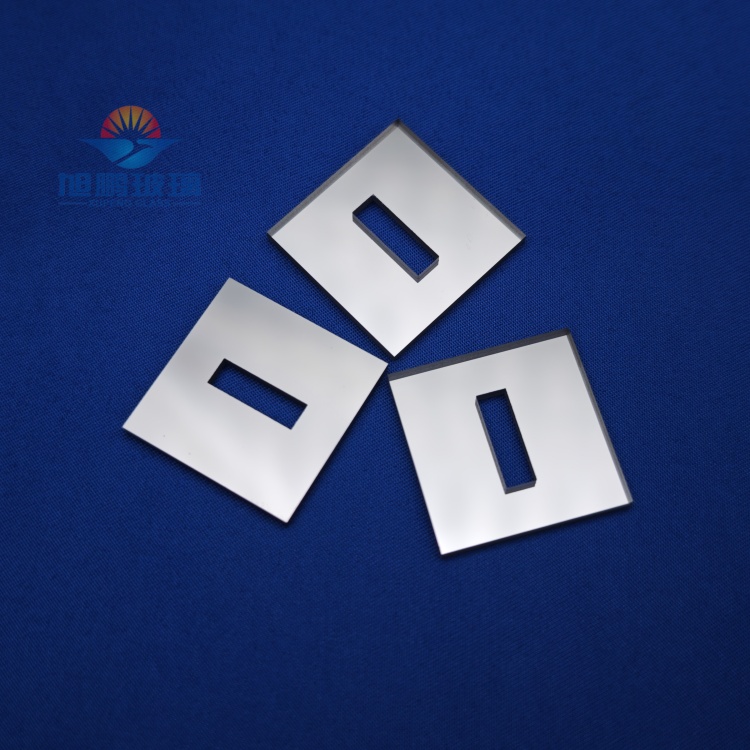
Silver-coated Mirror, Grooved at the Center of Glass
View product details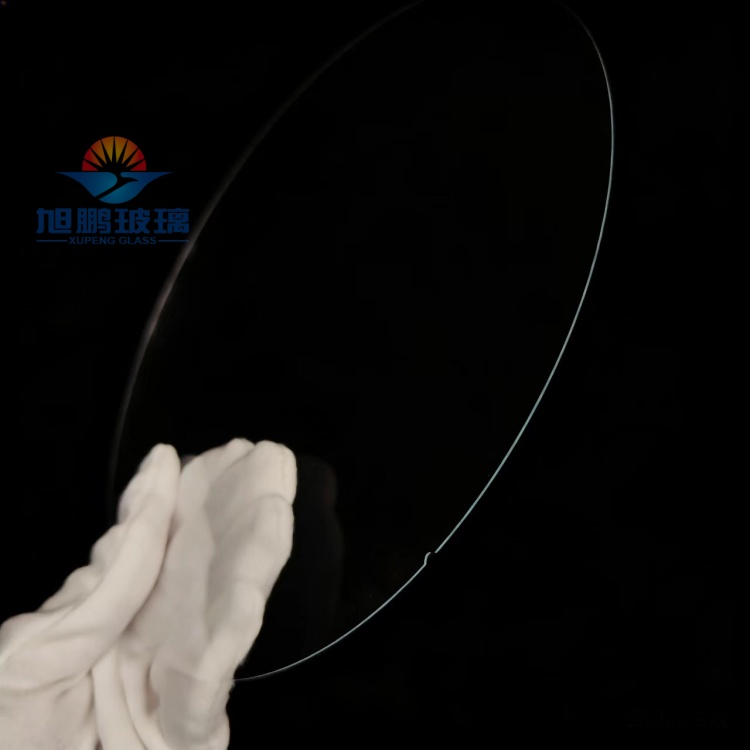
Corning EXG Glass Wafer, Double-Sided Polished Custom Fabrication for Semiconductor Glass Wafers
View product details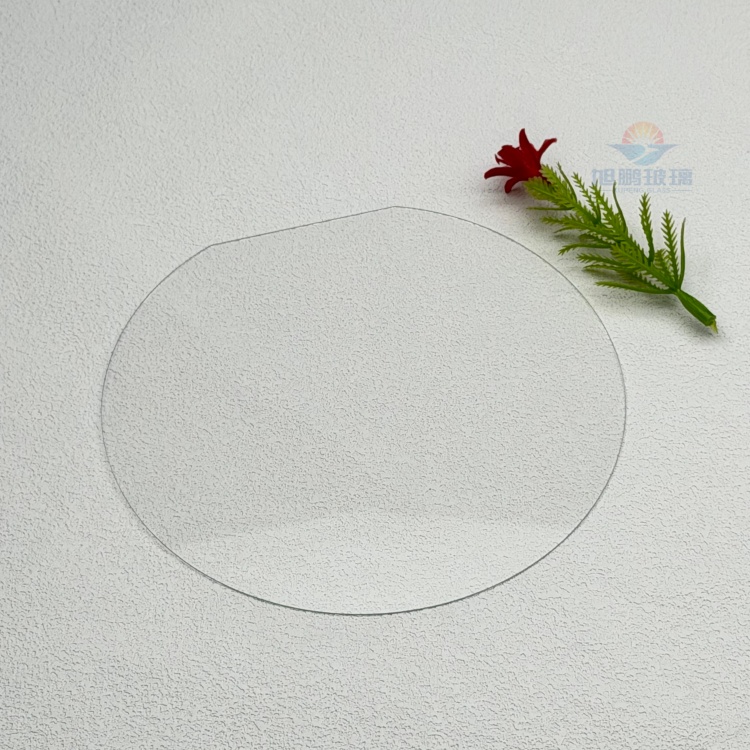
Round Aluminosilicate Glass with Chamfered Ground Edges and Metal Coating
View product details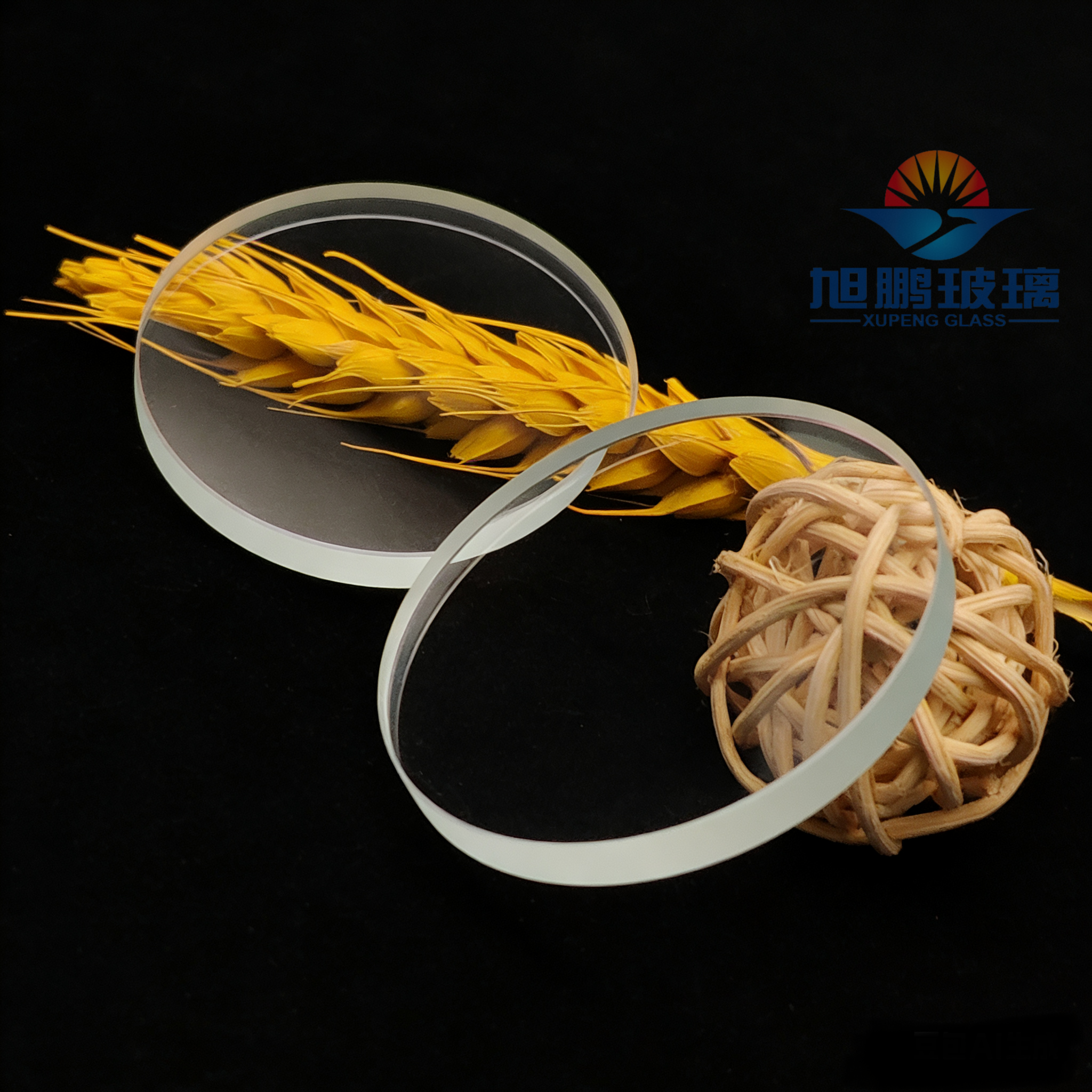
Low Iron Round High Transmittance Tempered Glass Panel with Precision Polished Edges, Flat Clear Glass
View product details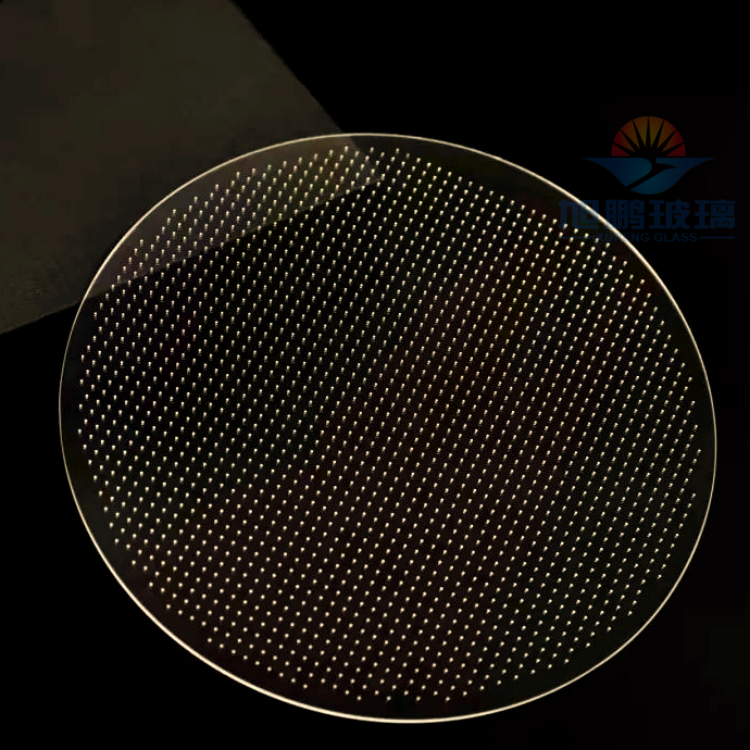
Schott BF33 TGV Microvia Glass Wafer, Packaging Substrate for Sensors & Chips
View product details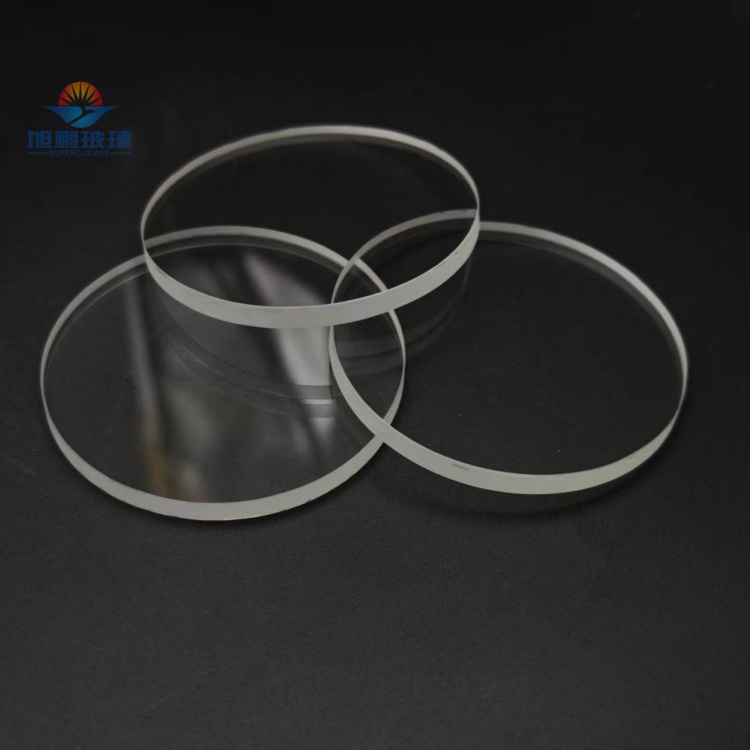
K9 Optical Glass (K9 Crystal Glass) for Optical Instruments
View product details
Schott Ultra-thin Optical Glass Sheets, 0.1mm, 0.5mm, 0.7mm, 1.1mm, Raw Semiconductor Electronic Glass Substrates
View product details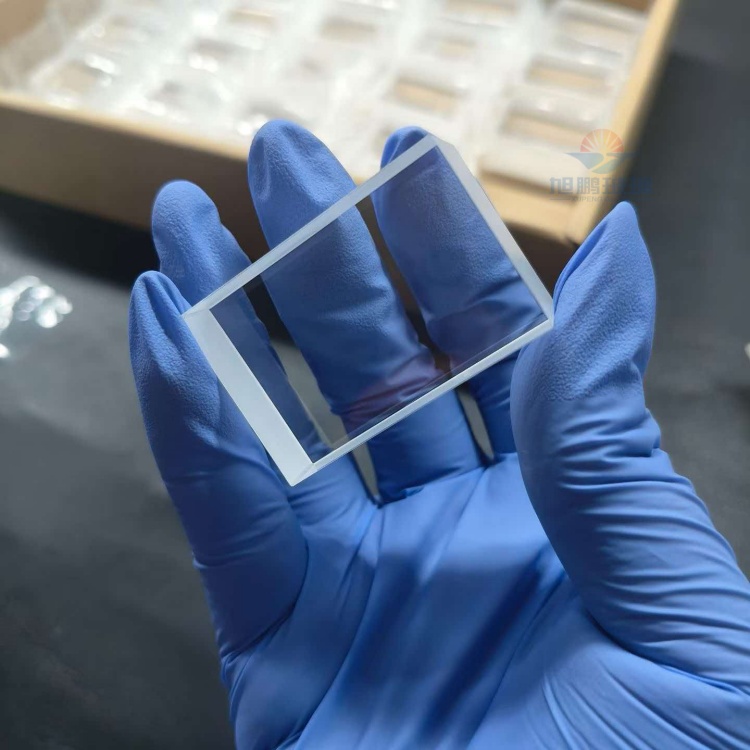
High UV Transmission Thick Gauge Thick Quartz Glass Plate
View product detailsWhat Makes Semi-Transparent Semi-Reflective Mirror Glass Different from a Standard Mirror?
Semi-transparent semi-reflective mirror glass is an engineered optical component, not a decorative mirror. A controlled coating — metal, dielectric or hybrid — reflects part of incident light while allowing the rest to pass.
Half-Mirror, Beam-Splitter and Transflective Glass
In an optical display panel, the display sits behind the glass and the viewer sees a combination of the emitted image and the reflected environment. This is why the same material is called half-mirror glass, beam-splitter glass, one-way mirror glass or transflective display glass depending on the application. The optical design must balance image brightness, background reflection, color neutrality and haze.
OEM Specifications That Actually Matter
For OEM production, the critical specification is not only “mirror” or “transparent”. Buyers in Semarang should define transmission/reflection ratio at the intended wavelength, visible-light color, haze, thickness, flatness, edge finish, coating durability and viewing angle. A 50/50 half-mirror that works in a dim hotel lobby may be unsuitable for a sunlit public kiosk; a 70/30 high-transmission panel may deliver a clearer display but reflect less image brightness. AUVE engineers review these trade-offs before quoting.
Why Semarang Is a Practical Test Market for Coated Display Glass
Semarang, the capital of Central Java and a busy north-coast port city, combines public-service digitalization, hospital and university projects, retail modernization and port-linked logistics. The tropical daylight is intense, the air is humid, and many installations sit close to the coast or in buildings without tightly controlled climate.
Port-Linked Procurement
Semarang buyers often plan around sea freight, air freight and local customs schedules. Clear Incoterms, reinforced export packing and batch labeling matter as much as the glass itself.
High Ambient Brightness
Public halls, retail streets and transport hubs create strong reflections. AG etching, AR coating and a carefully chosen T/R ratio can make the difference between readable and washed-out display content.
Humidity and Coastal Air
For coated glass, humidity makes coating adhesion, edge protection, cleaning compatibility and moisture-conscious packing visible quickly. Test methods should be agreed before mass production.
Recommended Semi-Transparent Mirror Glass Solutions for Semarang Buyers
Use these starting points to shortlist a material and coating architecture, then confirm final values against your drawing, optical stack and installation environment.
Public Information Kiosks & Smart-City Displays
Recommended build: 4–6 mm low-iron glass, tempered where safety or impact requirements apply, T/R around 50/50 to 60/40, AG or AR on the viewer side, optional anti-fingerprint treatment. Best fit for bright service halls and high-traffic lobbies in Semarang.
Retail Smart Mirrors & Hospitality Showcases
Recommended build: 2–4 mm low-iron or K9 glass, T/R 40/60 to 50/50, low haze, polished chamfered edges and neutral color. Test under local spotlight and daylight, because hospitality lighting can shift perceived mirror brightness.
Industrial HMI & Control-Room Monitors
Recommended build: 3–5 mm tempered or strengthened glass, dielectric or hybrid half-mirror coating, anti-glare etch, CNC cutouts and tight flatness for sealed gaskets. This reduces distracting reflections in manual-control and logistics dashboards.
Medical, Laboratory & Diagnostic Displays
Recommended build: K9, borosilicate or low-iron substrate with low distortion, controlled transmission and clean packing. Specify compatible cleaning agents and edge chamfer requirements before quoting.
Transportation, EV & HUD Prototypes
Recommended build: 1.1–2.0 mm ultra-thin glass with high transmission, dielectric coating, laser-cut outlines and durable adhesion. Validate with thermal, humidity and vibration tests that reflect the installation location.
Museum, AR & Virtual Try-On Panels
Recommended build: neutral low-haze half-mirror, 50/50 or 60/40, low-iron glass and AR backing where needed. Specify viewing angle and color temperature, because exhibition lighting and camera position affect perceived reflection.
Where Semi-Reflective Display Glass Fits in Semarang and Central Java
The same coated glass can serve very different project types. The right specification depends on ambient light, viewing distance, enclosure design and how the panel is cleaned and serviced.
Government Service Halls & Public Kiosks
Interactive queues, wayfinding and public information screens need readable content under strong daylight and indoor lighting. A half-mirror with anti-glare treatment can hide the display when idle while keeping information visible when active.
Hospitals, Clinics & Diagnostic Centers
Wayfinding displays, telemedicine carts and diagnostic review monitors benefit from low-reflection cover glass. For medical environments, specify cleaning compatibility and edge quality before choosing the coating stack.
Universities & Training Laboratories
Optics experiments, interactive lecterns and simulation labs often require custom T/R ratios. Small pilot batches from 10–50 pieces can help engineering teams validate the optical stack before a full procurement cycle.
Retail, Hotel & Showroom Smart Mirrors
Smart fitting-room mirrors and showroom displays combine reflected product views with digital information. Neutral color and low haze are usually more important than maximum reflectance.
Port-Linked Logistics & Factory Control Rooms
Semarang’s port and industrial ecosystem uses dashboards, equipment HMIs and warehouse displays where glare can slow decisions. Tempered cover glass with AG treatment and sealed gasket flatness is often the practical choice.
Automotive, EV & Electronics Assembly
Instrument clusters, HUD prototypes and test fixtures increasingly use custom coated glass. Buyers in Central Java can consolidate optical glass, display cover glass and wafer substrates with one qualified export supplier.
Semarang Market Trends Shaping Display-Glass Demand
Procurement teams are moving away from generic cover glass and asking for application-specific optical performance, documented test methods and export-ready packaging.
Higher Brightness, Lower Glare
Public infrastructure and retail projects increasingly expect readable displays under tropical daylight. This drives demand for AG etching, AR coating and custom half-mirror ratios rather than one-size-fits-all glass.
Humidity-Aware Purchasing
Coastal humidity turns coating adhesion and packing quality into qualification criteria. Buyers are asking for agreed humidity tests, protected edges and moisture-conscious export cartons.
Documentation & Traceability
OEM buyers want clear drawings, batch labels, packing lists and correspondence that can be shared with project owners. A supplier with reviewable trade credentials simplifies internal approval.
Smaller Pilots, Faster Iterations
Project teams and integrators often start with sample or pilot quantities before scaling. Suppliers that can discuss 10–50 piece coated optical parts and 100–500 piece standard tempered parts have an advantage.
Technical Selection Guide: Transmission, Reflection, Haze and Substrate
A high-quality half-mirror is defined by the complete optical stack. Use the guide below to prepare an RFQ that can be quoted and sampled without repeated clarification.
T/R Ratio
Decide how much visible light should pass through to the display and how much should reflect the environment. Common custom targets include 70/30, 60/40, 50/50, 40/60 and 30/70; tolerance and wavelength must be stated.
Substrate & Thickness
Low-iron glass supports neutral color and high transmission. K9 is common for optical instruments. Ultra-thin glass suits compact HUD and wearable prototypes. Tempered or strengthened glass suits public and industrial covers.
Coating Architecture
Metal, dielectric and hybrid coatings behave differently in color, durability and angle shift. For humid Semarang installations, clarify coating side, protection layer, cleaning compatibility and adhesion test method.
Inspection & Reliability
Dimensional checks, visual inspection, transmission/reflection measurement, haze, flatness, edge quality and agreed environmental tests should be documented before shipment. Final acceptance follows the approved drawing and standard.
Reference T/R Design Targets
Typical starting points for custom half-mirror display glass. Actual values are confirmed by drawing and sample approval.
What to Put on Your RFQ
Include the following details to reduce engineering back-and-forth:
- Substrate type, thickness and finished dimensions
- Target transmission/reflection ratio and wavelength
- Haze, color neutrality, flatness and surface quality
- Edge profile, holes, cutouts, grooves and chamfers
- Coating side, printing, tempering or strengthening
- Application, quantity, packing and Incoterms
Factory-Direct OEM Support from Dongguan AUVE Glass Co., Ltd.
AUVE is a deep-processing glass manufacturer integrating R&D, design, production and export in Songshan Lake, Dongguan — one of China’s leading electronics and optoelectronics clusters.

Why Sourcing Teams Shortlist AUVE for Custom Glass
Founded in 2018 and operating with 51–100 skilled employees in a 1,001–2,000 m² facility, AUVE focuses on high-end glass and custom fabrication rather than commodity sheets. Production covers flat and curved tempered glass, ultra-clear low-iron glass, laminated and painted glass, LCD and touch panel cover glass, smart control panel glass, LED lamp glass, instrument glass, AR anti-reflective glass, AG anti-glare glass and optical materials such as K9, quartz, sapphire, borosilicate and Corning EXG alkali-free glass.
Because cutting, CNC edging, drilling, tempering, silk-screen printing, coating and inspection are controlled in-house, engineering questions can be resolved before mass production. Buyers can send CAD, DXF or PDF drawings; our team reviews manufacturability, tolerance stack-up, coating orientation and export packing. Verified credentials — onsite supplier assessment, credit index, transaction level, trade capacity, ratings and trade history — are available for procurement review. Average response time is within 7 hours.
- Drawing-based engineering review before quotation and production
- In-house CNC cutting, edging, drilling, tempering, printing and coating
- Optical, electronic, tempered, ultra-clear and functional coated glass families
- Export experience across the United States, Canada, Russia, South Korea, Japan, Australia and other markets
Shipping Coated Display Glass to Semarang
Flexible Incoterms and fragile-goods packing help protect optical surfaces from the factory door to your assembly line in Semarang and Central Java.
Incoterms & Routing
AUVE supports FOB, CFR, CIF, EXW, DDP, DDU, DAF and express delivery. Sea freight to Tanjung Emas Port, air freight and courier can be quoted; the best option depends on size, coating sensitivity, project schedule and customs arrangements.
Fragile Glass Packing
Protective film or interleaving paper, foam corner protection, batch labels and fumigation-free wooden crates or reinforced cartons are selected according to part size and coating. Desiccant and moisture-conscious packing can be specified for humid destinations.
Documents & Communication
Share your drawing, quantity, target T/R ratio and packing preference. The AUVE team can align sample approval, production status and shipping documents through one technical contact, usually within 7 hours.
Frequently Asked Questions from Semarang Glass Buyers
Straight answers for procurement, engineering and project teams sourcing half-mirror display glass from overseas.
Can AUVE supply semi-transparent semi-reflective mirror glass to Semarang?
Yes. AUVE serves OEM buyers in Semarang and Central Java from its Dongguan factory. Send the application, drawing, transmission/reflection target and estimated quantity. We can quote custom half-mirror glass, AR/AG coated display glass, tempered cover glass and optical substrates, then discuss samples before mass production.
What specifications should I include in an RFQ for a half-mirror display panel?
Include substrate and thickness, finished dimensions, T/R ratio and wavelength, haze, color requirement, edge profile, holes or cutouts, coating side, printing, tempering or strengthening, flatness, quantity, application, packing and Incoterms. A CAD, DXF or PDF drawing shortens the engineering review.
How do you address Semarang’s humidity and coastal air?
For humid installations, specify coating adhesion and humidity testing, protected coating designs, clean edge finishing and moisture-conscious export packing. AUVE confirms the test method with the buyer before production; final acceptance should reference the agreed drawing and standard.
What is the MOQ and typical lead time?
MOQ depends on material and process. Coated and optical parts often start from 10–50 pieces; standard ultra-clear tempered parts often start from 100–500 pieces. Sample and pilot runs can be discussed. Lead time is confirmed after drawing approval, material availability and sample sign-off.
Which Incoterms and shipping methods do you support for Indonesia?
FOB, CFR, CIF, EXW, DDP, DDU, DAF and express delivery. Sea freight to Tanjung Emas Port, air freight and courier are all possible; the best choice depends on size, coating sensitivity, project schedule and customs arrangements.
How can Semarang buyers get an engineering review quickly?
Share the drawing, quantity, target T/R ratio and application by inquiry. AUVE’s average response time is within 7 hours. Include photos of the housing or optical stack if available, because installation angle and ambient light often change the recommended coating.
Send Your Semarang Display Glass Drawing for an Engineering Review
Share your target transmission/reflection ratio, size, thickness, coating side, edge requirements and quantity. AUVE will confirm material, process route, sample plan, packing and delivery terms — usually within 7 hours.