8 Glass Cover Panel Options for Austin OEM and Project Teams
The shortlist below is built from AUVE’s production catalogue and matched to common Austin sourcing briefs: outdoor HMI readability, low-iron clarity, semiconductor and photonics work, flexible electronics, high-temperature viewports and premium interior detailing. Send a CAD, DXF or PDF drawing with thickness, tolerance, edge, hole, printing and coating requirements for an engineering review before quotation.

Custom Ultra-White Clear Tempered Glass Socket Decorative Cover for Stairways
A decorative ultra-white tempered cover for socket, switch and stairway detailing. For Austin multifamily, hotel and commercial interior projects, the value is in repeatable cut-outs, clean edges and printable graphics that match the interior specification.
- Ultra-white
- Tempered
- Custom cut-outs

Round Aluminosilicate Glass with Chamfered Ground Edges and Metal Coating
Aluminosilicate glass brings strong thermal and chemical durability, while the chamfered edge and metal coating support decorative lighting, sensor windows and premium appliance interfaces. Austin design teams can use it where a refined glass-metal look and tighter edge finish matter.
- Aluminosilicate
- Chamfered edge
- Metal coating
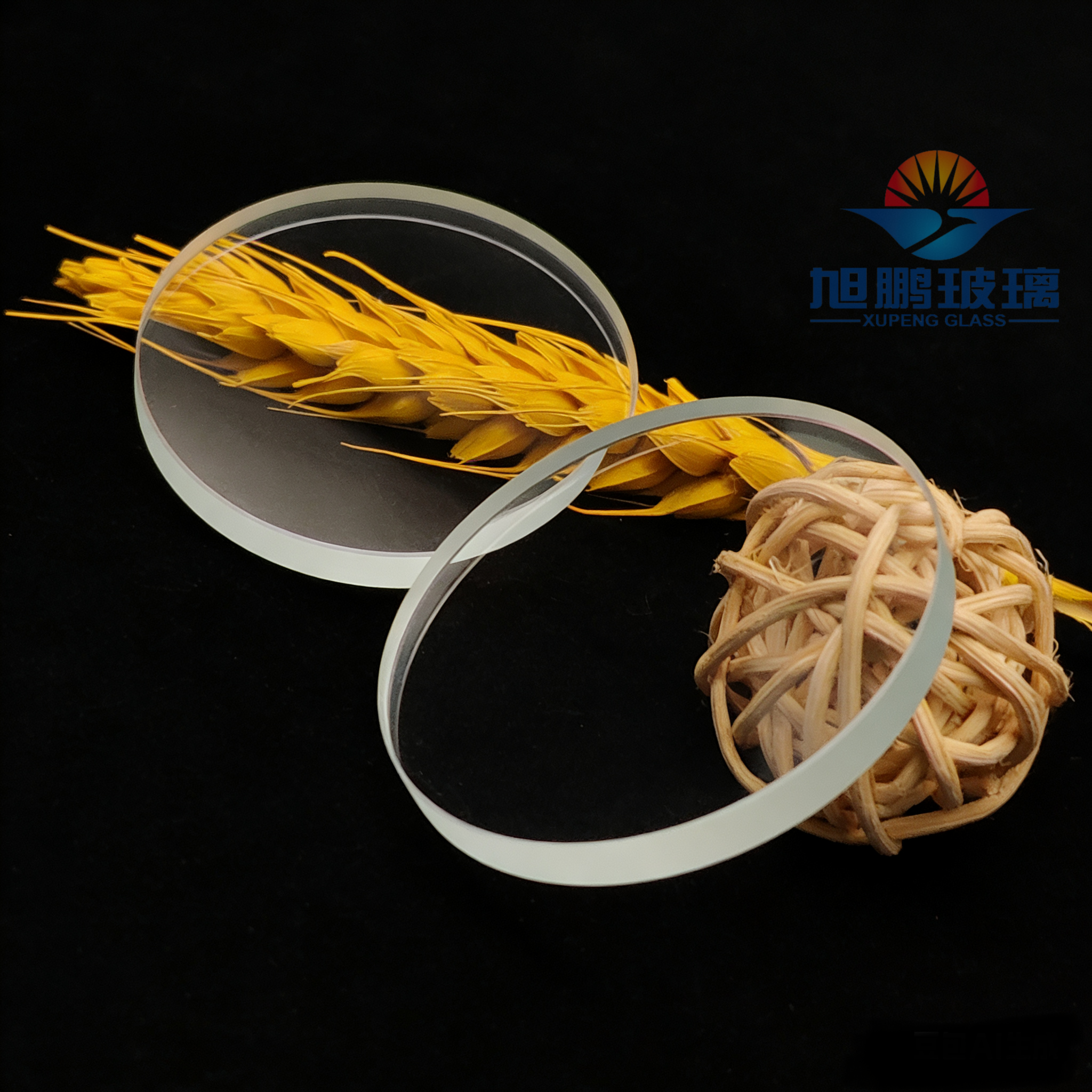
Low Iron Round High Transmittance Tempered Glass Panel with Precision Polished Edges, Flat Clear Glass
Low-iron glass with typical visible transmission around 91% and minimal green edge tint. Recommended for Austin display integrators, smart control panels and architectural lighting where colour neutrality, edge clarity and a clean flat surface are visible at close range.
- Low-iron
- Tempered
- Polished edges
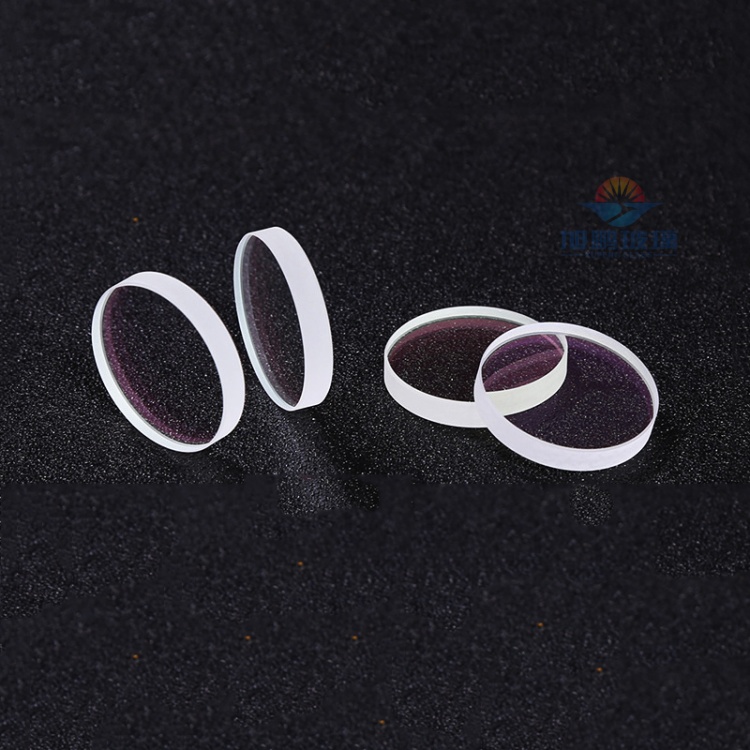
Ultra-clear Tempered Glass, Custom Processing Available: Drilling, Etching, AG Coating Silk Printing, AR Coating
A flexible platform part for Austin HMI, kiosk and appliance programmes: CNC drilling, etching, anti-glare coating, silk printing and AR coating can be combined on one ultra-clear tempered panel. This reduces supplier count and keeps optical and mechanical tolerances within one process route.
- Drill / etch
- AG / AR
- Silk print

Corning Ultra-Thin Glass Sheet, Optical Grade Glass Wafer Substrate with Chamfered Edge
Optical-grade ultra-thin glass for precision windows, wafer carriers and display substrates. The chamfered edge reduces handling risk, making it relevant to Austin semiconductor-equipment, photonics and advanced packaging teams that need clean, flat substrates with controlled edge quality.
- Optical grade
- Chamfered
- Wafer substrate
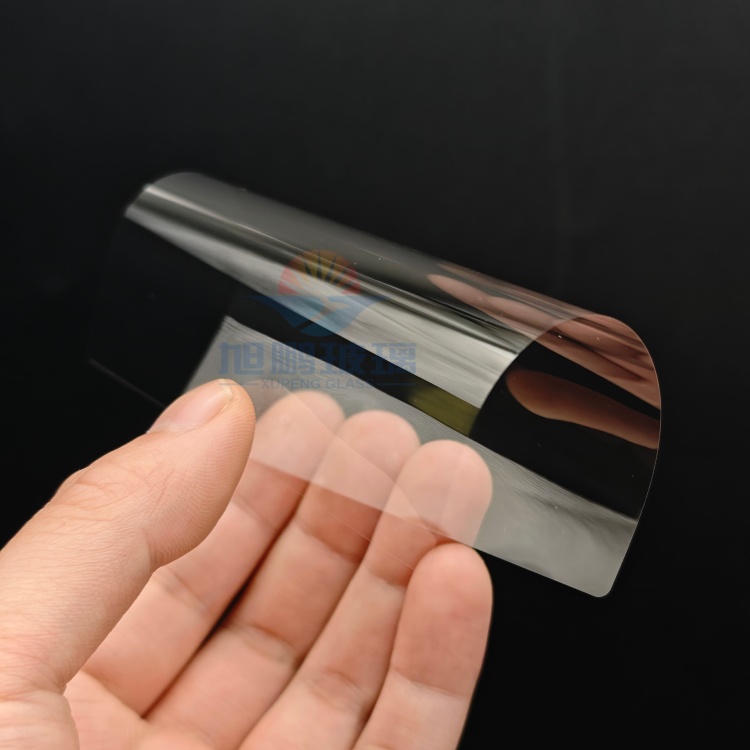
0.03 mm Ultra-thin Flexible Bendable Glass
A 0.03 mm bendable glass for foldable displays and flexible electronics. For Austin product developers, it enables thinner stacks and glass-like scratch resistance in wearable, AR/VR and flexible-sensor concepts; edge treatment and handling packaging are critical to yield.
- 0.03 mm
- Bendable
- Flexible

Ultra-thin Flexible UTG Glass, bendable and foldable, suitable for commercial aerospace and new energy industries
UTG glass for commercial aerospace and new-energy applications. Austin’s advanced manufacturing base includes aerospace, EV and energy-storage programmes; this material is suited to lightweight, bendable or space-constrained designs where glass barrier properties are required.
- UTG
- Foldable
- Aerospace / energy

Ultra-thin Optical Glass Sheets Schott B270/D263T Semiconductor Electronic Glass Blank Cutting & Processing
SCHOTT B270 and D263T ultra-thin optical glass blanks with cutting and processing support. Austin optics, medical-device and semiconductor-equipment engineers can specify blank size, edge quality and surface condition before downstream coating or assembly.
- SCHOTT B270 / D263T
- Cutting
- Semiconductor
Why Austin Buyers Are Re-Specifying Glass Cover Panels
This Austin-market guide is prepared by Dongguan AUVE Glass Co., Ltd., a deep-processing glass manufacturer that integrates R&D, design, production and export. The aim is to help Austin sourcing, engineering and project teams compare glass cover panel manufacturers and exporters on total application performance, not only unit price.
Austin has become a dense meeting point for advanced electronics, semiconductor equipment, electric mobility, aerospace, medical devices, data-centre infrastructure and high-growth commercial construction. In these environments, a glass cover panel is rarely just a flat protective part. It is part of the user interface, the environmental barrier, the optical path and the brand expression. A control panel on an outdoor kiosk, a touch window on a clinical analyser, a viewport on process equipment and a decorative socket cover in a multifamily lobby may all be called “glass cover panels,” yet they demand very different substrates, edge finishes, coatings and packing methods.
The Austin climate adds another layer. Central Texas combines high solar load, strong UV exposure, summer heat, dust, sudden storms and occasional hail. A panel that looks correct in a showroom can underperform at an outdoor digital kiosk if glare, thermal shock, cleaning chemicals and edge quality are not considered at the drawing stage. For indoor display modules, the main risks shift to reflection, colour shift, printing durability and dimensional fit. This is why application-based specification matters more than a generic “tempered glass” description.
From a procurement perspective, Austin buyers increasingly want a supplier that can combine cutting, CNC edging, drilling, tempering, silk-screen printing, AR/AG coating, inspection and export packing under one quality system. Consolidating these steps reduces the risk of tolerance drift between vendors and makes it easier to trace a batch from raw sheet to packed carton. It also shortens the feedback loop when a sample must be adjusted for a local assembly line, a design studio or a pilot production run.
When comparing glass cover panel manufacturers and exporters for the Austin market, evaluate the process route, the optical data, the packing survivability and the supplier’s ability to document decisions. A lower piece price can be erased quickly by replacement shipments, line stoppages or a coating that fails under real viewing conditions.
Where Austin Teams Use Custom Glass Cover Panels
Different Austin industries may share the same supplier, but they do not share the same failure modes. The application determines the substrate, coating, printing and packing logic.
Outdoor digital signage & kiosks
AG-coated tempered low-iron glass can reduce glare while maintaining display contrast. Austin buyers should also review thermal shock, cleaning agents and edge protection for exposed installations.
Smart control panels & appliance HMI
Ultra-clear tempered glass with AR/AG coating, silk-printed icons and flush edges supports a premium touch experience for Austin appliance, HVAC and building-control brands.
Semiconductor & photonics equipment
Corning EXG, quartz, sapphire and SCHOTT B270/D263T substrates are considered for viewports, carriers and optical windows where cleanliness, flatness and edge quality matter.
EV charging, mobility & energy storage
Printed icons, UV-stable coatings and tempered panels help Austin mobility and energy teams build durable interfaces for chargers, storage cabinets and fleet equipment.
Commercial interiors & multifamily
Ultra-white tempered socket covers, stairway details and metal-coated aluminosilicate glass give Austin architects clean, repeatable finishes for high-traffic interior projects.
Aerospace & flexible electronics
0.03 mm bendable glass and UTG materials support lightweight, foldable or space-constrained concepts in Austin’s aerospace, AR/VR and advanced sensor ecosystems.
Trends Shaping Austin Glass Cover Panel Demand
Austin is not a single market. It is a group of technical communities with different adoption cycles. The strongest supplier relationships are built around those differences.
Outdoor readability is now a specification
As more Austin kiosks, EV chargers and public-facing displays operate outdoors, AG anti-glare and AR anti-reflective glass move from optional upgrade to design requirement. Gloss, haze, reflection and cleaning compatibility should be agreed before tooling.
Supply-chain resilience and pilot runs
Austin buyers increasingly test multiple supply routes and request smaller pilot quantities before mass production. A supplier that can support samples, mixed processing and DDP/express options can reduce the friction of switching sources.
Glass, print and coating converge
One panel now often combines a display window, printed icons, AG etching, AR coating and a custom edge profile. This convergence favours factories with in-house CNC, tempering, printing, coating and QC rather than disconnected workshops.
Advanced materials move to production
Ultra-thin glass, sapphire, quartz and alkali-free substrates are moving from laboratory samples into semiconductor, aerospace, medical and new-energy programmes. Austin engineering teams need suppliers who can discuss material trade-offs, not just list catalogue items.
How to Match a Glass Cover Panel to an Austin Application
Use this quick reference to shortlist the substrate and process route before requesting a sample. Final specifications should always be confirmed against your drawing, assembly method and agreed test standard.
| Requirement | Recommended glass | Why it fits Austin projects | Processing notes |
|---|---|---|---|
| Outdoor kiosk with sun glare | AG anti-glare tempered low-iron glass | Diffuses direct and reflected glare for public-facing displays, EV chargers and wayfinding kiosks exposed to Central Texas sun. | Etched AG surface, optional AR, tempering, printed black border, protective packing. |
| High-contrast display window | AR-coated ultra-clear tempered glass | Reduces surface reflection to roughly 0.5–1% per side in typical AR designs and improves perceived contrast for touch modules and instrument windows. | Single- or double-side AR, low-iron substrate, CNC edge, silk print, tempering. |
| Premium interior cover | Ultra-white tempered or metal-coated aluminosilicate glass | Supports clean colour, repeatable cut-outs and decorative details for Austin hospitality, multifamily and commercial interiors. | CNC cut-outs, chamfered edge, metal coating, printing, batch labelling. |
| Semiconductor or optical equipment | Corning EXG, SCHOTT B270/D263T, quartz or sapphire | Matches low-CTE, UV-transmission, hardness or chemical-resistance needs in Austin semiconductor, photonics and medical-device programmes. | Double-side polishing, wafer dicing, chamfering, dimensional and optical inspection. |
| Flexible or space-constrained design | 0.03 mm ultra-thin flexible glass / UTG | Enables bendable, lightweight stacks for foldable displays, wearables, aerospace and new-energy concepts. | Precision cutting, edge strengthening, handling film, protected export packing. |
| High-temperature viewport | Fused quartz or sapphire glass | Useful where UV transmission, thermal shock resistance or scratch resistance is critical in process equipment and analytical instruments. | Thick-gauge cutting, polishing, drilling, chamfering and cleanliness control. |
Typical values are for early material screening. Final transmission, reflection, haze, tolerance and test methods are confirmed to the approved drawing and sample.
Why Work With Dongguan AUVE Glass for Austin Supply
Dongguan AUVE Glass Co., Ltd. is a deep-processing glass manufacturer integrating R&D, design, production and export in Songshan Lake, Dongguan. The company processes flat and curved tempered glass, ultra-clear glass, AR/AG coated glass, silk-screen printed glass, electronic cover glass and optical materials, with a documented process route from raw sheet to packed carton.
Drawing-first engineering review
Send CAD, DXF or PDF files with thickness, tolerance, edge, hole, printing and coating requirements. Engineers review manufacturability before production rather than discovering issues at final inspection.
In-house process chain
Precision cutting, CNC edging and drilling, tempering, silk-screen printing, AR/AG coating and QC can be coordinated as one route, reducing tolerance drift between separate suppliers.
≤7-hour average response
Procurement and engineering teams can move faster when technical questions are answered promptly. Include your drawing, target quantity and Austin delivery address for a more complete reply.
Verified supplier transparency
Buyer assurance data including onsite-checked supplier status, credit index, transaction level, trade capacity, ratings, reviews and trade history can be reviewed before a sample or bulk order.
Export-ready fragile packing
Protective film or paper, foam corner protection, batch labelling and fumigation-free wooden crates or reinforced cartons are selected for glass parts travelling to the USA by sea, air or express.
Broad material and coating coverage
Options include ultra-clear low-iron, K9, quartz, sapphire, borosilicate, Corning EXG, SCHOTT B270/D263T, UTG, AR, AG, mirror and high-temperature ceramic printing.

Factory-direct glass deep processing in Dongguan
AUVE’s team of 51–100 employees operates from a 1,001–2,000 m² facility range and serves buyers in the United States, Canada, Russia, South Korea, Japan, Australia and other markets. For Austin buyers, the practical benefit is a single production partner for tempered cover glass, printed panels, optical windows and coated display parts.
Production follows defined process standards and a documented quality management system, so every batch can be traced from raw sheet to packed carton. When a project requires a sample iteration, the same engineering and production team can review the change instead of handing it between unrelated workshops.
Precision cutting
Automatic and CNC cutting from float, low-iron and optical stock.
CNC edging & drilling
Edge grinding, beveling, grooving, holes and laser punching.
Tempering
Flat and curved thermal tempering for impact and thermal resistance.
Silk-screen printing
High-temperature ceramic inks, logos, windows and icons.
AR / AG coating
Anti-reflective, anti-glare, mirror and functional coatings.
QC & export packing
Dimensional, visual and optical checks, then protective packing.
Quality Control and Export Logistics for Austin Deliveries
Glass cover panels are vulnerable to handling damage and hidden optical defects. A disciplined quality and packing routine is part of the product, not an afterthought.
Process-based inspection
Checks are planned across incoming sheet, cutting, edging, drilling, tempering, printing, coating and final packing. Dimensional, visual and optical requirements can be agreed before production, with batch traceability from raw sheet to carton.
Fragile-goods packing
Interleaving film or paper, foam corner protection, labelled bundles and fumigation-free wooden crates or reinforced cartons are selected according to part size, edge profile and shipping mode.
Flexible trade terms
FOB, CFR, CIF, EXW, DDP, DDU, DAF and express delivery are supported. For Austin, confirm the Incoterm, delivery address, unloading constraints and sample approval before mass production.
Shipping by sea, air or express to Austin can be quoted with export documentation and packing data. HTS classification and duty treatment depend on material and process; the commercial invoice and packing list are prepared to support customs review.
Glass Cover Panel Manufacturer & Exporter FAQs
Common procurement and engineering questions from Austin teams evaluating custom glass cover panels, samples, MOQs, coating options and delivery terms.
Are you a glass cover panel manufacturer or a trading company?
Dongguan AUVE Glass Co., Ltd. is a deep-processing glass manufacturer integrating R&D, design, production and export. The supplier profile lists the business type as manufacturer and trading, with production processing that includes cutting, edging, drilling, tempering, silk-screen printing, coating, inspection and export packing.
Can you ship glass cover panels to Austin and support DDP?
Yes. Supported terms include FOB, CFR, CIF, EXW, DDP, DDU, DAF and express delivery. For an Austin DDP quotation, provide the full delivery address, contact details, unloading conditions and whether the shipment is a sample, pilot run or mass-production order.
What is the MOQ for an Austin pilot project?
MOQ depends on material and process. Many coated and optical glass parts can start from 10 to 50 pieces, while standard ultra-clear tempered parts typically start from 100 to 500 pieces. Sample and pilot quantities can be discussed for new Austin projects, especially when the drawing is still being finalised.
Which glass should I choose for an outdoor kiosk in Austin?
Start with AG anti-glare tempered low-iron glass if direct sun and reflected glare are the main issues. If display contrast is critical, evaluate AR coating as well. Also confirm cleaning-agent compatibility, edge protection, thermal shock expectations and packing for the installation method.
Can you produce cover panels to my CAD, DXF or PDF drawing?
Yes. Send a CAD, DXF or PDF drawing with thickness, tolerance, edge, hole, printing and coating requirements. The engineering team reviews manufacturability before production, covering CNC cutting, edging, drilling, tempering, silk-screen printing and AR/AG coating.
How do you control quality and fragile-goods packing?
Production follows defined process standards and a documented quality management system. Inspection can include dimensional, visual and optical checks, with batch traceability from raw sheet to packed carton. Export packing may use protective film or paper, foam corners, labelled bundles and fumigation-free wooden crates or reinforced cartons.
Do you support custom printing, AR/AG coating and special materials?
Yes. The catalogue includes ultra-clear tempered glass, AR anti-reflective glass, AG anti-glare glass, silk-screen printed glass, K9 optical glass, quartz, sapphire, borosilicate, Corning EXG, ultra-thin flexible glass and SCHOTT B270/D263T processing. The exact process route should be confirmed against the drawing and sample.
How quickly will I receive a technical reply?
The average response time is within 7 hours. For the fastest review, include your drawing, target quantity, material preference, coating requirement, Austin delivery address and required date. You can also email info@auveglass.com for an engineering review.
Send a Drawing for an Austin-Specific Glass Review
Share your size, thickness, tolerance, edge, printing and coating requirements. The team will confirm material, process route, packing and delivery options — usually within 7 hours.
info@auveglass.com