8 Glass Cover Plate Products for Baltimore Buyers
These eight production-ready product families reflect the materials most often requested by OEMs, research-instrument builders, display integrators and industrial buyers in Baltimore and the wider DMV corridor. Each item can be customised by size, thickness, edge profile, holes, printing, tempering and coating.
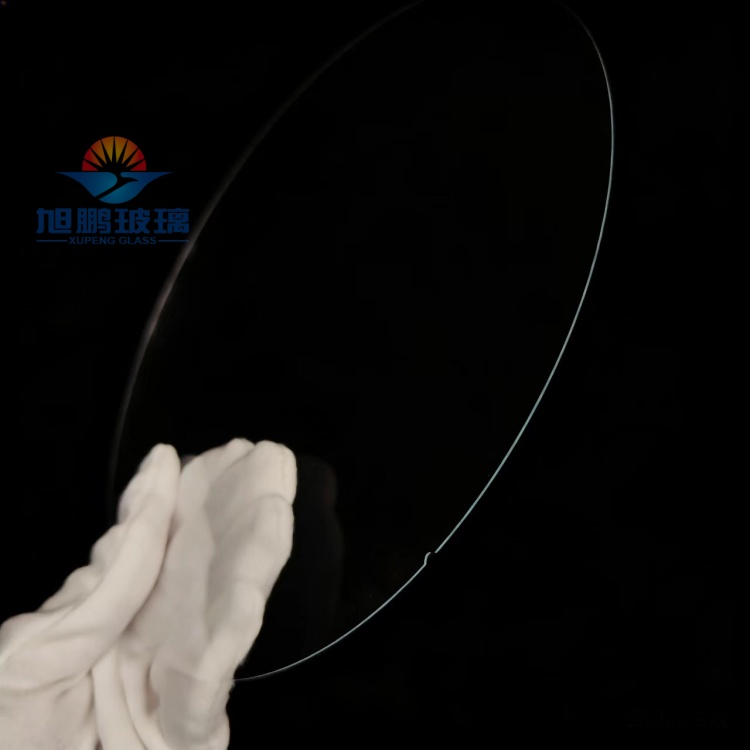
Corning EXG Glass Wafer, Double-Sided Polished Custom Fabrication for Semiconductor Glass Wafers
Alkali-free Corning EXG glass wafer with double-sided polishing, low thermal expansion and excellent dimensional stability for semiconductor, MEMS, sensor and high-precision display substrate programs.

Wafer Glass Thickness Circuit Board Chip Solar Silicon Ingot Substrate
Thickness-controlled wafer glass substrate for circuit-board, chip, solar and silicon-ingot related process fixtures. Suitable for applications requiring flatness, thermal stability and clean-edge machining.

Round Aluminosilicate Glass with Chamfered Ground Edges and Metal Coating
Round aluminosilicate glass with chamfered ground edges and metal coating for feedthroughs, instrument view windows and industrial cover plates that require dielectric strength and precise edge finishing.

Ultra-thin Flexible UTG Glass, bendable and foldable, suitable for commercial aerospace and new energy industries
Ultra-thin flexible glass for bendable and foldable covers, lightweight aerospace components and new-energy device designs. Precision cutting and edge handling help protect thin-glass reliability.
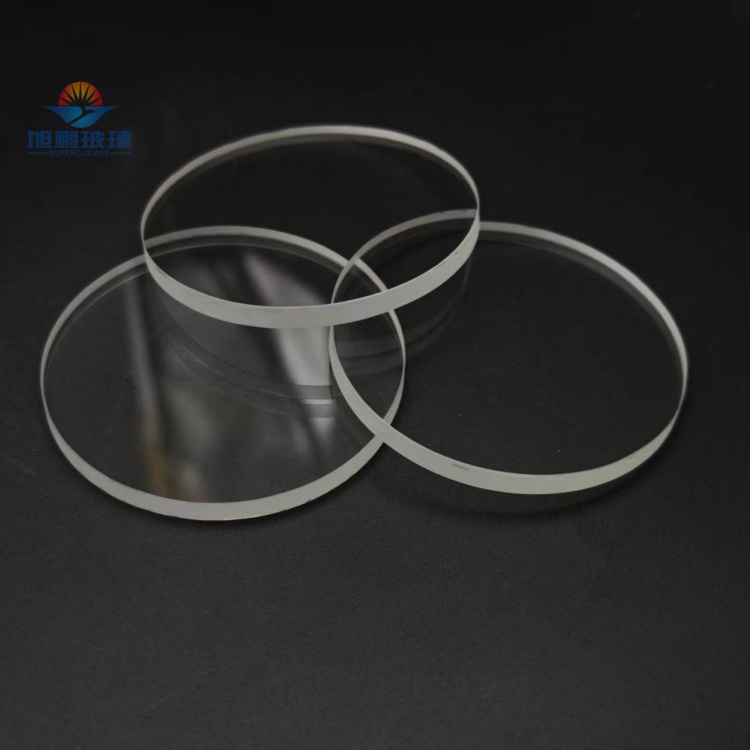
K9 Optical Glass (K9 Crystal Glass) for Optical Instruments
K9 borosilicate crown glass polished for instrument windows, lenses and optical assemblies. Provides stable optical performance, low inclusions and a clean surface for coating or precision mounting.

Ultra-white Tempered Glass, AR Anti-Reflection Coatable, High Light Transmittance & Anti-reflective
Ultra-white tempered glass with AR coating options for display windows, smart control panels, instrument covers and light-box surfaces where clarity and low reflection matter.

CNC Carved Low Iron Glass Sheet, High-temperature Screen Printed Tempered Glass, Drilled Glass Panel
Low-iron tempered glass with CNC carving, drilled holes and high-temperature silk-screen printing for appliance, HMI, lighting and architectural control surfaces requiring strong visual clarity.

Precision CNC Cut & Holed, High-temperature Silk Screen Tempered Glass, Drilled Ultra-clear Small Round Glass Discs
Ultra-clear small round glass discs with CNC cutting, drilled holes and high-temperature silk-screen printing for sensor windows, indicator covers and compact device view windows.
Why Baltimore Is a High-Value Market for Glass Cover Plate Manufacturing
Baltimore is not a generic glass market. It sits at the centre of a specification-heavy buyer ecosystem: hospital and university research teams, port and rail operations, advanced manufacturing, defense-adjacent engineering, marine service, commercial signage and building technology.
Buyers in Baltimore and the wider Mid-Atlantic region rarely need a simple sheet of glass. They need a cover plate that survives cleaning agents, UV exposure, touch wear, thermal cycling, mounting torque, edge handling and international shipment. The material, coating stack, printed graphics, edge geometry and packing method must work together—not as isolated line items in a purchase order.
This is where a specialist glass cover plate manufacturer creates information gain for procurement teams. We review manufacturability before quoting, then produce the part with documented inspection and export-ready packing. For Baltimore buyers, that means fewer surprises at receiving, better fit on the assembly line and a cleaner path from prototype to repeat order.
Localized Application Scenarios for Glass Cover Plates
From Johns Hopkins-area research equipment to Port of Baltimore operations and Inner Harbor public displays, the same question appears again and again: which glass cover plate will perform in the real environment, not only on a drawing?
Medical & Laboratory Instrument Cover Glass
Baltimore’s life-science and hospital research corridor uses cover plates in diagnostic instruments, sample-handling systems, sterilizable equipment windows and laboratory analysers. Relevant properties include chemical resistance, cleanability, AR-coated optical clarity, precise holes and durable printed alignment marks. We can supply ultra-clear tempered, borosilicate or quartz cover glass with smooth or chamfered edges.
Industrial HMI & Control-Panel Cover Plates
Port equipment, HVAC systems, water treatment, packaging lines, warehouse automation and machine tools all rely on readable interfaces. A good cover plate protects the display, resists cleaning agents and aligns with bezel gaskets. Options include AG anti-glare, AR anti-reflection, black border silk printing, stepped edges and countersunk holes for a clean control-panel assembly.
Smart Kiosks, Signage & Outdoor Displays
Transit, retail, campus wayfinding and Inner Harbor public terminals need covers that remain legible under daylight. Outdoor kiosks often use AG etched glass, anti-reflective coating, thicker tempered glass and sealed edge protection. We can produce low-iron tempered cover plates with selective AR, IR-window ink and CNC cut-outs for cameras, scanners and card readers.
Marine, Port & Field-Service Instruments
Salt air, humidity, UV and temperature swings test materials near the harbour and along the Chesapeake Bay corridor. Glass itself is stable; failures often begin at edge chips, unsealed coatings or poor packing. We recommend tempered or strengthened glass with chamfered ground edges, coating durability review and moisture-barrier export packing for field-service instruments.
Aerospace, Defense & Precision Optics
Baltimore’s position near major research, aerospace and defense-related engineering clusters supports demand for K9, sapphire, quartz, Corning EXG, UTG and metalized glass. Typical uses include optical windows, sensor covers, feedthrough plates, lightweight foldable covers and high-temperature viewports. Please provide the optical or environmental test standard with your RFQ.
Building Technology, Lighting & Appliance Glass
Ultra-white low-iron tempered glass is widely used in control panels, switch covers, LED lamps, light boxes and building interfaces. High-temperature silk-screen printing, AR coating, anti-glare etching and precision holes help integrate lighting, electronics and touch controls into one clean, durable glass surface.
Baltimore & Maryland Glass Cover Plate Procurement Trends
Procurement teams are becoming more specific about optical performance, documentation and total landed cost. These four trends are shaping custom glass cover plate projects in Baltimore and the Mid-Atlantic.
Display quality is now a procurement metric
Maryland buyers increasingly compare haze, gloss, transmission, reflectance and colour shift—not only thickness. For outdoor kiosks and industrial HMIs, ask for the coating side, target transmission, haze range and the test method used for approval.
Dual sourcing and resilient imports
Teams keep domestic inventory for urgent service while using factory-direct custom production for pilot builds, design revisions and lower-volume optical parts. The Port of Baltimore, BWI air freight and express courier routes create flexible logistics choices for time-sensitive glass components.
More documentation before mass production
Traceability, batch labels, inspection records, material declarations and packing photos reduce receiving risk. For medical, optical and industrial programs, include the required documentation in the original RFQ instead of requesting it after production.
Total landed cost beats lowest piece price
A lower unit price can lose to breakage, rework or line stoppage. Specify protective film, interleaving paper, foam corners, reinforced crates and sample approval before shipment. A factory-direct supplier should be able to show how the packing method protects the finished glass cover plate.
How to Choose the Right Glass Cover Plate Material
Choosing the wrong substrate is one of the most expensive causes of field failure and re-sourcing. Use this quick reference to shortlist the material before you send a CAD, DXF or PDF drawing.
| Glass cover plate option | What it solves | Typical Baltimore application | Useful custom processing |
|---|---|---|---|
| Ultra-clear low-iron tempered glass | ~91% visible light transmission class, reduced green edge tint and tempered strength for daily handling | Smart control panels, appliance covers, LED fixtures, light boxes and building interfaces | CNC shaping, drilling, silk-screen, AR/AG coating |
| AR-coated cover glass | Surface reflection reduced to roughly 0.5–1% per side in typical specifications; improved display contrast | Touch-screen modules, laboratory instruments, museum windows, all-in-one PC covers | Single/double-side AR, tempering, printing, edge finishing |
| AG anti-glare cover glass | Micro-textured surface diffuses glare; gloss and haze selectable for brightness control | Outdoor kiosks, industrial HMIs, transit signage, harbour-side display terminals | Etched AG, AG + AR, tempering, CNC cut-outs |
| Silk-screen printed tempered glass | Fired ceramic ink fused into glass for durable graphics, windows and icons | Instrument panels, home appliances, switch and socket covers, machine interfaces | Multi-colour printing, IR/window ink, holes, edge grinding |
| K9 optical glass | Borosilicate crown glass with stable optical performance, low inclusions and good polishability | Lenses, prisms, optical instrument windows and precision sensor covers | Precision polishing, coating, CNC edging, chamfering |
| Fused quartz glass | High UV transmission and excellent thermal shock resistance for demanding environments | UV curing, UV disinfection, high-temperature viewports and analytical equipment | Thick-gauge cutting, polishing, drilling, edge fire-polishing |
| Sapphire glass | Mohs hardness 9 and excellent scratch resistance for critical optical surfaces | Sensor covers, high-temperature windows and scratch-critical instrument covers | Cutting, polishing, chamfering, thickness control |
| Corning EXG alkali-free glass | Alkali-free aluminoborosilicate with low CTE and dimensional stability for precision substrates | Semiconductor wafers, MEMS, display substrates and high-precision carrier glass | Double-side polishing, wafer dicing, flatness control |
| Ultra-thin flexible glass / UTG | Thin-glass construction down to 0.03 mm class with bendability for flexible designs | Foldable displays, flexible electronics, lightweight aerospace and new-energy components | Precision cutting, edge strengthening, protective film lamination |
Values are typical reference data for material selection. Final specifications are confirmed against your drawing and agreed test standard before mass production.



What Dongguan AUVE Glass Brings to Baltimore Projects
Dongguan AUVE Glass Co., Ltd. is a deep-processing glass manufacturer that integrates R&D, design, production and export in Songshan Lake, Dongguan—one of China’s leading electronics and optoelectronics clusters. We process flat and curved tempered glass, ultra-white, laminated and painted glass, LCD and touch-screen glass, smart control-panel glass, LED lamp glass, instrument glass, AR high-transmittance glass and AG anti-glare glass.
Guided by the philosophy of “focusing on high-end glass, pioneering and innovating”, we keep investing in skilled engineers and advanced equipment to deliver complete glass solutions for OEMs, brand owners and distributors. Production follows defined process standards and a documented quality management system, so every batch can be traced from raw sheet to packed carton.
For Baltimore buyers, our value is not only factory-direct pricing. It is the ability to review a drawing, recommend a material, control the coating and printing route, and pack the finished cover plate for fragile international transport. Main markets include the United States, Canada, Russia, South Korea, Japan and Australia.
Drawing review before quotation
Send a CAD, DXF or PDF drawing with thickness, tolerance, edge, hole, printing and coating requirements. Our engineers review manufacturability before production, covering CNC cutting, edging, drilling, tempering, silk-screen printing and AR/AG coating.
In-house deep processing
One production route covers cutting, CNC shaping, edging, drilling, tempering, high-temperature printing, AR/AG coating, polishing and inspection. This helps protect tolerances and reduces the coordination risk of using multiple sub-suppliers.
Flexible MOQ and pilot builds
Many coated and optical glass parts start from 10–50 pieces, while standard ultra-clear tempered parts typically start from 100–500 pieces. Sample and pilot quantities can be discussed for new projects, design revisions and Baltimore validation builds.
Export-ready packing and terms
We support FOB, CFR, CIF, EXW, DDP, DDU, DAF and express delivery. Export packing can include protective film, interleaving paper, foam corner protection and fumigation-free wooden crates or reinforced cartons for fragile glass parts.
From Raw Glass Sheet to Baltimore-Ready Cover Plate
Each step is controlled in-house, which shortens lead times, protects tolerances and lets engineers solve issues before the part reaches your assembly line.
Drawing & DFM review
We check glass type, thickness, tolerance, edge profile, hole spacing, printing position and coating requirement before quotation or sample production.
Raw material selection
Low-iron float, borosilicate, K9, quartz, sapphire, Corning EXG and UTG are selected against the application’s optical, thermal and mechanical needs.
CNC cutting, edging & drilling
Automatic cutting, CNC shaping, edge grinding, beveling, grooving, countersinking and drilling create the physical geometry of the cover plate.
Tempering & silk-screen printing
Flat and curved thermal tempering improves strength. High-temperature ceramic inks create durable graphics, windows, logos and alignment marks.
AR/AG coating & optical checks
Anti-reflective, anti-glare, mirror and functional coatings are applied where needed, followed by visual and optical inspection against the agreed specification.
Final QC & export packing
Dimensional, visual and packing checks are completed before cartons are sealed. Batch labels and inspection records help Baltimore receiving teams verify the order.
Packaging, Logistics & Trade Terms for Baltimore Buyers
For Baltimore and Mid-Atlantic buyers, the shipping plan is part of the glass design. Fragile cover plates need the right protection, the right Incoterm and the right documents before they leave the factory.
Shipping routes to Baltimore
We can quote ocean freight to the Port of Baltimore, air freight to BWI, or express courier for samples and urgent repair parts. Please share your delivery ZIP code, whether you need inside delivery, and any dock appointment or packaging label requirements.
Fragile glass packing
Export packing may include interleaving film or paper, protective tape, foam corner protection and fumigation-free wooden crates or reinforced cartons. Batch labeling and packing photos can be provided to help your team verify the shipment before it arrives in Maryland.
Trade terms and documentation
We support FOB, CFR, CIF, EXW, DDP, DDU, DAF and express delivery. Commercial invoice, packing list, inspection records and material information can be prepared for your customs broker. Confirm the correct HTS code and coating/printing description before shipment.
Common Questions from Baltimore Glass Cover Plate Buyers
Straight answers for engineering, sourcing and operations teams comparing custom glass cover plate factories serving Baltimore.
Are you a glass cover plate manufacturer or a trading company?
Dongguan AUVE Glass Co., Ltd. is a deep-processing glass manufacturer that integrates R&D, design, production and export. We process tempered, ultra-clear, AR/AG coated, silk-screen printed and optical glass in-house. Our business type is listed as manufacturer and trading because we also coordinate export documentation, packing and freight for overseas buyers.
Can you produce custom glass cover plates to my CAD drawing for a Baltimore assembly?
Yes. Send a CAD, DXF or PDF drawing with thickness, tolerance, edge profile, hole positions, printing artwork and coating requirement. Our engineers review manufacturability before quotation and production. If a feature is difficult to inspect or likely to chip, we will propose an alternative edge or hole design before making the tooling or sample.
What is the minimum order quantity for Baltimore buyers?
MOQ depends on material and process. Many coated and optical glass parts start from 10–50 pieces, while standard ultra-clear tempered parts typically start from 100–500 pieces. Sample and pilot quantities can be discussed for new projects. For large-format display covers or complex printed parts, MOQ is confirmed after reviewing yield and packing.
How are glass cover plates shipped to Baltimore?
We can arrange ocean freight to the Port of Baltimore, air freight to Baltimore/Washington International Thurgood Marshall Airport, or express courier for samples. The best route depends on size, quantity, delivery date, fragility and whether you need DDP service. Share your ZIP code and delivery conditions so the freight option can be quoted accurately.
Which Incoterms and shipping methods do you support?
We support FOB, CFR, CIF, EXW, DDP, DDU, DAF and express delivery, with export packing designed for fragile glass parts. For first orders, many buyers choose FOB or CIF to maintain control of freight. DDP can be quoted when the destination scope and customs requirements are clear.
What quality documents can be provided before shipment?
Depending on the product and order scope, we can provide dimensional inspection records, visual inspection notes, batch labels, packing photos and material information. If your Baltimore receiving team requires a specific inspection sheet, first-article report format or declaration, include the template with your purchase order so it can be completed before packing.
How do you reduce breakage during international shipping?
We use protective film, interleaving material, foam corner protection and reinforced outer packing. Glass parts should be specified with suitable edge quality because chips and micro-cracks increase breakage risk. For high-value or large-format cover plates, we recommend a pre-shipment packing review and, when appropriate, wooden crates rather than cartons.
Do you support samples and pilot production before mass production?
Yes. Sample and pilot quantities can be discussed for new projects. The fastest path is to send the drawing, target quantity, application environment and delivery timing in the first message. Our average response time is within 7 hours, so engineering can confirm the material route and identify any missing specification early.
Send Your Drawing. We Will Review Material, Coating and Packing.
Include size, thickness, tolerance, edge finish, holes, printing, coating, quantity and Baltimore delivery ZIP code. Our team will review the glass cover plate specification and reply with a practical production route—usually within 7 hours.