8 Custom Glass Products for Denver Screen-Printing, Display and Technical Programs
These are production-relevant product families, not a generic catalog. Each item can be reviewed against your drawing, print coverage, edge profile, coating requirement and delivery plan for Denver, Colorado.

Welding Black Filter Glass, Beveled Edge Grinding, Long Irregular-shaped Welding Filter Glass
For welding masks, goggles, filtered viewing windows and replacement programs. Beveled edge grinding improves handling safety and helps reduce chipping when the part is assembled into PPE frames.
View product specification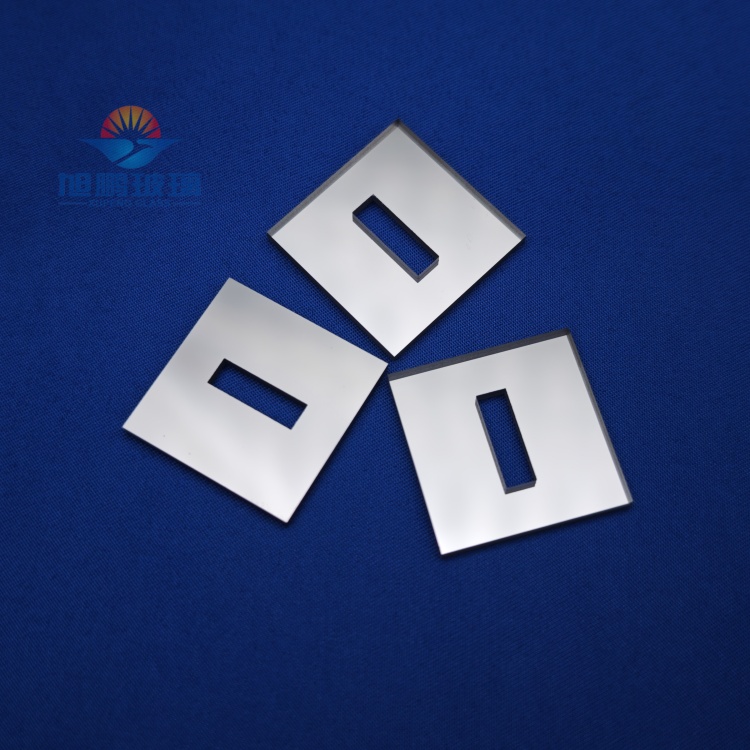
Silver-coated Mirror, Grooved at the Center of Glass
Used for decorative panels, lighting reflectors, exhibition displays and architectural detail work. Center grooving enables precise alignment where mirror glass must sit around fixtures or structural reveals.
View product specification
Round Aluminosilicate Glass with Chamfered Ground Edges and Metal Coating
A high-performance round window format suited to sensor covers, high-temperature viewports and instrument assemblies. Chamfered ground edges and metal coating support demanding industrial and Front Range lab environments.
View product specification
Ultra-thin Optical Glass Sheets Schott B270/D263T Semiconductor Electronic Glass Blank Cutting & Processing
For photonics, sensor windows, display prototypes and semiconductor-related R&D. Precision cutting and processing can be reviewed against your thickness, tolerance and edge-quality requirements.
View product specification
Corning EXG Glass Wafer Double-Sided Polished for Custom Semiconductor Glass Wafers & Solar Panels
Corning EXG alkali-free glass wafers are relevant to semiconductor, MEMS, display and solar research programs. Double-side polishing supports flatness and surface-quality requirements.
View product specification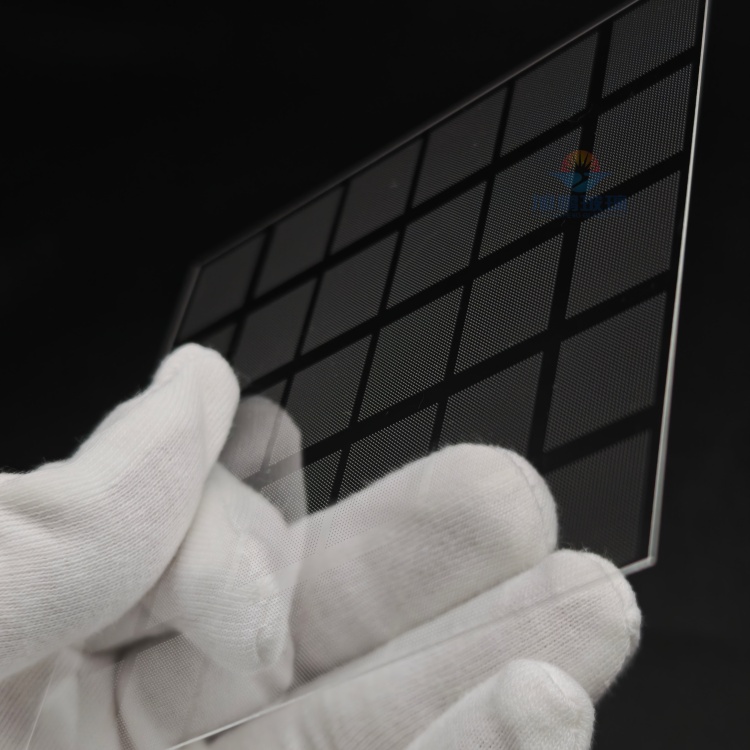
TGV Drilled Packaging Glass Substrate, Precision Laser Microvia Glass
For advanced packaging, RF, MEMS and microelectronic development. Laser-drilled microvias require tight communication on diameter, pitch, taper, surface finish and downstream metallization.
View product specification
Corning Ultra-Thin Glass Sheet, Optical Grade Glass Wafer Substrate with Chamfered Edge
For flexible electronics, optical device development and precision display research. Chamfered edges help reduce handling risk where thin glass moves through cleaning, coating or inspection steps.
View product specification
Custom Ultra-White Clear Tempered Glass Socket Decorative Cover for Stairways
For residential, hospitality and commercial interiors that need clean visual detail around stairways, sockets and feature walls. Ultra-white tempered glass can be cut and finished to suit the visible design face.
View product specificationHow Denver Buyers Can Compare Screen-Printed Glass Factories and Wholesalers
The search phrase “glass screen printing factories & wholesalers in Denver” combines several buying intents: local availability, custom fabrication, screen printing, tempering, optical coating and wholesale pricing.
Denver buyers often start with a practical question: can a local supplier handle custom screen-printed glass, or should the project go directly to a manufacturing factory? The honest answer is that both routes can work, but they solve different problems. A Denver-area glass wholesaler or fabricator is useful when you need stock sheet, short-run cutting, urgent replacement, local delivery or a physical sample handoff. A factory-direct custom manufacturer is usually more effective when the part requires controlled printing, tempering, CNC edging, drilling, AR/AG coating, optical selection, batch traceability and repeat production to the same drawing.
Screen-printed glass is not ordinary signage. In architectural, appliance, display and instrument applications, the print is often a ceramic ink system fired into the glass surface, which makes the graphic durable, cleanable and suitable for tempered safety glass. Other projects use UV-cured or organic inks on annealed glass, especially for indoor decorative work where the performance requirement is lower. Before you compare prices, separate the project into five specification layers: substrate, fabrication, print, coating and delivery. A supplier that can quote only the glass size but cannot discuss print side, ink type, edge clearance, color tolerance and packing may create hidden costs later.
For Denver specifically, the local environment creates useful design questions. High-altitude UV exposure is strong, the air is dry, and freeze-thaw cycles can stress exterior assemblies. Glass used in outdoor wayfinding, transit shelters, brewery patios, mountain-facing windows or rooftop signage should be reviewed for UV stability, cleanability, impact safety and edge quality. Indoor projects in Denver offices, hotels, laboratories and university buildings may place more weight on clarity, anti-glare readability, low reflection and consistent printed color across batches.
Localized Applications: Where Screen-Printed and Technical Glass Performs in Denver
From Front Range hospitality to advanced laboratories, the same glass category can require very different print, coating and safety specifications.
Breweries, Taprooms and Hospitality
Denver’s brewery and restaurant culture creates steady demand for branded glass partitions, menu boards, decorative panels and durable printed glass details. Ceramic-ink printing is easier to clean and more abrasion-resistant than many decorative films in high-touch areas.
Outdoor Wayfinding and Transit
Printed glass for transit stops, bike-share stations, campus maps and public wayfinding must resist UV exposure, cleaning chemicals and weather. Anti-glare etched glass or AG-coated glass can improve readability where sunlight and snow glare are common.
Architectural Facades and Lobbies
Screen-printed patterns, privacy bands, spandrel graphics and lobby feature glass are common in Denver commercial interiors. Specify print coverage, ink color, viewing side, edge clearance and whether the printed surface must face the interior or exterior.
Electronics, HMI and Display Covers
Control panels, touch modules, kiosks and instrument windows often need printed windows, icons and borders combined with AR anti-reflective or AG anti-glare coatings. Optical clarity and print alignment matter as much as the glass thickness.
Healthcare, Education and Public Buildings
Denver hospitals, clinics, schools and universities need glass that is easy to clean, resistant to daily contact and consistent with safety glazing requirements. Printed privacy bands and wayfinding graphics can reduce the need for applied films.
Labs, Photonics and Advanced Manufacturing
Colorado’s research and advanced-manufacturing ecosystem uses K9, quartz, sapphire, borosilicate, Corning EXG, ultra-thin glass and TGV substrates. These projects require optical material selection, precision polishing and careful packing more than decorative printing.
Denver Glass Sourcing Trends Shaping 2025–2026 Purchasing Decisions
The local market is moving toward higher specification control, more mixed-material assemblies and a hybrid sourcing model that pairs local responsiveness with factory-direct customization.
UV-Durable Print Systems
Outdoor signage, mountain-facing glazing and transit projects are pushing buyers toward ceramic-ink systems, AG surfaces and better ink-color control instead of low-cost decorative films.
Hybrid Local and Factory-Direct Sourcing
Denver wholesalers remain valuable for stock and speed. Custom OEM programs increasingly move to factories that control printing, tempering, coating and QC under one roof.
Display Integration
Printed glass is increasingly combined with touch sensors, LED lighting, cameras and displays. Buyers need partners who understand print alignment, AR/AG coatings and optical clarity.
Traceability and Change Control
Repeat orders for Denver customers require documented drawings, material batches, print colors and inspection criteria, not informal samples alone.
Specification Matrix: Match the Glass to the Denver Use Case
Use this matrix to shortlist a substrate and process before requesting a quote. Final production details should always be confirmed against your drawing, installation method and agreed inspection standard.
| Denver use case | Recommended glass route | Print / coating options | What to specify |
|---|---|---|---|
| Brewery partitions and branded interiors | Ultra-clear tempered glass or ultra-white tempered glass | Ceramic screen print, matte AG, custom logos | Viewing side, ink color target, edge polish, hole locations, safety glazing requirement |
| Outdoor wayfinding and transit signage | Tempered glass with UV-stable print | Ceramic frit, AG etching, anti-glare coating | Weather exposure, cleaning chemicals, reflection level, colorfastness, mounting method |
| Control panels and display windows | Ultra-clear tempered, AR/AG coated glass | Printed windows, icons, borders, AR or AG coating | Print tolerance, gloss or haze value, coating side, transmission target, touch-module integration |
| Appliance and socket decorative covers | Ultra-white tempered glass | Printed graphics, selective coating, custom cut-outs | Flatness, visible surface, cut-out tolerance, edge finish, packing for installation |
| High-temperature viewports and sensors | Aluminosilicate, quartz or sapphire | Metal coating, optical polish, chamfered edges | Temperature range, transmission spectrum, sealing surface, edge quality, cleaning process |
| Semiconductor and photonics development | Corning EXG, Schott B270/D263T, ultra-thin glass, TGV glass | Double-side polishing, laser drilling, wafer cutting | Thickness, CTE, flatness, microvia pitch, surface finish, cleanliness and packaging |
Why Build a Factory-Direct Relationship While Sourcing in Denver?
Dongguan AUVE Glass Co., Ltd. is a deep-processing glass manufacturer integrating R&D, design, production and export. We are factory-direct, not a Denver retail storefront, which is an important distinction for custom programs.
In-House Process Control
Cutting, CNC edging, drilling, tempering, silk-screen printing, AR/AG coating, polishing and inspection are coordinated as a controlled routing rather than disconnected subcontract steps.
Custom-to-Drawing Fabrication
Send CAD, DXF or PDF drawings with thickness, tolerance, edge, hole, printing and coating requirements. Engineers review manufacturability before production so late surprises are reduced.
Material Breadth
Ultra-clear low-iron glass, flat and curved tempered glass, AR anti-reflective glass, AG anti-glare glass, K9, quartz, sapphire, borosilicate, SCHOTT B270/D263T, Corning EXG and ultra-thin glass.
Traceable Quality Route
Production follows defined process standards and a documented quality management approach. Dimensional, visual and optical checks can be agreed before mass production.
Export Experience
Products are exported to markets including the United States, Canada, Russia, South Korea, Japan and Australia. Fragile-glass packing and Incoterm choices can be planned for Denver delivery.
Fast Technical Reply
Average response time is within 7 hours. For a Denver quote, include quantity, delivery city, target date, drawing, print artwork and whether a sample is required.
Factory Evidence, Not Just a Directory Listing
AUVE Glass is located in Songshan Lake, Dongguan, Guangdong, China, within a major electronics and optoelectronics cluster. The company operates with a team of 51–100 employees in a 1,001–2,000 m² facility and was established in 2018. Its manufacturing scope covers flat and curved tempered glass, ultra-clear low-iron glass, laminated and painted glass, touch screen and LCD cover glass, smart control panel glass, LED lighting glass, instrument glass, AR high-transmittance glass and AG anti-glare glass.
The company philosophy is “focusing on high-end glass, pioneering and innovating.” For Denver buyers, that matters when the project crosses categories: a printed display cover may also need AR coating; a mirror part may need a precise groove; a laboratory window may need quartz or sapphire; a foldable display concept may need ultra-thin glass. A supplier that understands multiple glass technologies can often reduce coordination risk.



From Drawing to Denver Delivery: Six Controlled Production Steps
Each step is reviewed against the application. For screen-printed glass, the sequence of printing and tempering must be aligned with the ink system and the final safety requirement.
Drawing and DFM Review
Check dimensions, thickness, tolerances, holes, edge clearance, print coverage, color, coating side and installation constraints before cutting.
Cutting and CNC Shaping
Cut float, low-iron, optical or technical glass stock; shape, drill, bevel, groove or edge according to the drawing.
Screen Printing and Ink Control
Apply ceramic or suitable screen-print ink with attention to color, opacity, registration, pinholes, edge distance and viewing direction.
Tempering and Coating
Where required, temper for safety glass performance; add AR, AG, mirror or other functional coating based on the application.
Inspection and Documentation
Inspect dimensions, visual defects, print appearance and agreed optical characteristics. Record the approved standard for repeat orders.
Export Packing and Freight
Use protective film, interleaving material, foam protection and strong export packing. Support Incoterms such as FOB, CFR, CIF, EXW, DDP, DDU, DAF or express.
Local Denver Wholesaler vs Factory-Direct Manufacturer: A Practical Comparison
Use this comparison to choose the right sourcing route for each project rather than forcing every order through one model.
| Decision factor | Denver wholesaler / local supplier | Factory-direct custom manufacturer |
|---|---|---|
| Best-fit project | Stock glass, urgent replacement, local sample handling and simple cut-to-size needs | Custom screen-printed glass, OEM repeats, optical glass, AR/AG coating, complex holes and edges |
| Engineering communication | Convenient for local meetings; may relay questions to an outside factory | Direct technical discussion on material, print, tempering, coating and inspection standard |
| Customization depth | Depends on local equipment and supplier network | Broader control over cutting, edging, drilling, printing, tempering, coating and packing |
| Cost structure | Fast local service can justify convenience cost; stock may reduce lead time | Factory-direct pricing is often stronger for repeat volumes, but freight planning matters |
| Change control | Good for simple repeat items when the local supplier owns the specification | Stronger when drawings, print files, color targets and inspection criteria are documented |
| Delivery to Denver | Local pickup and regional delivery can be faster for urgent stock items | Ship by air, sea or express with planned fragile-glass packing and chosen Incoterms |
Denver Purchasing FAQs for Screen-Printed Glass
These are the questions Denver sourcing teams, engineers and distributors commonly ask before requesting a custom glass quote.
Are there glass screen printing factories in Denver that can handle custom OEM work?
Denver has glass fabricators and screen-printing suppliers, but capabilities vary widely. Some handle decorative print, while others focus on architectural glazing or stock distribution. For tempered safety glass, AR/AG coating, optical materials or semiconductor glass, verify the actual production route rather than assuming a local listing owns every process.
What should I include in an RFQ for a Denver screen-printed glass project?
Include the drawing, glass type and thickness, dimensions and tolerances, edge profile, hole positions, print artwork, viewing side, ink color target, coverage percentage, coating requirement, quantity, sample need and delivery city. State whether the glass must be tempered, and whether the print must survive exterior UV exposure or repeated cleaning.
How does Denver’s high-altitude environment affect printed glass?
The main issues are UV exposure, temperature swings, dry air and snow or cleaning abrasion. For exterior projects, ceramic-ink systems and appropriate tempered glass are often better choices than low-durability decorative films. For display readability, AG anti-glare glass or AR coating may be more useful than darker print coverage.
Can you ship fragile custom glass to Denver safely?
Export packing can use protective film, interleaving material, foam corner protection and reinforced cartons or wooden crates. The correct method depends on glass size, thickness, coating and quantity. Air, sea and express shipments can be reviewed with Incoterms including FOB, CFR, CIF, EXW, DDP, DDU and DAF.
What is the minimum order quantity for screen-printed glass?
MOQ depends on substrate and process. Coated and optical glass parts often start from lower quantities, while standard ultra-clear tempered parts may require larger runs. New Denver projects can discuss sample and pilot quantities before committing to mass production, provided the drawing and inspection criteria are clear.
Which products are most relevant for Denver technical buyers?
Common technical inquiries include ultra-thin SCHOTT B270/D263T glass, Corning EXG wafers, TGV drilled substrates, ultra-thin optical glass, K9 optical glass, quartz windows, sapphire windows, AR/AG display glass and custom printed tempered glass for HMI panels.
Request a Denver-Specific Screen-Printed Glass Quote
Send your drawing, material, print artwork, quantity, coating requirement and target delivery date for Denver, Colorado. We will review manufacturability, suggest the most practical glass route and confirm the next production step.