Eight Glass Grades Specified for Scratch-Critical Assemblies
Every item below is produced to drawing — size, thickness, tolerance, edge profile, hole pattern, silk-screen artwork and coating stack can all be adapted. Items marked with optical or coated processes typically start at 10–50 pieces.
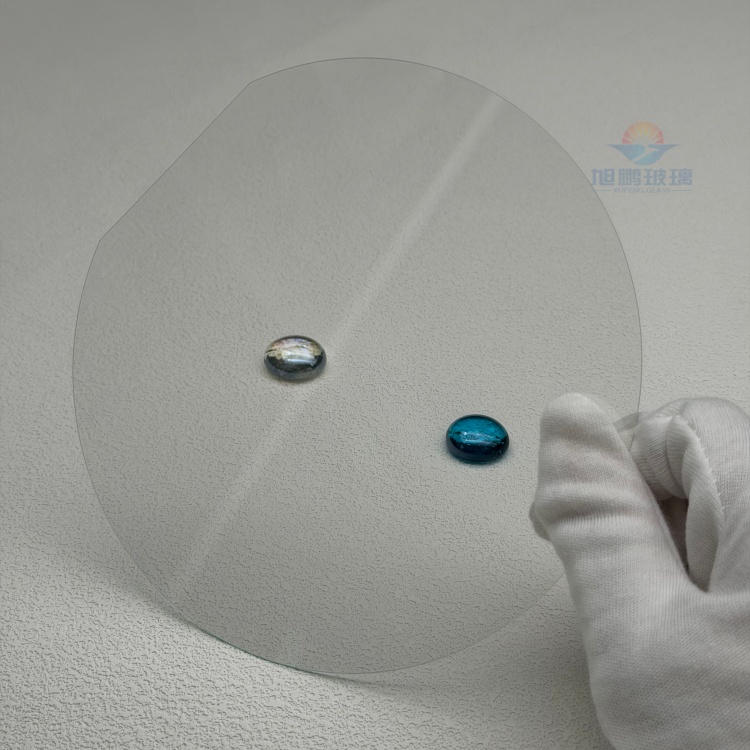
Ultra-thin Optical Glass Sheets SCHOTT B270 / D263T — Blank Cutting & Processing
Thin borosilicate substrates for sensor covers, microfluidic chips and display cover blanks. CNC cutting, laser scribing, chamfering and precision drilling — with edge quality controlled so that handling wear does not create visible scratches.
View specification
High-Transmittance AR Coated Optical Glass, Ultra-Clear Tempered
Double-sided anti-reflective coating that holds surface reflection near 0.5% per face while keeping the impact strength of tempered low-iron glass. A common choice for touch modules and kiosk displays that face daily wipe-down.
View specification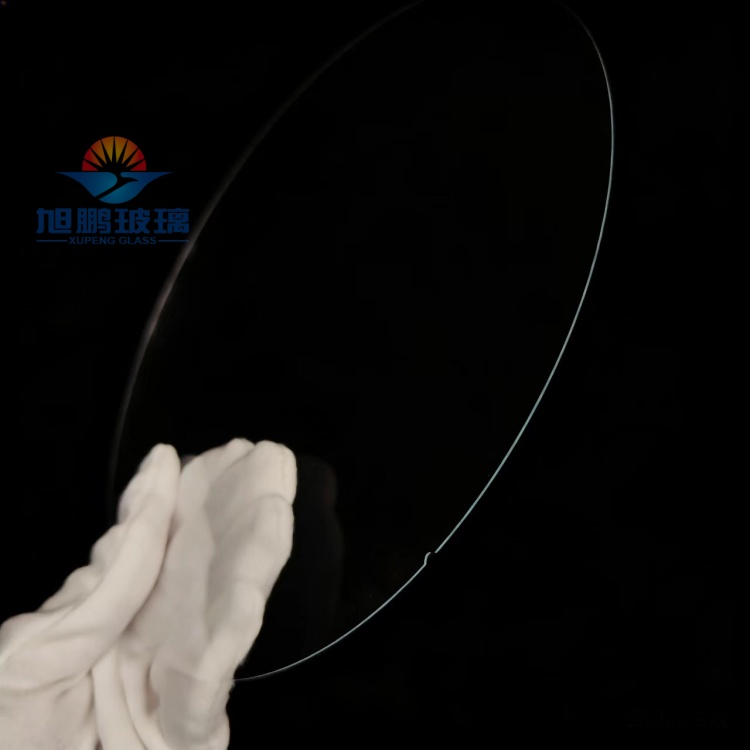
Corning EXG Glass Wafers — Double-Sided Polished Custom Fabrication
Alkali-free aluminoborosilicate with a low coefficient of thermal expansion and sub-micron flatness after double-side polishing. Used for MEMS, RF devices and temporary bonding carriers in round or square formats.
View specification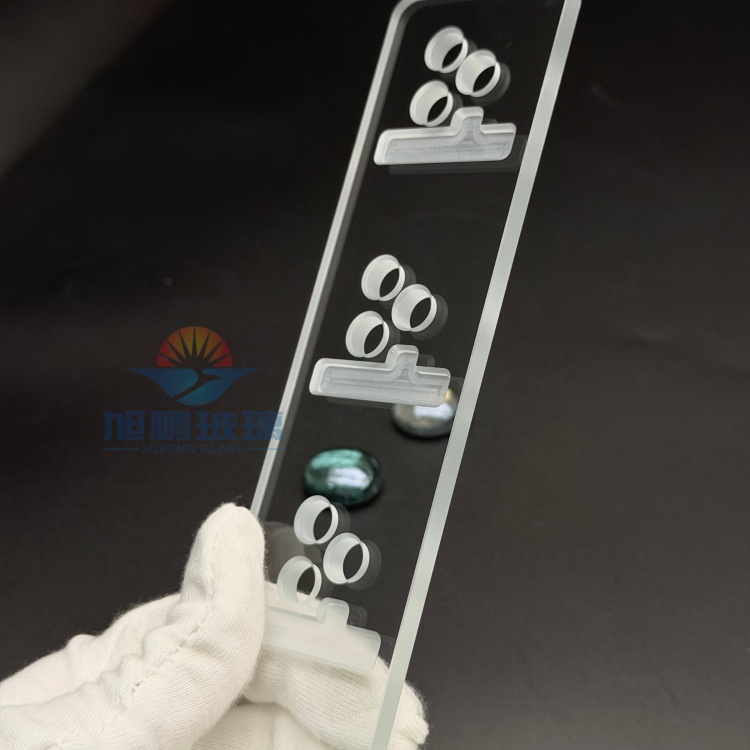
Ultra Clear High Light Transmission Tempered Glass Panel — CNC Arc Polishing, Drilling & Grooving
Low-iron float glass at roughly 91% visible transmission, thermally tempered to about four to five times annealed strength. Drilling, grooving and arc polishing are done before tempering so the finished panel keeps clean, burr-free edges.
View specification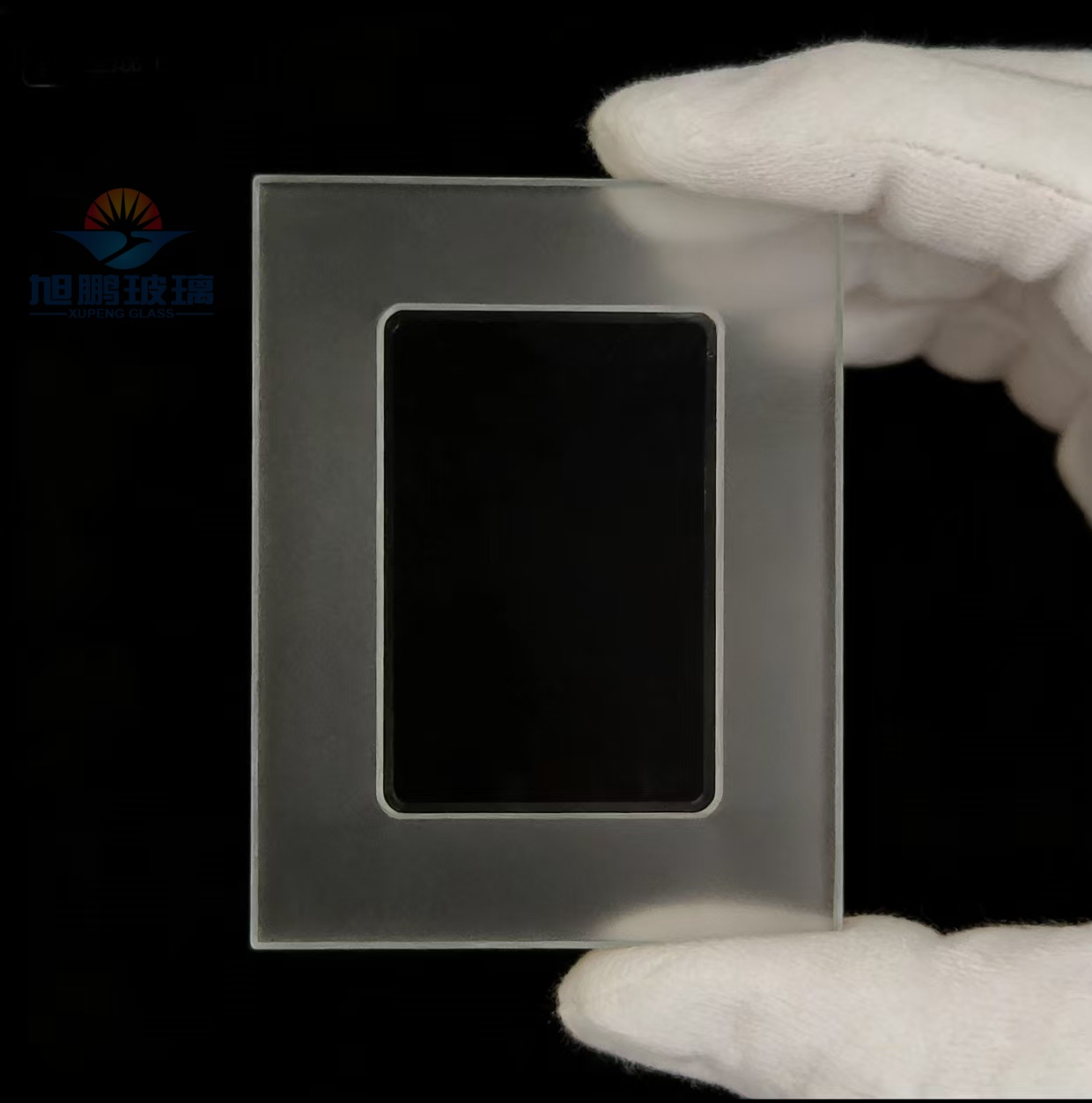
Custom Ultra-White Clear Tempered Glass Socket & Switch Decorative Cover
Ultra-white tempered covers with custom cut-outs and printed graphics for stairways, lobbies and hospitality interiors. Specified where coastal humidity and routine alkaline cleaning must not cloud the surface finish.
View specification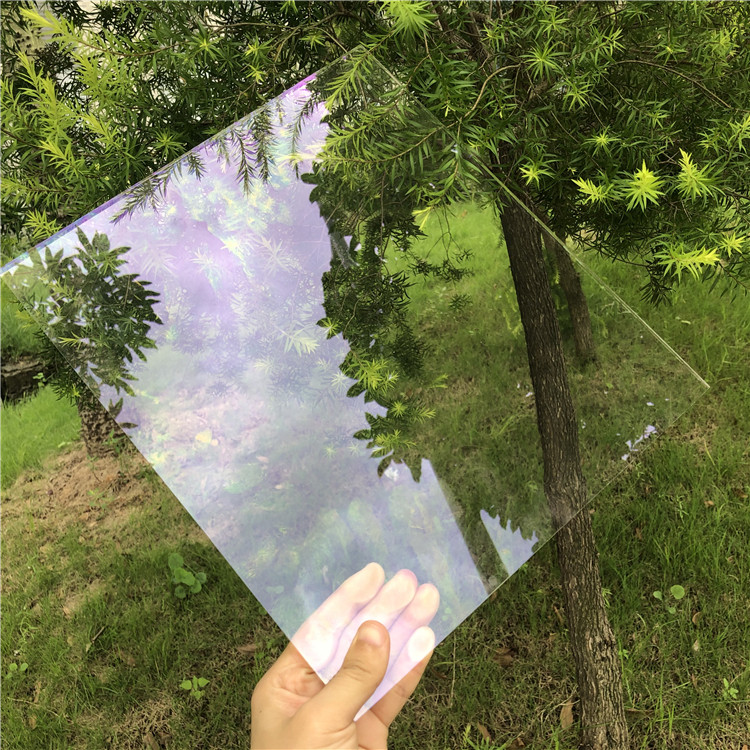
High-Transmittance Anti-Reflection (AR) Coated Optical Glass
Single-side or double-side AR coating with broadband and V-coat options, finished with a hard top layer that resists steel-wool and eraser abrasion testing. Built for instrument windows that are cleaned many times per shift.
View specification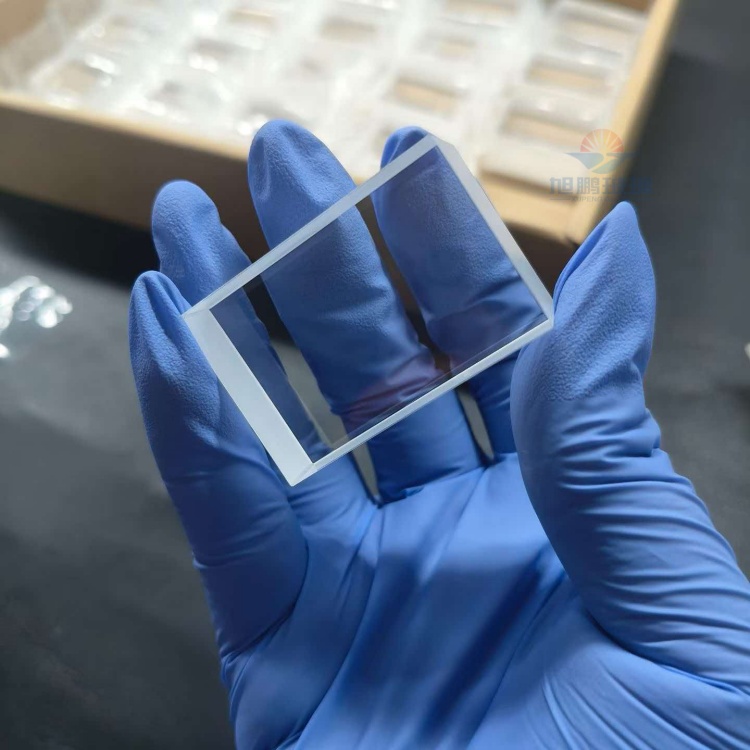
High UV Transmission Thick Gauge Quartz Glass Plate
Fused quartz with strong deep-UV transmission and excellent thermal shock resistance, used in UV-C disinfection chambers, UV curing stations and high-temperature viewports. Thick plates are edge-polished and chamfered for sealing.
View specification
High Transmittance Sapphire Glass — Scratch Resistant & High Temperature Resistant Sheets
Synthetic sapphire at Mohs 9 with a melting point near 2,040 °C. The substrate of choice for sensor windows, high-pressure sight glasses and any surface that must stay optically clear after contact with grit, tools or repeated cleaning.
View specificationWhy San Diego Buyers Specify Scratch-Resistant Glass Instead of Generic Glass
Geography, industry mix and inspection culture all push this market toward harder substrates and wear-rated coatings.
San Diego County evaluates glass hardness differently from most markets, and the reason is geographic. From La Jolla to Carlsbad, the coastal belt sees more than 260 sunny days a year, high cumulative UV dose, and salt-laden aerosol carried in on Pacific air masses. Layer onto that the Navy and Military Sealift operations, the biotech corridor running through Torrey Pines and Sorrento Mesa, and the photonics and laser labs clustered around UC San Diego — and you arrive at a specification profile that demands a transparent window material able to survive abrasive dust, repeated chemical cleaning, salt fog and UV exposure without losing haze performance, transmission or appearance.
This is precisely where scratch-resistant glass stops being a premium option and becomes a project requirement. Acrylic hazes within three to six months in outdoor enclosures. A single failed Taber abrasion result can trigger a full-lot rejection at incoming inspection. That is why our factory, Dongguan AUVE Glass Co., Ltd., organises its quality system around traceability rather than appearance alone: every batch carries a documented raw-sheet origin, process route, coating specification and inspection record before your IQC team signs off.
The deeper point is that scratch resistance is not a single property. It is the combined outcome of substrate hardness, surface finish, coating chemistry and edge quality. Our catalogue carries at least three material families that answer this problem — synthetic sapphire at Mohs 9, fused quartz, and chemically or thermally strengthened ultra-clear glass — each with its own cost curve and failure mode. The sections below walk through them in engineering terms rather than marketing terms.
Where Scratch-Resistant Glass Earns Its Place in San Diego County
Six application clusters where our optical, sapphire and tempered glass products are already specified by West Coast OEMs.
Biotech & Life Science Instruments
Microfluidic chips, flow cells, cuvette windows and instrument covers in the Torrey Pines and Sorrento Mesa corridor are wiped with alcohol and bleach across multiple shifts. Sapphire and fused quartz windows are standard because a single scratch scatters stray light straight into the optical readout path.
Defense, Naval & Aerospace Systems
Sensor windows, sight optics and sealed viewports operating out of Coronado, Point Loma and Miramar face salt fog, jet fuel, hydraulic fluid and abrasive particulate. Environmental qualification frequently hinges on coating adhesion, abrasion and haze change — so the coating system matters as much as the substrate.
Optics, Lasers & Photonics Labs
High-power laser windows, beam-splitter prisms and interferometer substrates demand high bulk damage threshold combined with coatings that tolerate frequent cleaning. B270, K9, fused quartz and sapphire cover most of the demand we receive from the UCSD research and startup ecosystem.
Marine & Coastal Outdoor Equipment
Viewports for autonomous surface vessels, water-quality sondes and dock-side sensor housings sit in salt fog, blowing sand and relentless UV. AR-coated quartz or sapphire typically outperforms frosted acrylic on light transmission after two years of coastal service.
Medical Devices & Diagnostics
Endoscope cover lenses, reader windows and disposable cartridge windows. San Diego device makers consistently ask the same question: can the supplier document the process? We answer with batch numbers, raw material origin and inspection reports that support supplier qualification rather than replace it.
Smart Buildings & Architectural Interfaces
In the Gaslamp Quarter and Marina District, glass control interfaces, elevator panels and media facades rely on AR or AG treated glass. Near coastal terraces, tempered ultra-clear glass is often specified because surface wear shows up immediately against a clean architectural finish.
What San Diego Sourcing Teams Are Watching Right Now
Six shifts we see in RFQ packages and supplier scorecards from Southern California buyers.
Quantified Incoming Wear Testing
IQC teams increasingly specify Taber abrasion (CS-10F wheels, 250 or 500 cycles) with a numeric haze-change limit instead of a purely visual acceptance criterion. Defining the test standard before the pilot build keeps the transition to mass production predictable.
Dual Sourcing, Single Process Authority
Trade policy has pushed some volume toward Vietnam and Malaysia, yet many San Diego OEMs still require deep-processing to stay with one qualified plant so drawings, tolerance stacks and first-article reports remain consistent across production lots.
California Compliance Documentation
Proposition 65 labelling, REACH statements for inks and coatings, and energy-related declarations are now requested inside the quotation package rather than at the end of procurement. We issue material declarations alongside each quote to keep that paperwork off the critical path.
Port Routing & Lead-Time Planning
Most shipments enter through the Los Angeles and Long Beach gateways and move south by truck to San Diego County, or arrive by air through SAN, or cross at the Otay Mesa land port for customers with Mexican assembly. DDP quotations that include duty and final-mile delivery make landed cost easier to compare.
Outdoor Readability = AR + AG Together
Kiosks, EV charging stations and marine instrumentation increasingly combine anti-reflective coating for transmission with anti-glare etching for diffuse reflection control. The right haze level has to be selected alongside coating abrasion performance, not evaluated separately.
Small Batches, High Mix
A dense hardware startup ecosystem means quantities of 10 to 50 pieces are routine. Coated and optical parts typically start at 10–50 pieces, while standard ultra-clear tempered parts usually begin at 100–500 pieces, with pilot quantities negotiable for new programmes.
Hardness, Abrasion and Coatings: A Short Technical Brief
Use this reference to shortlist a substrate before a drawing is released. Final specifications are always confirmed against your drawing and agreed test standard.
Two numbers are confused more often than any other in glass specifications. Pencil hardness (9H) describes how a coating resists a pencil lead scratch — it does not measure substrate Mohs hardness. A 9H coating applied over soft soda-lime glass will still be scratched by silicon carbide grit wiped across the surface. Genuine abrasion resistance emerges from the combination of substrate hardness, coating adhesion, surface friction and edge quality; a sharp CNC edge frequently causes more user-visible damage than the glass face itself.
| Material | Typical Hardness | Best-Fit Uses | Available Processing |
|---|---|---|---|
| Synthetic sapphire | Mohs 9 | Sensor windows, high-temperature and high-pressure sight glasses | Cutting, polishing, chamfering, metallisation |
| Fused quartz (UV grade) | Mohs ~7 | UV-C disinfection, laser optics, high-temperature viewports | Thick-plate cutting, edge polishing, drilling |
| Borosilicate (B270 / D263T) | Mohs ~5.5–6 | Cover blanks, microfluidics, display substrates | CNC cutting, laser scribing, AR coating |
| Corning EXG (alkali-free) | Mohs ~6 | Semiconductor wafers, MEMS, temporary carriers | Double-side polishing, wafer dicing |
| Ultra-clear tempered (low-iron) | Mohs ~5.5–6 | Control panels, lighting glass, architectural panels | Tempering, silk-screen printing, drilling, grooving |
| Coated glass (AR / AG) | Substrate-dependent; coating governs wear | Display and instrument windows, outdoor kiosks | Single/double-side AR, etched AG, hard top layer |
When the phrase “scratch resistant” appears in a project specification, the test clauses normally cluster around five methods: steel wool abrasion (0000 grade, 500 g load, 10 cycles), eraser abrasion, Taber abrasion with CS-10F wheels at 250 or 500 cycles, pencil hardness for coatings, and combined salt fog plus UV ageing for coastal service. We recommend agreeing the exact clauses — load, cycle count and haze-change limit — before the first pilot lot is produced, because those three variables decide whether a perfectly good part passes or fails.
From Our Dongguan Plant to a San Diego Receiving Dock
Fragile-goods packing, flexible Incoterms and predictable routing for West Coast deliveries.
For San Diego buyers, DDP is the most frequently requested term because it folds duty, customs clearance and final-mile delivery into a single landed number that procurement can compare against a domestic distributor quote. The routing options are straightforward: full-container or LCL ocean freight into the Los Angeles and Long Beach gateways with a one to two day truck leg south on Interstate 5; air freight into San Diego International for urgent pilot batches; or a land crossing at Otay Mesa for customers running Mexican assembly alongside California operations.
Allow production lead time plus transit time when building a schedule. As a working reference, uncoated tempered glass parts usually run 7–15 days in production, while coated and optical parts run 15–25 days. Export packing is engineered for fragile glass rather than general industrial goods: PE protective film, foam corner protection, moisture barrier bags and fumigation-free wooden crates or reinforced cartons with batch labelling on the outside of every box.
- Accepted delivery terms: FOB, CFR, CIF, EXW, DDP, DDU, DAF and express delivery.
- Export markets served: United States, Canada, Russia, South Korea, Japan, Australia and others.
- Packing methods: interleaving film or paper, foam corners, desiccant, fumigation-free wooden crates.
- Documentation: commercial invoice, packing list, batch inspection record and material declaration on request.
 Songshan Lake · Dongguan · China
About Dongguan AUVE Glass Co., Ltd.
Dongguan AUVE Glass Co., Ltd. is a deep-processing glass manufacturer that integrates R&D, design, production and export under one roof in Songshan Lake, Dongguan — one of China's leading electronics and optoelectronics clusters. We serve OEMs, brand owners and distributors rather than retail customers, and we process flat and curved tempered glass, ultra-white and low-iron glass, laminated and painted glass, touch screen and LCD cover glass, smart control panel glass, LED lighting glass, instrument glass, AR high-transmittance glass and AG anti-glare glass.
Our optical range extends to K9, fused quartz, sapphire, borosilicate and Corning EXG alkali-free glass. In-house operations cover precision CNC cutting, edging, beveling and grooving, drilling, thermal tempering, silk-screen printing, AR/AG coating and final quality inspection. Guided by our philosophy of “focusing on high-end glass, pioneering and innovating”, we keep investing in skilled engineers and advanced equipment so that each inquiry receives a manufacturability review before production rather than after a non-conformance.
For San Diego buyers this consolidation matters. When cutting, drilling, tempering, printing and coating all happen in one plant, you remove the third-party handling steps where scratches most often appear, and you keep one continuous traceability chain from raw sheet to packed carton.
- Business Type
- Manufacturer & Trading
- Established
- 2018
- Location
- Dongguan, Guangdong, China
- Team Size
- 51 – 100 Employees
- Facility
- 1,000 – 2,000 m²
- Response Time
- ≤ 7 Hours Average
- Delivery Terms
- FOB / CFR / CIF / EXW / DDP / DDU / DAF
- Main Markets
- USA · Canada · Russia · Japan · Korea · Australia
Precision Cutting
Automatic and CNC cutting from float, low-iron and optical stock.
CNC Edging & Drilling
Edge grinding, beveling, grooving, holes and laser punching.
Tempering
Flat and curved thermal tempering for impact and thermal resistance.
Silk-Screen Printing
High-temperature ceramic inks, logos, windows and icons.
AR / AG Coating
Anti-reflective, anti-glare, mirror and functional coatings.
QC & Export Packing
Dimensional, visual and optical checks, then protective packing.
Frequently Asked Questions from San Diego Buyers
Direct answers to the questions procurement and engineering teams in Southern California ask most often.
Do you ship scratch-resistant glass to San Diego, and can you quote DDP?
Yes. San Diego County is served routinely through the Los Angeles and Long Beach ports with truck delivery south on Interstate 5, through San Diego International for urgent batches, and via the Otay Mesa crossing for customers with Mexican operations. We quote FOB, CFR, CIF, EXW, DDP, DDU, DAF and express delivery, so a DDP quotation including duty and final-mile delivery is normally available on request.
What lead time should we plan for from order to arrival in San Diego?
Production typically runs 7–15 days for uncoated tempered glass parts and 15–25 days for coated and optical parts, with samples usually faster. Ocean transit to Los Angeles or Long Beach plus the truck leg to San Diego generally adds two to four weeks depending on sailing schedules. Air freight shortens the transit leg to a few days at higher cost — useful for pilot builds and line-down situations.
Which material is best for outdoor equipment exposed to salt fog and UV in coastal San Diego?
For optical performance and wear combined, AR-coated fused quartz or sapphire is usually the strongest choice because the substrate itself resists abrasion once the coating is consumed. Where impact resistance and cost matter more than absolute clarity, thermally tempered ultra-clear low-iron glass with a hard-coated AR layer is a practical compromise. We recommend agreeing a combined salt fog plus UV ageing clause before release, since that pairing exposes coating weaknesses faster than either test alone.
Do you have local stock or a distributor in California?
We operate factory-direct from Dongguan and do not maintain bonded inventory in California. That said, many West Coast customers hold a buffer stock locally and replenish with scheduled production runs. For repeat programmes we can hold tooling, artwork and approved first-article reports so re-orders skip the engineering review stage.
What is the minimum order quantity for coated and optical parts?
MOQ depends on material and process rather than on a single fixed number. Many coated and optical glass parts start from 10 to 50 pieces, while standard ultra-clear tempered parts typically start from 100 to 500 pieces because tempering and printing benefit from batch efficiency. Sample and pilot quantities are discussed openly for new projects, including startup programmes built around small initial builds.
Can you supply the abrasion and optical test reports our IQC team requires?
Yes. Batch inspection records covering dimensional checks, visual criteria, transmission or haze measurement and coating adhesion can be issued with the shipment, and material declarations for inks and coatings are available alongside the quotation. If your incoming inspection follows a specific internal standard, send that document with the drawing so the inspection plan is aligned from the first lot rather than retrofitted later.
Can you combine drilling, silk-screen printing and AR coating on the same part?
Yes — that is the advantage of consolidating the process chain in one plant. Holes, cut-outs and grooves are machined before tempering; ceramic ink is fired during the tempering cycle or in a dedicated furnace; and AR or AG coating is applied after the glass geometry is final. Sequencing matters, because coating a part that will later be drilled invites edge chipping and coating damage.
How quickly will you respond to a drawing and quantity enquiry?
Our average response time on technical inquiries is within 7 hours. Sending a CAD, DXF or PDF drawing together with thickness, tolerance, edge, hole, printing and coating requirements allows our engineers to return a manufacturability review and a quotation in a single pass. Email info@auveglass.com or use the quote button on this page to start the review.
Send a Drawing — Get an Engineering Review for Your San Diego Project
Share size, thickness, tolerance, edge profile, hole pattern and finishing requirements. Our engineers will confirm material grade, process route and lead time, usually within 7 hours.
info@auveglass.com