Eight TV & Display Glass Products Philadelphia Buyers Quote First
Every item below can be re-engineered to your drawing — thickness, tolerance, edge profile, holes, silk-screen graphics and AR/AG coating. Sample quantities start from 10 pieces on most coated and optical parts.
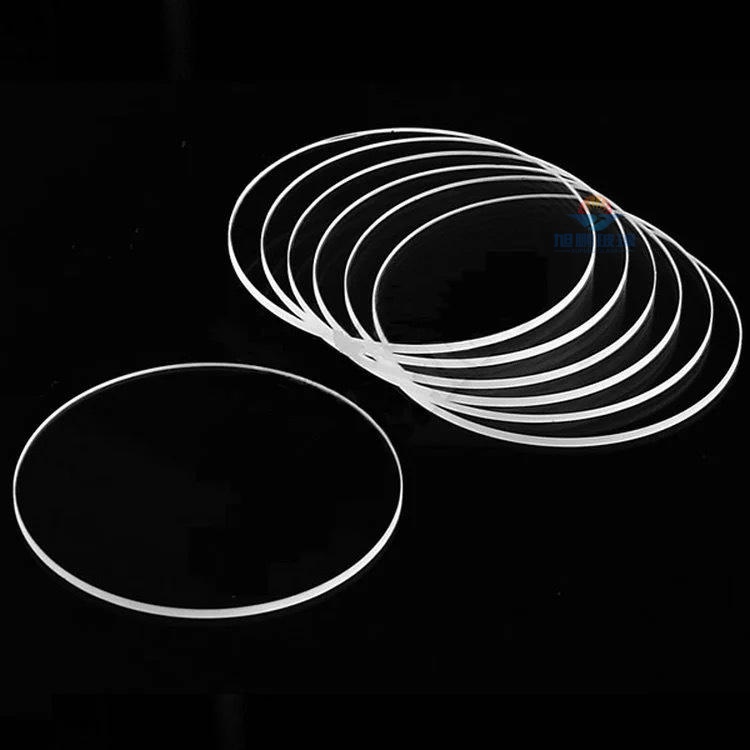
Corning EXG Alkali-Free Glass, UV High-Transmittance Optical Window Substrate
Aluminoborosilicate substrate with high UV transmission and no mobile alkali ions. Used for display process windows, lithography ports and inspection stations where sodium contamination and UV loss are unacceptable.
View specifications
Corning Ultra-Thin Glass Sheet, Optical Grade Glass Wafer Substrate with Chamfered Edge
Thin, chemically stable glass sheets with chamfered edges to reduce chipping during handling. A preferred substrate for slim display stacks, flexible cover laminates and thin optical windows.
View specifications
Precision CNC Cut & Holed, High-Temperature Silk Screen Tempered Glass, Drilled Ultra-Clear Small Round Glass Discs
CNC-drilled tempered discs with fired ceramic ink graphics. The same process route covers TV bezel windows, speaker apertures, IR receiver ports and decorative trim rings.
View specifications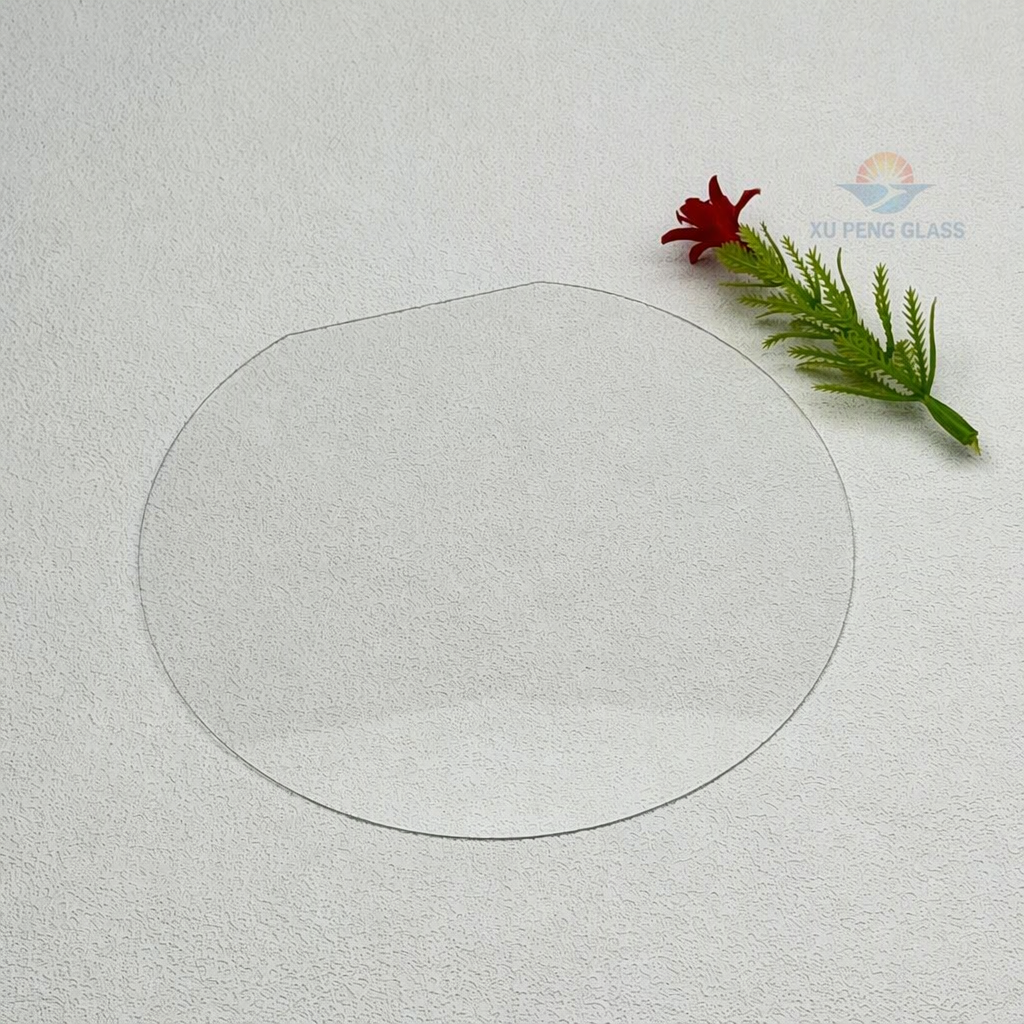
Ultra-thin High-precision Optical Glass Wafer, Corning / SCHOTT / Fused Silica
Double-side polished wafers in Corning, SCHOTT and fused silica grades. Selected where flatness and transmitted wavefront matter more than price per square metre.
View specifications
High-transmittance AR Coated Optical Glass, Ultra-clear Tempered Glass
Anti-reflective coating on low-iron tempered glass, typically reducing surface reflection to roughly 0.5–1% per side. The workhorse front cover for TV and monitor assemblies.
View specifications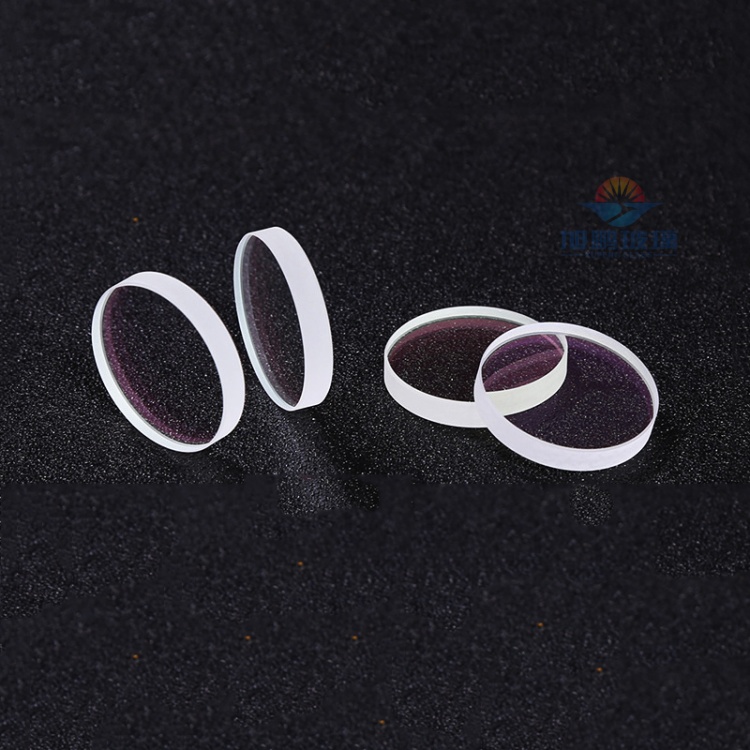
Ultra-clear Tempered Glass, Custom Processing Available: Drilling, Etching, AG Coating, Silk Printing, AR Coating
Low-iron tempered glass with the complete post-processing menu in one production route — so a TV front frame, a touch panel and a decorative cover can ship in the same batch.
View specifications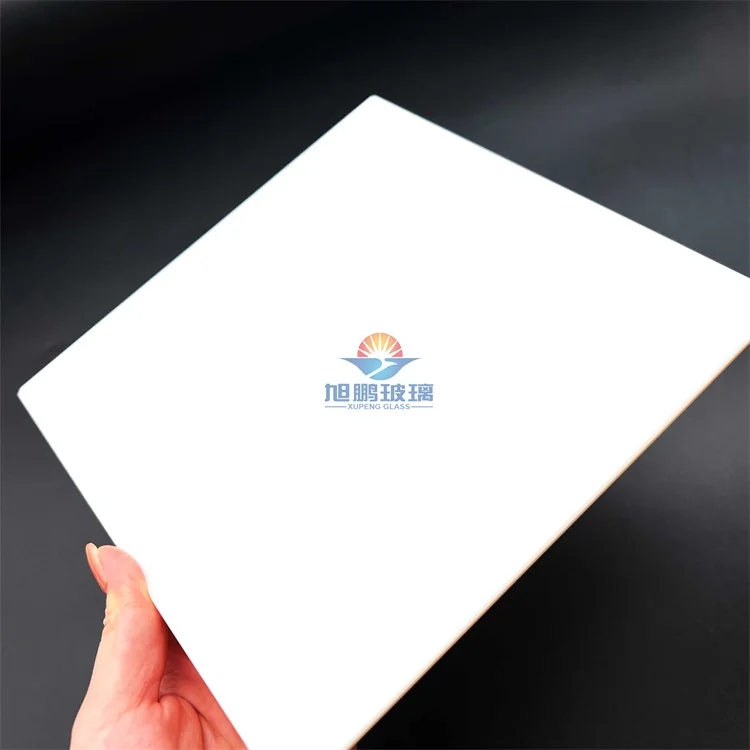
White Ceramic Glass-Ceramic, 4mm & 6mm, High Temperature Resistant Glass-Ceramic
Opaque white glass-ceramic that holds dimensional stability under thermal cycling. Used for backlit diffuser panels, appliance windows and display housings exposed to heat.
View specifications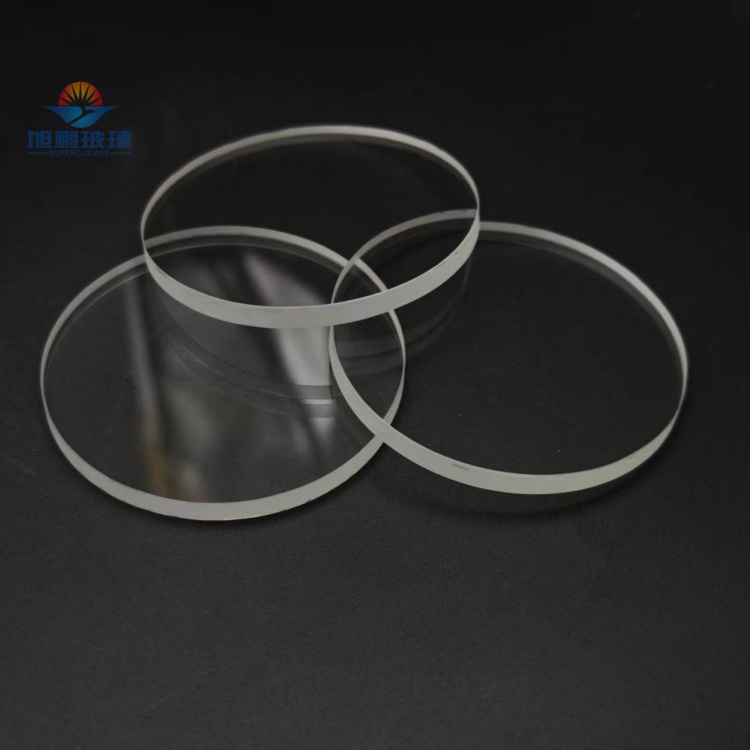
K9 Optical Glass (K9 Crystal Glass) for Optical Instruments
Borosilicate crown glass with refractive index nd ≈ 1.5168 and low inclusion levels. A practical BK7-equivalent choice for projection optics, prisms and instrument windows.
View specificationsWhy Philadelphia Deserves Its Own TV Glass Sourcing Page
Philadelphia is rarely marketed as a glass-processing capital, yet the metro sits on a genuine procurement junction of the US East Coast display supply chain. The region anchors the I-95 corridor — one day from the New York & New Jersey port complex, a short haul from Baltimore and Washington — and the Port of Philadelphia itself handles direct glass imports. Add comparatively available industrial space across South Jersey and the Lehigh Valley, and you get a natural staging point for integrators, stocking distributors and aftermarket refurbishers.
Three buyer types dominate the enquiries we receive from this market. Commercial display integrators assembling video walls and digital menu boards for Center City, University City and Navy Yard projects. TV and all-in-one PC brands running aftermarket networks that need replacement bezel glass carrying the correct logo, IR window and cut-outs. And industrial distributors holding inventory in South Jersey warehouses for downstream customers across the Delaware Valley. Their checklists converge fast: stable low-iron flatness, accurate hole positions, clean fired-in graphics, and a supplier that is honest about breakage risk on oversized panels.
Distance is also a surface-level issue. TV bezel glass is light in weight but brittle, so LCL consolidation into Philadelphia often means extra unloading cycles and extra chances to chip an edge. Shipping palletised, full-container, DDP door-to-door is frequently the calmer route once landed cost is modelled properly — we break this down in the FAQ section below.
Where TV Tempered Glass Actually Lands in Philadelphia
Search volume for "tempered glass Philadelphia" is dominated by generic suppliers. The real specification work happens in these six application clusters.
Commercial Video Walls & Digital Menu Boards
Restaurants, hotel lobbies and transit wayfinding across Center City and University City. An AG outer face plus an AR inner face controls both overhead glare and deep-black contrast — the two complaints that get a display deployment re-specified.
TV Repair & Refurbishment Networks
Aftermarket operations in South Jersey and the Delaware Valley need replacement bezel glass with the right logo, sensor apertures and screw reliefs — usually 100 to 500 pieces per run, and usually on a short clock.
Smart Home & Kitchen Control Panels
Low-iron ultra-clear glass with back-side printing for appliance consoles and whole-home touch panels. Glass survives daily degreasing sprays that haze acrylic — a specification point homeowners rarely mention but service teams always do.
Museum, Campus & Institutional Displays
Exhibit and wayfinding projects around the Museum District and University City routinely pair AR windows with thicker tempered protection, so an interactive map survives both fingerprints and the occasional backpack impact.
Outdoor Signage & Transit Wayfinding
Bus shelters, fuel-price boards and forecourt advertising. Philadelphia's freeze–thaw swings and summer humidity are a genuine durability test for the AG layer, so substrate and coating must be specified together.
Optical Instruments & Lab Windows
Research and test labs around University City and the Navy Yard innovation campus source K9, fused quartz and sapphire windows where UV transmission, scratch resistance and thermal shock behaviour outrank unit price.
Six Shifts Reshaping TV Glass Buying in the Philadelphia Region
AR Coating Moved From Upgrade to Default
Contrast is bought, not calculated. Integrators comparing a coated and an uncoated panel side by side in the same room rarely go back — which is why AR now appears in the first quotation cycle rather than the third revision.
AG + AR Laminates With Written Haze Values
Outdoor buyers no longer accept "glare reducing" as a phrase. They ask for a haze range, a gloss value and a test method, because a forecourt screen that looks fine in April can be unreadable in July sun.
Low-Iron Glass Becomes the HDR Baseline
The faint green edge of ordinary float glass shifts white point under a colorimeter. Premium and calibration-critical projects now specify low-iron only, with roughly 91% visible light transmission as the reference figure.
Smaller MOQs, Faster Sample Loops
Distributors would rather validate 10 to 50 pieces in a real installation than commit a full container to a price break. Sample-first sourcing has become the norm across the corridor, not the exception.
DDP Door-to-Door Replaces Fragmented Freight
Managing a forwarder, a customs broker and a final-mile carrier separately is three failure points on fragile freight. Buyers increasingly ask for one landed number delivered to a Philadelphia zip code.
Traceability Files Ship With the Pallets
Batch numbers, dimensional inspection records and coating reflectance curves are turning into standard attachments. When a display fails a field audit, the paper trail decides who pays for the rework.
Glass Selection Matrix for TV & Display Engineers
Substrate choice drives field failure more often than any other single decision. Use this matrix to shortlist before you release a drawing.
| Glass Type | Typical Optical / Mechanical Property | Best-Fit Display Application | Processing We Execute |
|---|---|---|---|
| Low-Iron Ultra-Clear Tempered | ~91% visible transmission, minimal green edge; tempered strength ≈ 4–5× annealed glass | HDR TV bezels, appliance consoles, LED light guides | CNC cutting, drilling, edging, silk screen, AR/AG |
| AR Coated Glass | Surface reflection reduced to roughly 0.5–1% per side | TV front covers, AIO PC panels, museum windows | Single/double-side AR, tempering, printing |
| AG Etched Glass | Micro-textured surface; haze and gloss selectable to spec | Outdoor signage, industrial HMI, kiosks | Etched AG, AG + AR hybrid, tempering |
| Silk-Screen Tempered | Ceramic ink fired and fused into the glass surface | Bezels, logo windows, IR apertures, switch covers | Multi-colour print, IR-transmissive ink, holes |
| White Glass-Ceramic | Thermally stable, opaque white, 4 mm and 6 mm stock | Diffuser panels, heated appliance windows | Cutting, polishing, edge grinding |
| K9 Optical Glass | Borosilicate crown, refractive index nd ≈ 1.5168, low inclusions | Projection optics, prisms, instrument windows | Precision polishing, coating, CNC edging |
| Fused Quartz / Sapphire | High UV transmission; sapphire at Mohs 9 and approx. 2,040 °C melting point | UV curing windows, sensor covers, high-temperature ports | Thick-gauge cutting, polishing, drilling, chamfering |
| Corning EXG / Ultra-Thin Glass | Alkali-free with low CTE (~3.2 ppm/°C); thin stock down to 0.03 mm | Semiconductor substrates, flexible and foldable display stacks | Double-side polishing, wafer dicing, edge strengthening |
Values shown are typical reference data for material shortlisting. Final specifications are confirmed against your drawing and an agreed test standard before mass production.
Ten Factory Checks Philadelphia Buyers Should Run Before the Deposit
This is the checklist we would use ourselves if we were buying instead of selling. Any credible factory will answer all ten without hesitation.
Confirm whether cutting, tempering, silk-screen printing and coating genuinely happen under one roof, or get subcontracted across three suppliers who never speak to each other.
Ask for a plant layout, not just a gallery of polished finished parts. Equipment lists expose capability far more honestly than product photography.
Verify the tempering furnace can handle your largest panel size — and whether curved tempering is available for curved TV and signage designs.
Ask whether the AR or AG layer is vacuum-sputtered or wet-coated, and request a reflectance curve at your specified wavelength band.
Get a flatness and warp specification with real numbers and a stated test method. On panels above 55 inches this single figure causes more disputes than any other.
Confirm printed graphics use high-temperature ceramic ink, not low-temperature epoxy that fades, scratches or lifts after a few cleaning cycles.
Request a packing drawing — interleaving film, edge protectors, foam, crate type — and ask specifically how panels above 65 inches are braced.
Have Incoterms and landed cost put in writing for a Philadelphia zip code, including truck type and whether a liftgate is required at the receiving dock.
Cross-check third-party verification: onsite inspection status, credit index, transaction level and unfiltered buyer reviews. All of it should be independently viewable.
Test the sample against the same drawing used for the quotation, and log the date. A sample from a different production route proves nothing.
What the Factory Behind These Products Actually Brings
Dongguan AUVE Glass Co., Ltd. operates as a deep-processing glass manufacturer rather than a trading intermediary — R&D, design, production and export sit in one facility in Songshan Lake, Dongguan, inside one of China's densest electronics and optoelectronics clusters.
Deep Processing Since 2018
Established in 2018 with a stated philosophy of "focusing on high-end glass, pioneering and innovating" — the factory processes flat and curved tempered glass, ultra-white and painted glass, display cover glass, AR/AG coated glass and precision optics rather than reselling catalogue stock.
51–100 Skilled Staff, 1,001–2,000 m²
A mid-size, engineering-led team in a facility sized for genuine custom work rather than high-volume commodity runs. That combination keeps tooling changes economical at the 10 to 500 piece quantities most Philadelphia buyers actually order.
Full In-House Process Chain
CNC cutting, edging, beveling, grooving, drilling, flat and curved tempering, high-temperature silk-screen printing, AR/AG/mirror coating, and dimensional plus optical inspection — sequenced internally so tolerances are not lost between vendors.
Verifiable Supplier Records
Onsite-checked supplier status, a credit index built on real trading behaviour, transaction level, documented trade history and public buyer ratings — all independently viewable, so a Philadelphia procurement team can audit before committing budget.
Export-Ready Commercial Terms
FOB, CFR, CIF, EXW, DDP, DDU, DAF and express delivery are all supported. Fragile-goods packing includes interleaving film, foam corner protection and fumigation-free wooden crates or reinforced cartons.
≤7 Hour Engineering Reply
Send a CAD, DXF or PDF drawing with thickness, tolerance, edge, hole, printing and coating requirements. Engineers review manufacturability before any glass is cut — average response time is within seven hours.
Product catalogue covers tempered, AR/AG, silk-screen and optical glass series with reference specifications and MOQ guidance.
Questions Philadelphia Buyers Ask Before the First PO
What is the typical lead time from your factory to Philadelphia?
Sampling usually takes 3–7 working days depending on coating and printing complexity. Bulk production typically runs 12–20 working days. Ocean freight to the Port of Philadelphia, or routing through the New York & New Jersey complex, generally adds around 30–40 days, plus 3–7 days for final-mile delivery and customs clearance. Ask for these stages itemised rather than a single aggregated number, because the transit leg is the one you can least influence.
Can you ship DDP directly to a Philadelphia address?
Yes. We support EXW, FOB, CFR, CIF, DDP, DDU and DAF, as well as express courier for samples. For an accurate door-to-door quote we need the destination zip code, whether a loading dock is available, and whether a liftgate and inside delivery are required — those three details drive most of the variance in final-mile cost for fragile freight.
What is the minimum order quantity for TV front bezel glass?
MOQ depends on material and process route. Many coated and optical parts start from 10 to 50 pieces, while standard ultra-clear tempered parts typically start from 100 to 500 pieces. Sample and pilot quantities are negotiable for new projects, particularly where the drawing is still being validated.
Can you produce AR-coated glass for 55", 65" and 75" television panels?
Yes, though the real constraint is furnace chamber size and coating fixture capacity rather than cutting. Larger panels make flatness and warp significantly more sensitive, and packing cost rises steeply with diagonal size. Please supply the drawing together with the mounting method — corner-fixed, adhesive-bonded or full-frame — because mounting dictates the warp tolerance we can commit to.
Should we specify AR coating or AG etched glass?
AR reduces surface reflection and lifts contrast, so it suits indoor TVs, monitors and gallery displays. AG scatters reflections across a wider angle, which suits rooms with windows, ceiling lights or outdoor exposure. The most common specification for commercial installations is a hybrid: AG on the viewing surface to kill glare, AR on the inner surface to suppress internal reflection.
Do you handle CNC drilling, cut-outs and silk-screen printing on the same part?
Yes. Cutting, edging, beveling, grooving, hole drilling, high-temperature ceramic silk-screen printing and AR/AG coating are all carried out internally, so a bezel with apertures, logo printing and an anti-reflective layer ships as a single controlled part. Send CAD, DXF or PDF files noting thickness, tolerance, hole positions, edge profile and print colours.
How do you prevent breakage during ocean transport?
Standard packing uses PE protective film, EVA foam interleaving, corner protectors, and either fumigation-free wooden crates or reinforced cartons, palletised and batch-labelled. For panels above 65 inches we recommend a full container rather than LCL consolidation — every additional handling cycle in a shared container is an additional edge-impact risk.
How can we verify the factory before placing a deposit?
Five records are publicly checkable: the onsite inspection report confirming premises and legal status, the credit index built on real trading behaviour, the transaction level, the documented trade history, and unfiltered buyer ratings and reviews. Reviewed together, they give a clearer picture than any single certificate, and none of them require a factory visit to confirm.
Sample First in Philadelphia. Commit to Volume Second.
Send your drawing — size, thickness, tolerance, hole positions, print colours and coating requirements. Our engineers will reply within seven hours with a manufacturability review, a material recommendation and a landed DDP cost to your Philadelphia zip code. No obligation until the sample has been measured against your own specification.
Get Catalog