Why Chicago Buyers Source CNC-Cut Glass From a China Specialist
What procurement and engineering teams in Illinois actually need to know before they request a quotation.
The Chicago metropolitan area is one of the densest precision-manufacturing corridors in North America, and almost every product family inside it depends on a custom glass component somewhere. From equipment integrators in Elk Grove Village and contract electronics manufacturers in Schaumburg, to welding-equipment OEMs across the Midwest and laboratory-instrument builders in Illinois, sourcing teams are constantly looking for a supplier that can handle high-mix, low-to-mid volume CNC glass cutting with tight tolerances, clean edges and a predictable landed cost.
What separates a good quotation from a good part is the order of operations. CNC cutting, drilling, countersinking and edge grinding must all happen before tempering. Once glass has been thermally tempered it can no longer be cut, drilled or re-edged — any attempt produces a shower of small fragments rather than a clean cut. That single rule is why drawings, material grade and the process route need to be locked in at the quotation stage, and it is also why many Chicago buyers prefer to work with a factory that owns every step of that route in-house instead of passing a sheet between three subcontractors.
At our Dongguan plant, CNC machining centres handle contour cutting, notching, step holes and optical polishing, with ±0.1 mm typical tolerance on general shapes and ±0.05 mm achievable on precision optical parts. Laser cutting is reserved for ultra-thin sheets in the 0.1–1.1 mm range, where a small heat-affected zone protects edge strength; diamond-wheel cutting followed by CNC edge grinding is the standard route above 2 mm, because micro-crack control matters far more on thicker, heavier parts.
Logistics from South China to Chicago is well established. Ocean freight from Shenzhen/Yantian to Los Angeles–Long Beach runs roughly 14–18 days, followed by 5–7 days by BNSF or Union Pacific rail into a Chicago rail yard — typically 30–40 days door to door. Air freight into O'Hare (ORD) usually lands in 5–8 days including customs clearance. We quote FOB, CIF and DDP Chicago, so the landed cost can be locked before the purchase requisition is approved.
CNC-Cut Glass Products Frequently Ordered by Chicago OEMs
Eight production-proven product families. Every part can be adapted in size, thickness, edge profile, hole pattern, printing and coating to suit your assembly.

Corning EXG Glass Wafer, Double-Sided Polished Custom Fabrication for Semiconductor Glass Wafers
Alkali-free aluminoborosilicate with low CTE, double-side polished and chamfered for MEMS, sensor and display-substrate work.
View specification
White Ceramic Glass-Ceramic, 4mm & 6mm, High Temperature Resistant Glass-Ceramic
Opaque, thermal-shock resistant panels for heater windows, cooktops and industrial viewports that must survive repeated heating cycles.
View specification
Precision CNC Cut & Holed, High-temperature Silk Screen Tempered Glass, Drilled Ultra-clear Small Round Glass Discs
Small round windows with CNC-drilled holes and fired ceramic ink, a common choice for device view windows and instrument bezels.
View specification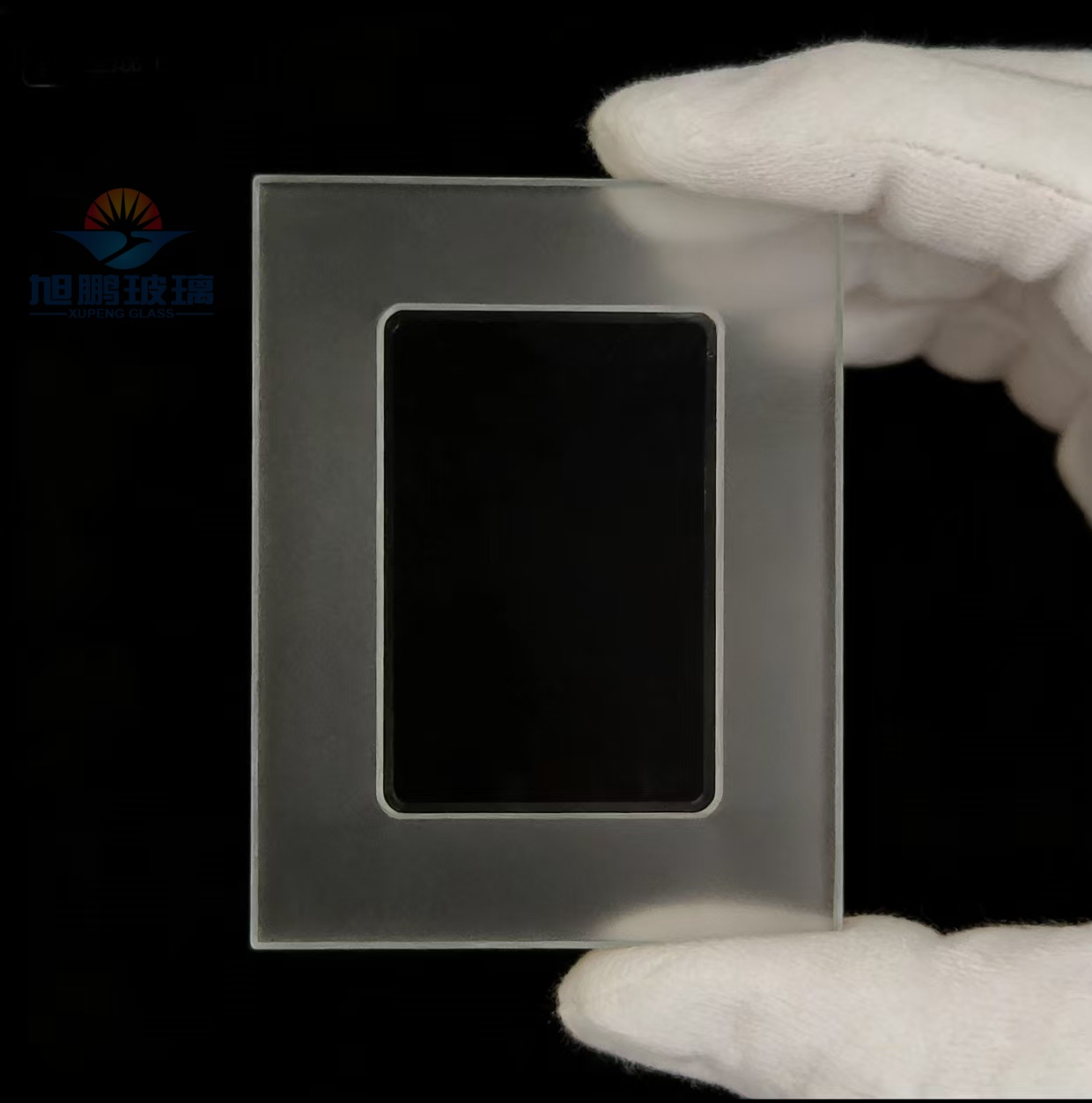
Custom Ultra-White Clear Tempered Glass Socket Decorative Cover for Stairways
Low-iron tempered covers with custom cut-outs for switches, sockets and stairway detailing, polished edges and optional printing.
View specification
Schott Ultra-thin Optical Glass Sheets, 0.1mm, 0.5mm, 0.7mm, 1.1mm, Raw Semiconductor Electronic Glass Substrates
Thin borosilicate and optical substrates cut by laser or diamond wheel, with edge strengthening for compact sensor and display stacks.
View specification
High-transmittance Anti-Reflection Coated Glass
Single or double-side AR coating that drops surface reflection to roughly 0.5–1% per face and lifts display contrast in bright rooms.
View specification
Welding Black Filter Glass, Beveled Edge Grinding, Long Irregular-shaped Welding Filter Glass
Dark filter glass profiled to irregular helmet and goggle shapes, with beveled edge grinding to prevent chipping during assembly.
View specification
Corning Ultra-Thin Glass Sheet, Optical Grade Glass Wafer Substrate with Chamfered Edge
Optical-grade ultra-thin substrates with chamfered edges for precision mounting, wafer handling and high-clarity optical windows.
View specificationWhere CNC-Cut Glass Is Used Across Chicago and the Midwest
Six application clusters that drive the majority of custom glass enquiries from Illinois and the surrounding states.
Industrial HMI & Automation Panel Covers
System integrators around Elk Grove Village and Addison build HMI stations for packaging, food-processing and material-handling plants. A 2–4 mm ultra-clear tempered cover with a silk-screen border and an etched anti-glare surface keeps screens readable under warehouse lighting and survives daily washdown cleaning.
Welding Filter Glass & Protective Windows
Midwest welding-equipment OEMs and the repair aftermarket need black filter glass that will not chip when a lens is seated in a helmet frame. CNC contour cutting plus beveled edge grinding removes the sharp stress points that cause field breakage, and dark filter grades are matched to the hood specification.
Semiconductor, MEMS & Laboratory Windows
Research laboratories, university cleanrooms and analytical-instrument builders across Illinois require alkali-free substrates and optical windows with controlled flatness. Corning EXG wafers, SCHOTT ultra-thin sheets, K9 windows and fused quartz viewports are supplied double-side polished with batch traceability.
Electronic, Display & Touch Module Covers
Contract electronics manufacturers in Schaumburg and the wider Chicago tech corridor integrate AR-coated cover glass into all-in-one PCs, kiosks, touch assemblies and control consoles. Anti-reflection coating at 0.5–1% per face, combined with CNC cut-outs for cameras and sensors, keeps optical performance predictable.
Appliances, Switches & Interior Hardware
Ultra-white tempered socket covers, switch plates and decorative glass panels feed the Illinois hospitality, multi-family residential and property-refurbishment market. Low-iron glass delivers a neutral white edge with no green tint, and CNC cut-outs are polished so the part sits flush against the wall plate.
Agricultural, Construction & Transport Instruments
OEMs building tractors, lifts and construction equipment in the Midwest specify impact-resistant, heat-tolerant windows for instrument clusters. Tempered glass with fired ceramic icons and precisely drilled mounting holes handles vibration and temperature cycling better than injection-moulded alternatives.
Local Trends Shaping Chicago Glass Sourcing in 2025–2026
Six shifts that procurement teams in Illinois are already writing into their supplier scorecards.
Dual Sourcing Has Become the Default
Chicago buyers rarely place a single-region bet. A qualified Chinese deep-processing factory is now paired with a domestic or Mexican nearshore option, and the deciding factor is documentation quality — capacity data, batch records and repeatability evidence, not headline price.
AR/AG Metrics Moved From Nice-to-Have to Mandatory
Requests for quotation arriving from Illinois now state reflection and haze targets as hard requirements — often "≤1% reflection per face, 5–10% haze, pencil hardness ≥7H". Buyers expect coated samples and measurement data before approving a production order.
Thinner Substrates for Smaller Packages
Sensor windows and compact display stacks are pushing demand toward 0.1–0.55 mm glass. Thin substrates change the whole process route: laser or precision-wheel cutting, gentler edge treatment, dedicated interleaving and low-pressure packaging all become part of the specification.
Supplier Vetting Now Relies on Documents
Engineers increasingly ask for a manufacturability review before quoting, a first-article inspection report with dimensional and optical data, and a traceability record tying each carton to its glass lot. Suppliers who cannot produce these documents are filtered out at the RFQ stage.
DDP Quotations Have Become the Norm
Duty, brokerage and inland delivery from a US port to a Chicago-area dock are now modelled up front. Buyers want one landed number covering ocean or air freight, customs clearance and final-mile trucking, so the approval cycle no longer stalls on freight surprises.
Packaging Compliance Is Part of the Audit
Fumigation-free, ISPM-15-compliant crating, foam corner protection and drop-tested export cartons are now checked during supplier audits. For fragile glass travelling by rail into Chicago, packaging design is treated as an engineering deliverable rather than an afterthought.
CNC Glass Cutting Process Capability & Tolerances
Reference figures for engineering review. Final specifications are confirmed against your drawing and the agreed test standard before mass production.
| Capability | Process Route | Typical Specification | Best-Fit Application |
|---|---|---|---|
| CNC Contour Cutting | Diamond-wheel cutting plus CNC machining centre | ±0.1 mm general shapes; ±0.05 mm precision optics | HMI covers, sensor windows, touch panels |
| Drilling & Grooving | CNC milling, laser drilling, step-hole machining | Minimum hole around 1 mm; edge distance ≥ 2× hole diameter | Instrument bezels, view windows, mounting plates |
| Edge Processing | CNC edge grinding, beveling, flat polish, chamfer | Polished, beveled or flat edge with chip-free finish | Tempered covers, decorative panels, welding glass |
| Tempering | Flat and curved thermal tempering | Approx. 4–5× the strength of annealed glass | Appliance panels, lighting glass, control covers |
| Silk-Screen Printing | High-temperature ceramic ink, multi-colour | Registration around ±0.1 mm; window and IR inks | Switch and socket covers, instrument panels |
| AR Coating | Single or double-side vacuum deposition | Reflection approx. 0.5–1% per face | Displays, kiosks, optical windows |
| AG Etching | Chemical etching or spray coating | Selectable haze, typically 5–40% | Outdoor LCDs, industrial HMI, wayfinding kiosks |
| Optical Polishing | Double-side polishing | Ra below 1 nm class finish on selected substrates | Semiconductor wafers, K9, quartz, sapphire |
| Inspection & Packing | Dimensional, visual and optical checks | First-article report plus lot traceability | All export orders |
What Dongguan AUVE Glass Brings to a Chicago Project
Dongguan AUVE Glass Co., Ltd. is a deep-processing glass manufacturer integrating R&D, design, production and export, located in Songshan Lake, Dongguan — one of China's leading optoelectronics clusters.
Factory-Direct Since 2018
Established in 2018 and operating a 1,001–2,000 m² facility with 51–100 skilled staff, we quote and produce directly — no trading layer between your drawing and the machine that cuts it.
Every Critical Process In-House
Cutting, CNC edging and drilling, flat and curved tempering, high-temperature silk-screen printing, AR/AG coating, QC and export packing all run under one roof, which shortens lead times and keeps tolerances consistent between batches.
Broad Substrate Coverage
Ultra-clear low-iron glass, laminated and painted glass, K9 optical glass, fused quartz, sapphire, borosilicate, Corning EXG alkali-free wafers and SCHOTT ultra-thin sheets — one supplier for the whole bill of materials.
Engineering Review Before Quotation
Send a CAD, DXF or PDF drawing with thickness, tolerance, edge, hole, printing and coating requirements. Our engineers check manufacturability first, then confirm material, process route and lead time — typically within 7 hours.
Documented Quality & Traceability
Production follows defined process standards and a documented quality management system, so every batch is traceable from the raw sheet to the packed carton — dimensional, visual and optical checks included.
Export Logistics Built for Fragile Glass
FOB, CFR, CIF, EXW, DDP, DDU, DAF and express delivery are all supported, with interleaving film, foam corner protection and fumigation-free wooden crates or reinforced cartons designed for long-haul rail and truck transit.
Guided by our philosophy of "focusing on high-end glass, pioneering and innovating", we keep investing in skilled engineers and advanced equipment to deliver complete glass solutions for OEMs, brand owners and distributors in the United States, Canada, Russia, Japan, South Korea, Australia and beyond.
Frequently Asked Questions From Chicago Glass Buyers
The questions our Illinois and Midwest customers ask most often before placing a first order.
Do you ship CNC-cut glass to Chicago and the rest of Illinois?
Yes. Chicago is one of our regularly served US destinations. We ship by ocean FCL/LCL to Los Angeles or Long Beach with rail transfer into a Chicago rail yard, or by air freight directly into O'Hare (ORD). Final-mile trucking to addresses in Cook, DuPage, Lake, Will and Kane counties is arranged as part of a DDP quotation.
How long does delivery from your factory to Chicago take?
Ocean freight to the US West Coast takes about 14–18 days, plus roughly 5–7 days by rail into Chicago, giving a typical 30–40 day door-to-door transit. Air freight into O'Hare usually arrives within 5–8 days including customs clearance. Production lead time is quoted separately and depends on material and process complexity.
Can you quote DDP Chicago prices directly?
Yes. We support FOB, CFR, CIF, EXW, DDP, DDU, DAF and express terms. For DDP we include ocean or air freight, US customs clearance, duties and inland delivery so your requisition shows one landed cost rather than a chain of separate charges.
What happens if glass arrives damaged?
Every carton leaves the factory photographed and sealed, and we use interleaving film, foam corner protection and fumigation-free crates for fragile parts. If a claim arises, send photographs of the outer packaging and the damaged units on arrival — we review the packing record with you and replace or credit per the agreed terms. Inspecting cartons before signing the delivery receipt makes the process much faster.
Can you produce glass to my own CAD or DXF drawing?
Yes. Send a CAD, DXF or PDF drawing with thickness, tolerance, edge, hole, printing and coating requirements. Our engineers review manufacturability before production, covering CNC cutting, edging, drilling, tempering, silk-screen printing and AR/AG coating, and will flag anything that cannot be achieved — for example a hole placed too close to a tempered edge.
What is the minimum order quantity for custom CNC glass?
MOQ depends on material and process. Many coated and optical glass parts start from 10 to 50 pieces, while standard ultra-clear tempered parts typically start from 100 to 500 pieces. Sample and pilot quantities can be discussed for new projects, including first-article builds for Chicago engineering teams.
Can you send samples to Illinois before we place a production order?
Yes. For most product families we can supply a prototype or sample batch by express courier so your engineers can validate fit, coating performance and edge quality. Sample charges and freight are quoted transparently and can be discussed against the first production order.
What payment terms and shipping documents do you provide?
We normally work on a deposit-plus-balance structure, with the balance released against the bill of lading copy. Standard export documentation — commercial invoice, packing list, bill of lading or airway bill, and certificates of origin where applicable — is issued for every shipment. Terms can be refined once a long-term supply pattern is established.
Have a Drawing? Get an Engineering Review for Your Chicago Project.
Share your size, thickness, tolerance, edge, hole, printing and coating requirements. Our team will confirm the material, the process route and the lead time — usually within 7 hours — and quote FOB, CIF or DDP Chicago.
Send an Inquiry